
If you live in the US or UK you can now buy Imaginator Magazine’s Folk Horror Special Edition Volume 2 directly from the publisher.
Just scan the QR code!
Or you can click here: Buy Now

If you live in the US or UK you can now buy Imaginator Magazine’s Folk Horror Special Edition Volume 2 directly from the publisher.
Just scan the QR code!
Or you can click here: Buy Now
Starring Isacco Salvi, Martina Capaccioli, Marco Cevoli, and Marcello Castiglioni. Written by Samuele Breschi and Isacco Salvi. Directed by Samuele Breschi. Produced by Luca Boni, Marco Ristori, Valentina Cau and Mario Niccolò Messina.
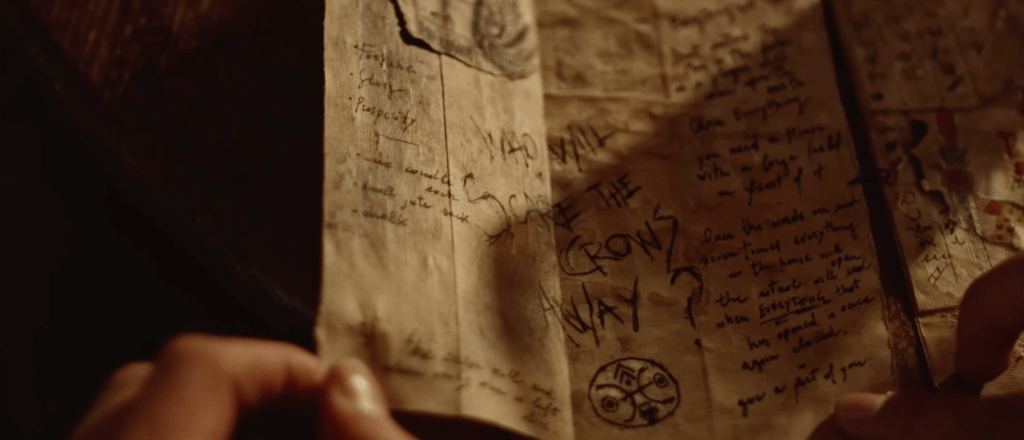
A group of friends perform a ritual, reciting the words, “Who will scare the crows away.” After they do this, and before the ritual can be finished, a stranger enters the house, drags one of the friends, David (Salvi), outside – and then the stranger cuts his own palm, allowing the blood to spill onto David’s face. From then on, matters only get worse for the group, and it transpires that a creature will hunt them down until only one of them is left alive…
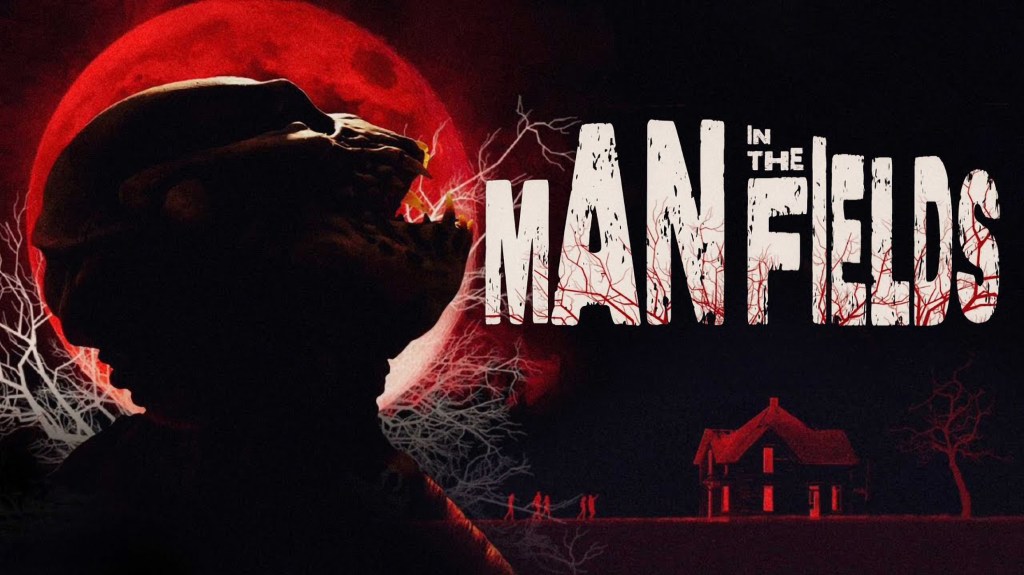
This US film, shot in Italy, is far from perfect, but has some well-done passages, the musical score is very good in places, and there’s enough intrigue in the story to ensure viewer interest is maintained.
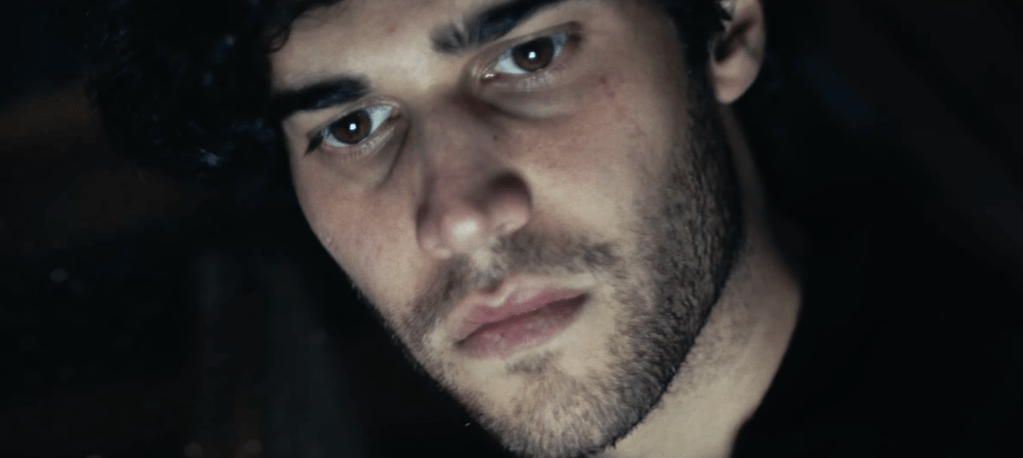
MAN IN THE FIELDS is director Samuele Breschi’s debut movie and, despite the uneven acting (the cast members all seem to be Italians speaking English, with some being more accomplished thespians than others), it’s a good first effort.
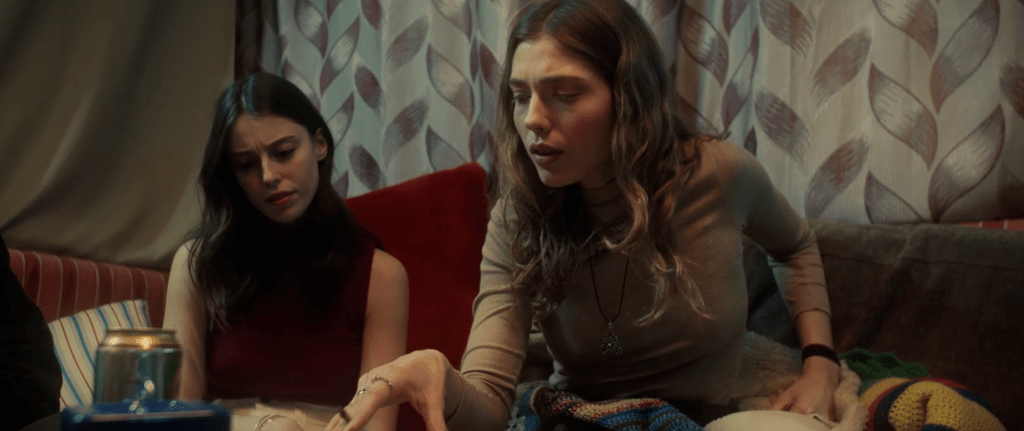
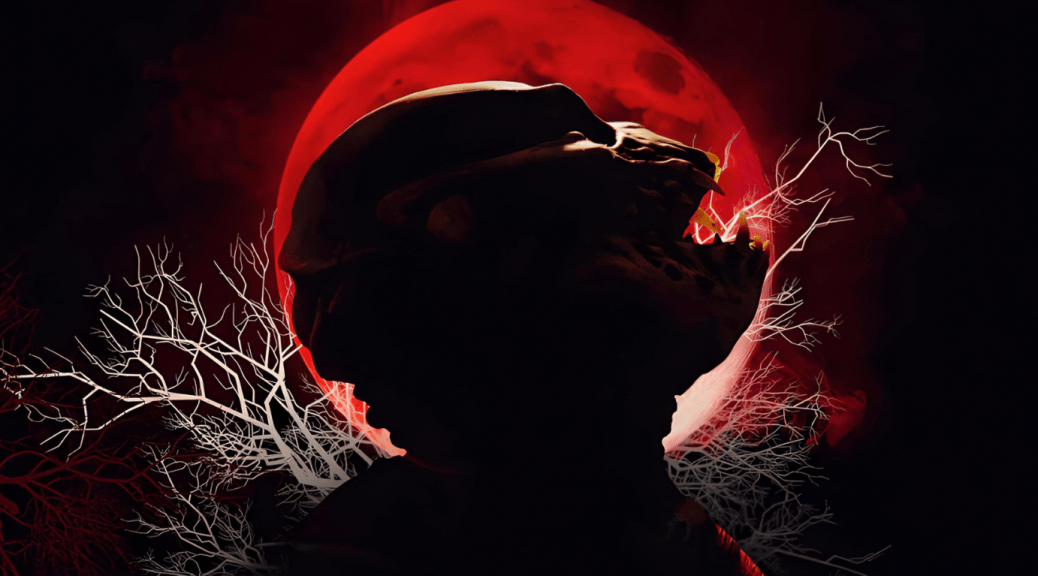
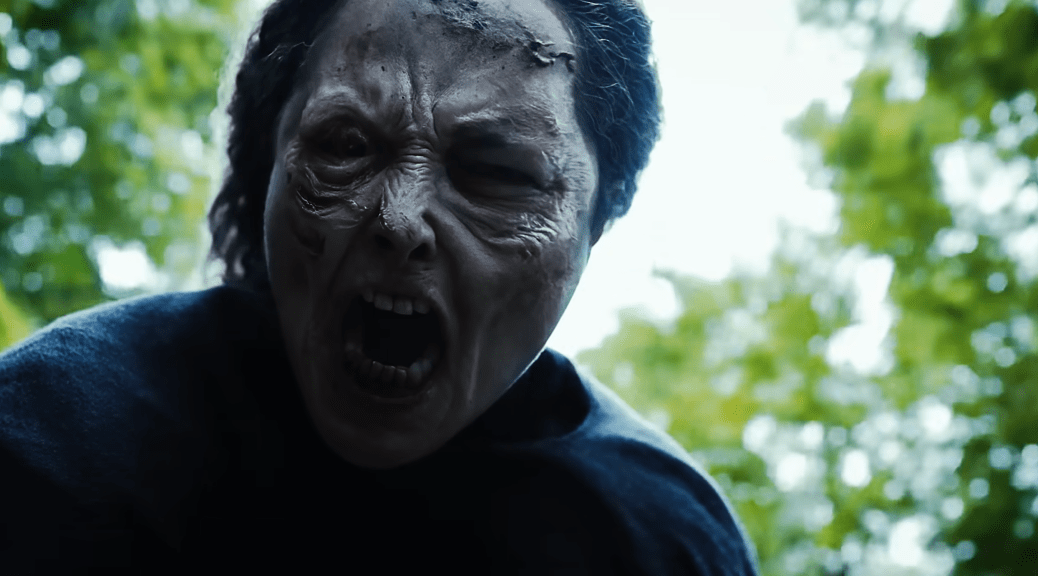
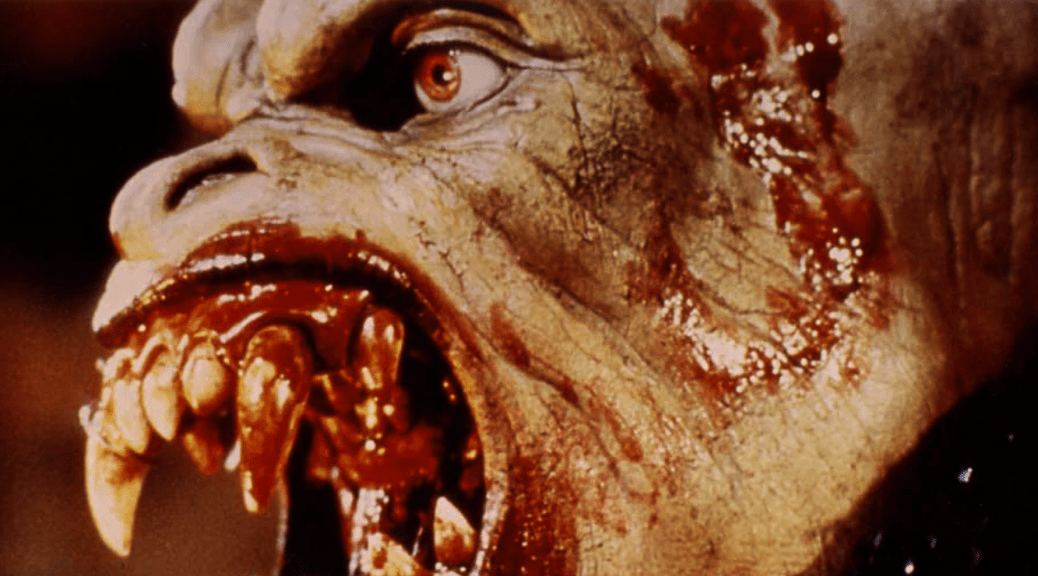
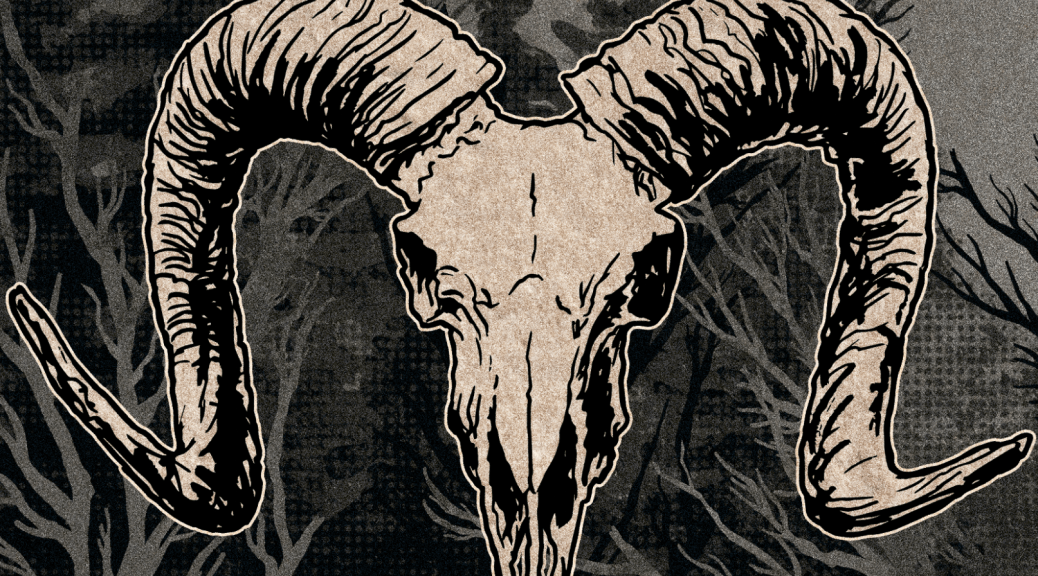
One of the highlights of the film is the pagan-god-in-human-form creature that David turns into; it is a damn cool-looking skull-headed creature! It rips off the skin of David’s girlfriend like it’s a bloody onesie (the flayed skin still has its scalp attached)! The creature then drapes the girlfriend’s skin around its shoulders like a pashmina!
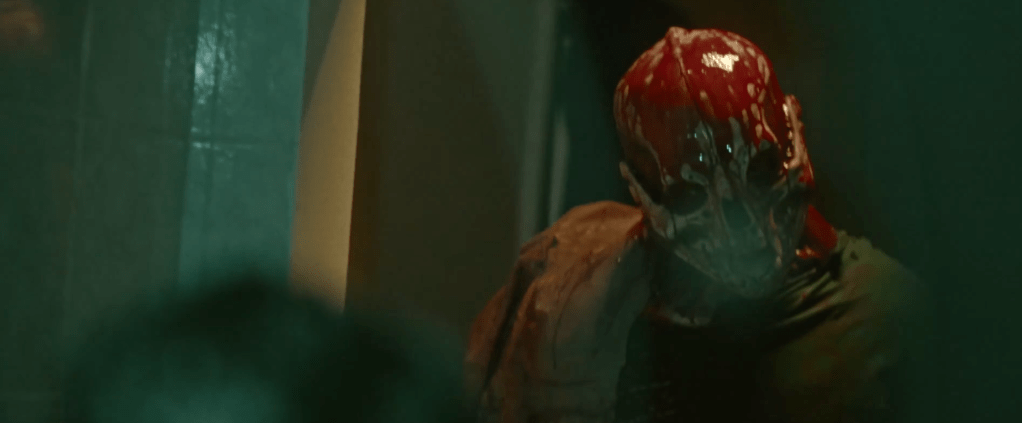
The action scenes could’ve done with being shot with a bit more panache, but the film remains enjoyable nonetheless, thanks to the skull-headed man-creature and the effort that the filmmakers put into creating it; its face has muscles and eyes located beneath the bone of its animal skull-like head. It’s a pretty ace beastie.
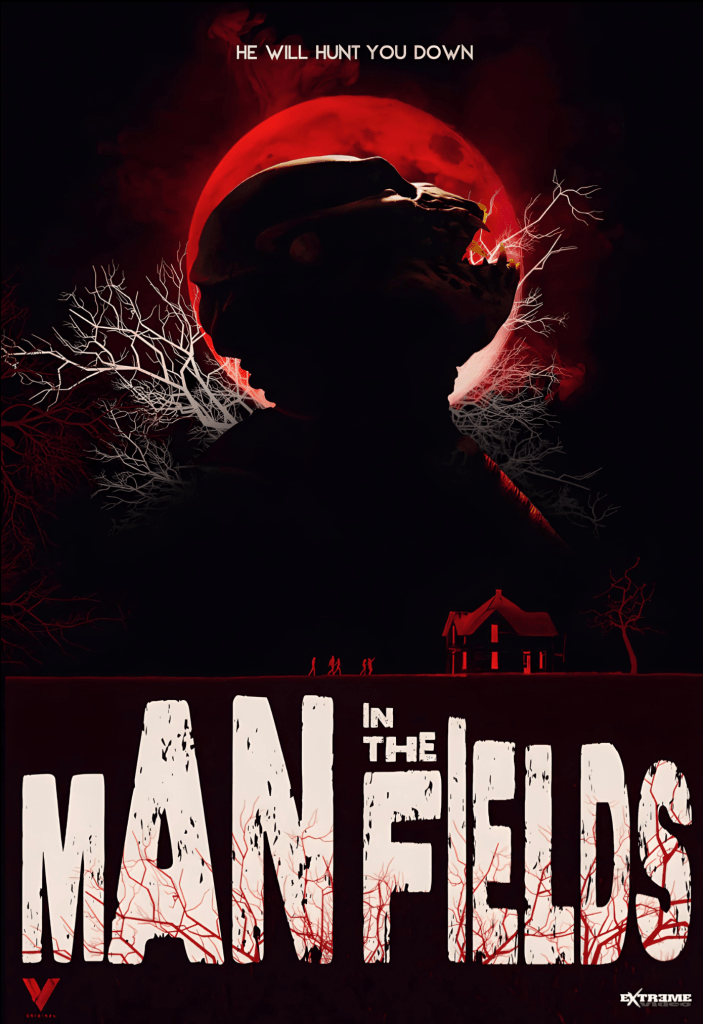
The mythos surrounding the events taking place in the movie revolves around two figures; the ‘Man in the Fields’ (who is the stranger we saw earlier, who is supposedly one of the ‘first men’) and ‘Xipe-Totec’ (a dark deity known as Our Lord the Flayed), who is the god of agriculture and spring.
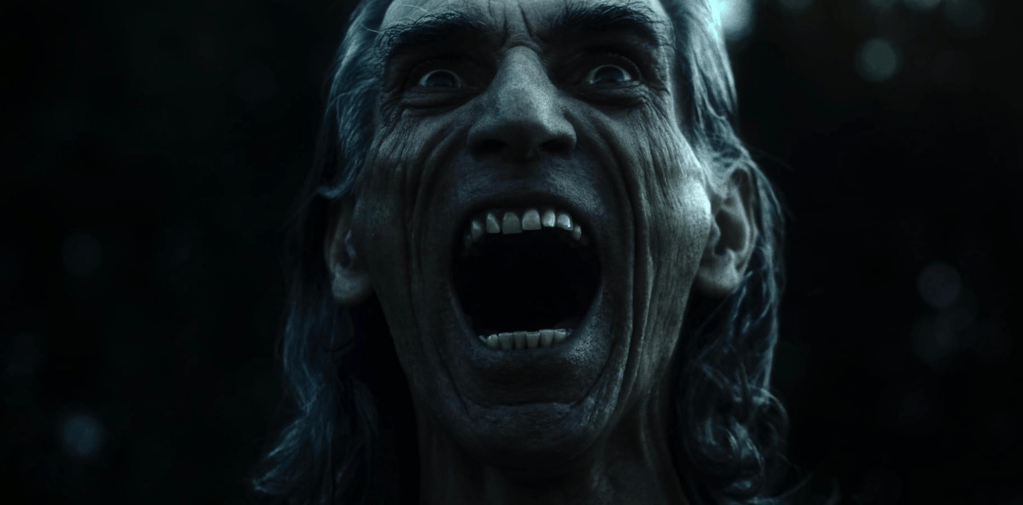
The ensuing plot sees an older dude, Jonathan (Castiglioni), joining the action. He is the survivor of the massacre of a family from years earlier, and he’s the one who supplies the others with details regarding the occult situation that they’ve become entangled in.
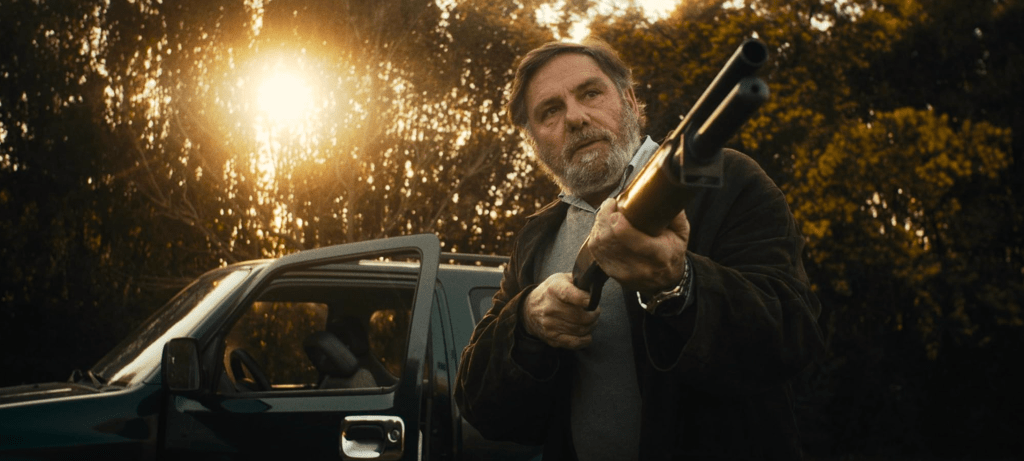
Breschi and co-writer Isacco Salvi make some dubious plot choices, such as having Rob (Cevoli), one of the surviving friends who has become a bit of a psycho, deciding that the best way to deal with the horrific events he’s witnessed is to go to a house party! Though I guess this story choice does allow for some slo-mo mass panic and carnage scenes at the party later on.
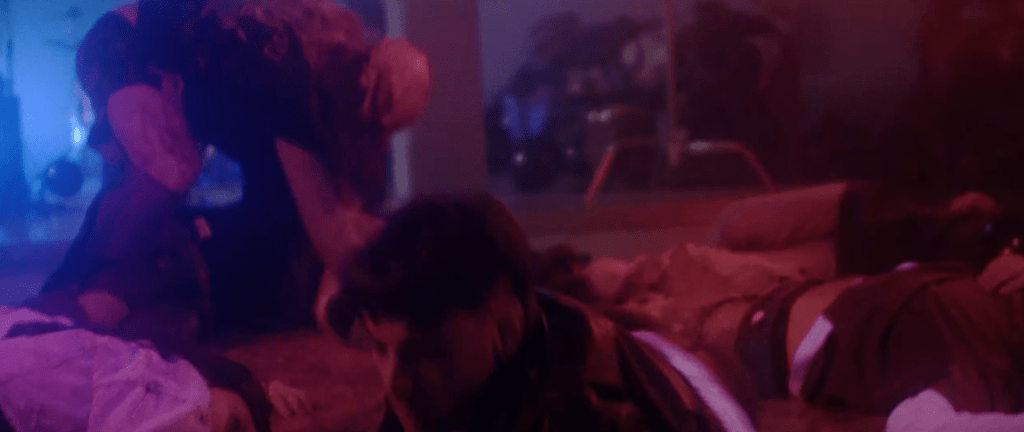
The movie is flawed, for sure, but it does deserve kudos for its attempt at creating an absorbing mythology that sees the spirit of the nature god Xipe-Totec (which possesses the body of its victims, who develop the signature skull-like head) linked to the Man in the Fields in an ongoing cycle of rebirth and slaughter; the Man in the Fields, it seems, triggers the physical manifestation of Xipe-Totec (remember how he dripped his blood on David) so that Xipe-Totec becomes flesh in the physical world, after which the Man decapitates the god-creature to ensure that he remains immortal.
Top marks for the use of practical effects.
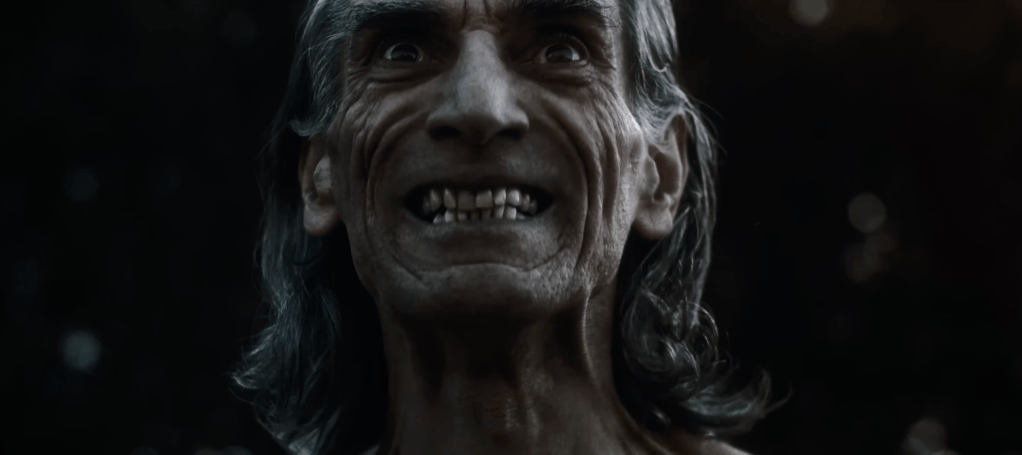
Starring Zelda Adams, John Adams, Toby Poser, Lulu Adams and Sofia Macaluso. Written, directed and edited by John Adams, Zelda Adams and Toby Poser. Produced by Toby Poser.
Wonder Wheel Productions
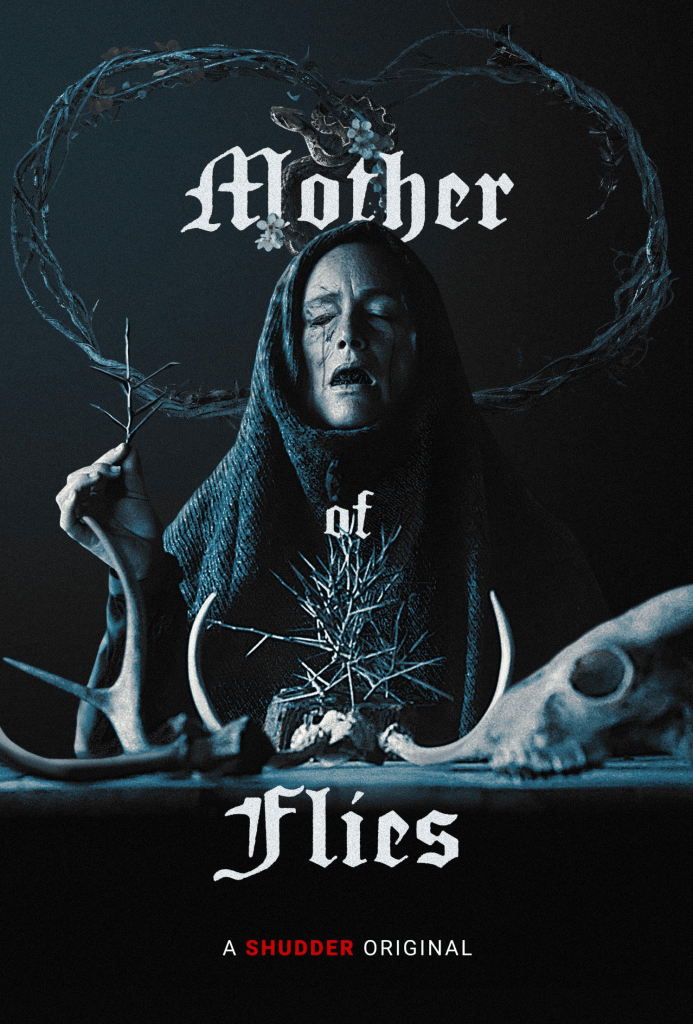
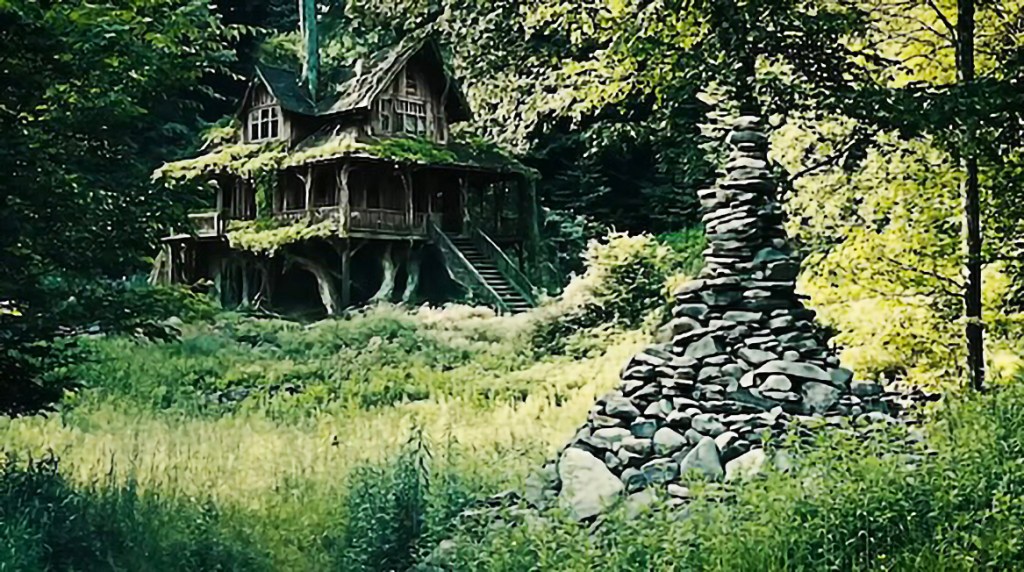
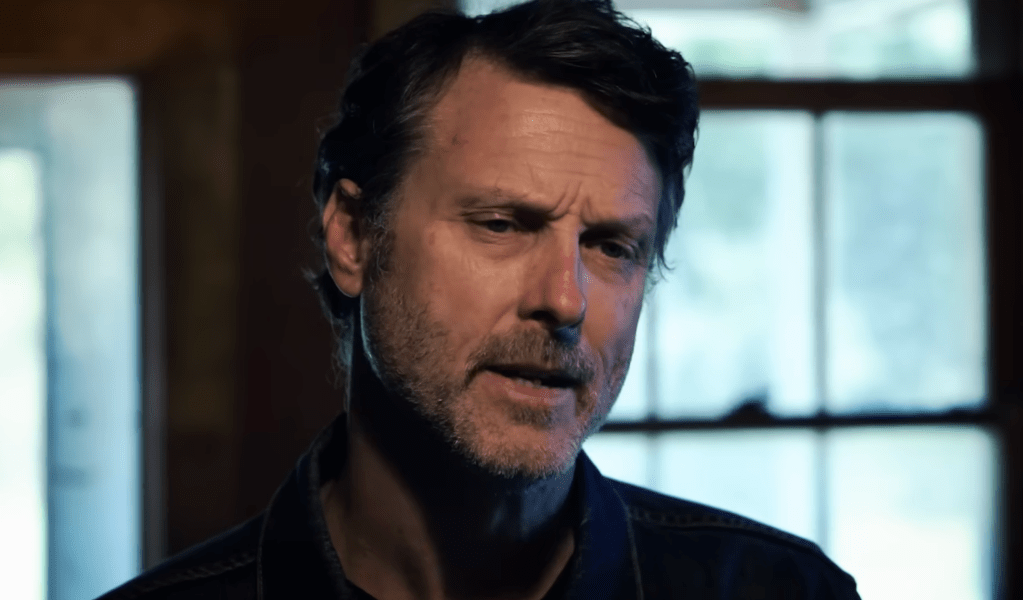
Jake agrees to take his adult daughter Mickey, who is suffering from cancer, to meet a healer called Solveig. They will stay in Solveig’s ivy-covered, isolated house (which is located near a cairn of rocks) for the next few days as the mysterious woman attempts to deal with the tumour in Mickey’s belly. Jake is skeptical, but Mickey is willing to give Solveig a chance, so she listens to the healer’s many musings, though a series of flashbacks make it clear to viewers that Solveig is actually a witch…
MOTHER OF FLIES is the latest work from that low budget independent filmmaking team – the Adams family. Father John, mother Toby (Poser) and daughters Zelda and Lulu Adams have been responsible for releases including HELLBENDER (2021), WHERE THE DEVIL ROAMS (2023) and HELL HOLE (2024). With their latest project they succeed in making it look very good, with contrasty and saturated colours ensuring the visuals are stunning. The acting is acceptable but not exceptional, as is the general dialogue, but the many voiceover monologues spouted by Toby Poser as Solveig, which are meant to sound poetic, significant and deep, are actually irritating and dull.
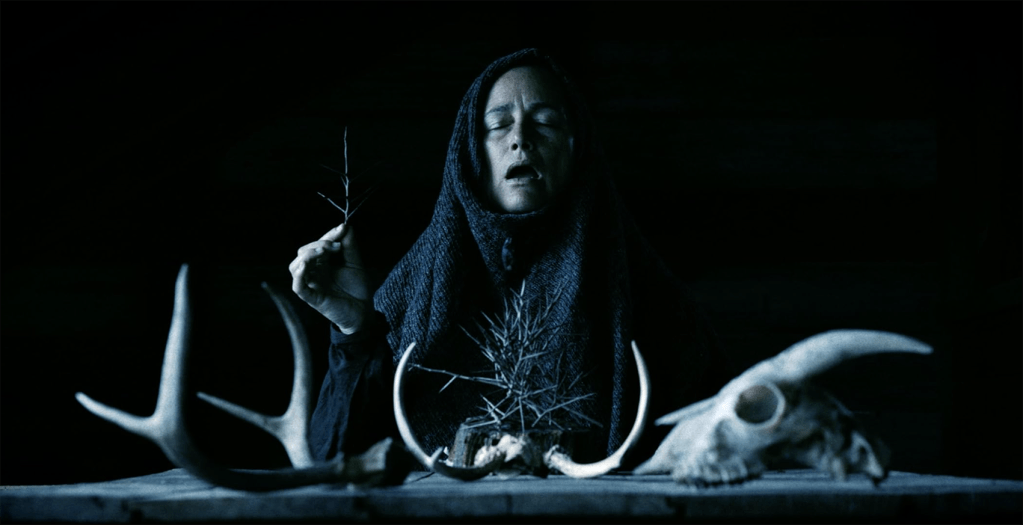

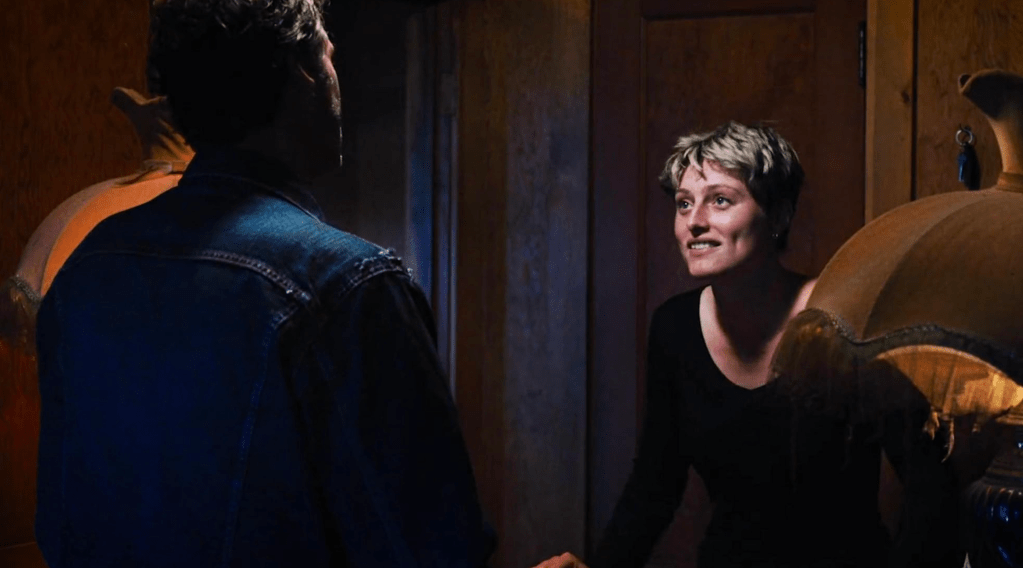
“Trees bind the heaven to earth, roots clenching down the dirt, leaves grasping high in the sky…” Yada yada yada. Solveig’s unending blathering doesn’t add anything to the really quite astounding visuals, and I’d even say that they severely detract from the impact of all the scenes they’re added to. It would almost pay to watch the film with the sound turned off!
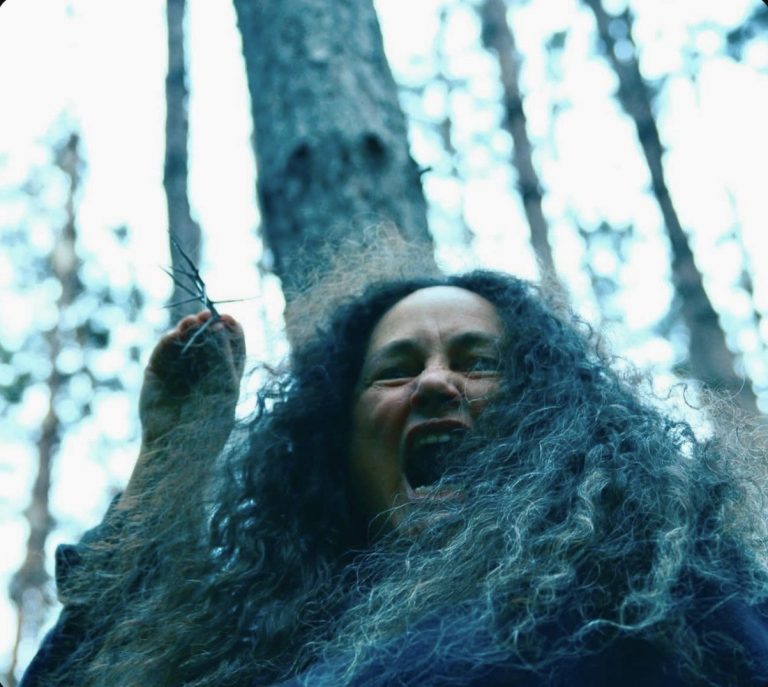
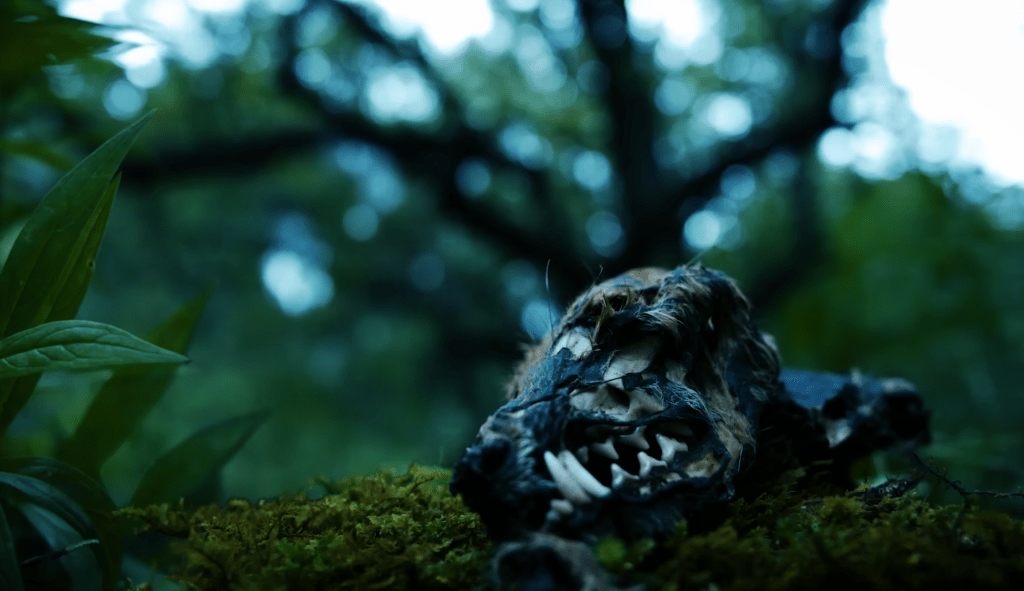
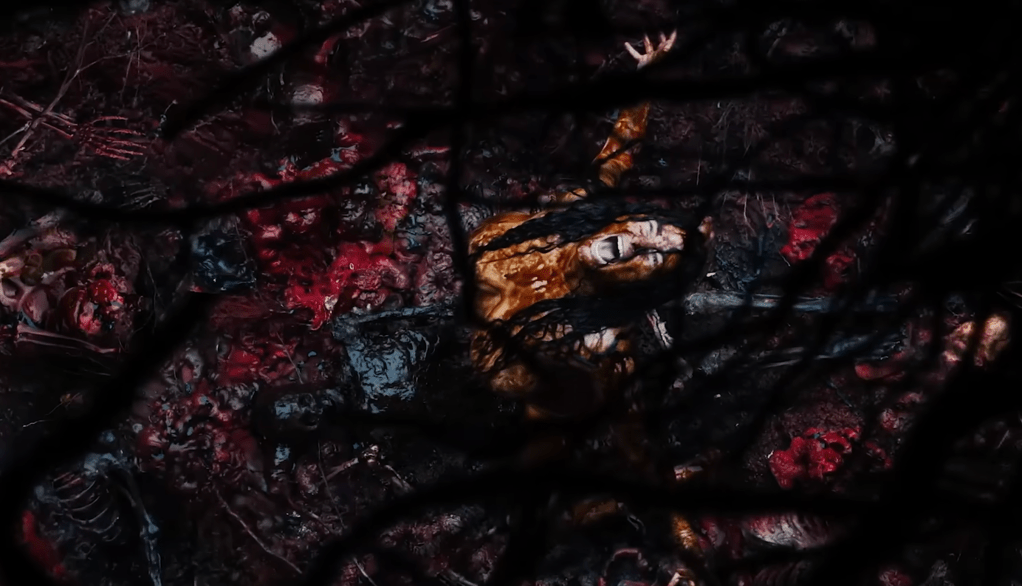
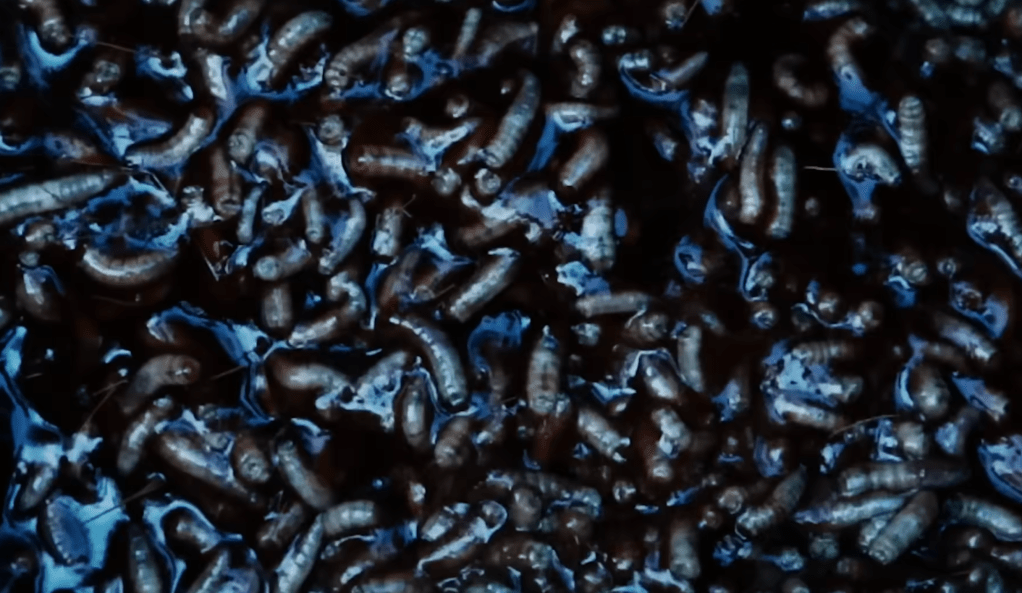
Okay, there is a bunch of interesting things to look out for, like Solveig’s use of a snake’s egg to initiate the removal of Mickey’s tumour, a process that requires the witch to allow a snake to slither into her mouth, which she then regurgitates into Mickey’s mouth later. Flashbacks to the time Solveig dealt with the stillborn child of a woman, bringing it back to life and incurring the wrath of the villagers, is pretty intriguing and utilises a very realistic-looking prosthetic dead baby. There’s a grisly tumour removal scene too; this involves Solveig transforming the tumour-lump into the form of a foetus (providing me with the excuse to feature this movie on the Monster Zone blog as this tumour-child is kind of a monstrous thing, right? Plus – Solveig is eventually revealed as a horror-hag – and films with scary witches can definitely be included on this blog – go and search for my review of the hag-tastic flick THE PALE DOOR )
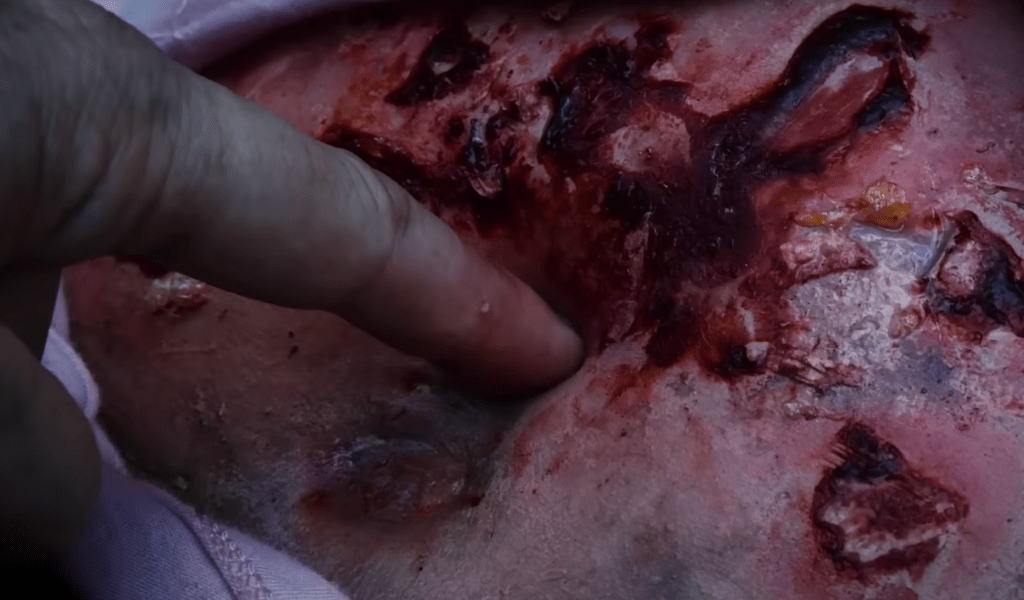
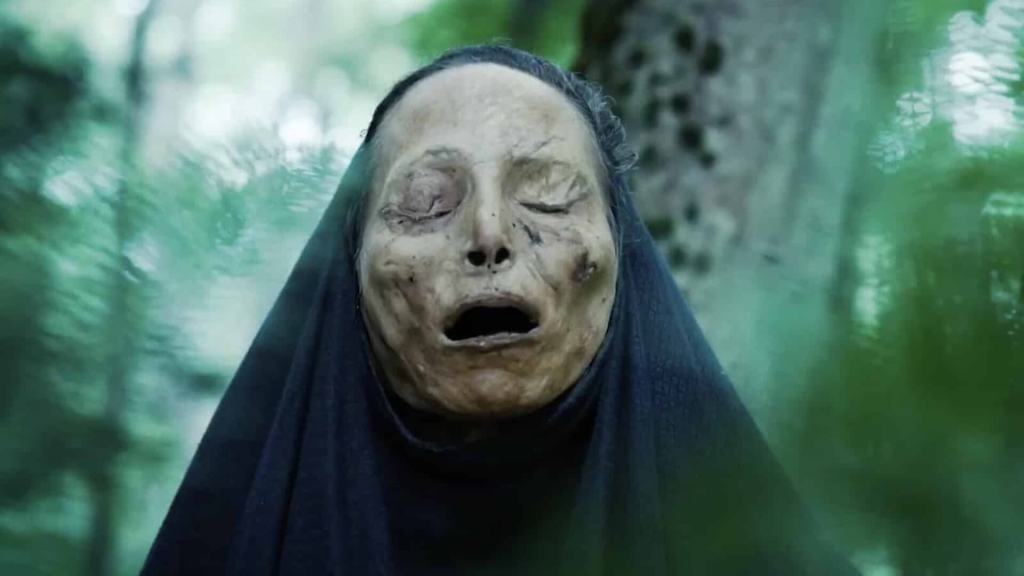
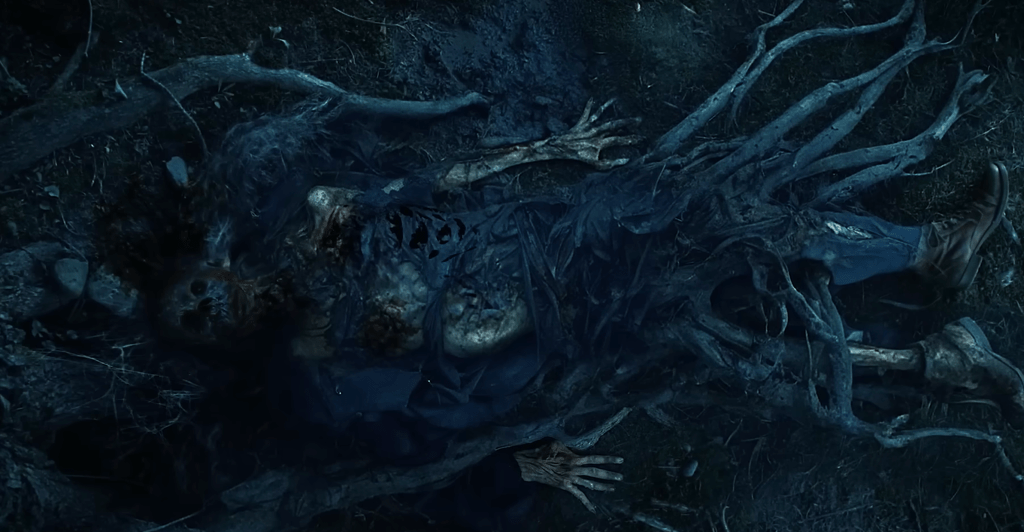
Towards the end of the film some tension is created when Jake finally finds out that he and Mickey have been staying in an abandoned patch of land next to the cairn of rocks (known locally as The Witch’s Tit), which is the resting place of Solveig’s corpse. Jake, upon hearing this, speeds back to save Mickey, but the film itself cannot be saved, unfortunately, because the striving-to-be-elegiac-and-meaningful monologues scupper everything. Even a flashback showing Solveig getting stoned to death by villagers with faces coated in lime is sucked of all drama because the footage is overlaid with the same endless, flowery, empty verbiage uttered by Toby Poser.
What a pity. Still, the film does look good.

Starring Jack Kesy, Jefferson White, Adeline Rudolph, Leah McNamara, Suzanne Bertish, Joseph Marcell and Martin Bassindale.
Written by Christopher Golden, Mike Mignola and Brian Taylor
Directed by Brian Taylor. Produced by Jeffrey Greenstein, Yariv Lerner, Mike Richardson, Sam Schulte, Les Weldon and Jonathan Yunger.
Campbell Grobman Films/Dark Horse Entertainment/Millennium Media

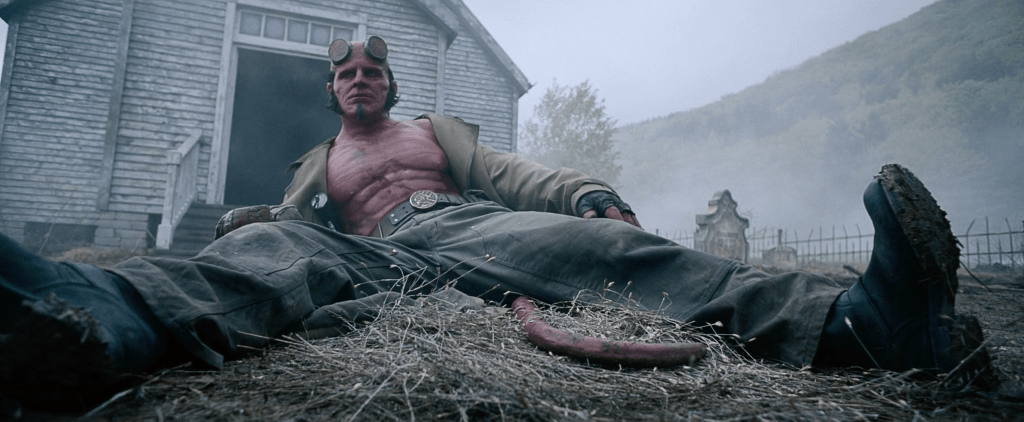
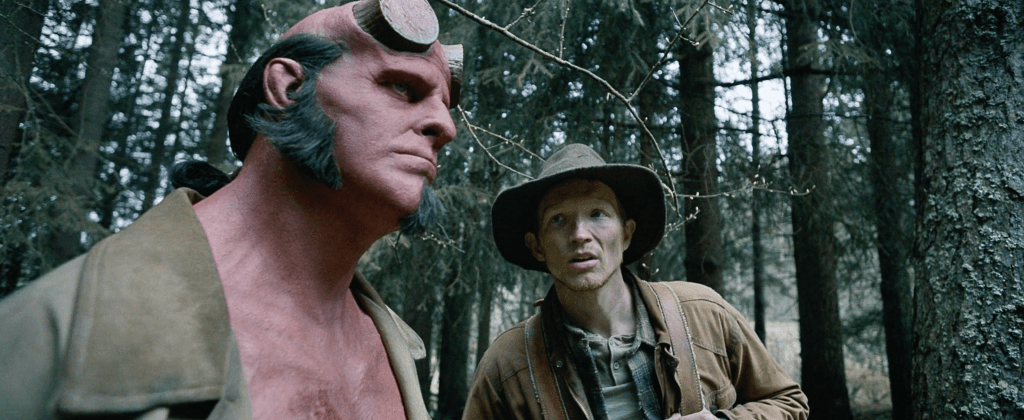
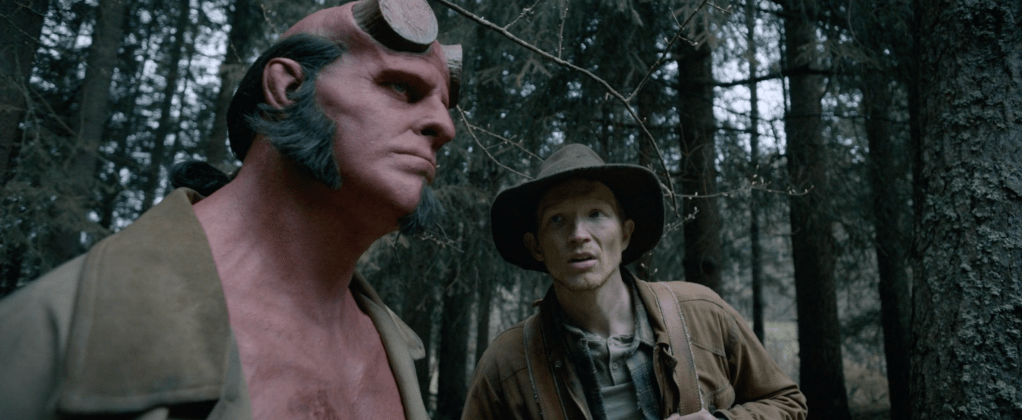
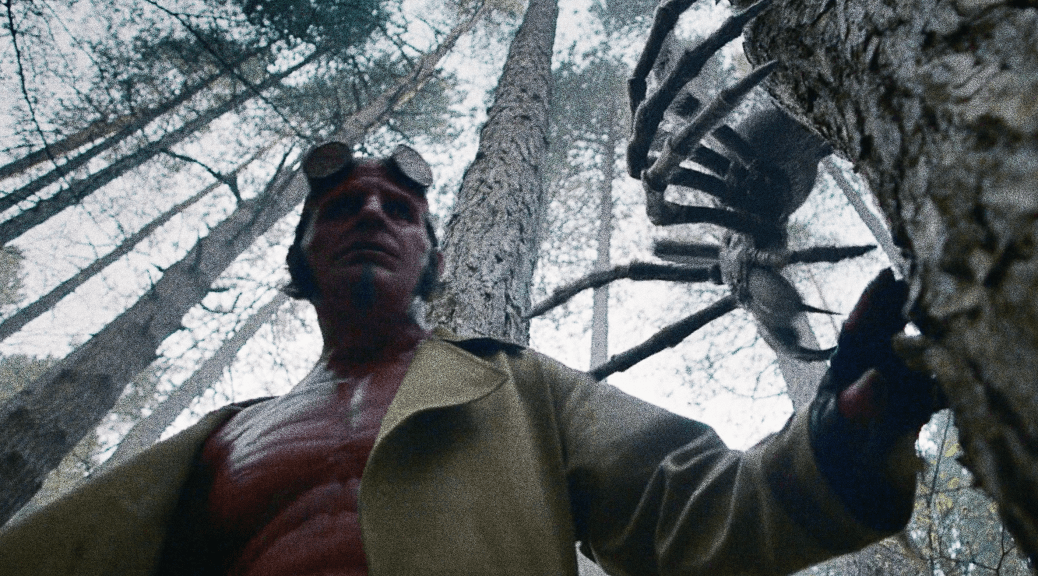
In 1959 Hellboy, who is accompanied by BPRD agent Bobbie Jo Song, has an occult adventure in the witch-filled woods of the Appalachians, where he teams-up with the stoic hillbilly hero Tom Ferrell and encounters the hellish Crooked Man, whilst also hunting down an escaped funnel-web spider that houses a demonic entity.
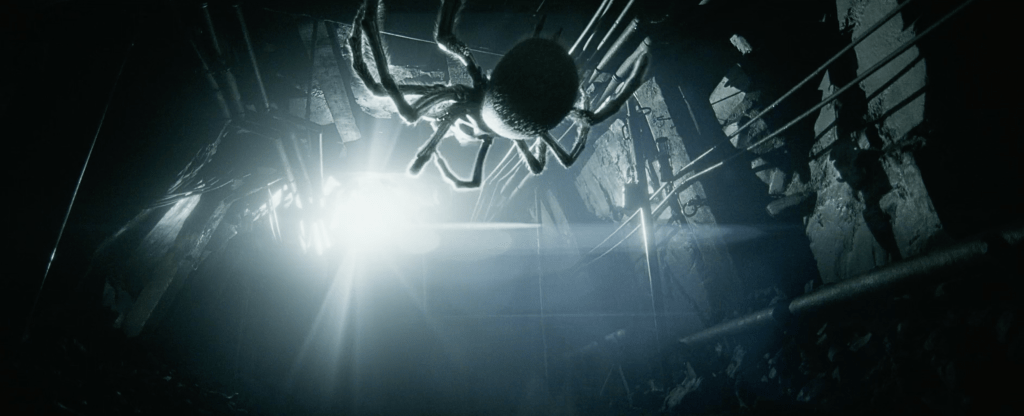
This is an engaging, more compact instalment of the Hellboy saga, underlining the horror aspects of the comic book source material and deftly maintaining a folksy supernatural tone throughout.
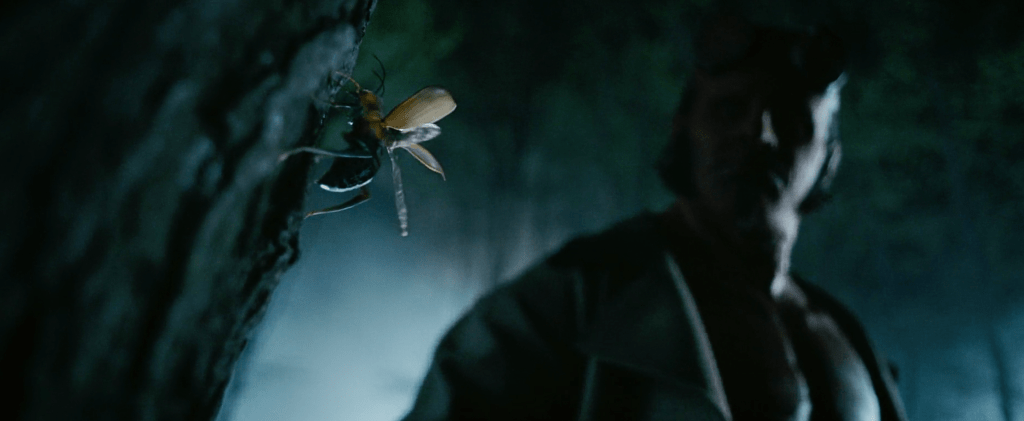
Jefferson White is particularly good as Tom, a character inspired by Manly Wade Wellman’s pulp horror protagonist Silver John, Adeline Rudolph plays special agent Bobbie Jo Song nicely as someone who views all the supernatural occurrences and practices from a very scientific perspective, and Jack Kesy is actually a really good Hellboy.
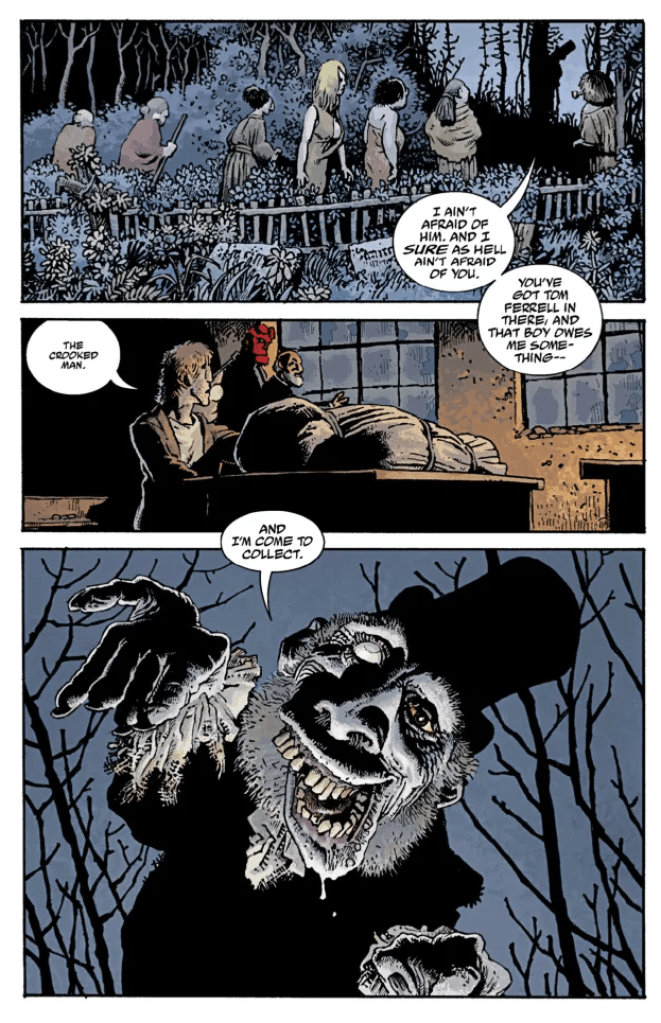
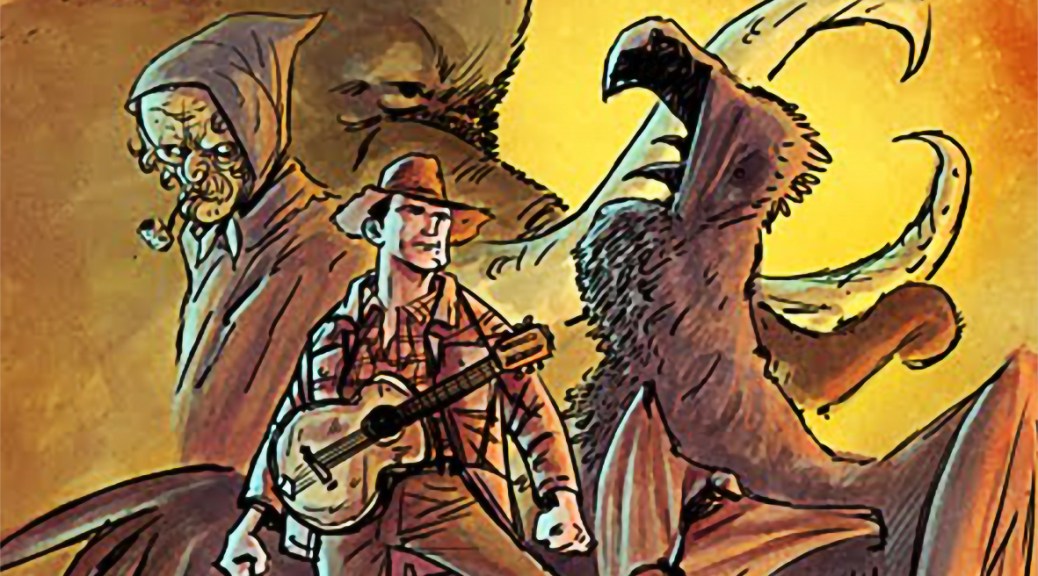
The Crooked Man himself (played by Martin Bassindale) is an interesting screen bogieman, though he did look scarier, I think, in the comic book version, as illustrated by the late, great Richard Corben.
There’s a lot of cool, interesting content and imagery in the movie: a witch refills her skin-suit by crawling back into it whilst in the form of a raccoon, and a supernatural black snake slithers from between a character’s legs and slides down her throat in a continuous cycle – and there’s other memorable stuff, including the lowdown on how to make witchballs.

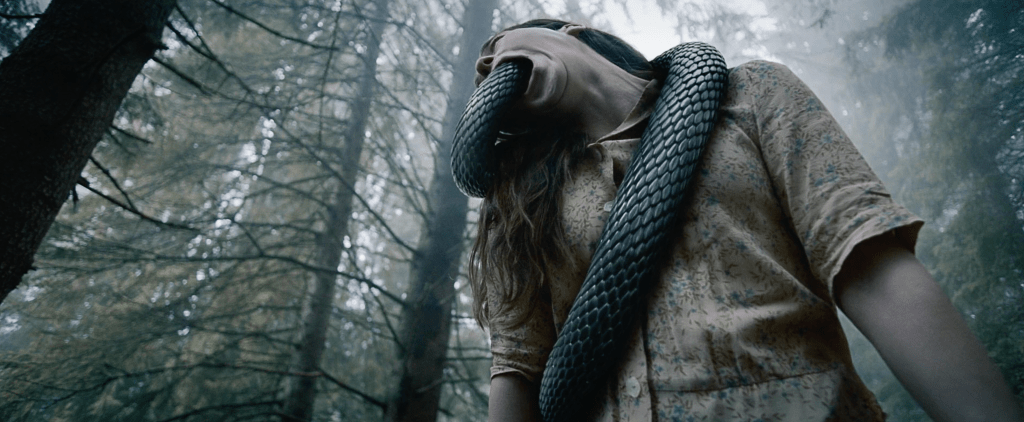
HELLBOY: THE CROOKED MAN is not as big scale or glossy as its predecessors, but this works to its advantage, helping the film to come across as more faithful to the vibe (and often more modest scope ) of many of Hellboy creator Mike Mignola’s original yarns.
I really enjoyed this flick, and I would definitely like to see more Hellboy films told in this style!
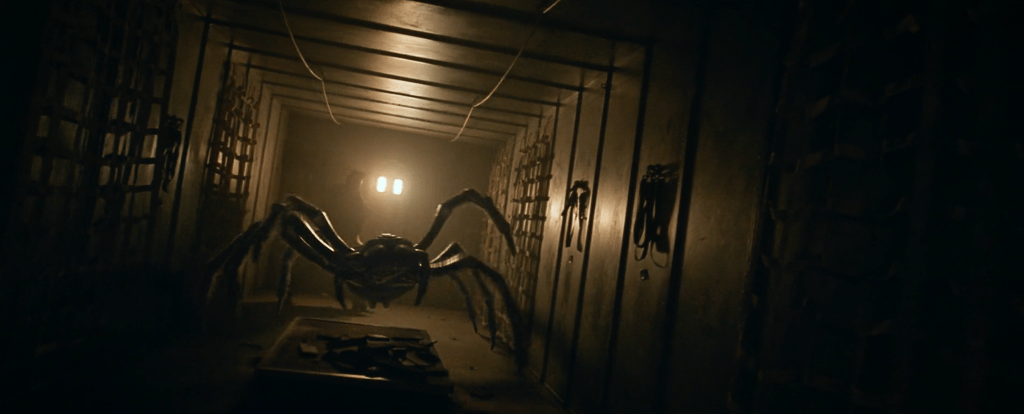

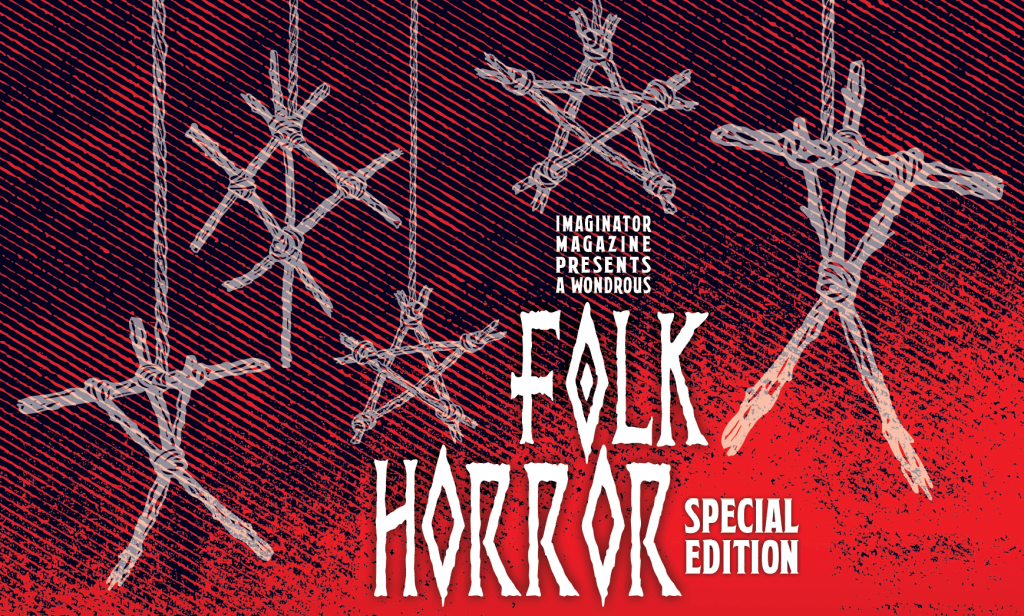
Yes! Issue 8 of Imaginator magazine is now roaming the world!
There are loads of links to places it can be bought HERE!
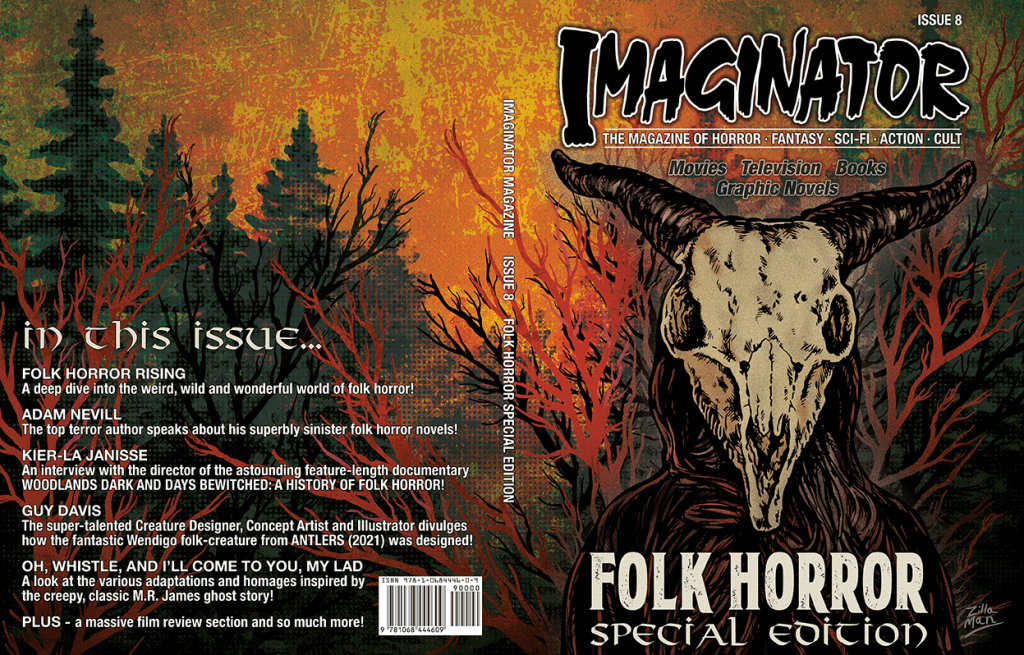
I am so proud of this issue!
I love the way the magazine looks, design-wise, and I think it contains a wealth of wonderful folk horror-related contents that anyone with even a passing interest in the sub-genre will enjoy reading!


Check out the magazine’s contents…
FOLK HORROR RISING
Noah Kneal looks at what makes Folk Horror so special… and ponders why the sub-genre continues to go from strength to strength.
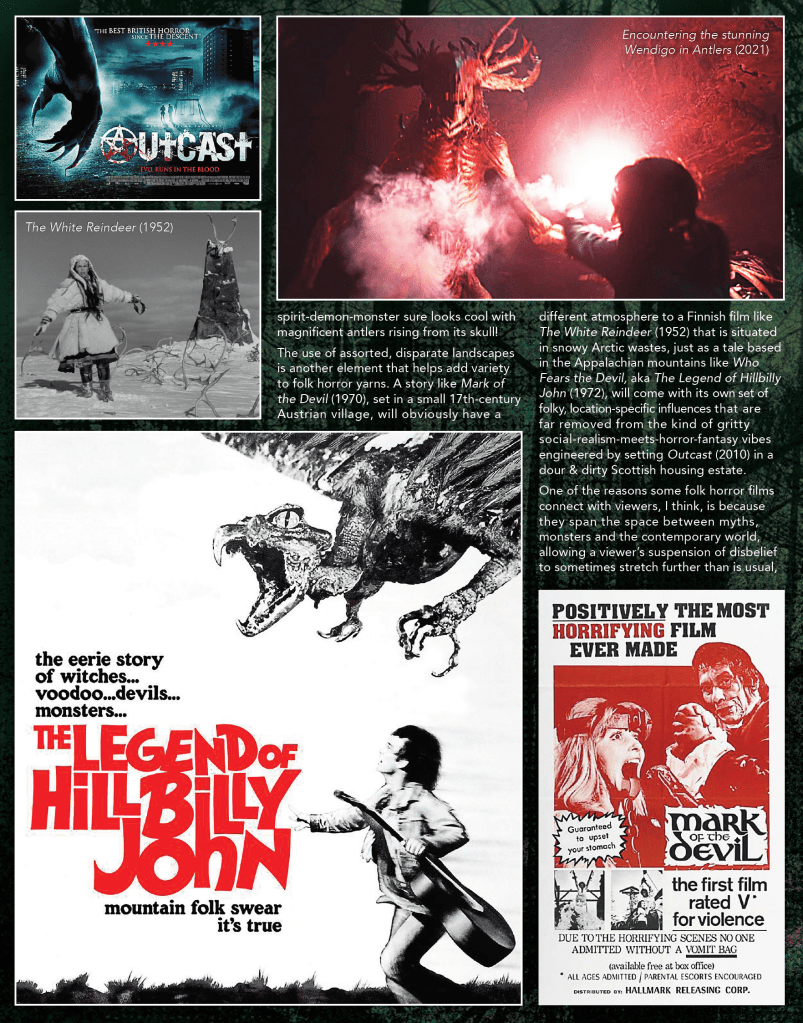
ALL THE HAUNTS BE HERS
Ken Miller talks with Kier-La Janisse, the director of stunning folk horror documentary Woodlands Dark and Days Bewitched: A History of Folk Horror.
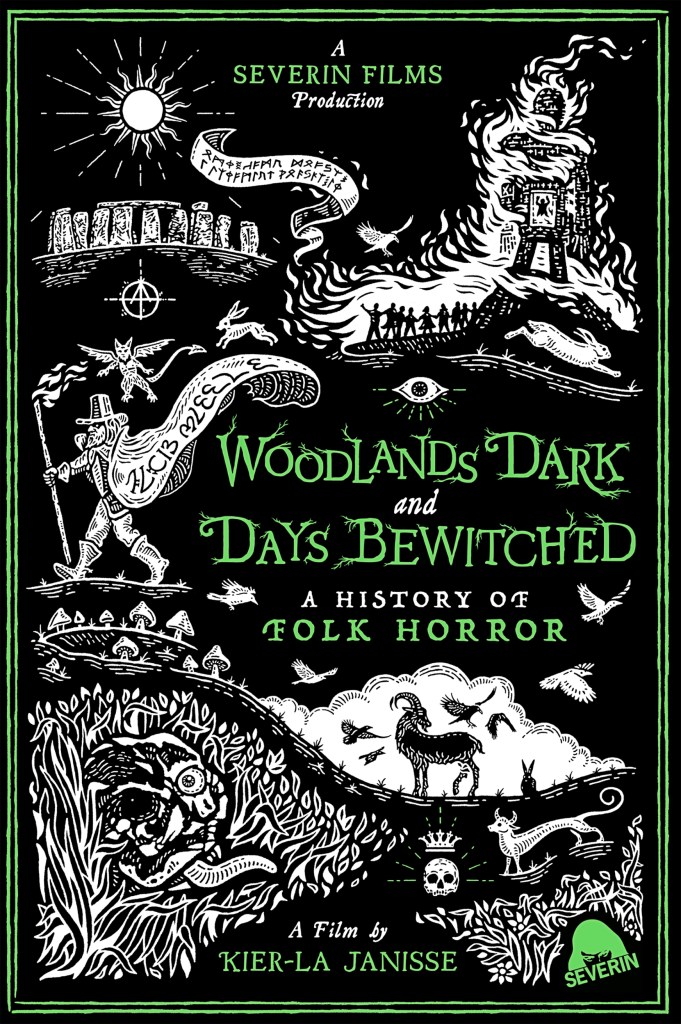
REMEMBERING THE RITUAL
Dan Nicks reminds us why The Ritual (2017) is such a wonderful melding of folk horror and survival horror.
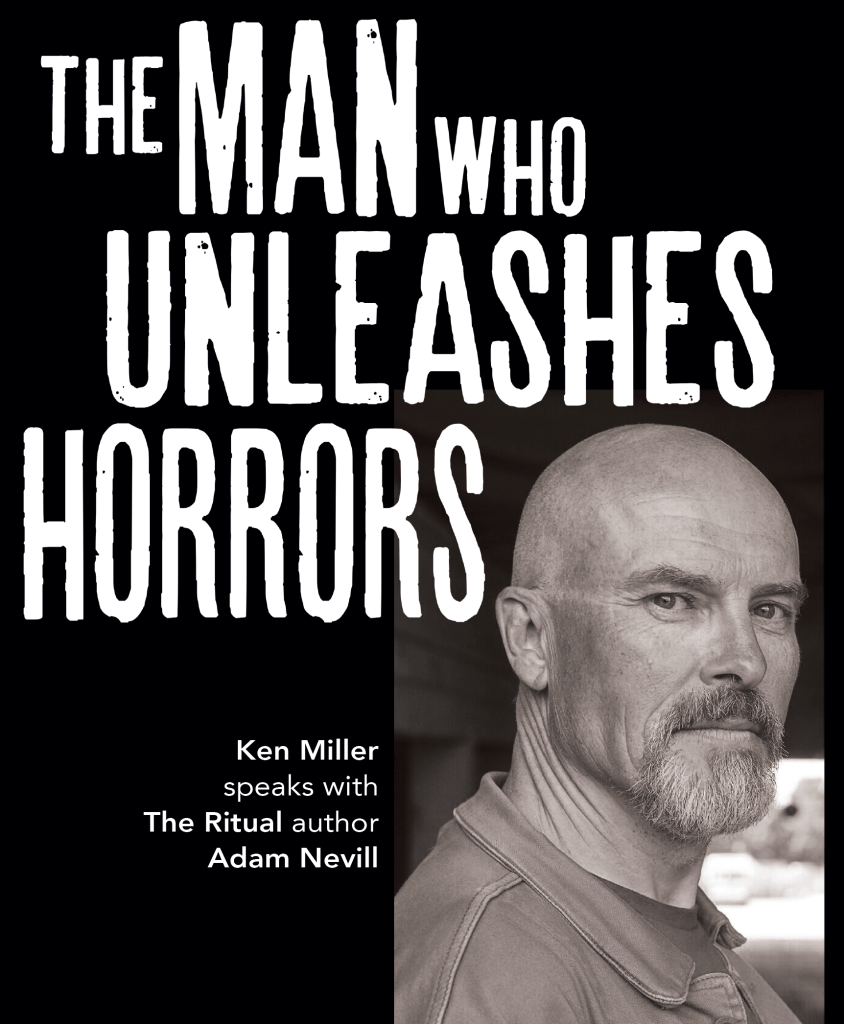
THE MAN WHO UNLEASHES HORRORS
Ken Miller speaks with Adam Nevill, author of such scrumptiously sinister folk horror books as The Reddening, The Ritual and Cunning Folk.
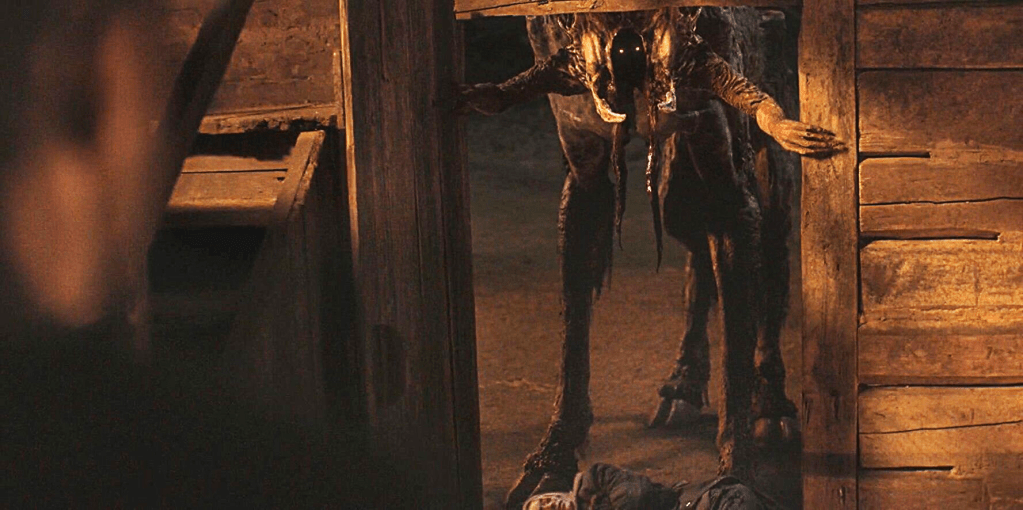
MAKING THE MONSTER!
Charlotte Quist supplies the lowdown on how the awesome and freaky Jötunn god-monster was created for the film adaptation of The Ritual.
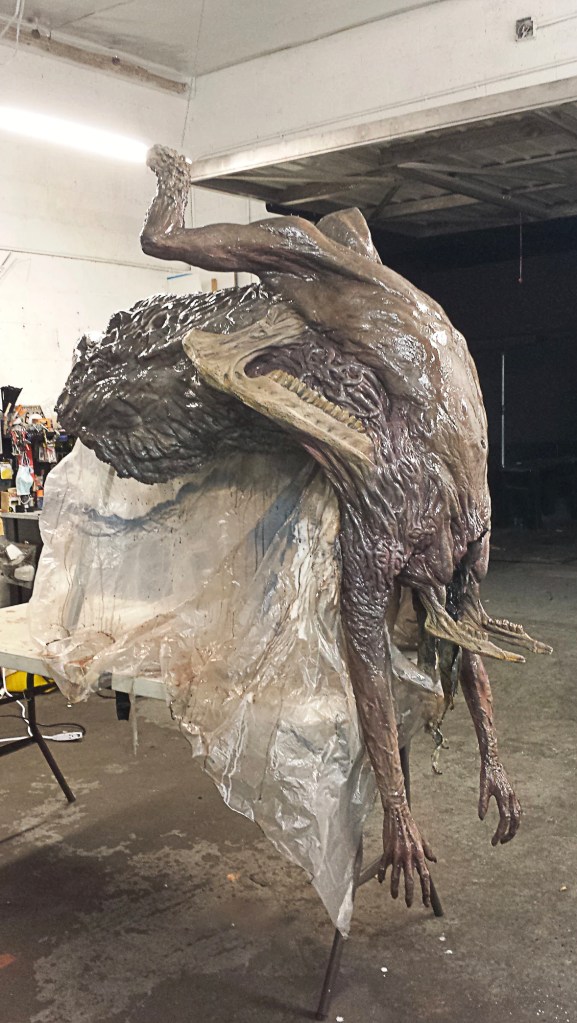
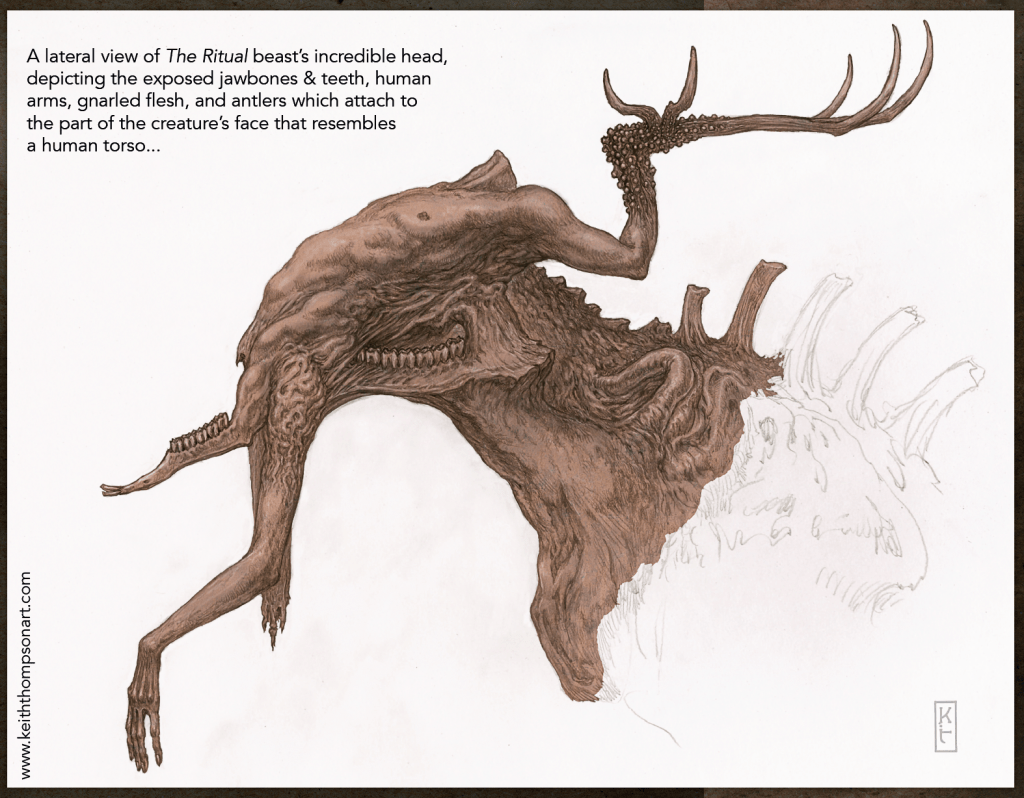
DREAMING OF THE JÖTUNN
Talented Concept Artist and Creature Designer Keith Thompson reveals to Ken Miller how he designed the monstrous, marvellous movie beast featured in The Ritual.
FOLK HORROR MOVIE REVIEWS
Noah Kneal and Ken Miller review loads and loads of folk horror flicks… and horror fiction writer, editor and critic Ramsey Campbell provides a guest movie review too!
THE ROAD LESS TRAVELLED
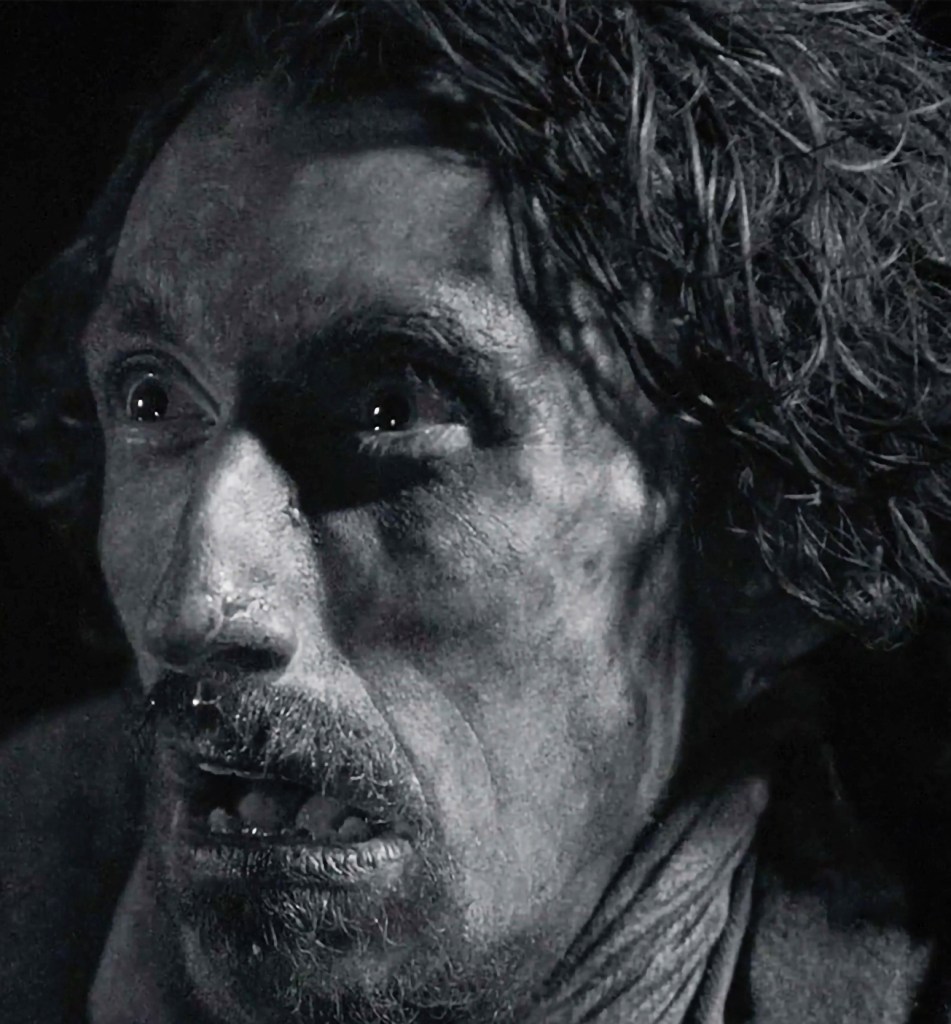
Writer, director and producer Sean Hogan chats to Ken Miller about his menacing, brooding, brilliant film To Fire You Come at Last.
“WHO IS THIS WHO IS COMING?”
Sebastian Starkey clarifies why Oh, Whistle, and I’ll Come to You, My Lad is such a fine ghost tale, then checks out the various adaptations, homages and parodies inspired by the story.
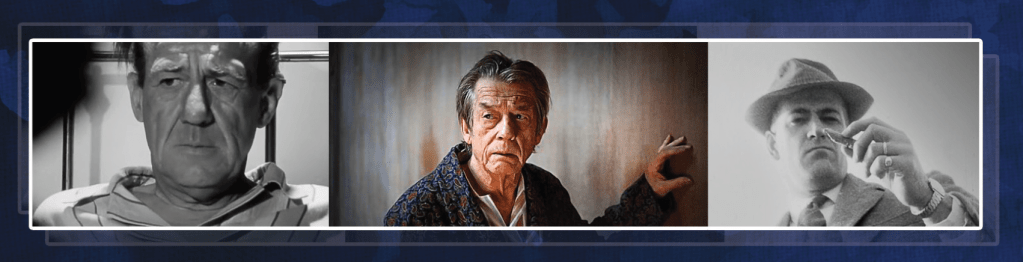
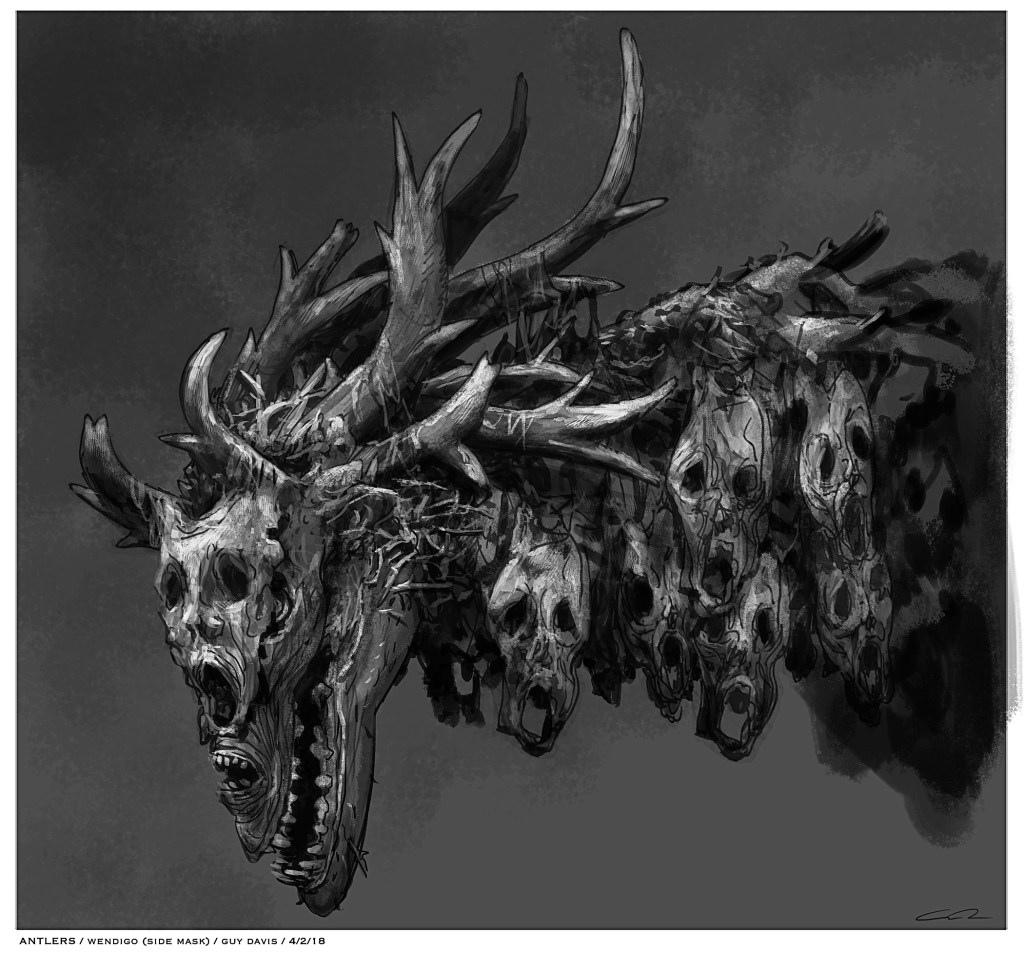
DESIGNING THE PERFECT WENDIGO
Creature Designer, Concept Artist and Illustrator Guy Davis divulges to Ken Miller how the fantastic folk-creature from Antlers (2021) was conceived.
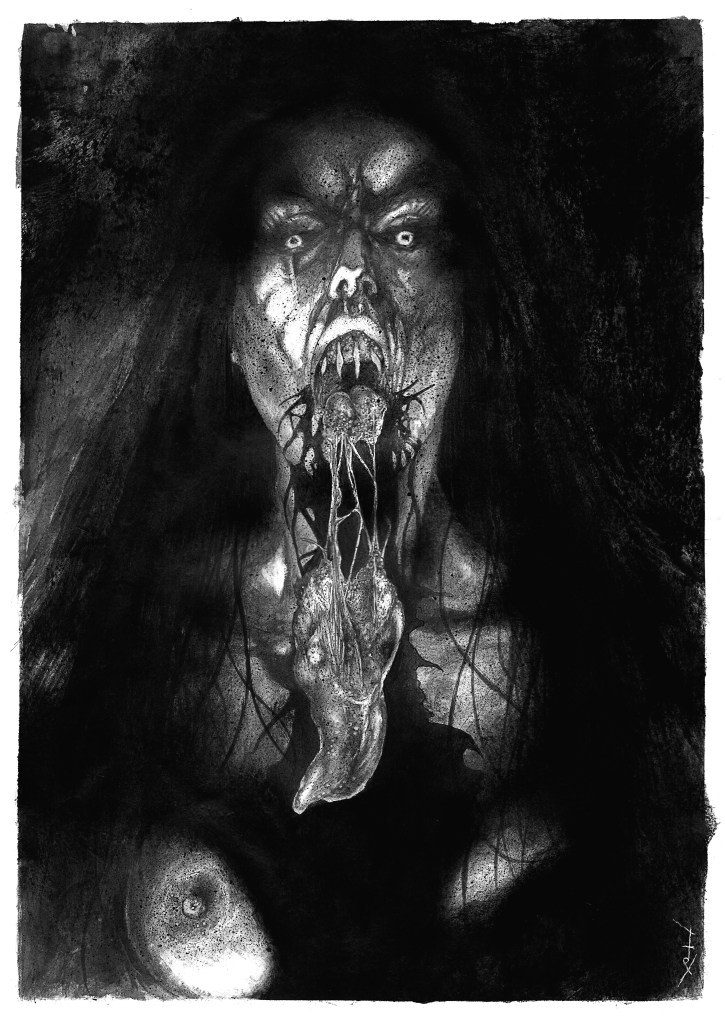
SEQUENTIAL TALES OF TERROR
Artist and writer Russell Fox spills the beans on his stunning-looking folk horror graphic novel A VVitch. His illustration work is so good!
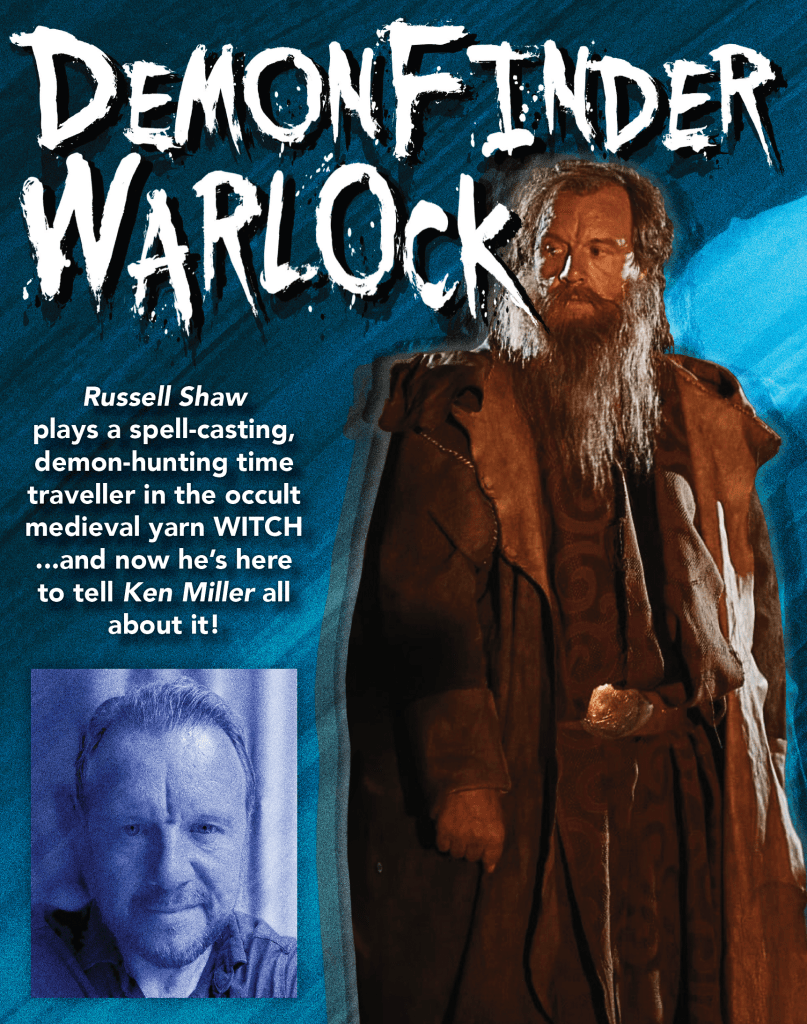
DEMONFINDER WARLOCK
Actor Russell Shaw tells Ken Miller what it was like playing the demon-hunting, bewhiskered, time-travelling protagonist in the wild, medieval-set movie Witch (2024)
RADIOACTIVE REVIEWS
The movies reviewed in this section are non-folk horror flicks (though some are folk horror-adjacent). Top scriptwriting guru and author William Martell supplies a guest film review.
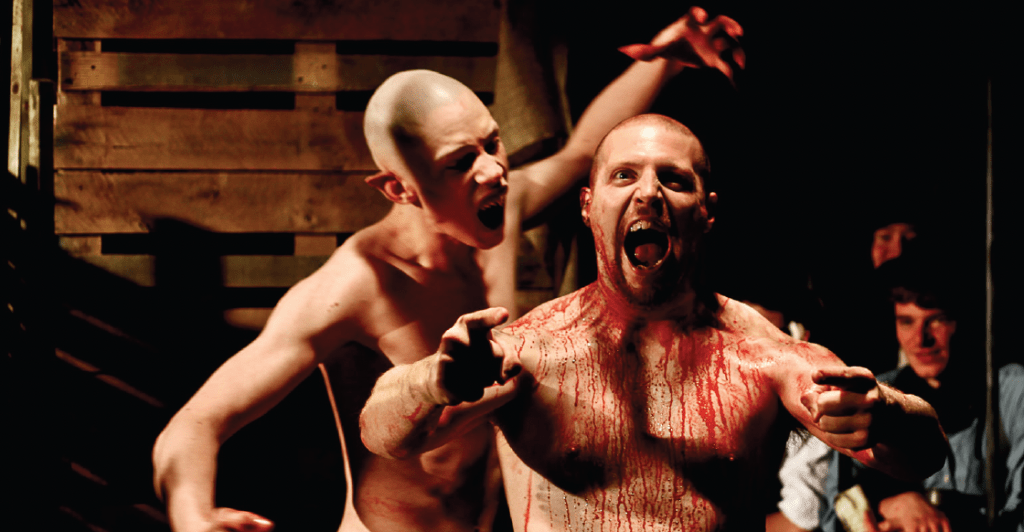
I think this issue rocks – and I think you will agree once you’ve read it!
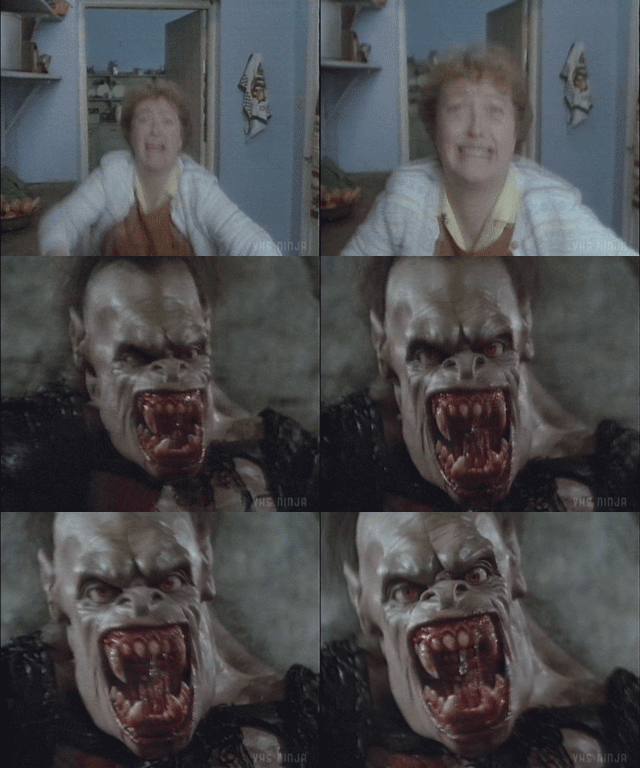
Starring David Dukes, Kelly Piper, Hugh O’Conor, Cora Venus Lunny, Ronan Wilmot, Niall Toibin, Niall O’Brien and Heinrich von Schellendorf. Written by Clive Barker. Directed by George Pavlou. Produced by Kevin Attew, Don Hawkins, David Collins, Al Burgess and Paul Gwynn. Alpine Pictures/Green Man Productions
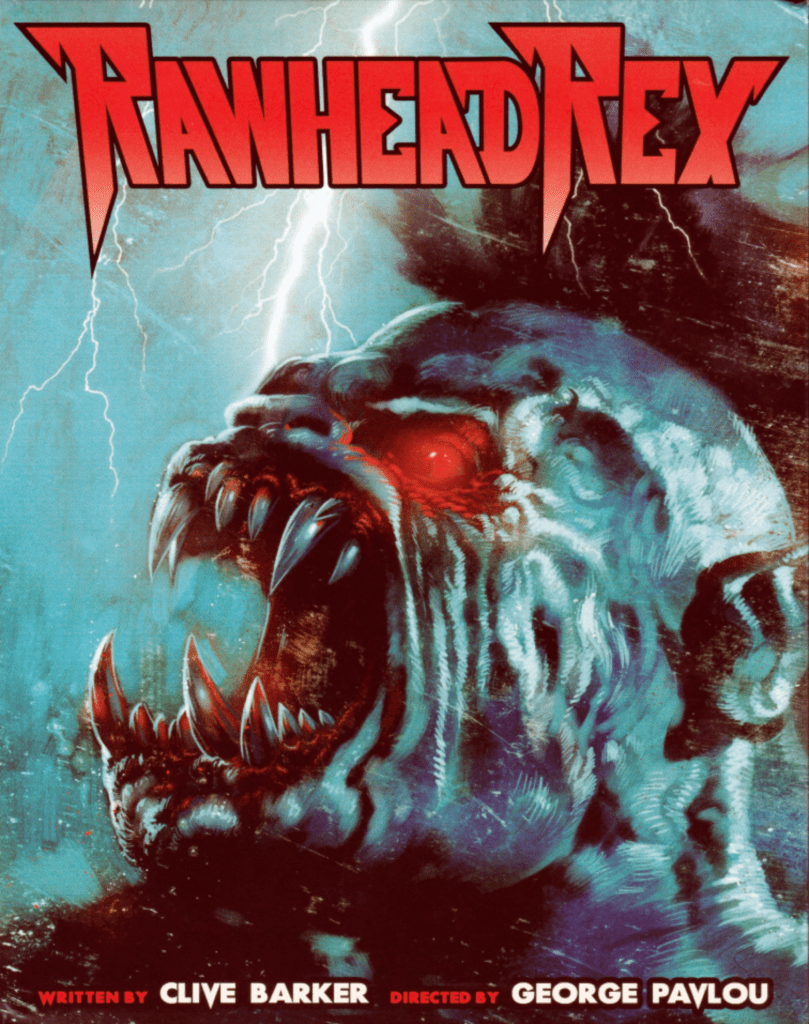
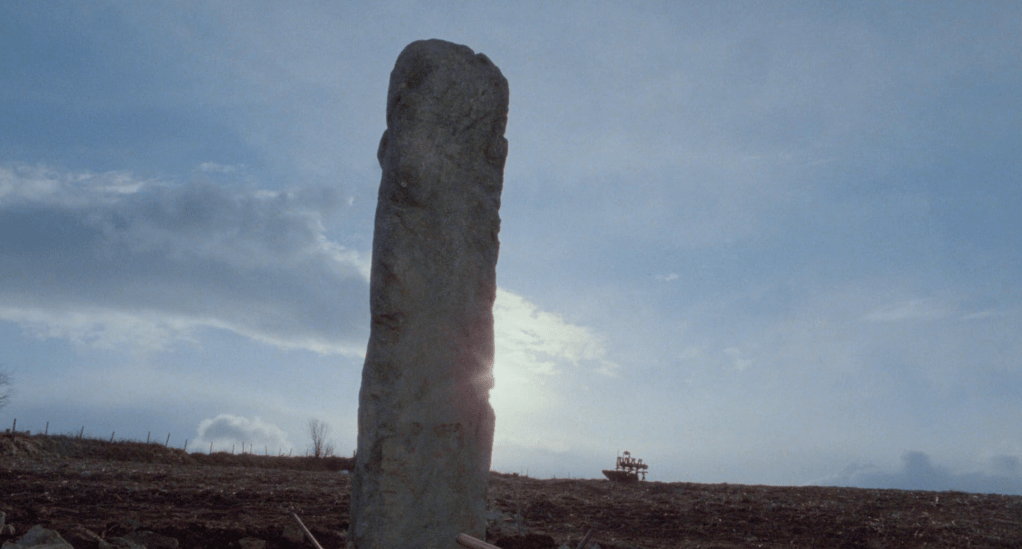
An American author, Howard Hallenbeck (Dukes), travels around Ireland with his family, doing research for his book focusing on the persistence of sacred sites. The Hallenbecks are staying in a small village, where Howard is checking out the local church’s intriguing stained glass panels, when an enraged, toothsome monster is released from beneath an ancient menhir.
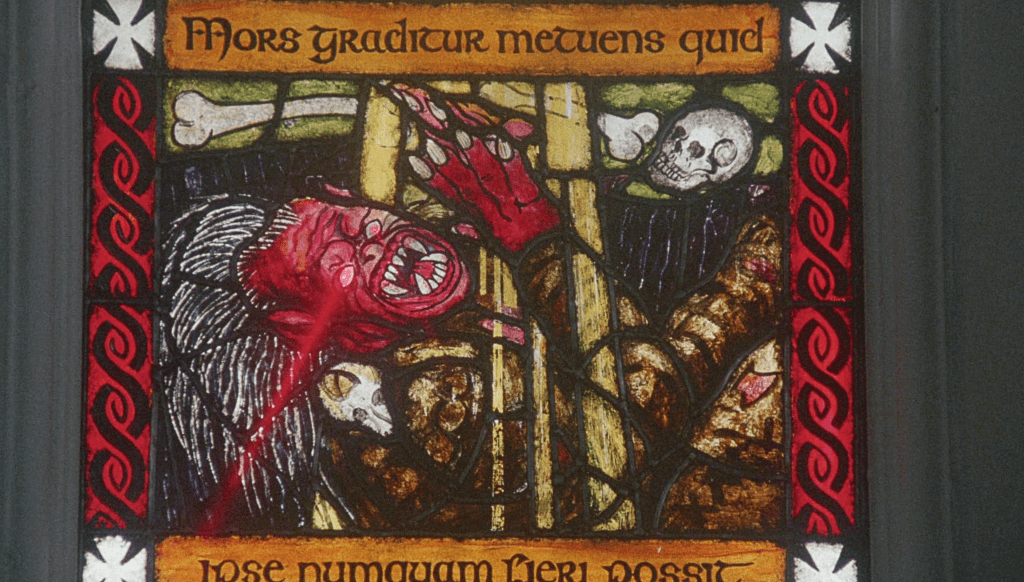
This beast goes on the rampage, and one of the creature’s victims is Howard’s son, provoking the upset & angry author to seek out a way to destroy the monster, but there are those, including the church’s rector, Declan O’Brien, who regard the critter as a pagan god…
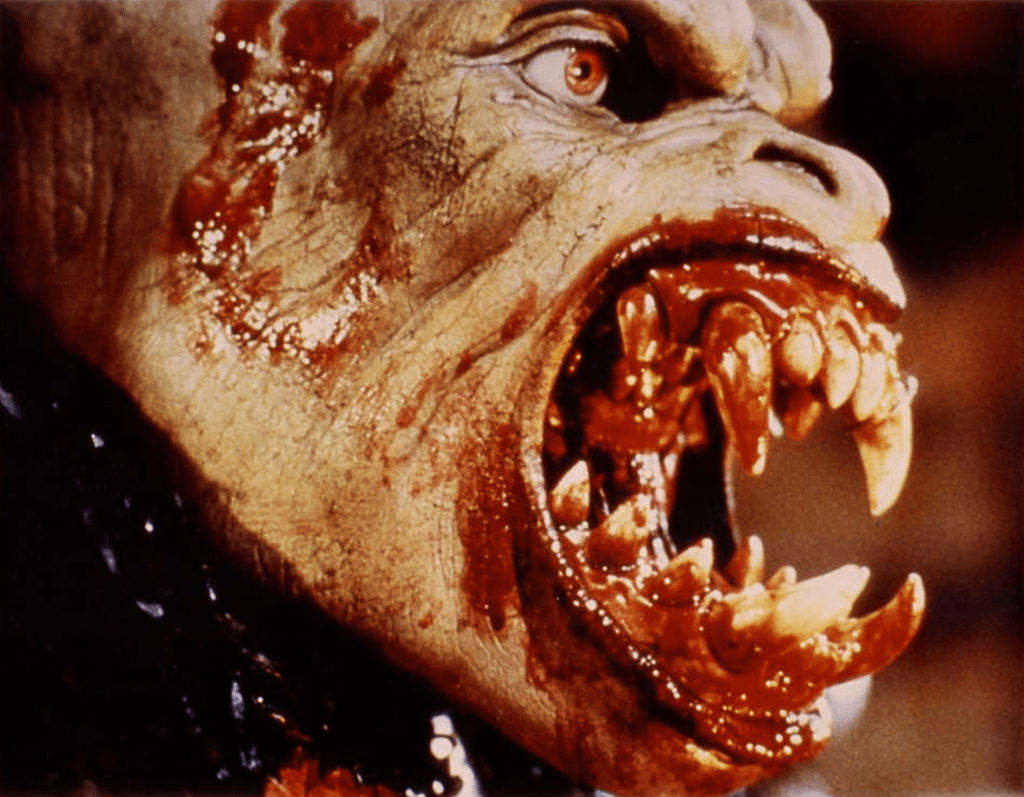
RAWHEAD REX started life as a short story included in Volume Three of Clive Barker’s BOOKS OF BLOOD anthology series. The original story is set in Kent, and features a folkloric humanoid monster, a kind of raw-fleshed, ferocious personification of hyper-toxic-masculinity. This berserk, barbaric boogeyman devours innocent children and violates women, though the brutal man-beast has an aversion to pregnant females and those who are menstruating: they cause a sense of fear within the ancient, feral being. Barker wrote the screenplay for the film adaptation, but he was pretty dissatisfied with the way the movie eventually turned out, prompting him to direct the next movie version of one of his stories himself, that film being HELLRAISER (1987), based on Barker’s novella THE HELLBOUND HEART.
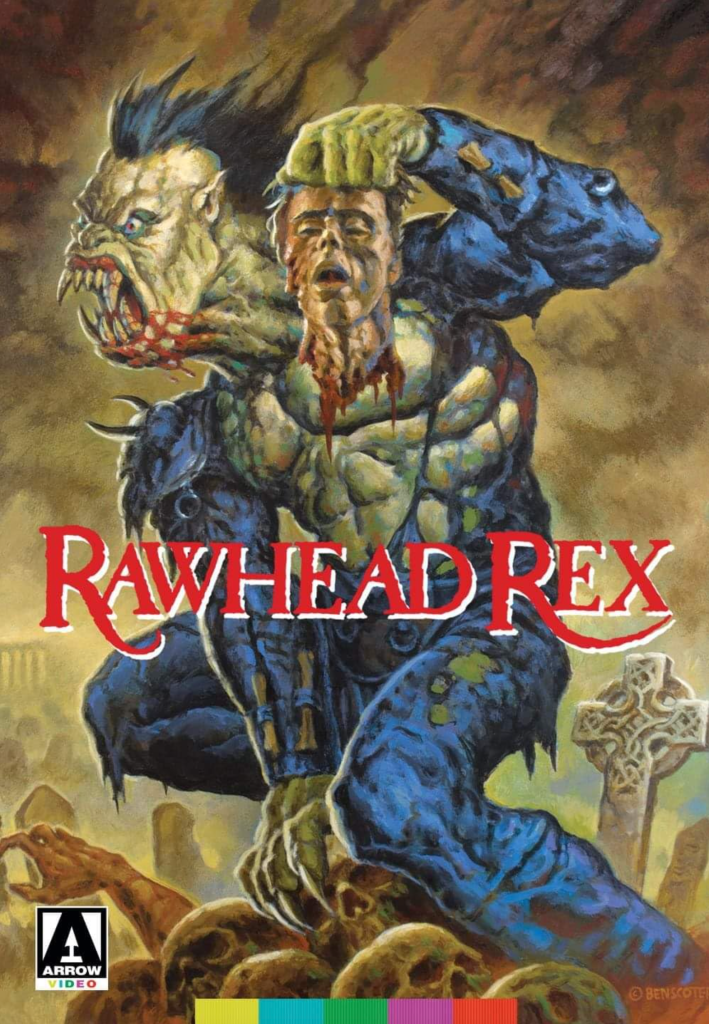
Okay, I can fully understand why Clive Barker felt let down by the cinematic representation of his original yarn. There was no way George Pavlou’s low budget flick was going to live up to the impactful, visceral tone and atmosphere of Barker’s source material. I really like that original story, it’s one of my favourite Barker tales. And yet…
…I believe that this film is definitely in need of reappraisal!
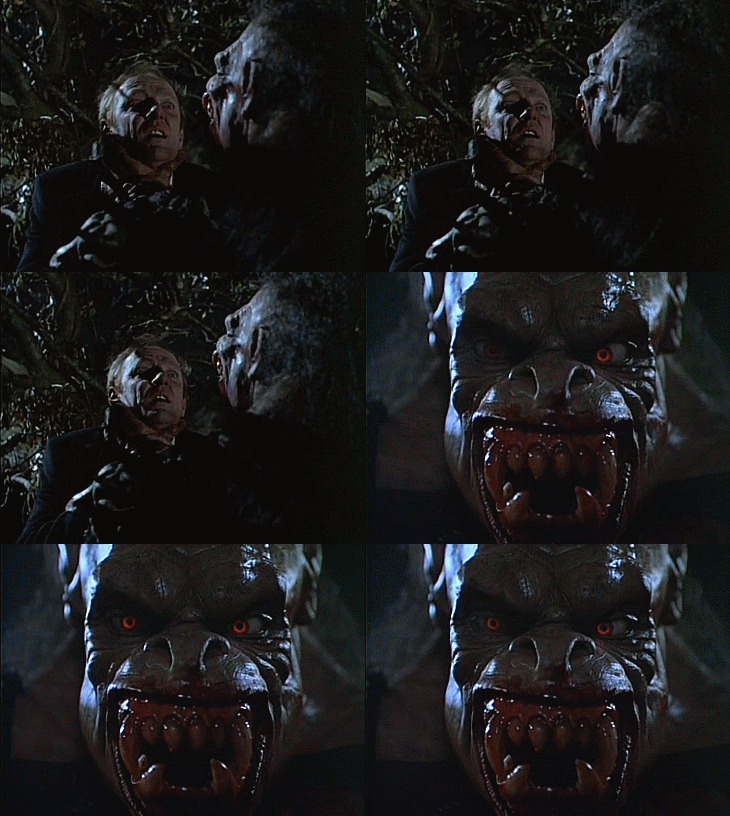
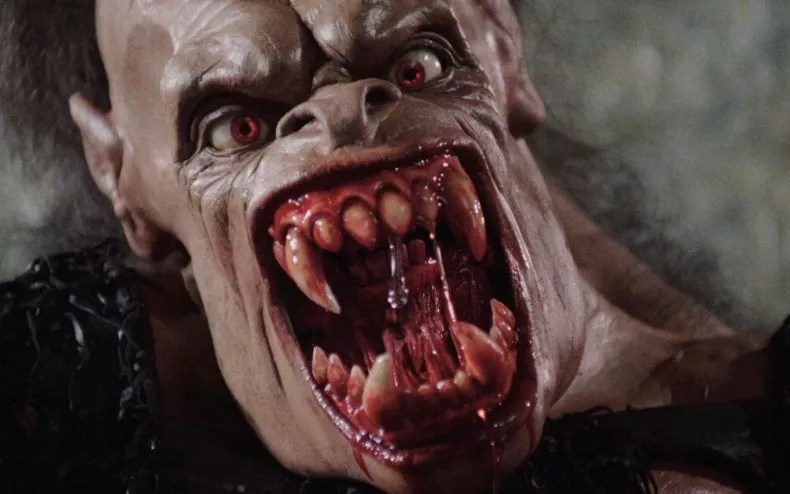
Maybe this sounds like I’m damning the movie with faint praise when I say that the practical effects monster on show here is better than so much of the cheap CGI dross churned out over the last couple of decades, but I do mean this as a compliment. Sure, Rawhead Rex’s scowling face doesn’t have an awful lot of different facial expressions, but it’s still damn satisfying to see an actual creature suit being used, something that is really there, really in the scenes! I love the fact this beast-man is basically a big, leather-clad humanoid monster with a huge maw full of teeth!
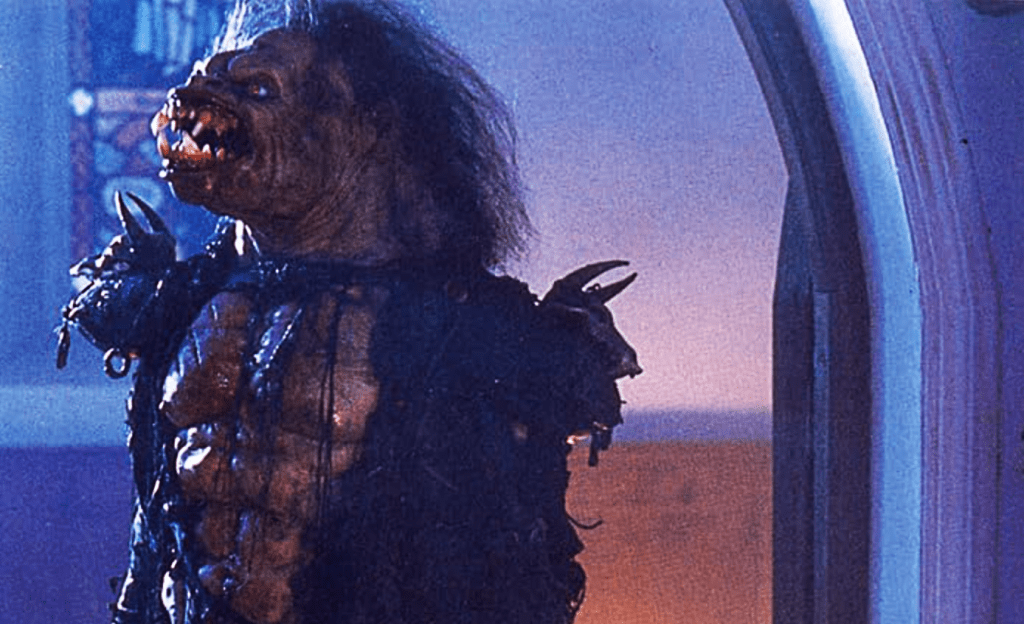
The special effects team had a frantic four week deadline to create the Rawhead Rex creature: a body suit, with an animatronic monster head for close-ups, brought the snarling monster to life in the movie. And, by god, it works just fine!
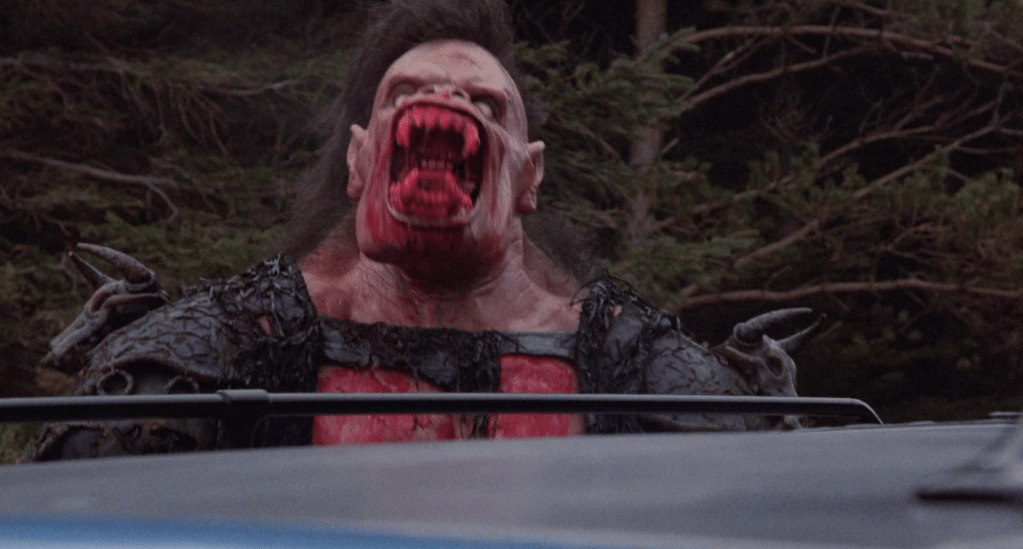
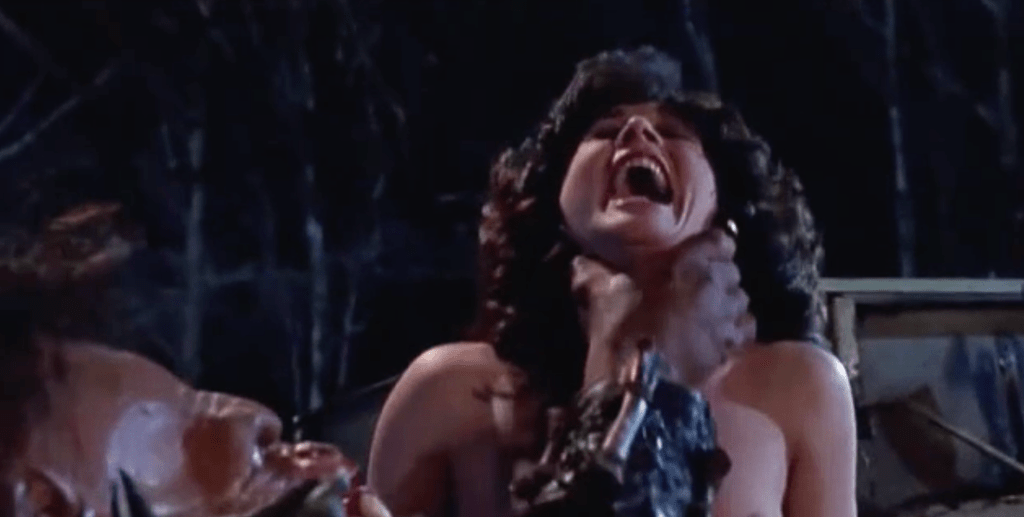
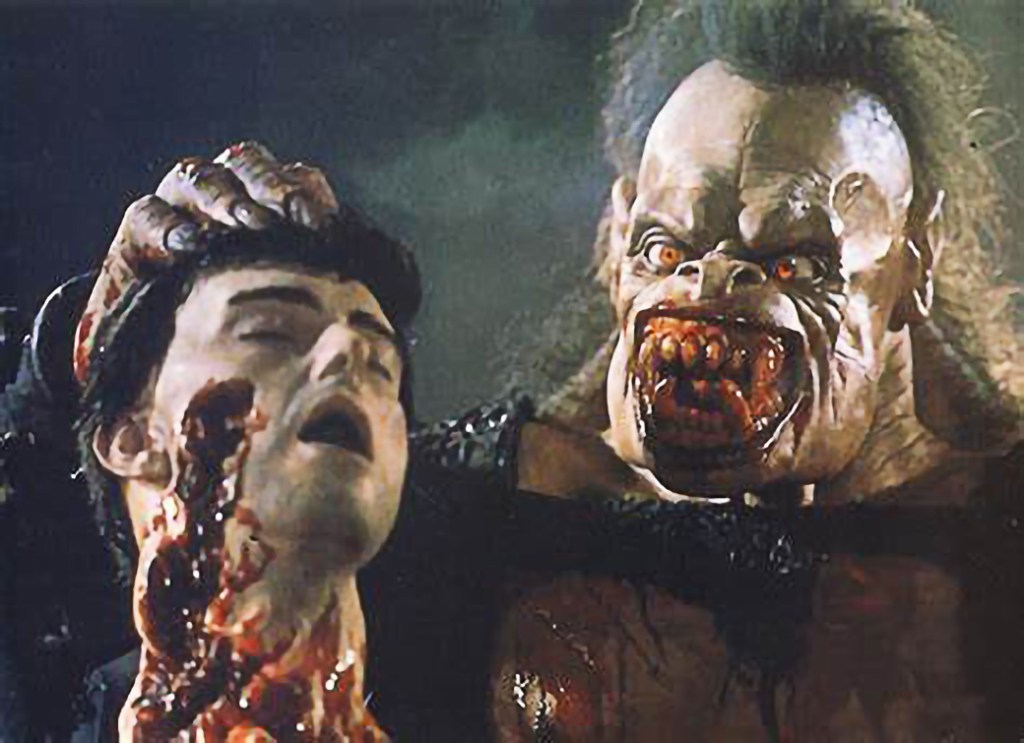
The film is not as transgressive as the short story, but it is enthusiastically gory, and there is a lot of fun/cool stuff to look out for, like the great shot of Rawhead standing on a hill holding aloft a severed head, his beastly breath illuminated as he exhales. And then there’s the attack on the caravan park: faces are slashed and boobs get revealed as the wild, primal creature runs amok! And let’s not forget the blasphemous baptism scene (taken from the original story), where Rawhead bathes the kneeling Declan O’Brien with its urine!
O’Brien tells his boss, Reverend Coot, that Rawhead Rex is a god, a deity that was here long before Christ: before civilisation, Rawhead was the king of this place. Later on, O’Brien utters a classic line as he forces Coot to meet the deadly Rawhead: “Get upstairs, fuckface, I can’t keep god waiting!”
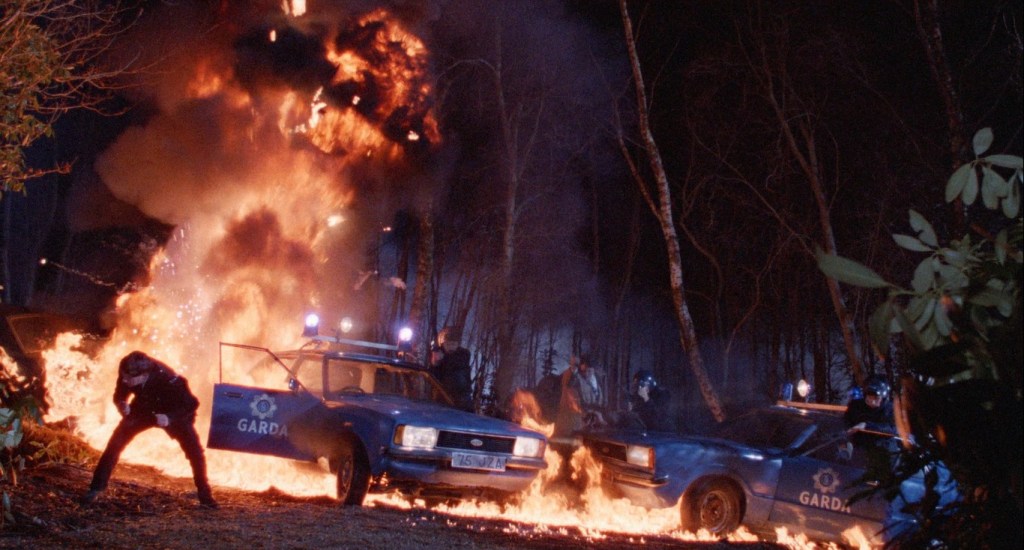
The barechested, muscled Rawhead (played by Heinrich von Schellendorf) has glowing red eyes, which have the ability to overwhelm the minds of some victims (the creature doesn’t have this power in the original story). “For you!” Says a burning cop, who has become one of Rawhead’s acolytes, as he immolates his fellow officers!
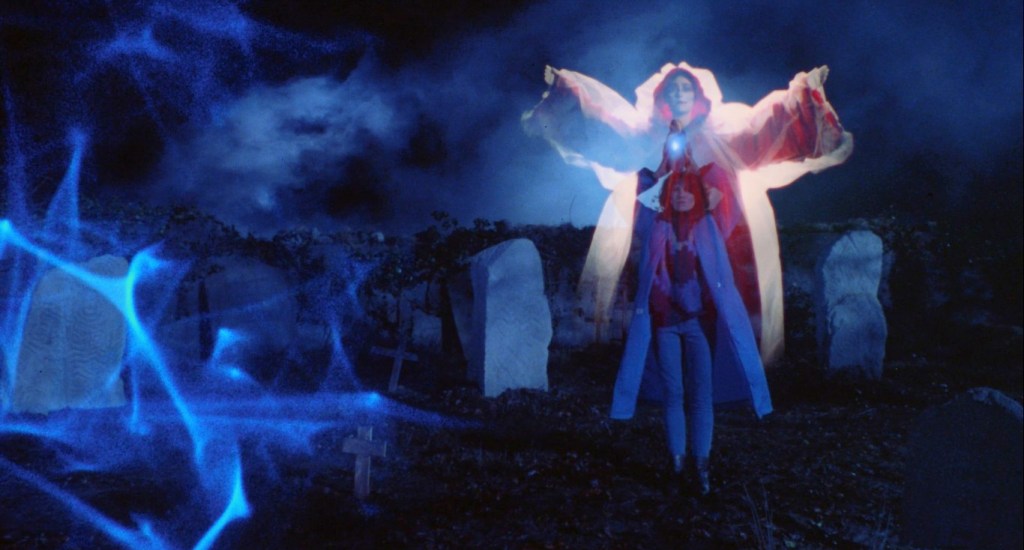
Salvation is hidden within the church’s altar, in the form of a small, stone earth-goddess-style idol, which a woman must wield, leading to an optical FX-drenched showdown, as Howard’s wife Elaine (Piper) uses the idol to unleash supernatural forces to drive Rawhead back into the ground. This is a colourful, rousing fantasy-horror finale!
Honestly, I don’t believe RAWHEAD REX deserves the derision levelled at it from many critics. It is an unpretentious, cheesy-but-satisfying, 80s-tastic entertainment, a B-movie that makes sure its rampaging, rubbery, rockin’, rampant god-beast is given a lot of time on screen! And for that I respect it!
A tale featuring mysterious, quirky, mountain-dwelling beasts!
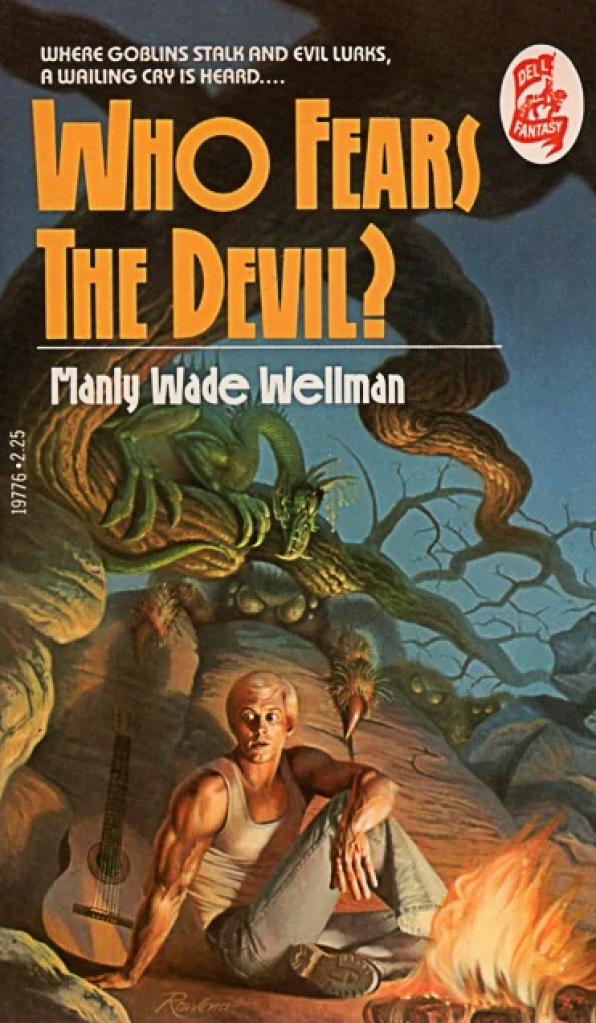
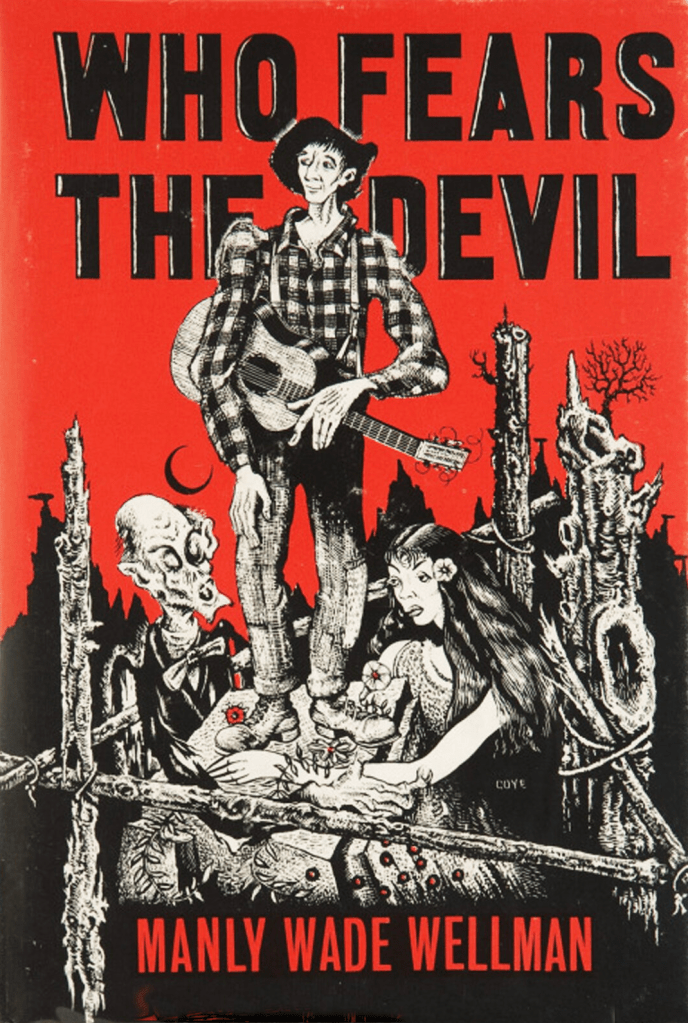
THE DESRICK ON YANDRO is a short fantasy-horror story written by pulp horror, sci-fi, fantasy author Manly Wade Wellman (May 21st, 1903 – April 5th, 1986), who created the wonderful evil-vanquishing character John, often referred to as Silver John or John the Balladeer. John roamed the Appalachian mountains with a silver-stringed guitar, which helped him to ward off evil (because the Devil and evil in general doesn’t like silver!) John speaks in a dialect that sounds authentic for the region, and Wellman’s turn of phrase in these stories lends a lyrical, poetic-folksy vibe to the narratives. THE DESRICK ON YANDRO was the second story about John to be written by Wellman, and it was first published in the June 1952 issue of THE MAGAZINE OF FANTASY & SCIENCE FICTION.
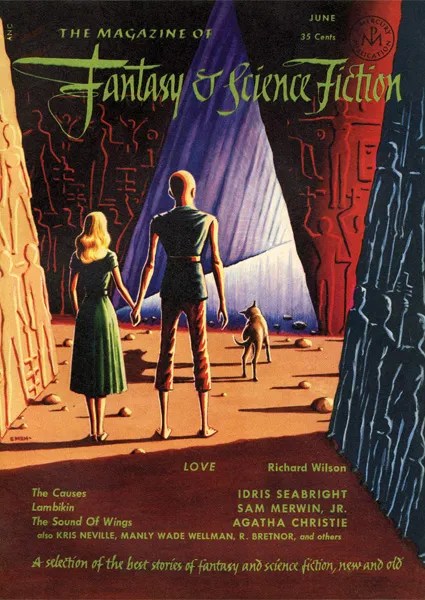
The yarn sees John agree to accompany a rich, pushy, unpleasant man called Mr. Yandro on a trip to Yandro Mountain, a mysterious place where Yandro’s grandfather, Joris Yandro, had courted a pretty witch, Polly Wiltse, who lived in a desrick atop the flat, wooded mountain peak. John and Mr. Yandro reach a cabin in the valley below the mountain, where Mr. Yandro is told by an old woman called Miss Tully that, seventy-five years ago, his grandfather had used Polly Wiltse’s witch-powers to locate gold on the mountain and then he had run away with the treasure, abandoning Polly.
Mr. Yandro, it seems, intends to trudge up the mountain and coerce the ancient Polly Wiltse into giving him more of the gold.
Miss Tully warns Mr. Yandro that ‘scarce animals’ live up on the mountain, creatures like the Toller – the hugest flying thing there is: its voice tolls like a bell, to tell other creatures their feed’s near. And she talks about the Flat – a critter that lies level with the ground, which can wrap around people like a blanket. Miss Tully mentions a furred beast called the Bammat, but Mr. Yandro suggests the old woman is referring to the Behemoth. Tully says that the Behemoth is from the Bible, and the Bammat is different, something hairy, with big ears and a long wiggly nose. Mr. Yandro laughs at this, saying that Miss Tully is referring to the extinct Mammoth. The old woman continues, telling Mr. Yandro about the Behinder – which is always hiding behind the man or woman it wants to grab, and she describes the Skim – a living thing that kites through the air, and she explains what the Culverin is – a creature that can shoot pebbles with its mouth.
Mr. Yandro just sneers at all this talk of weird animals. The next day he and John make their way up the mountain trail. John notes that it wasn’t folks’ feet that had worn that trail, it was hoofmarks… and soon John starts noticing things peering from the foliage, such as a big, broad-headed Bammat, a creature with white tusks like ‘bannisters on a spiral staircase’. But Mr. Yandro is oblivious to the things lurking amongst the trees until it is too late, and then, finally, he discovers that all these unlikely beasts really do exist…
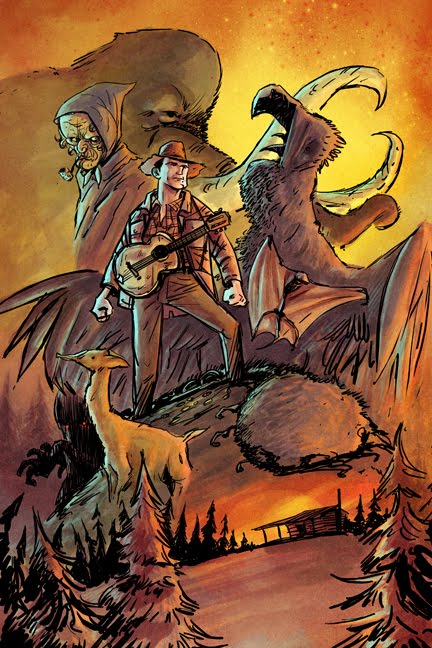
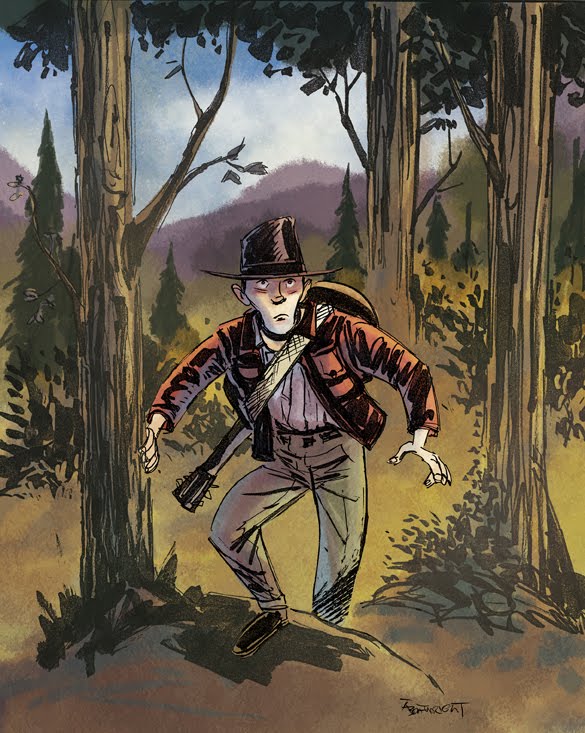
THE DESRICK ON YANDRO is an enjoyable tall tale, with John playing something of a passive role, even though he is the narrator. But once it is explained by Miss Tully that the bitter witch Polly Wiltse had created a special song with the power (if it is heard by a member of the Yandro family) to draw a male Yandro relative back to her desrick, it becomes apparent that John has indeed played a very important function in the story: he happens to be singing this very song at a rich folks’ gathering at the start of the story, which triggers Mr. Yandro’s urge to seek out Polly.
When John and Mr. Yandro reach the desrick (an old term for a kind of cabin that’s made of strong logs with loophole windows), Yandro is set upon by various creatures, and he is chased into the witch’s desrick, never to be seen again. It is inferred that the old, haggard Polly Wiltse doesn’t care which generation of the Yandro family she punishes, just so long as they resemble the man who’d wronged her all those years ago.
I love the menagerie of uncanny critters that pop-up in this story. The Culverin has many legs, and has a needle-shaped mouth from which it spits a pebble at Mr. Yandro. The Behinder, which is a variation on the Hidebehind creature featured in lumberjack lore, is not explicitly described by John because it is too terrible a thing for anyone to want to remember properly. Several of the Skims are seen and they seem to be living frisbee-things, whilst the Flat resembles a black, broad, short-furred carpet rug! The specific look of the avian Toller isn’t gone into, we are simply told that it makes gong-gong-gong sounds.
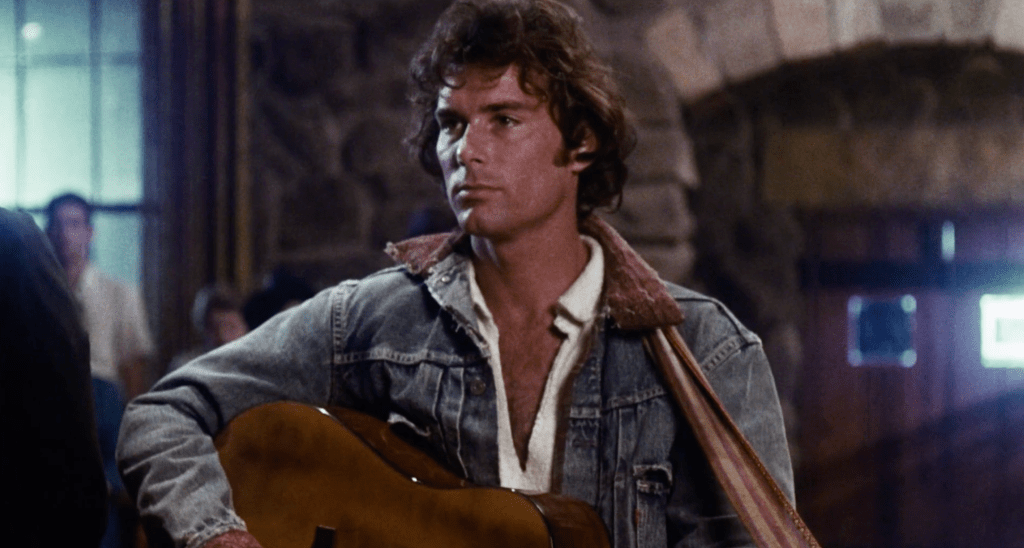
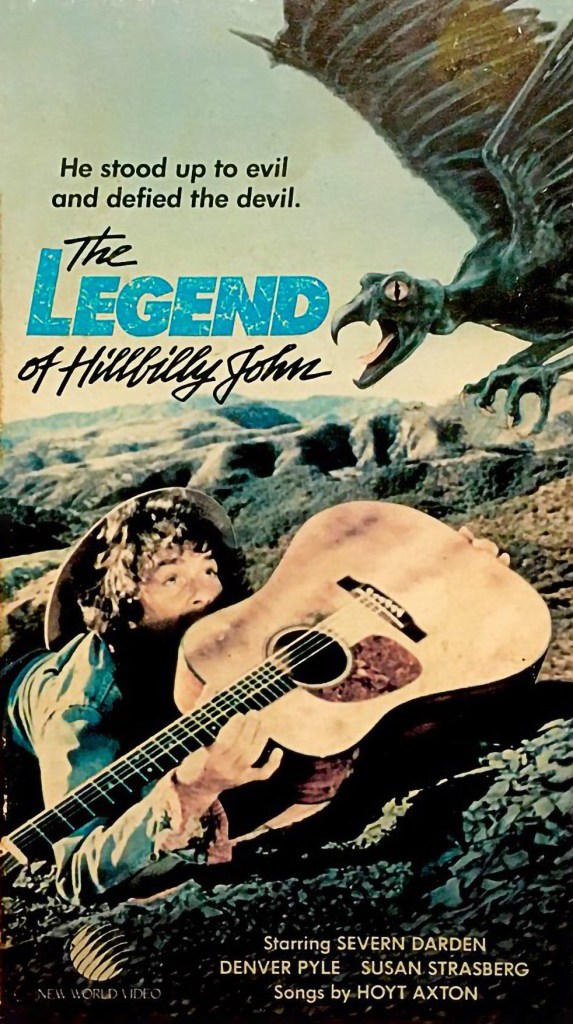
Wellman wrote a whole bunch of short stories about John, plus five novels. In 1972 the movie WHO FEARS THE DEVIL, aka THE LEGEND OF HILLBILLY JOHN, was released. This was a movie about Silver John’s adventures, and it was set within the same supernaturally-flavoured backwoods milieu of a bizarre rural Appalachia, just like in the books. Two of Wellman’s stories, O UGLY BIRD! and THE DESRICK ON YANDRO, were incorporated into the film’s script.
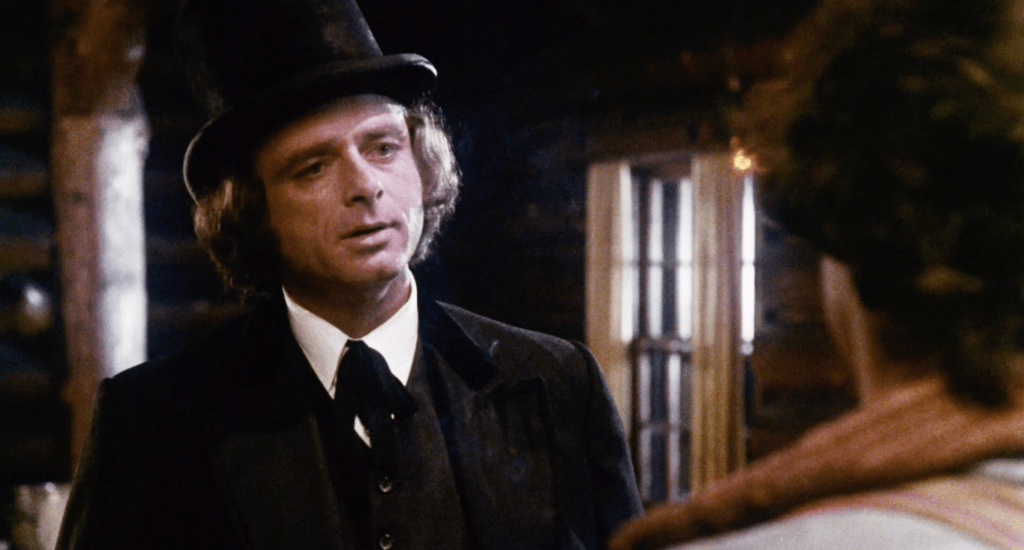
The section of the movie that is based on THE DESRICK ON YANDRO story features actor Harris Yulin playing Mr. Yandro. In the film the character likes to dress as an undertaker. This part of the movie boasts some nicely-lit night shots, and it adds scenes that weren’t in the original story, involving Susan Strasberg playing the old hag witch Polly Wiltse, who pretends to be an attractive, still-young woman. The movie also includes John’s dog, called Honor Hound, which accompanies him on his trek up the mountain (the dog isn’t in the short story). This segment of the movie is certainly engaging, but (no doubt because of budgetary reasons) all the quirky folklore creatures are not shown! In the movie adaptation, John and Mr. Yandro simply mention such creatures as Behemoths and Behinders, and there’s an off-screen roar heard at one stage… but we NEVER get to see the folkloric fauna, which is a damn shame!
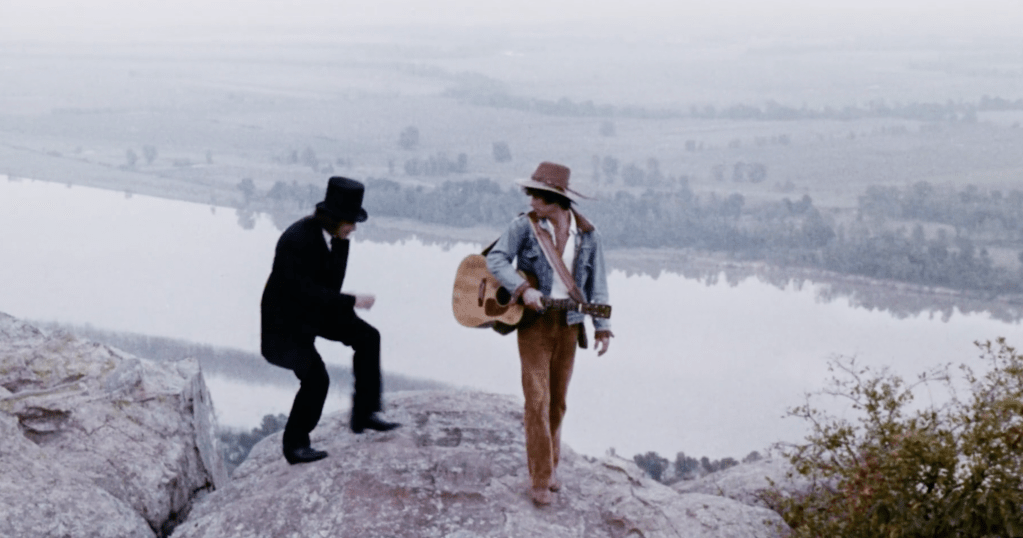
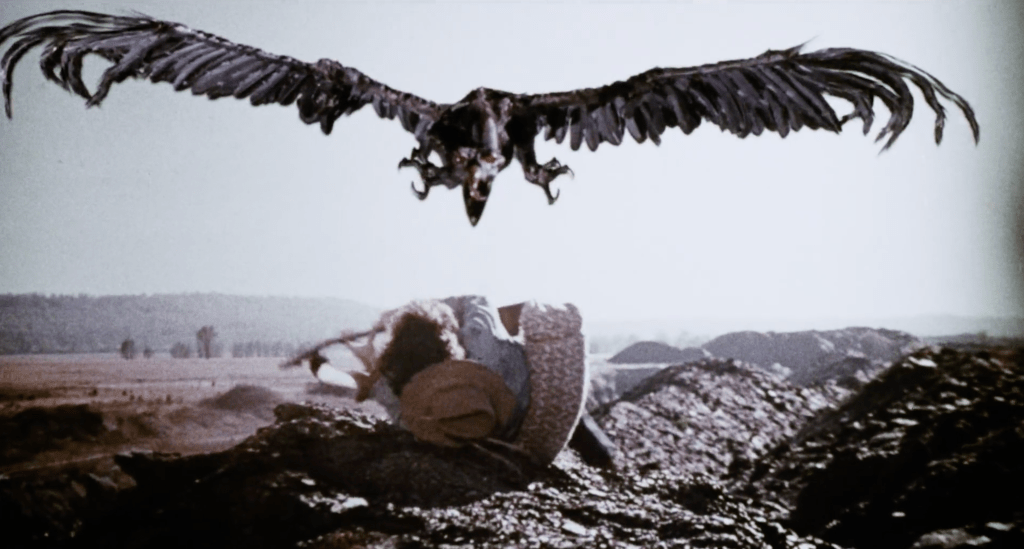
Fortunately, the part of the film inspired by the O UGLY BIRD! story does show the monster! The filmmakers bring the feathered fiend to the screen as a Ray Harryhausen-style flying, fiendish animated fowl! The Ugly Bird scenes add a lot of much-needed action and fantasy thrills to the production, and they’re definitely my favourite moments in the film. The quirky & creepy-looking puppet was designed and made by key animator Harry Walton, who did 85% of the animation, with Gene Warren Jr. providing animation for four shots.
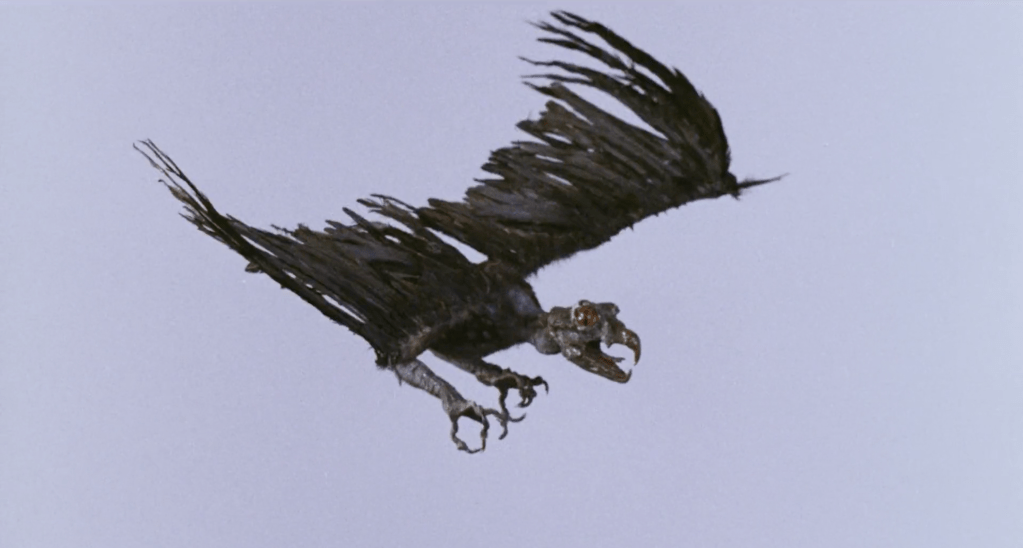
Despite the omissions in the DESRICK portion of the plot, and the rather loose directorial style, WHO FEARS THE DEVIL/THE LEGEND OF HILLBILLY JOHN remains an easygoing, episodic, folksy fantasia that’s fun to watch, even if the film lacks the specific atmosphere of the Wellman stories.
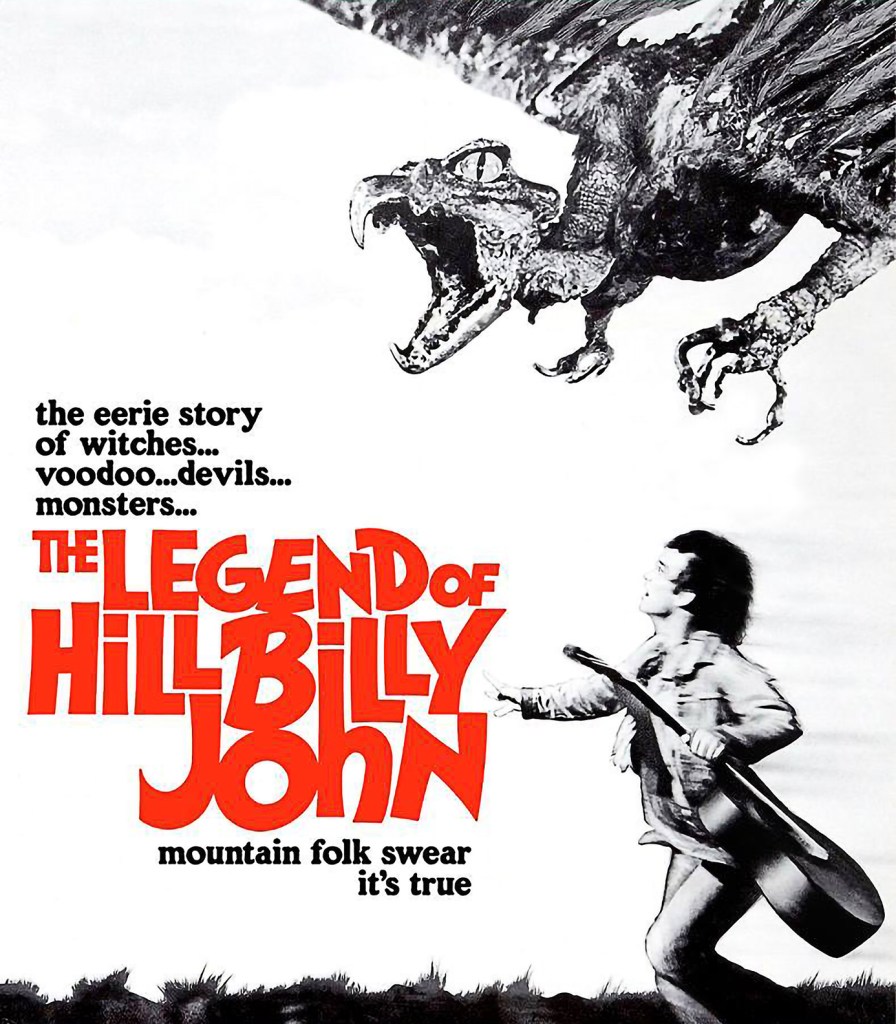
The film WHO FEARS THE DEVIL is reviewed in Imaginator magazine’s FOLK HORROR SPECIAL EDITION. You can find out more about this folk-tastic magazine HERE!
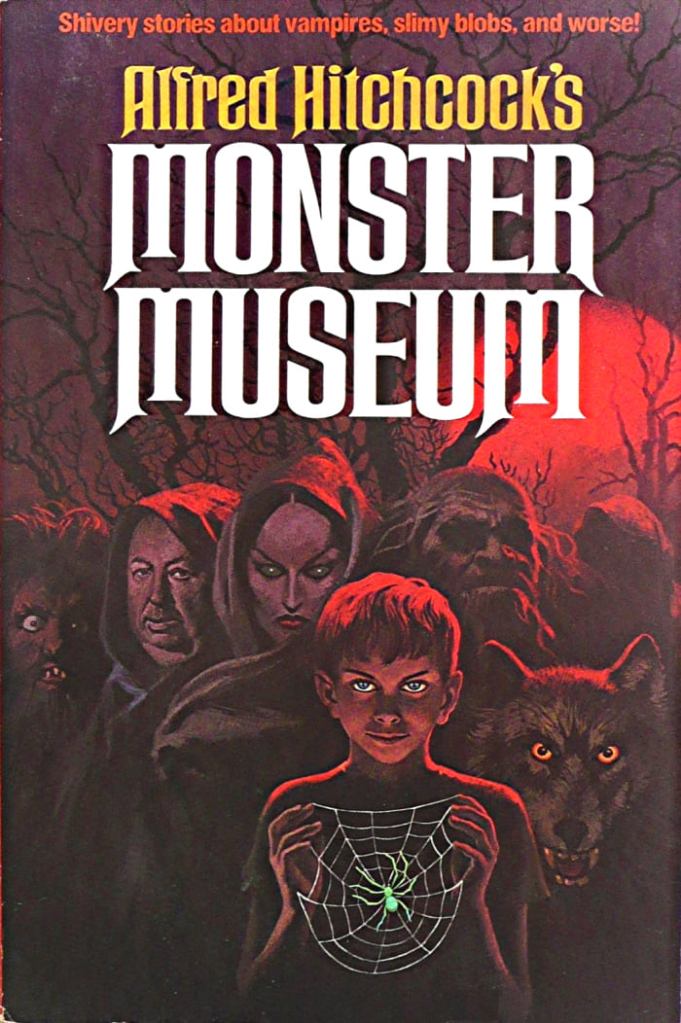
I first read THE DESRICK ON YANDRO short story within the pages of ALFRED HITCHCOCK’S MONSTER MUSEUM. This anthology book had stories about such beasts as a slimy blob-creature and intelligent ants, but it was the YANDRO tale that lodged itself in my memory.
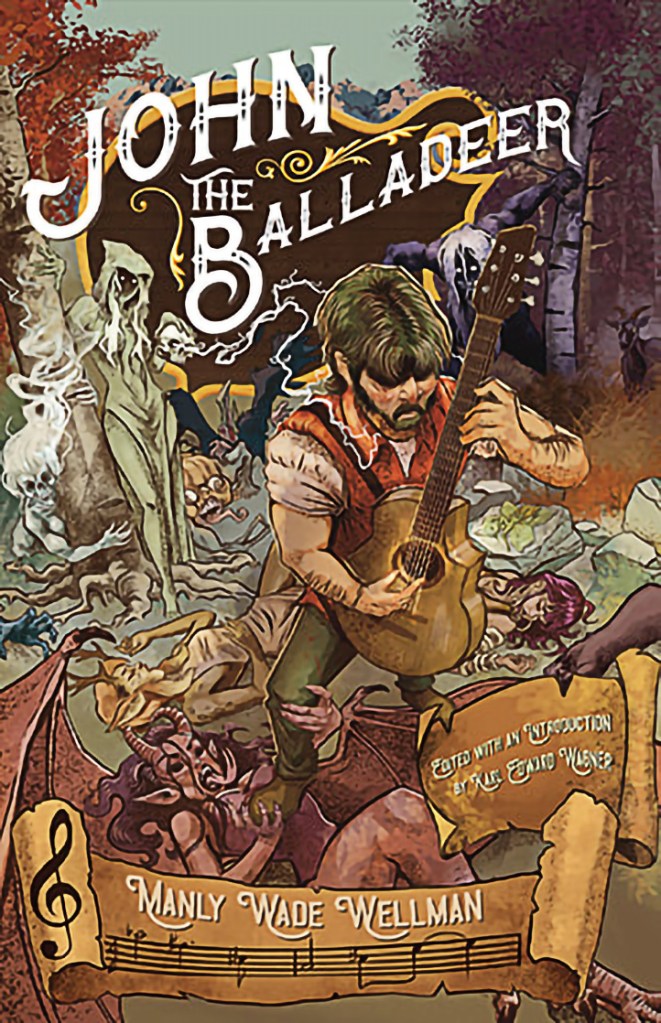
The DESRICK story is also featured in various books that collect Wellman’s Silver John short tales together – JOHN THE BALLADEER,
OWLS HOOT IN THE DAYTIME AND OTHER OMENS, and WHO FEARS THE DEVIL?
Mike Mignola’s and Richard Corben’s comic book tale HELLBOY: THE CROOKED MAN was heavily inspired by Manly Wade Wellman’s Appalachian-set Silver John pulp-fantasy-horror stories. I really enjoyed the 2024 movie adaptation – it’s well worth seeking out!
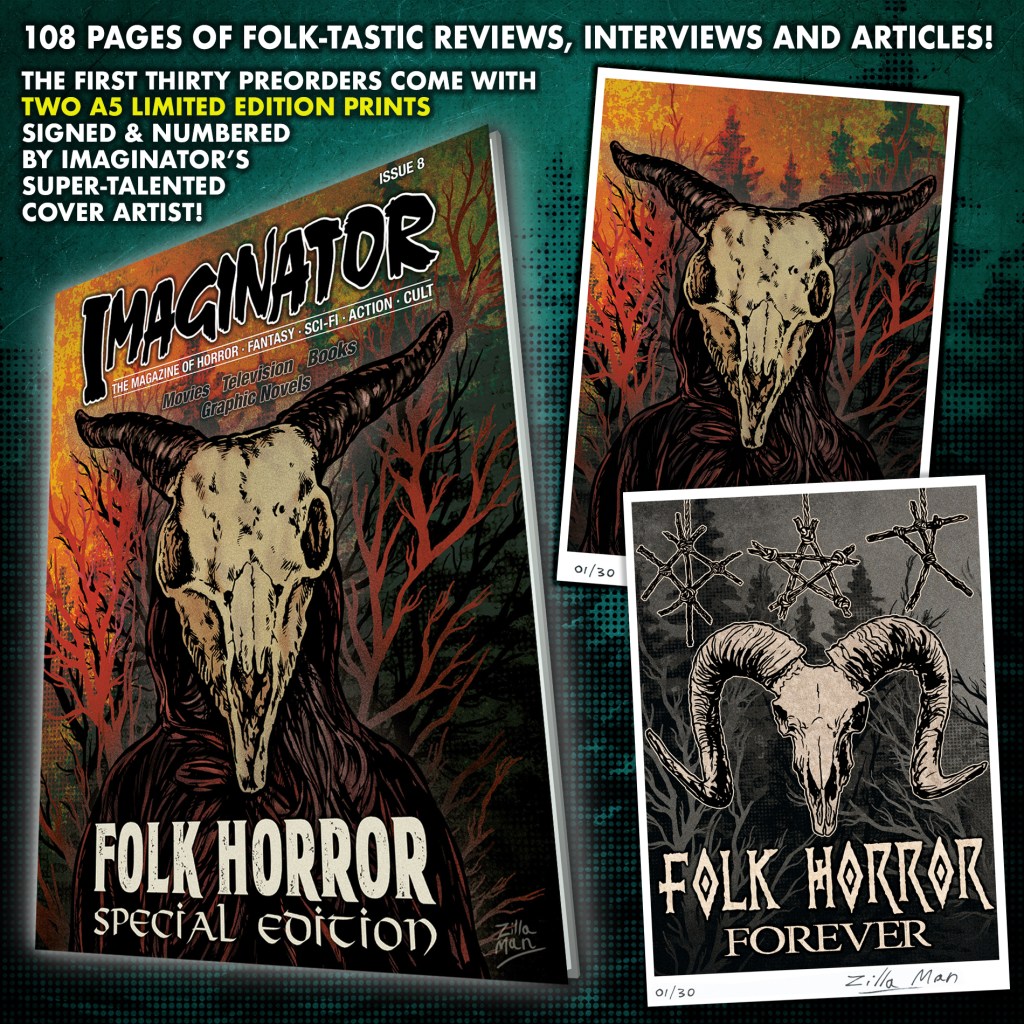
Imaginator magazine’s FOLK HORROR SPECIAL EDITION will be available everywhere (UK, US, Europe, Japan, etc) from mid-April, via Amazon and other fine retailers!
If you live in the UK or the EU, you can preorder the issue from the Imaginator store – and the first 30 copies ordered will come with TWO A5 LIMITED EDITION PRINTS, numbered and signed by Imaginator’s cover artist, Zilla Man!
You can find the links HERE!
All about the FOLK HORROR SPECIAL EDITION…
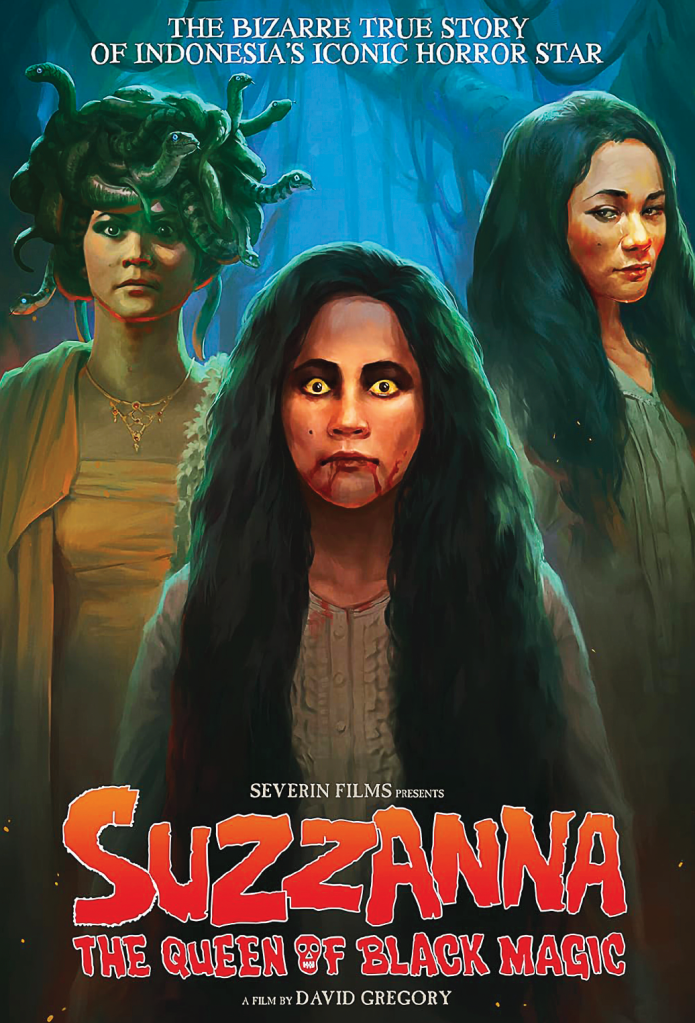
Every film featured in Severin Films’ awesome boxset ALL THE HAUNTS BE OURS: A COMPENDIUM OF FOLK HORROR VOLUME 2 is reviewed! Plus other fine folk horror flicks are reviewed too!
There’s an interview with director KIER-LA JANISSE, who talks about her definitive, all-encompassing feature-length documentary WOODLANDS DARK AND DAYS BEWITCHED: A HISTORY OF FOLK HORROR!
Author Adam Nevill speaks about his top-notch, scrumptiously sinister folk horror novels, which include THE RITUAL, THE REDDENING, NO ONE GETS OUT ALIVE and CUNNING FOLK!
Writer, director and producer Sean Hogan chats about his menacing, brooding, brilliant film TO FIRE YOU COME AT LAST.
Creature Designer, Concept Artist and Illustrator Guy Davis divulges how the fantastic Wendigo folk-creature from ANTLERS (2021) was conceived!
Actor Russell Shaw, who plays the demon-hunting, bewhiskered, time-travelling protagonist in WITCH (2024), talks about making this wild, genre-twisting occult-themed movie!
A conversation with the super-talented Concept Artist and Creature Designer Keith Thompson: the man who conceptualised the spectacular Jötunn god-monster in THE RITUAL (2017)!
A look at the upcoming Folk Horror graphic novel A VVITCH: many of artist/writer Russell Fox’s awesome illustrations are displayed within these pages for your viewing pleasure!
A deep dive into the adaptations and homages inspired by M.R. James’s classic ghost story OH, WHISTLE, AND I’LL COME TO YOU, MY LAD.
Horror fiction writer, editor and critic Ramsey Campbell provides a special guest film review, and top scriptwriting guru and author William Martell also shares a special guest film review with us!
And there’s much more inside this issue!
Starring Bryn Fôn, Morgan Hopkins, Sean Carlsen, Victoria Pugh and Morgan Llewelyn-Jones. Written and directed by Craig Williams. Produced by Julien Allen for Two Draig Films.
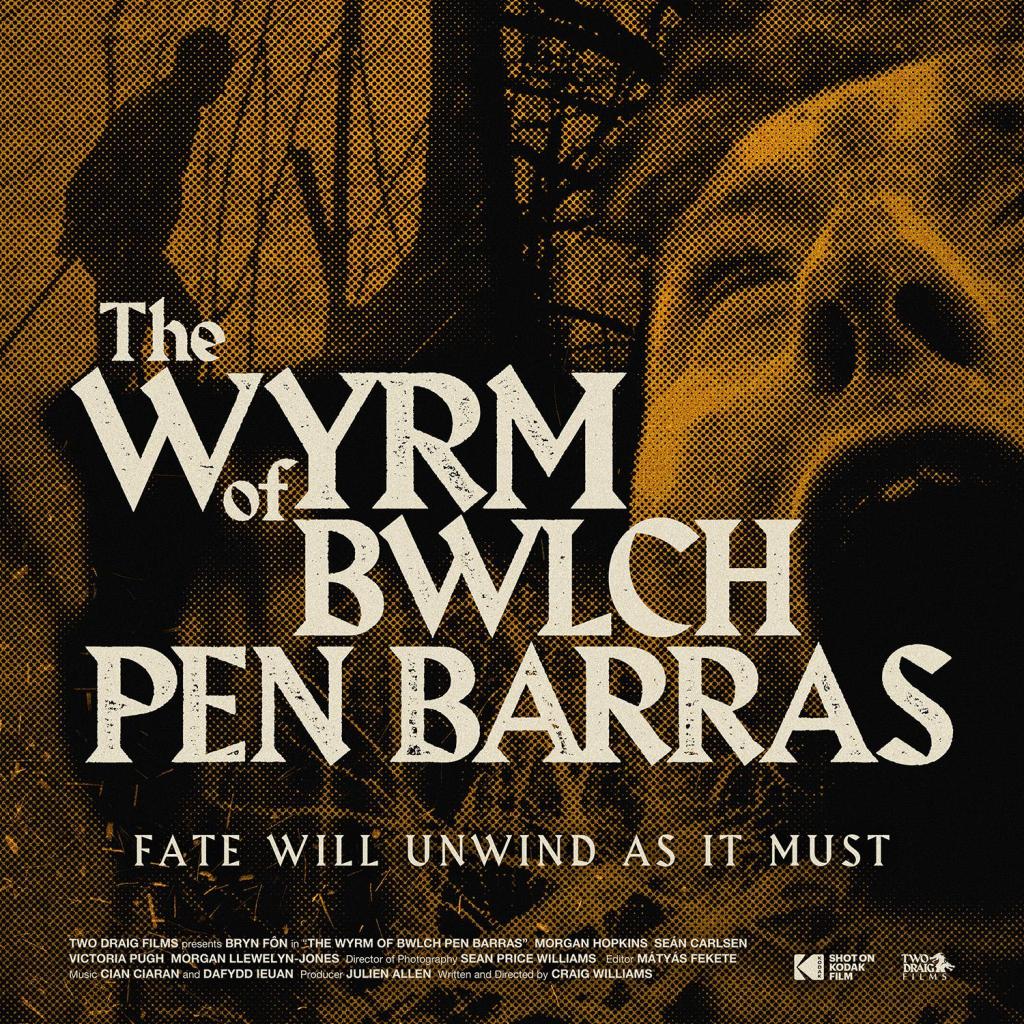
When Gwyn (Fôn) gets an early morning phone call, it’s obvious he is being informed about something that is serious, and it’s also clearly an occurrence that has happened before. What seems to concern Gwyn and his wife Anwen (Pugh) most is the fact that this event has started sooner this time around..

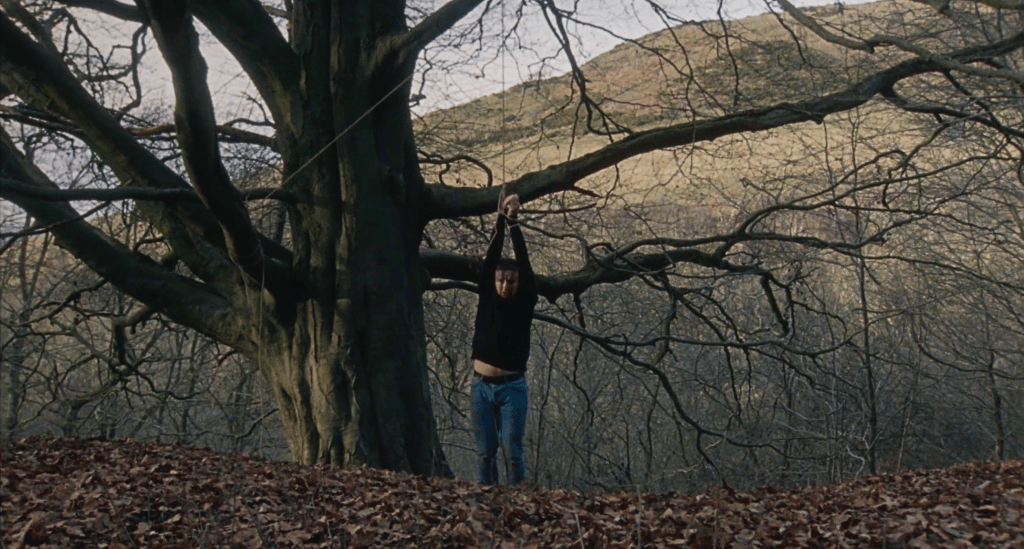
We follow Gwyn as he fetches items hidden in his attic, makes another call, then heads out to pick up the two other members of his team, Emlyn (Hopkins) and Dai (Carlsen). These men drive over to a farm, where they physically attack and subdue Dafydd (Llewelyn-Jones), who they shove into the boot of their car. They drive Dafydd to Bwlch Pen Barras mountain, get him out of the vehicle, and lead him further up the slope. The young captive’s wrists are tethered to a tree branch with rope, black markings are applied to Dafydd’s face, and Gwyn calls out to the Queen of the Mountain as something horrible happens to Dafydd off-screen…
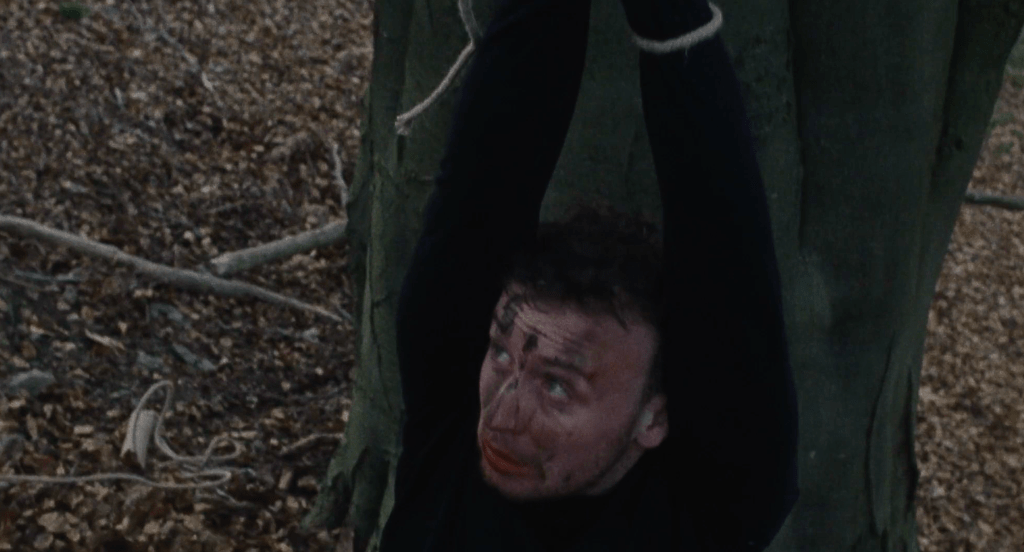
This short Welsh movie, shot on nicely-grainy Kodak Super 16mm film, purposefully leaves a lot of details unanswered, so viewers must fill in the blanks themselves. Just what is it that has happened sooner this time? How are the sacrificial victims chosen? Is this a ritual tradition that has been undertaken by multiple generations of Gwyn’s family?
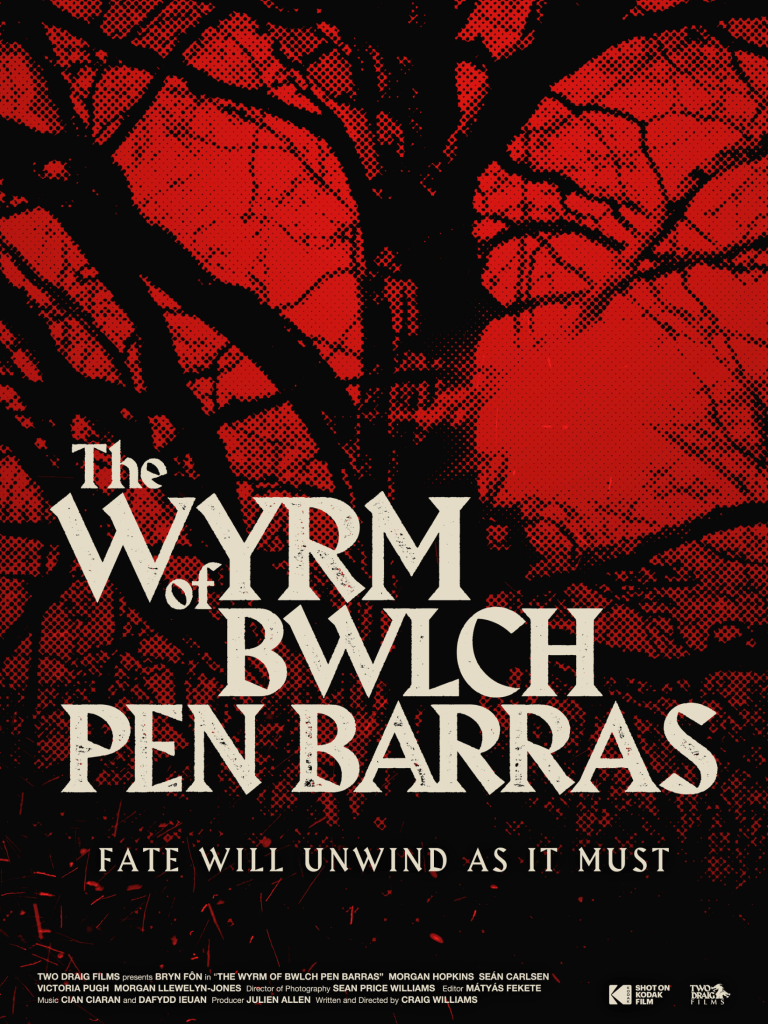
The film’s title is the main clue to explain what is actually occurring in the story: the word ‘Wyrm’ relates to dragons, such as the one featured in the Anglo-Saxon poem Beowulf. A red dragon, of course, is the most prominent symbol of Wales and it is included on the kingdom’s flag. Though the legendary creature is a symbol of national pride in Wales, in local myths dragons can have a more ambiguous or infernal significance. Writer-director Craig Williams has said in an interview that there are still folk stories which carry symbolic weight today in which dragons protect villages for a price, and he explained that he wanted to draw on that idea in the context of a horror film.
Some viewers will be frustrated that the finale refrains from actually showing the creature: THIS IS A MONSTER-RELATED MOVIE THAT DOESN’T SHOW THE MONSTER! But, though I can sympathise with that opinion, I found some tasty tidbits to savour throughout this folk-horror-urban-fantasy’s brief running time, including the sweetly unnerving opening music by Dafydd Ieuan & Cian Ciarán (of the band Super Furry Animals). The overall no-nonsense vibe of the piece is the film’s main selling point, as it depicts the average Joe characters going about their business in a down-to-earth manner. Gwyn is very restrained and world-weary, Emlyn is rather fretful, out of shape, and is evidently content to follow Gwyn’s lead, whilst Dai likes to act the hard man, obviously getting a kick out of what he’s doing.

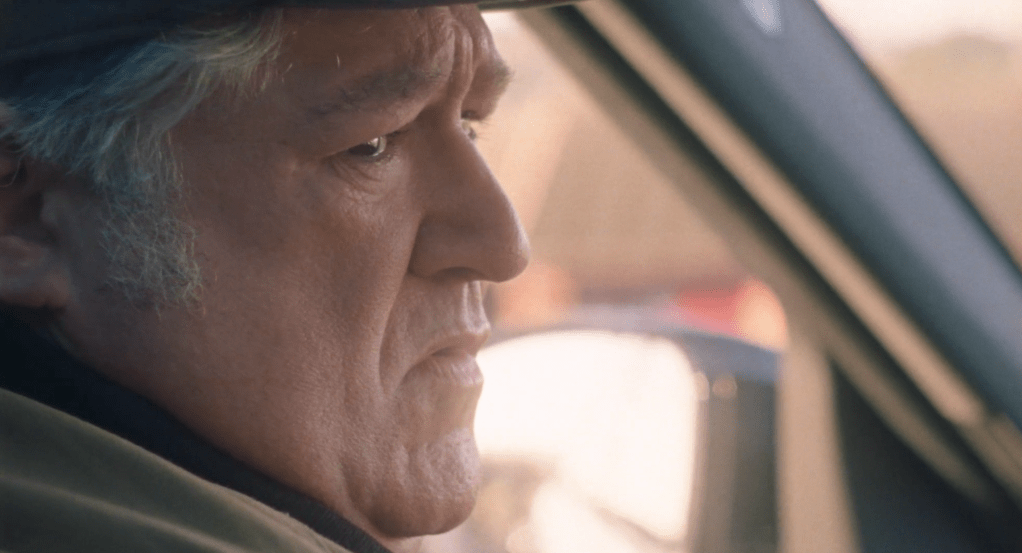

THE WYRM OF BWLCH PEN BARRAS was originally shot as two versions, one in English and one in Welsh. But it soon became apparent to Williams, during the postproduction process, that the Welsh version felt far richer and seemed more true to the material, so that was the one the director submitted to film festivals.
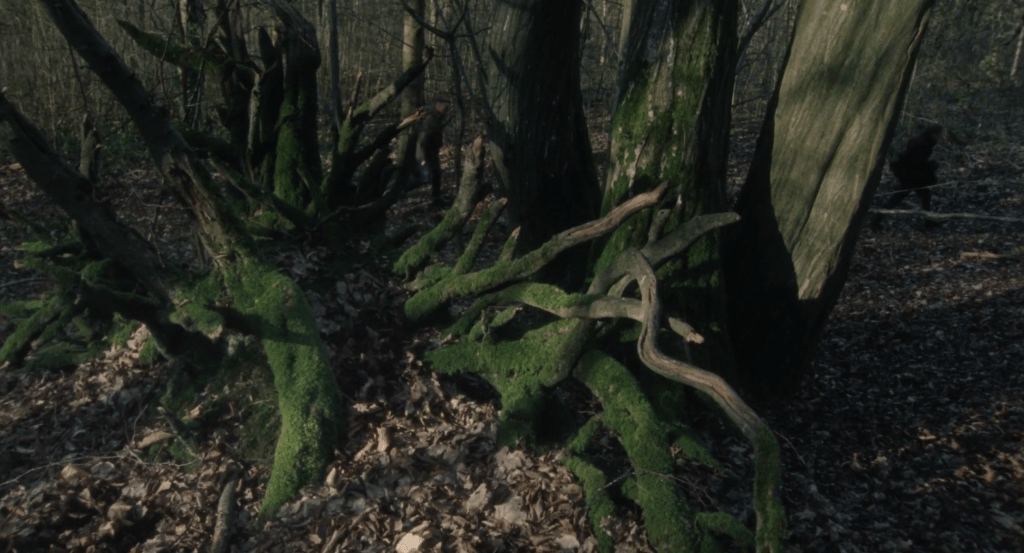
This unflashy short film acts almost like an extract from some larger work, and it poses enough questions (Why has the Wyrm’s need for a sacrifice become more regular? When will the rituals not be enough?) to make me want to see them answered in a more substantial follow-up movie – and hopefully a sequel would put the scaly ‘Queen of the Mountain’ on screen!
Starring Wang Zhener, Han Dong, Liu Lincheng and Wang Jianguo. Written by Chien Shih-Keng. Directed by Xiang Qiuliang and Xiang Hesheng. Produced by Guo Runze, Jing Wu and Xiang Weibin.
Beijing Tmeng Network Technology Co/Hainan Golden Seagull Media
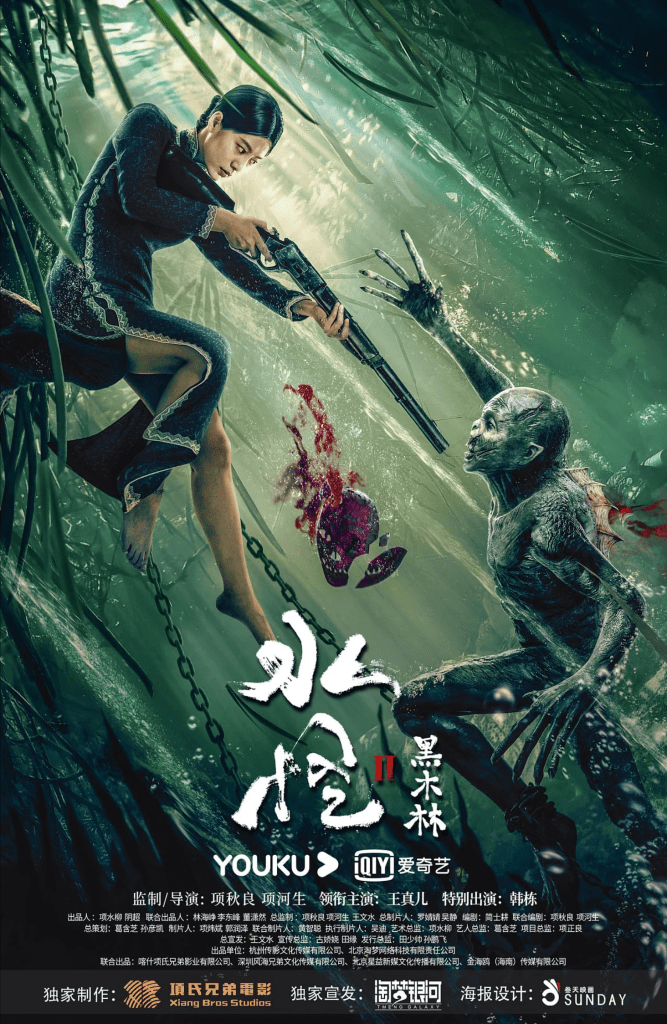
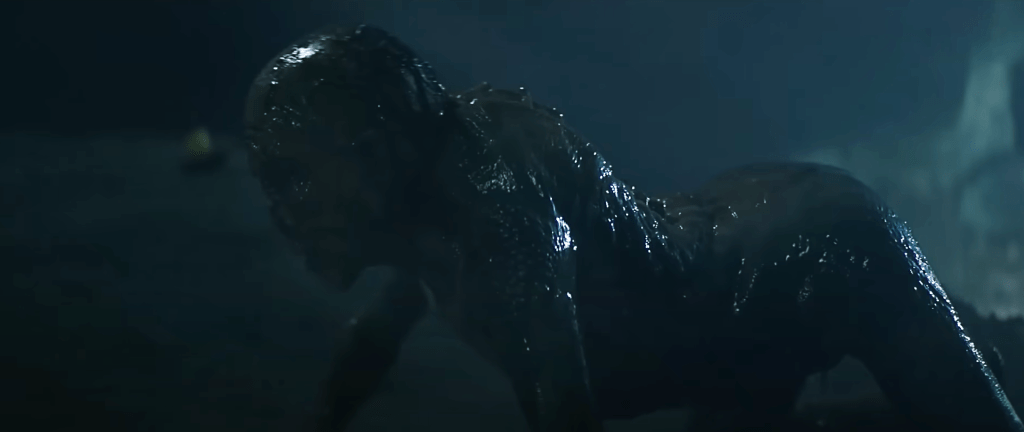
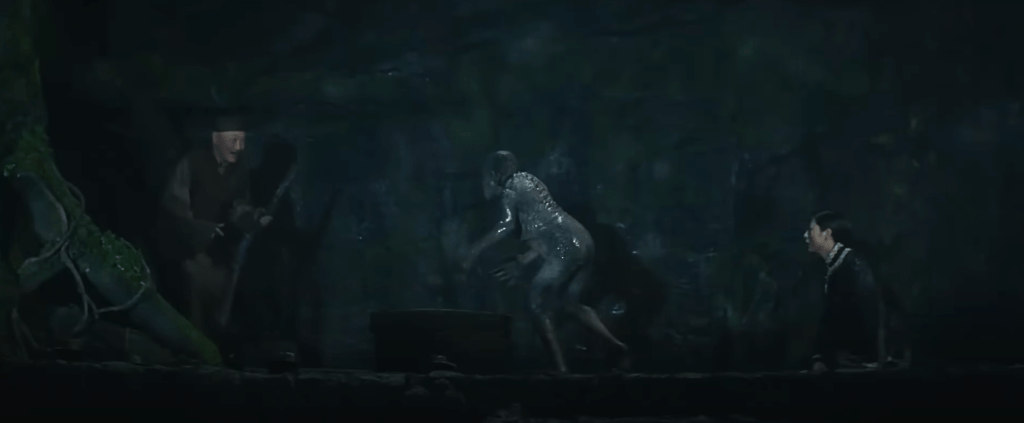
A forensic doctor, Du (Zhener), ventures to a misty, boggy settlement called Shangshui Town to look for her missing brother. The townsfolk are not too willing to help her, however, because they are in thrall to a superstition involving an aquatic monster they call Lord Water Monkey, whom they fear might punish them if they get involved. Du digs deeper into the local mysteries, people continue to get killed, she finds her brother’s body, and plans are made to trap the swamp-beast, but things are not as they seem…
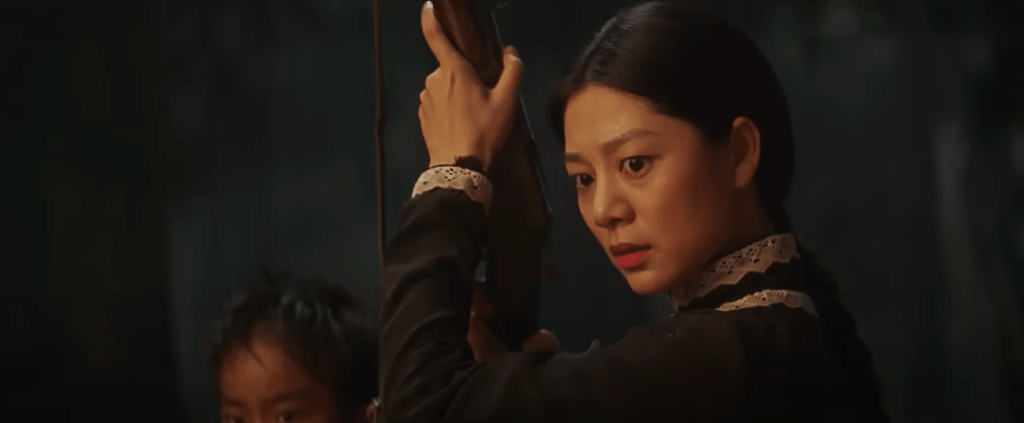
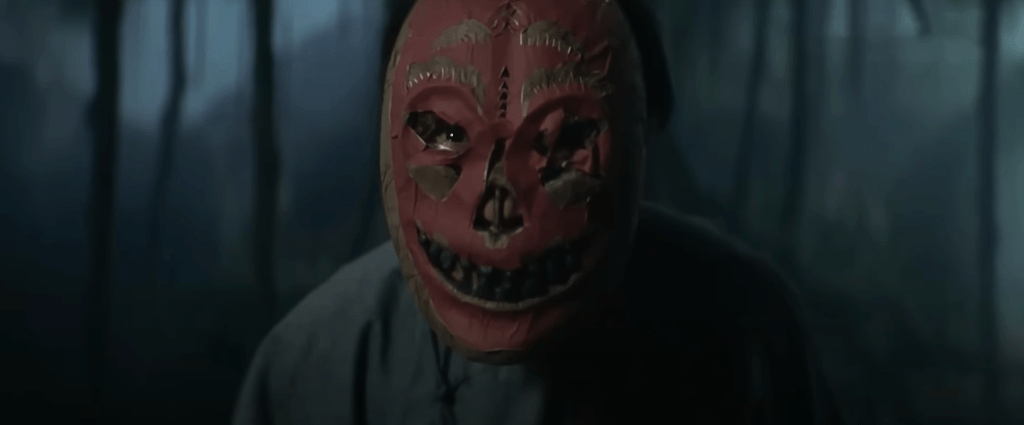
This sequel to WATER MONSTER (2019), made by the same two directors, tells a different story with different characters, and is a pleasingly shot and art directed production, using the waterlogged, mist enshrouded locations effectively.
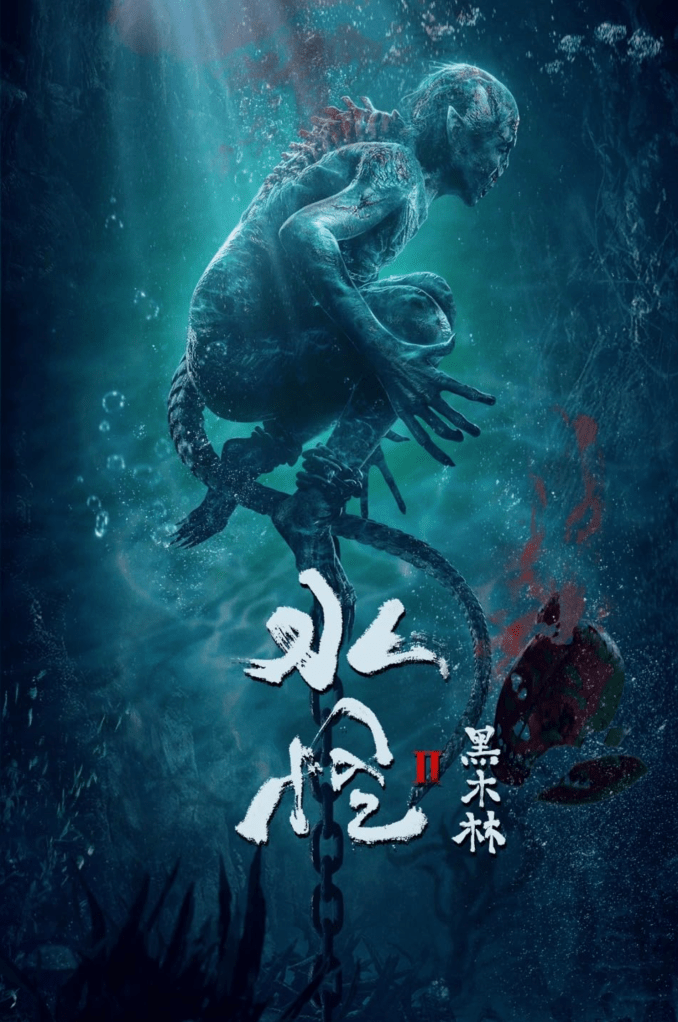
Central to the enjoyment of WATER MONSTER 2 is Wang Zhener’s performance as the outsider who, after black and white flashbacks, dreams, and meetings with various characters, learns that her name is actually Qingling and she originally lived in this town as a girl, involved in a tragic backstory inextricably linked to the origins of Lord Water Monkey. Zhener has a well maintained composure about her, playing Qingling/Du as a calm, smart and driven character. She really stands out, especially in a sub-genre (modern Chinese creature features) where many female leads teeter on being pretty, tough and rather one-dimensional. This film might feature a slimy, leaping marsh monster, but it is obvious that Zhener is totally committed to her role and really shines in every scene.
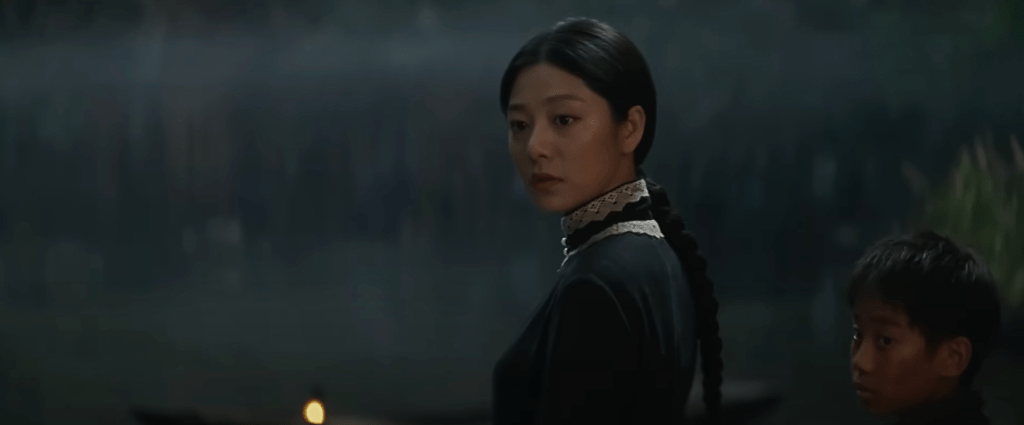
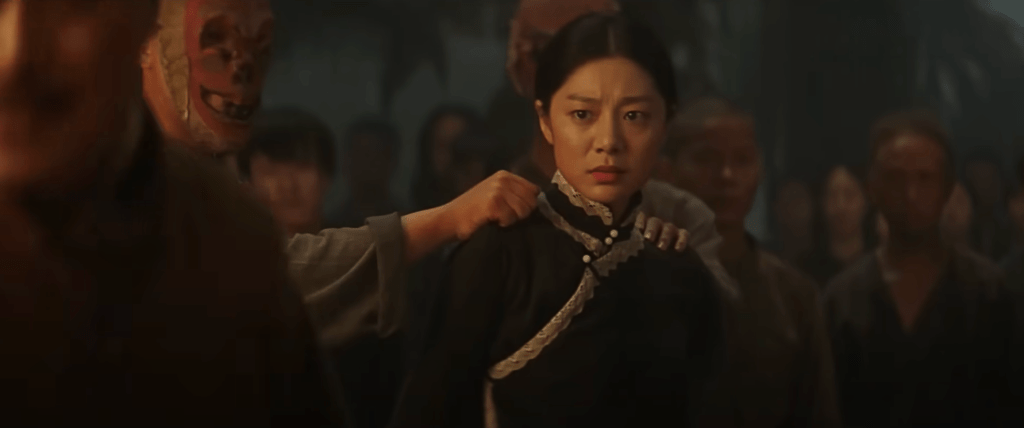
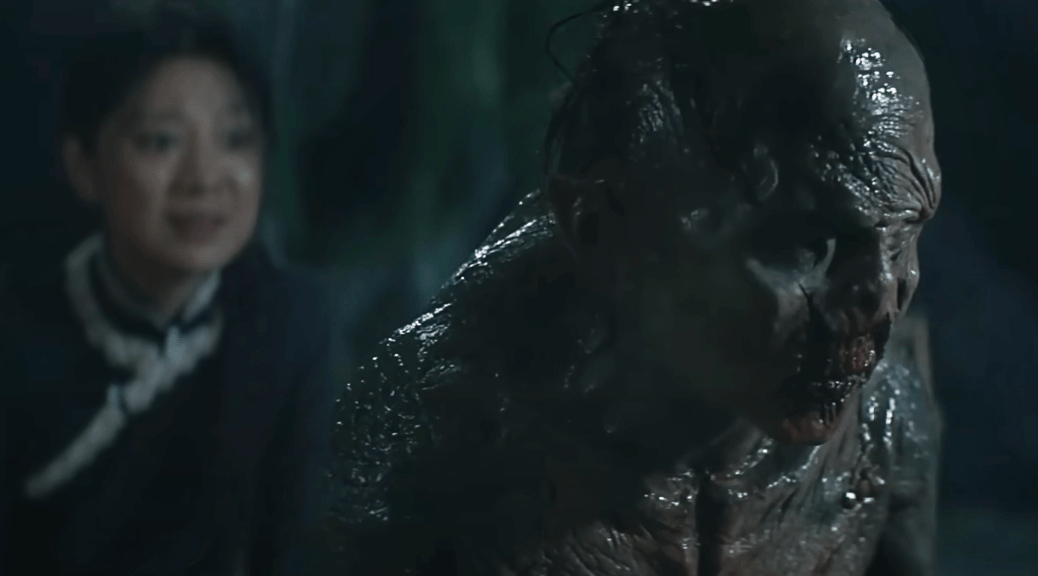
The town people’s ceremonies, aimed at appeasing the water monster, which they regard as a deity, imbue the film with a folk horror atmosphere, while a fast-paced sequence showing the eventual capture of Lord Water Monkey injects some vital energy into the tale. This set piece is full of invention, as Qingling and a group of locals use a series of elaborate boobytraps and other rope & wooden mechanisms to attack the Gollum-esque creature, keep the heroine out of harm’s way, and then trap the man-beast.
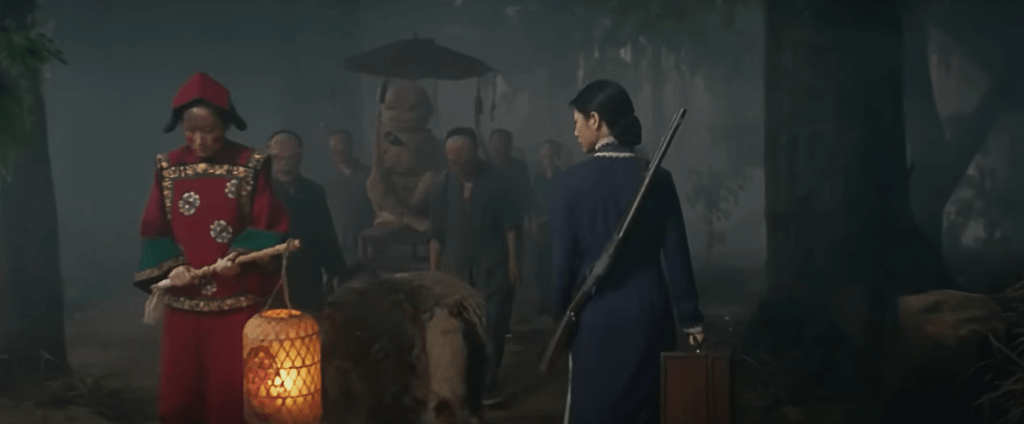
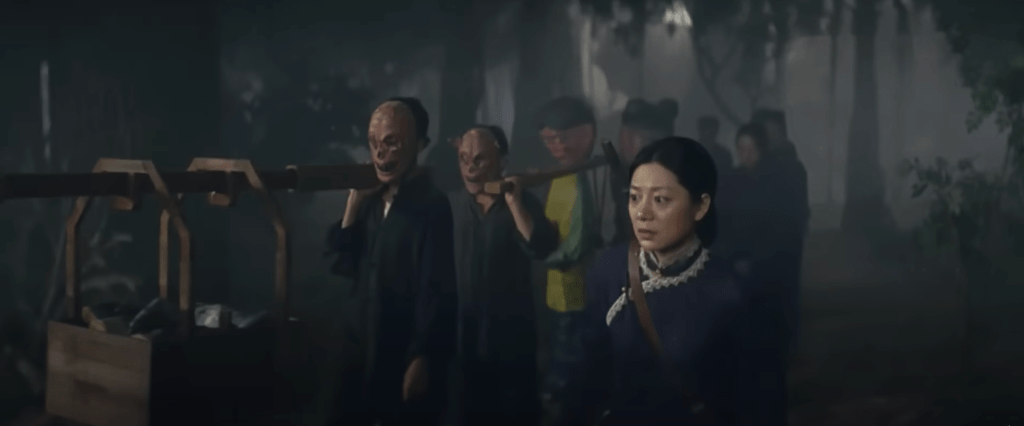
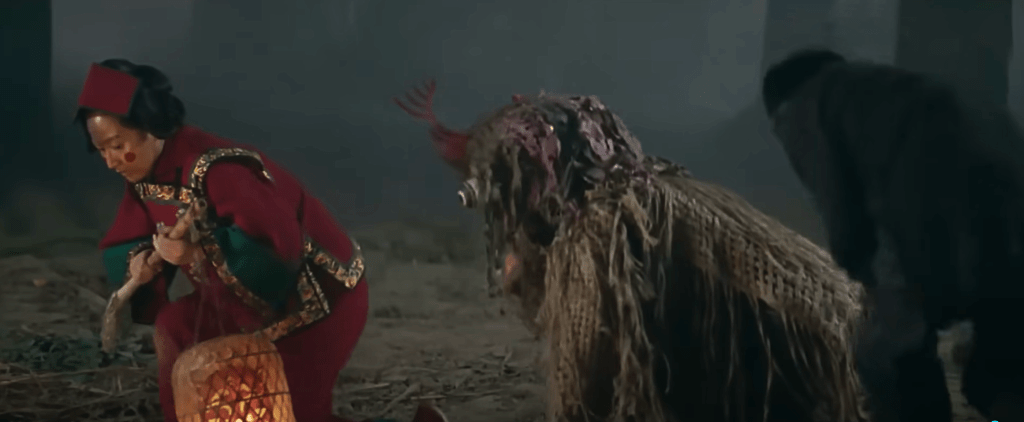
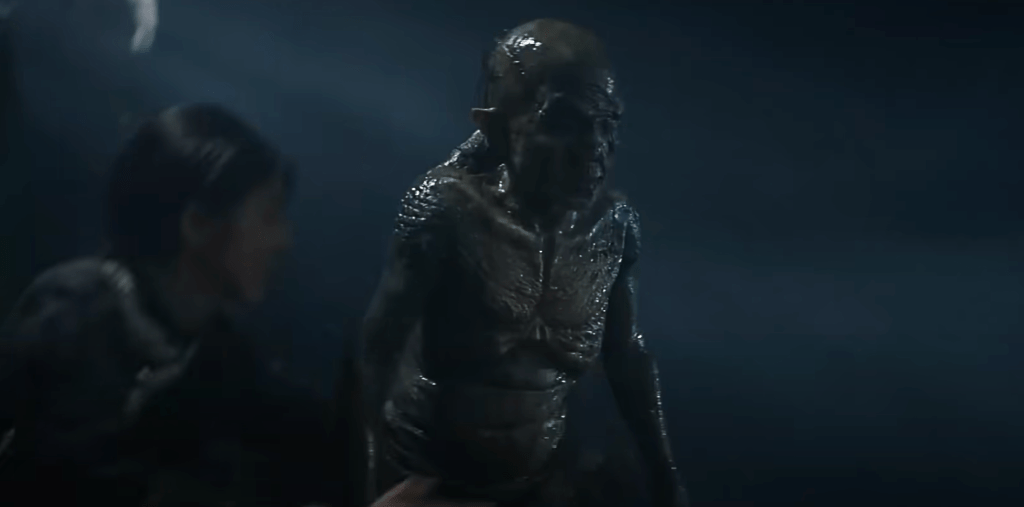
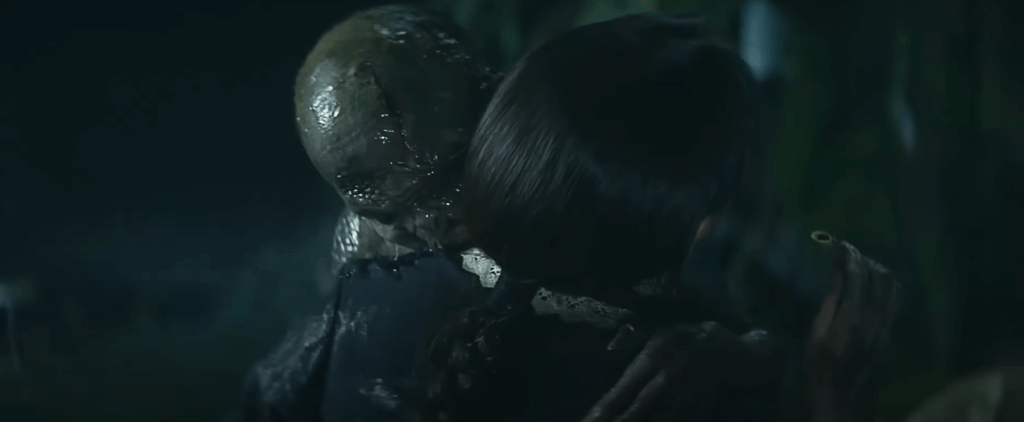
The story now takes an interesting turn, as Qingling uncovers information revealing that the town elders are corrupt, lying opium-smuggling gangsters: they are the real culprits behind the ongoing spate of child disappearances and murders! The slimy-skinned, hunched, ridge-backed water ‘monster’ turns out to be Qinghe, the biological brother of Qingling, a sibling she’d lost all memories of. Qinghe’s grotesque form is, it’s explained, due to a rare hereditary disease, and his feral nature was triggered by the vile actions of the elders many years ago. After these revelations, Qingling finally gets to fight back against the bad guys and really looks striking as she goes into action, keeping commendably cool, wearing her traditional cheongsam dress and toting a rifle that she’s ready and willing to use!
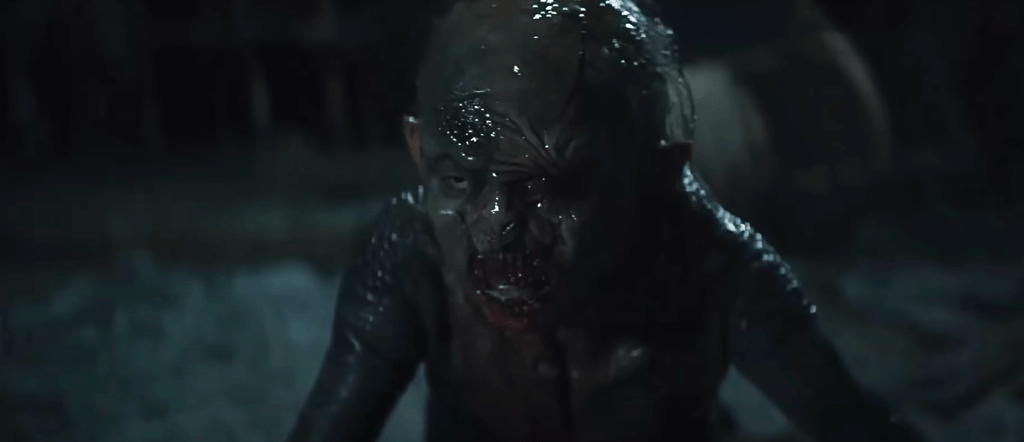
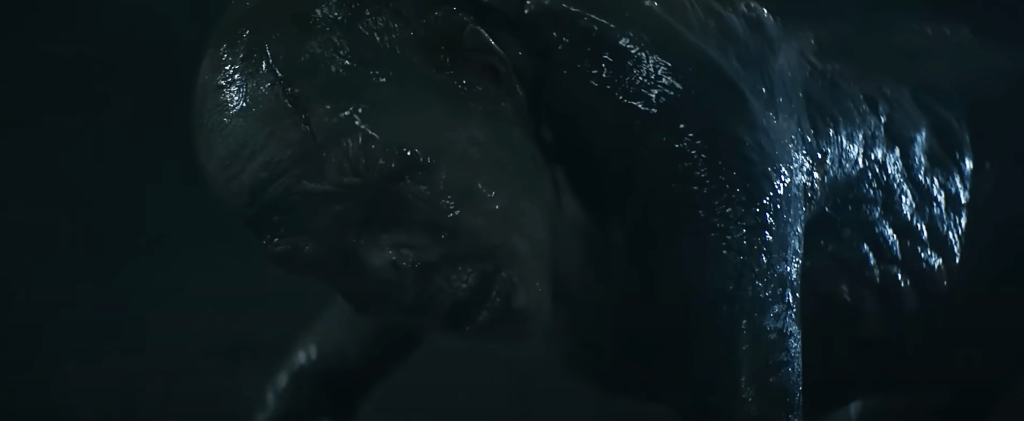
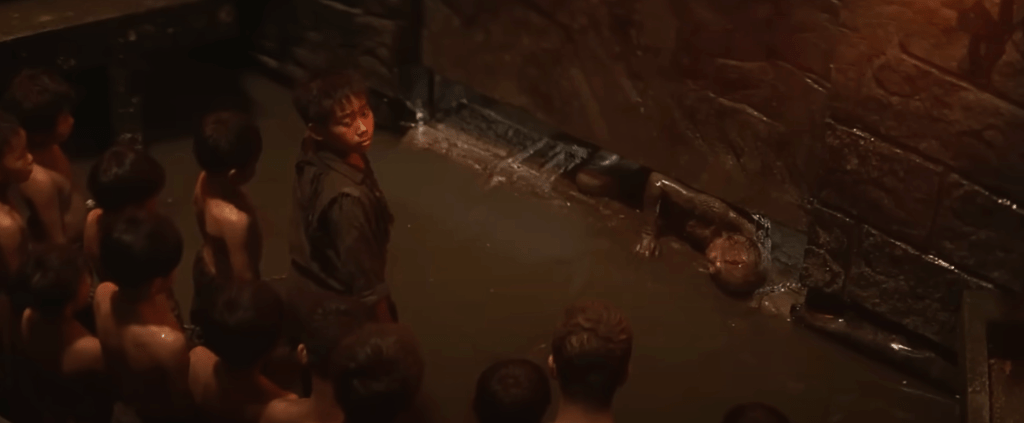
The titular aquatic monster is often CGI in the fast-moving action shots, but he looks much better when a practical creature suit is used, especially during the finale, where we can see Qinghe in more detail. Here the heavily deformed Qinghe is treated in an empathetic manner, as he overcomes his urges to harm his sister, then dies saving child slave opium workers from drowning. It’s actually quite a touching finale!
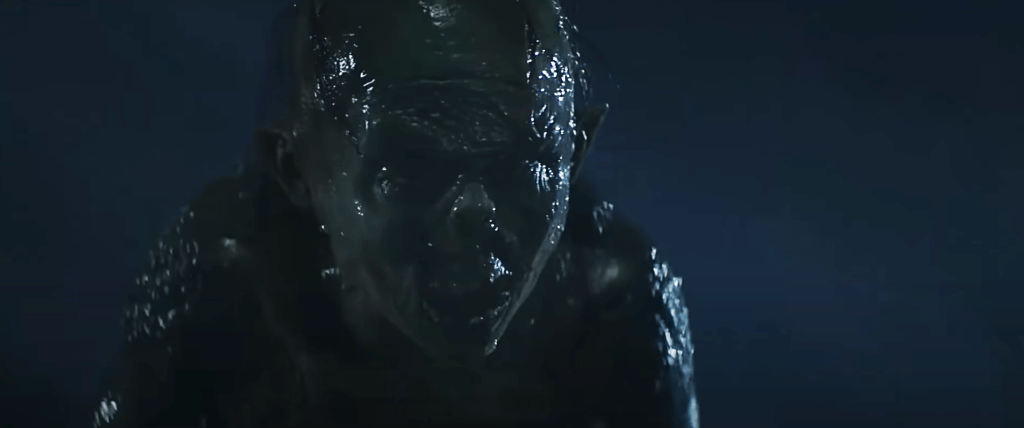
WATER MONSTER 2 is well-handled, well-paced and is, all in all, an entertaining murder-mystery-creature-feature-drama.

 Monster Zone