Tag Archives: Dinosaurs

When I met my hero – An interview with Ray Harryhausen

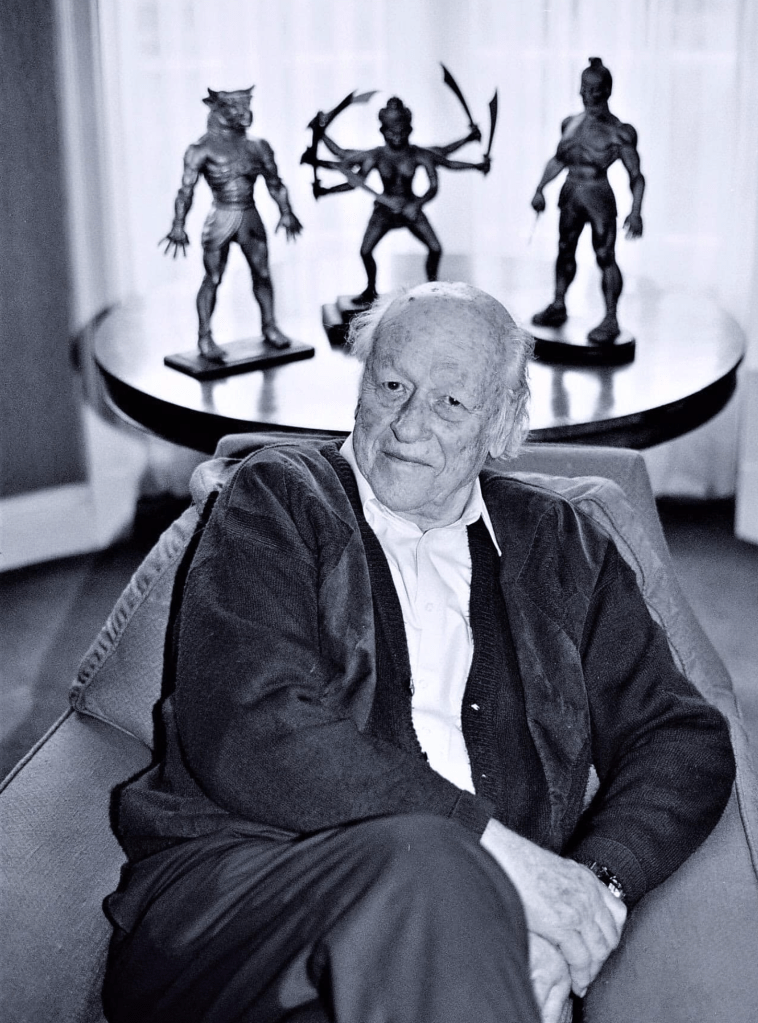
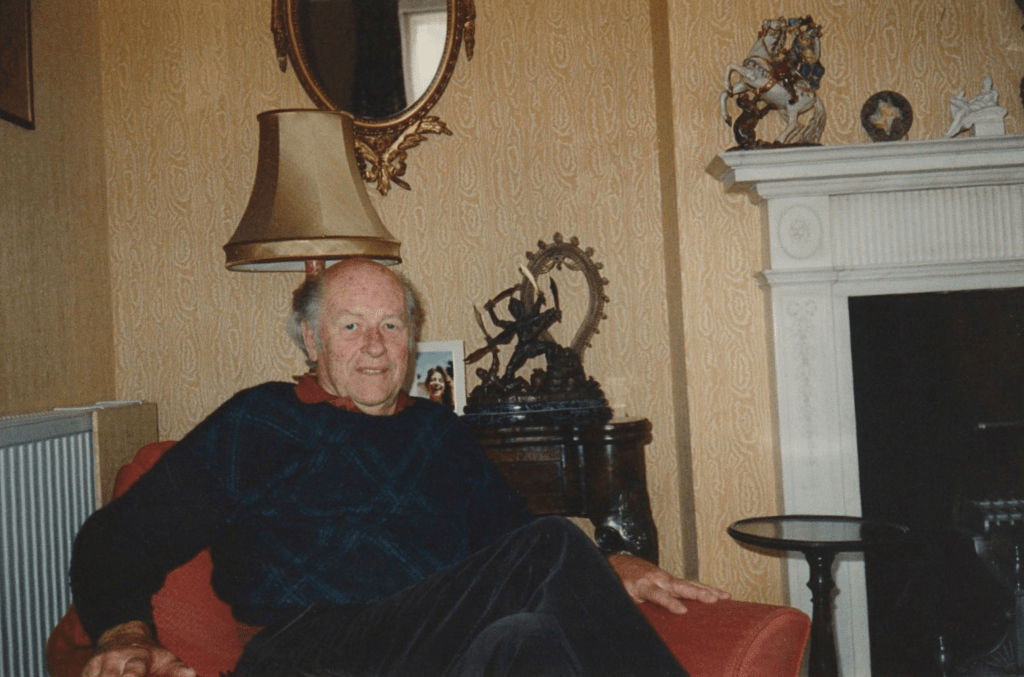
Here's a photo I took of Ray Harryhausen at his home in Holland Park, London, when I interviewed him in 1990 for my magazine Imaginator. Check out the Kali bronze behind Ray!
Here’s a photo I took of Ray Harryhausen at his home in Holland Park, London, when I interviewed him in 1990 for my magazine Imaginator. Check out the Kali bronze behind Ray!

Back in the 1960s, when I was a young kid living near Tamworth, a town in Staffordshire, my father took me to the cinema one fateful day… to see a certain movie called ONE MILLION YEARS B.C.

At the time, as many children often were, I was very interested in dinosaurs, so my dad knew that I’d like this film. And, of course, I loved ONE MILLION YEARS B.C. when I saw it within the sumptuous surroundings of Tamworth’s (now long-gone) Palace Cinema! Watching this movie, which told a tale of love and survival and conflict in a prehistoric world, was an experience that cemented several lifelong interests within me; a fascination with dinosaurs, a fondness for films of the fantastic (especially creature features!), and a love of movies in general. 
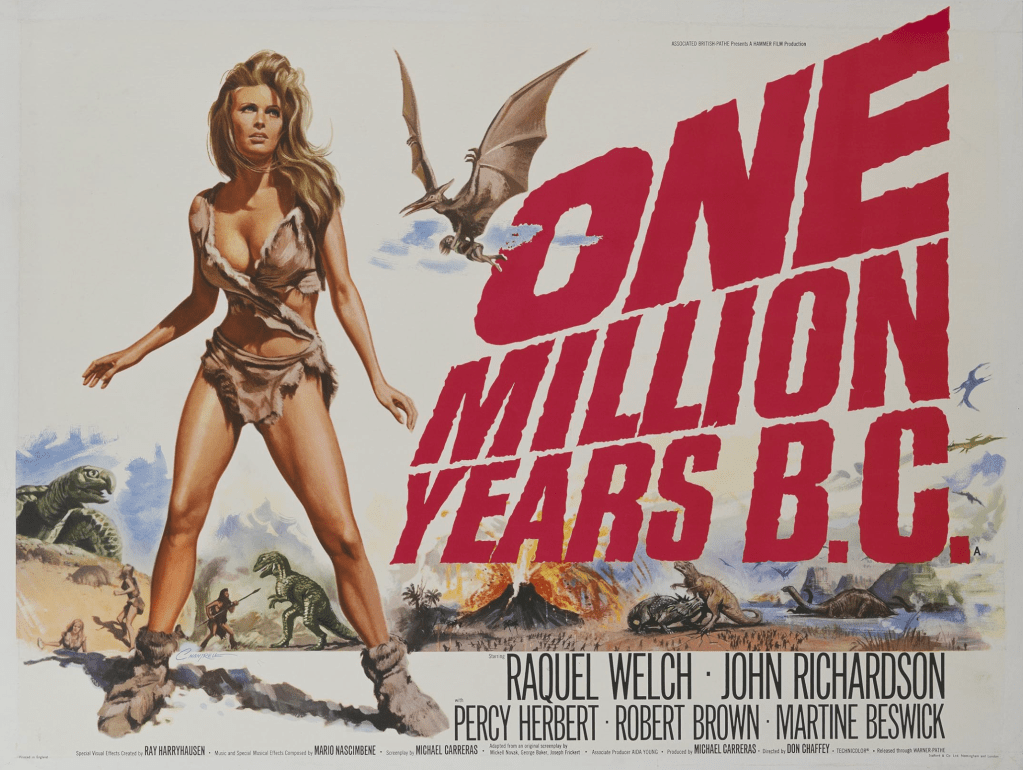
Million Years B.C. poster
I love this film so much!

Before this key trip to the cinema, at an even younger age, I’d already seen MIGHTY JOE YOUNG on television. I liked this film so much my mother got into the habit of telling me new bedtime stories about the great ape to help me to fall asleep!
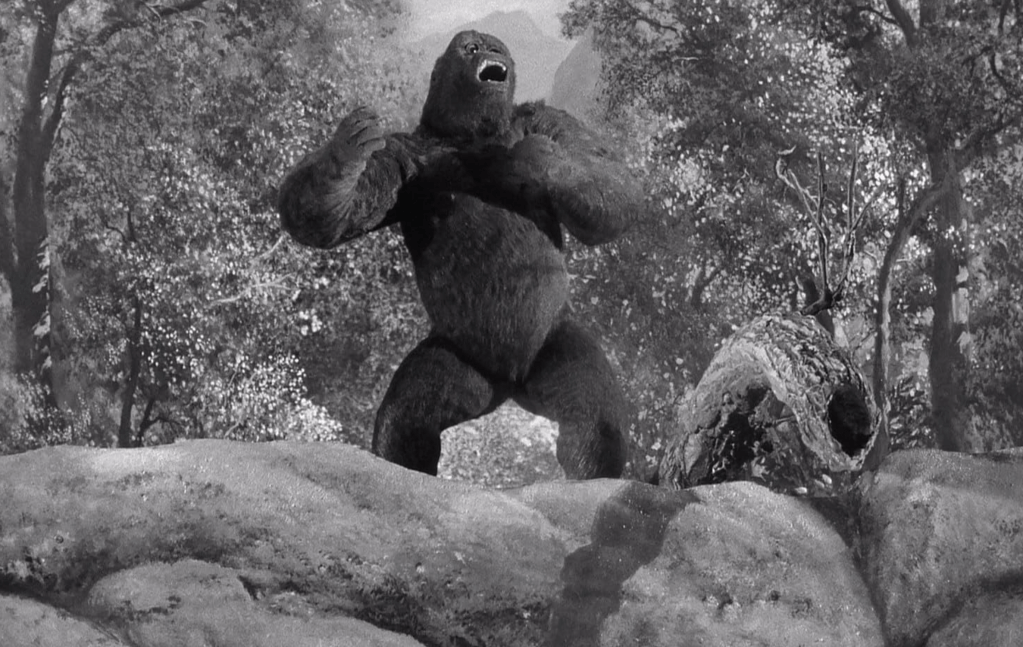
MIGHTY JOE YOUNG was the first feature-length film Ray worked on
MIGHTY JOE YOUNG!

There were other films I would catch on television as the years went by, colourful productions like MYSTERIOUS ISLAND and JASON AND THE ARGONAUTS; movies that would immediately find themselves on my list of favourite films.
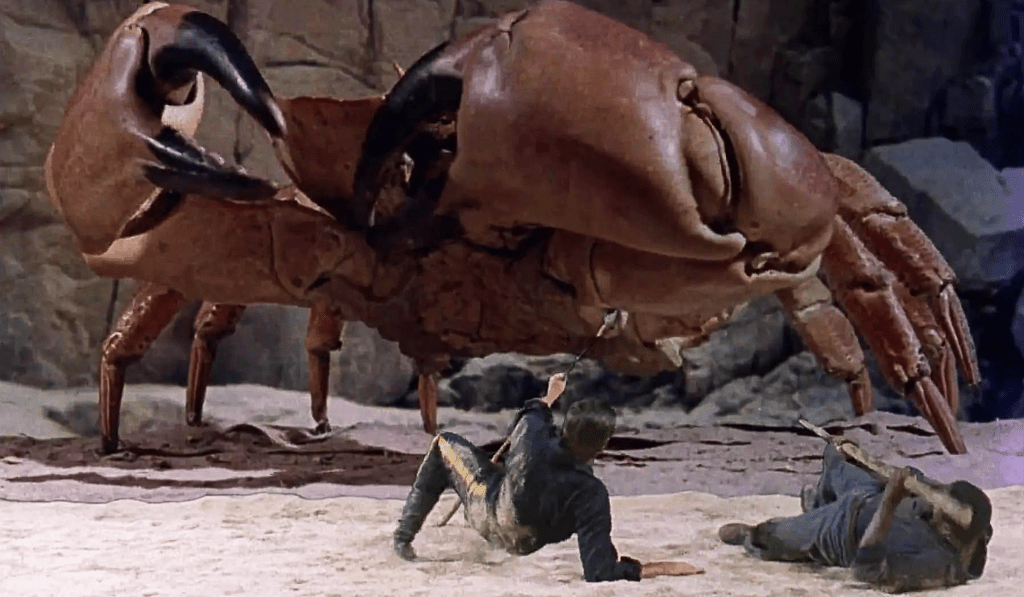
As a kid watching MYSTERIOUS ISLAND on TV for the first time I couldn't believe how utterly amazing the giant crab sequence was!
As a kid watching MYSTERIOUS ISLAND on TV for the first time I couldn’t believe how utterly amazing the giant crab sequence was!

And then, in 1973, I watched an episode of the children’s TV series CLAPPER BOARD. This particular episode was devoted to the work of an American guy called Ray Harryhausen… and the clips being shown were from all the movies that I liked – and I finally realised the same genius was behind them all! Now I knew the movie monsters that I thought were the best-looking creatures to ever roam the silver screen were brought to ‘life’ via the art of stop-motion animation. And so I became obsessed with Ray Harryhausen, finding snippets of info about him from magazines like Famous Monsters of Filmland, going to see his latest releases like THE GOLDEN VOYAGE OF SINBAD at the theatre, making my own stop-motion home movies, buying Super 8 films and projecting these edited highlight reels of the stop-motion action sequences (from movies including THE 7TH VOYAGE OF SINBAD and JASON AND THE ARGONAUTS) for my own enjoyment and for my friends to watch. I was the only one of my group of friends to own a film projector at the time (this was a long time before the advent of videos and DVDs!) 

Anyway, fast-forward to the mid-1980s; this was when I started producing a film fanzine called Imaginator. The first few issues were photocopied, then I moved on to having them properly printed, and Imaginator became more of a prozine. In 1990 I reached out to Ray Harryhausen, asking if I could interview him – and Ray got back to me and he said… ‘yes’! So I went over to his lovely house in Holland Park in London, where Ray sat with me and answered my questions. I included the interview in issue 6 of Imaginator. By this time my interest in movie genres had broadened, so I was equally thrilled to be watching Hong Kong action flicks, low budget US horror movies, Carolco Pictures-style sci-fi-action epics, and so on – but I was still extremely fond of Ray’s fantastic output of films, and I was very proud to be able to include an interview with my hero within the pages of my magazine.    
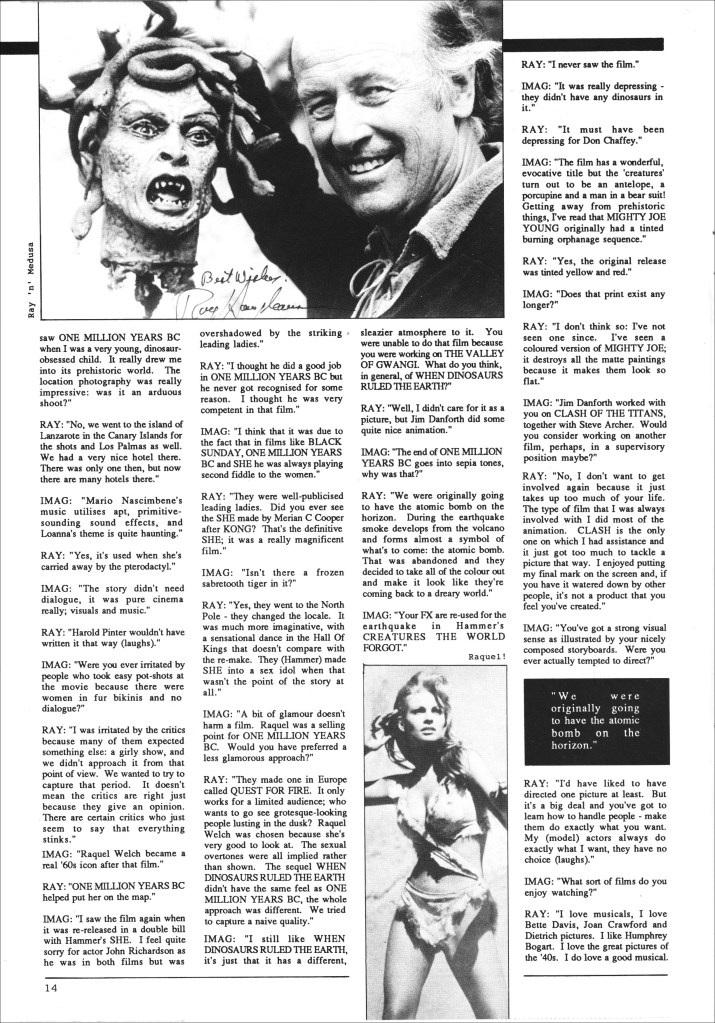
This is a scan of one of the Ray Harryhausen interview pages from issue 6. I have recently started publishing Imaginator again, and it’s now a full colour magazine, but you can see from the scan above that issues 1 to 7 of Imaginator were printed in black & white. So, to accompany the interview now that it’s being shared on this blog, I am going to use a lot of colour images too. Woot!

I did cross paths with Ray a couple more times when I went to some of his book-signing events, etc, but my fondest memory remains going to Ray’s home in 1990, where he put aside some time to let me, a lifelong fan, eagerly ask him a bunch of questions about his movies, and I even got to quiz him about such things as his favourite actors, the trickiest sequences he ever shot… and we even talked a little about the 1976 version of KING KONG!

There are a lot of people, including Peter Jackson, Rick Baker, Phil Tippett, Dennis Muren, Tom Hanks, James Cameron, Guillermo del Toro and many more, who were influenced and inspired and entertained by Ray Harryhausen’s cinematic oeuvre. Ray was someone who was not just a master of his craft, he was also a considerate man who would find the time to interact with those who looked up to him.
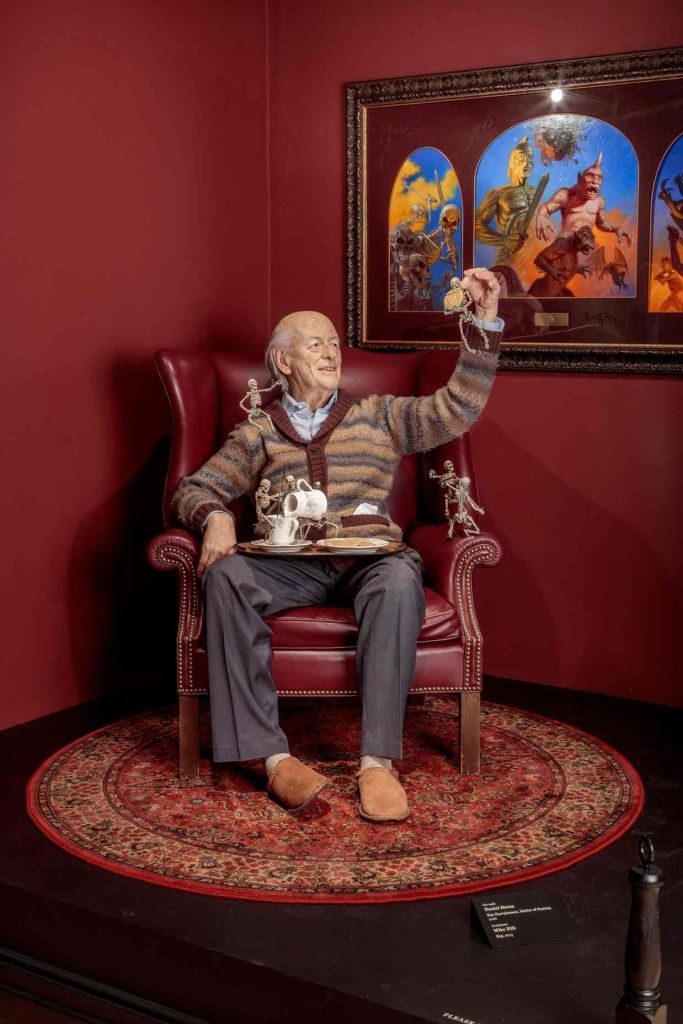
Guillermo del Toro’s extensive collection of fantasy and horror memorabilia includes a very realistic custom mannequin of his hero Ray Harryhausen

When I heard the news of Ray’s passing in 2013 it hit me hard. Though I had only met him a handful of times, the depth of interest that I had retained for his work, reaching right back to when I was a very young child, meant that, in a way, Ray had always been a part of my life, and so the sadness I felt was akin to losing someone close to me. There will never be another Ray Harryhausen.

The interview I did with Ray is featured below; please remember, as I’ve already said a couple of times, this chat took place in 1990, so some of the comments I make in the interview about how difficult it is to find and watch some of Ray’s older films no longer apply as his wonderful work is available now on DVD and Blu-ray and streaming. Also, this chat took place before a certain new type of special FX called CGI was to become an all-pervading method of making movie monsters, so that, of course, never gets commented on .

Anyway, in case you haven’t already guessed, this talk with Ray Harryhausen remains one of the highlights of my publishing-related work; I got to chat, one-to-one, with my all-time hero!

From MIGHTY JOE YOUNG (1949) to CLASH OF THE TITANS (1981), special effects magician Ray Harryhausen created a wonderful menagerie of monsters, dinosaurs and mythical creatures for the movies. Over the years many cinéastes have fallen under the spell of his creations. Whether they happened to be reanimated skeletons or an ever-growing alien from Venus, these articulated models possessed character and dynamism thanks to Ray’s painstaking work and skill. If it wasn’t for Ray Harryhausen’s body of work I probably wouldn’t have become hooked on fantastic films, and there would have been no IMAGINATOR magazine.

Recently I was very pleased to be able to talk with Ray and chat about such topics as his favourite movie stars, some of his unmade movie projects… and even Godzilla!

IMAGINATOR: I love monster movies and you’re the King of the Monster Makers. Of the creatures that you’ve created, which are you fondest of?

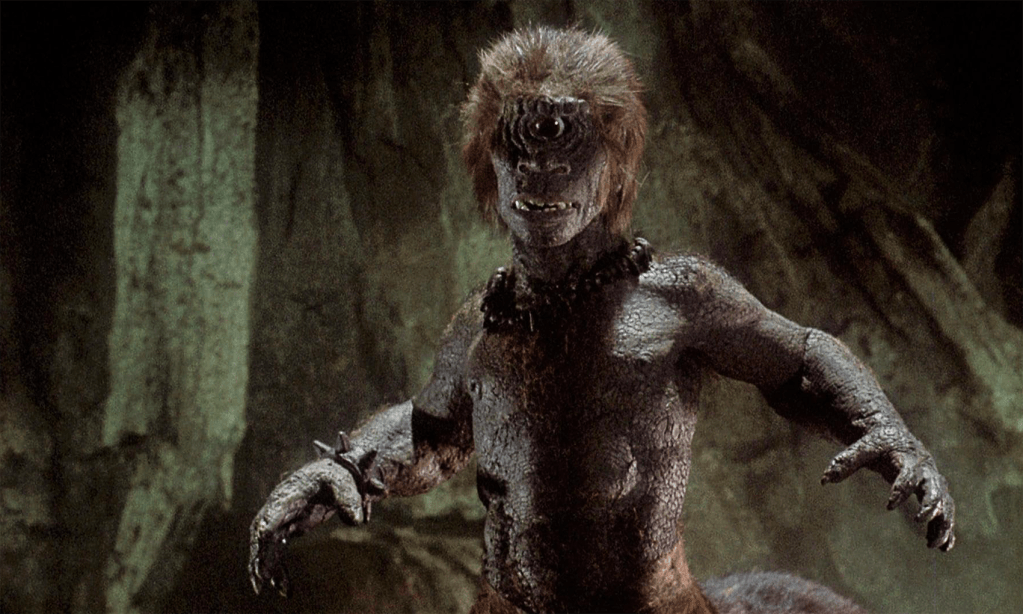
RAY: That’s very difficult to say. There are different creatures in different pictures one becomes fond of. One of the most popular things I’ve ever done was the Cyclops from THE 7TH VOYAGE OF SINBAD. I get more fan letters about the Cyclops, I think, than any other character.

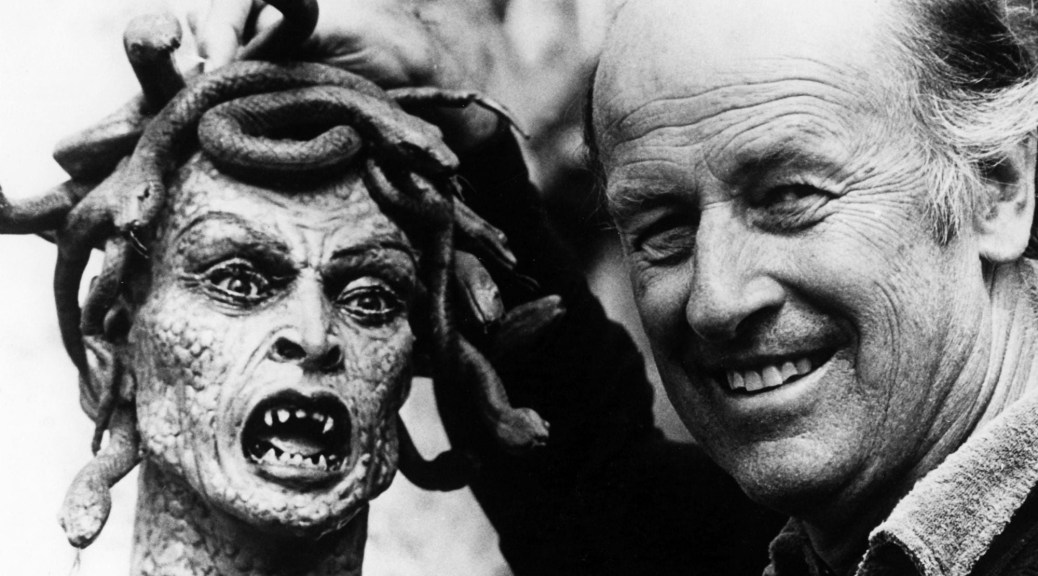
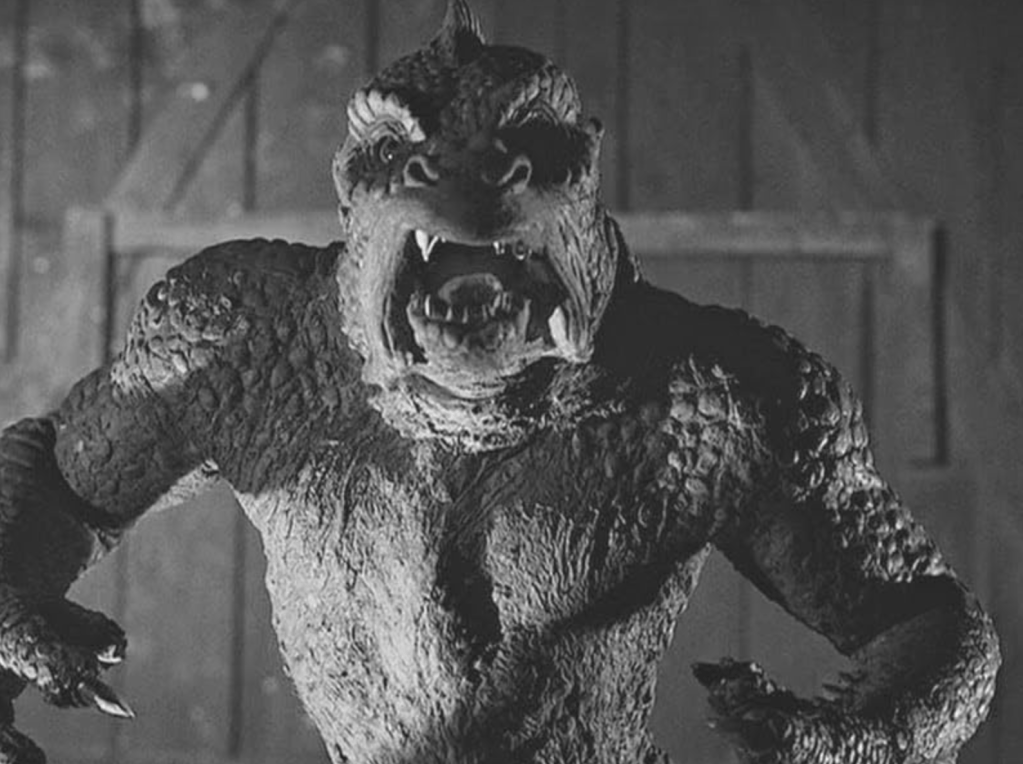
The Ymir was a character I grew rather fond of from 20 MILLION MILES TO EARTH, and Medusa (from CLASH OF THE TITANS), I think has a certain charm in her own uncharming way.
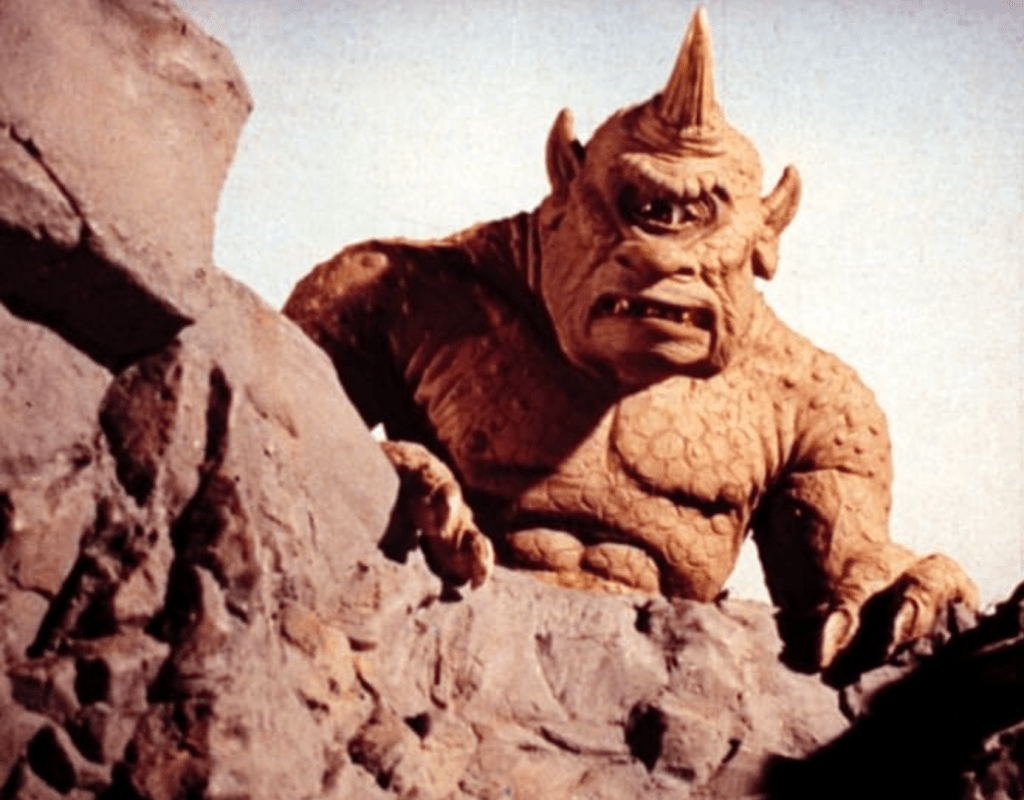
The Cyclops!
The Cyclops!
The Ymir!
The Ymir!
Medusa!
Medusa!

IMAG: One of my favourites is the Hydra from JASON AND THE ARGONAUTS.

RAY: Yes, the Hydra was interesting to animate.
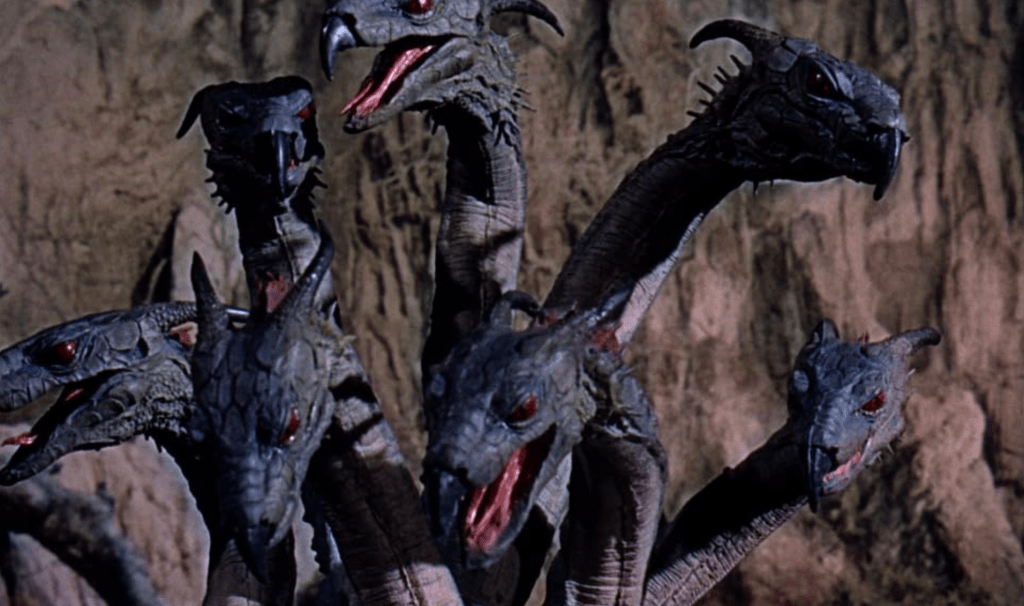
The Hydra!
The Hydra!

IMAG: It is one of those creations that couldn’t have been brought to life in any other way, other than with animation.

RAY: It’s something you read about in a storybook and you could never imagine you’d ever see a ‘live’ one of the screen.

IMAG: Did you ever intend to give it legs?

RAY: No, never. It’s supposed to be snake-like. With legs it would be a dragon.
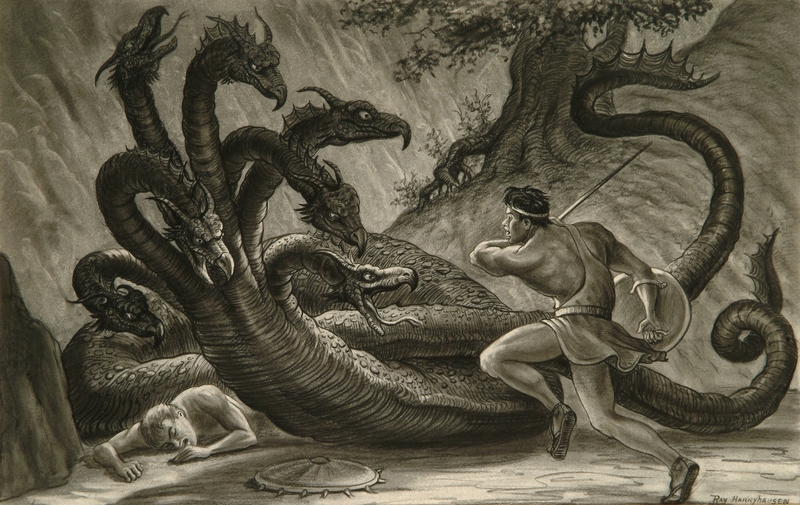
Ray's concept art showing Jason confronting the Hydra
Ray’s concept art depicting Jason confronting the Hydra

IMAG: Rick Baker made a rubber mask based on your cyclopean Centaur design from THE GOLDEN VOYAGE OF SINBAD.

RAY: Yes, he wanted to put it on the market. This was years ago before rubber masks became popular. He made it as a sample and tried to talk to Columbia, but unfortunately no one at that time was interested.
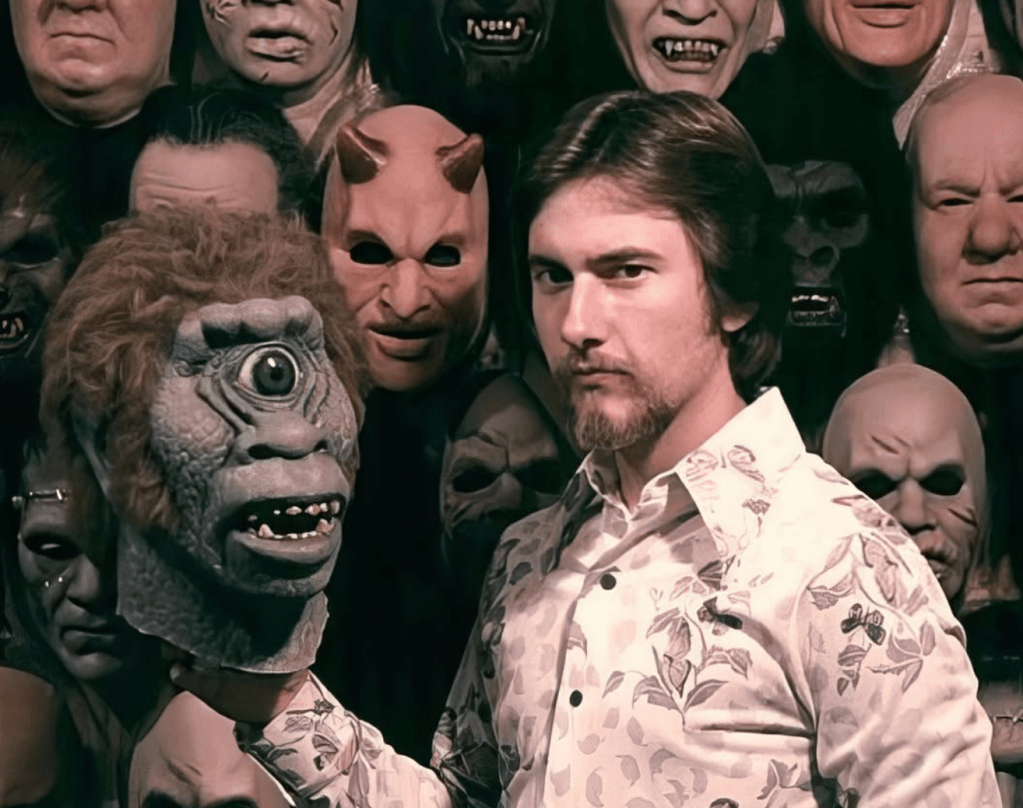
Rick Baker with the Centaur-Cyclops mask. Laine Liska would go on to modify a casting of this mask, and it became Myo, the one-eyed alien in the cantina sequence in STAR WARS (1977)

IMAG: He made it quite a while back?

RAY: Oh yes. Many years ago.

IMAG: Rick Baker, of course, was involved in the 1976 remake of your all-time favourite film, KING KONG (1933).

RAY: Very much so. He WAS King Kong. Unfortunately, the awards were all given to entirely different things.
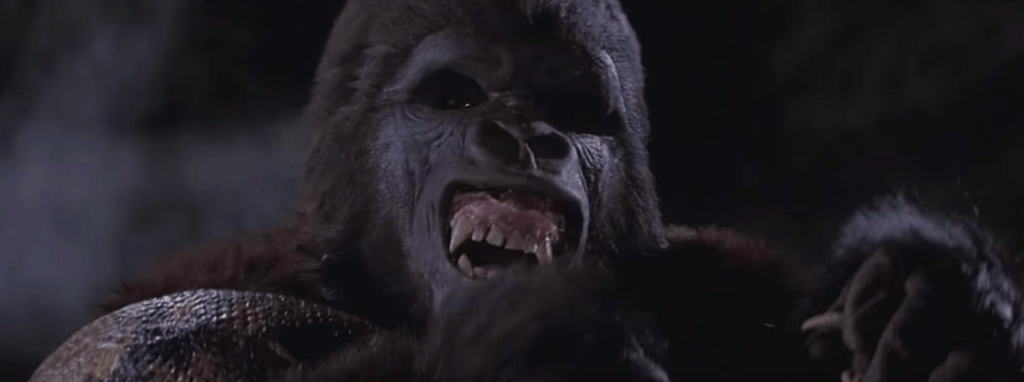
Rick Baker as Kong in the 1976 version of KING KONG

IMAG: I felt sorry for Rick Baker. At the start of KING KONG there is a message from the producers that acknowledges the ‘fact’ that King Kong was built by Carlo Rambaldi: with no mention of Baker.

RAY: And they never used that big mechanical thing for more than 10 seconds. It was a big con game.
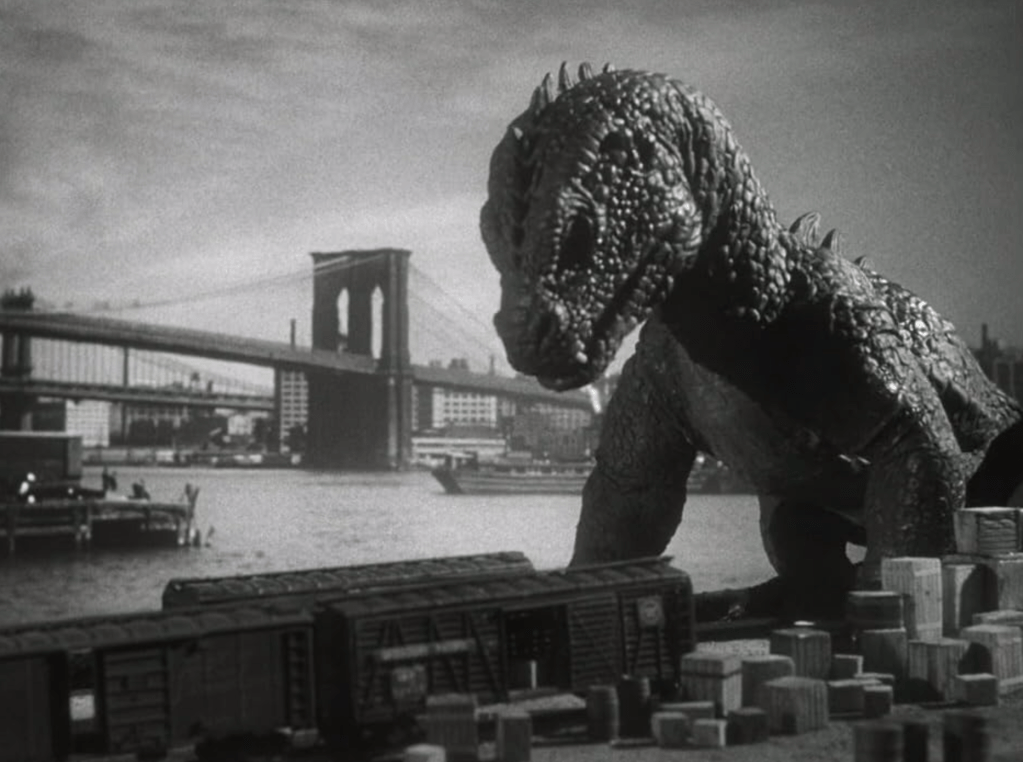
THE BEAST FROM 20,000 FATHOMS

IMAG: The Rhedosaurus from THE BEAST FROM 20,000 FATHOMS (1953) is a made-up dinosaur. Was it always intended to be fictional?

RAY: Yes. We didn’t want to have a brontosaurus as they are too round and don’t have a great deal of menace, and they’re vegetarian. So we made a synthetic creation: a sort of cross between a tyrannosaurus, a brontosaurus, and an alligator, all three combined.

It’s the Rhedosaurus! Run away!

IMAG: It must have been wonderful to work on a film based on a short story written by one of your friends; Ray Bradbury.

RAY: Oh yes, very much so. It was the only time that we’ve worked together. We used to haunt the telephones when telephone conversations were cheap; you’d pay five cents and you could talk for an hour or two. He used to live on the other side of town and we used to talk and compare notes. We wanted to make the greatest dinosaur picture ever.

How the BEAST came about didn’t involve us working directly together on the screenplay. The script had already started for the film when the short story (called THE FOGHORN) came out in The Saturday Evening Post. We needed additional sequences so, when the producer read the story with a big illustration of a monster attacking a lighthouse, he said, ‘Gosh, we’ve got to get that and put it in the picture’. The title was also changed. The picture was originally called MONSTER FROM BENEATH THE SEA.
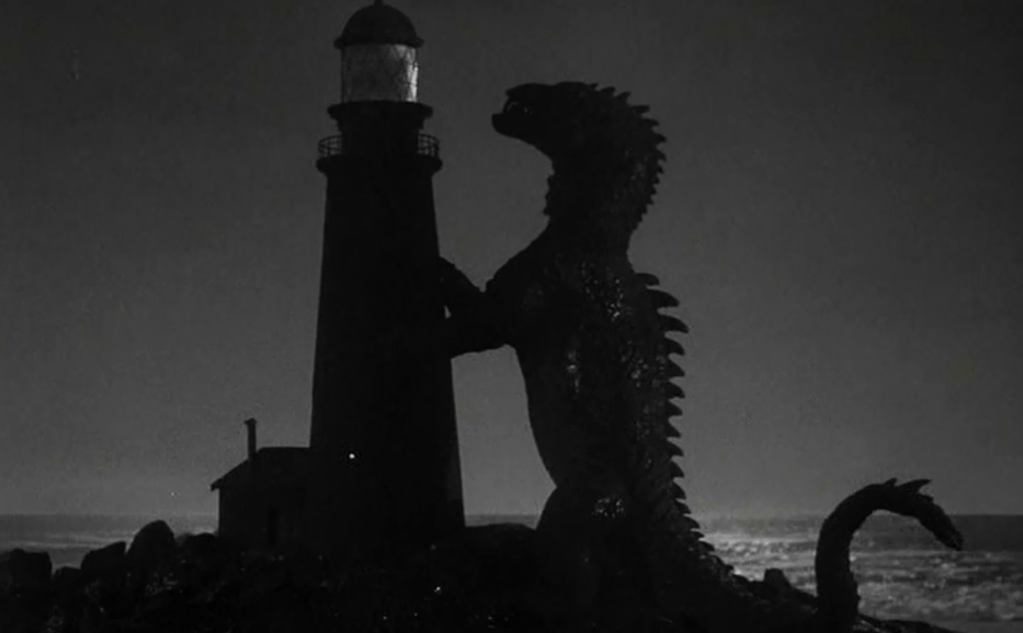
The Rhedosaurus attacks the lighthouse!

IMAG: The lighthouse scene is very good. The silhouetted attack is very atmospheric.

RAY: It’s one of the highlights of the picture. I would’ve liked to have done it in a more elaborate way, but the whole picture was made for a very low budget so it wasn’t practical.
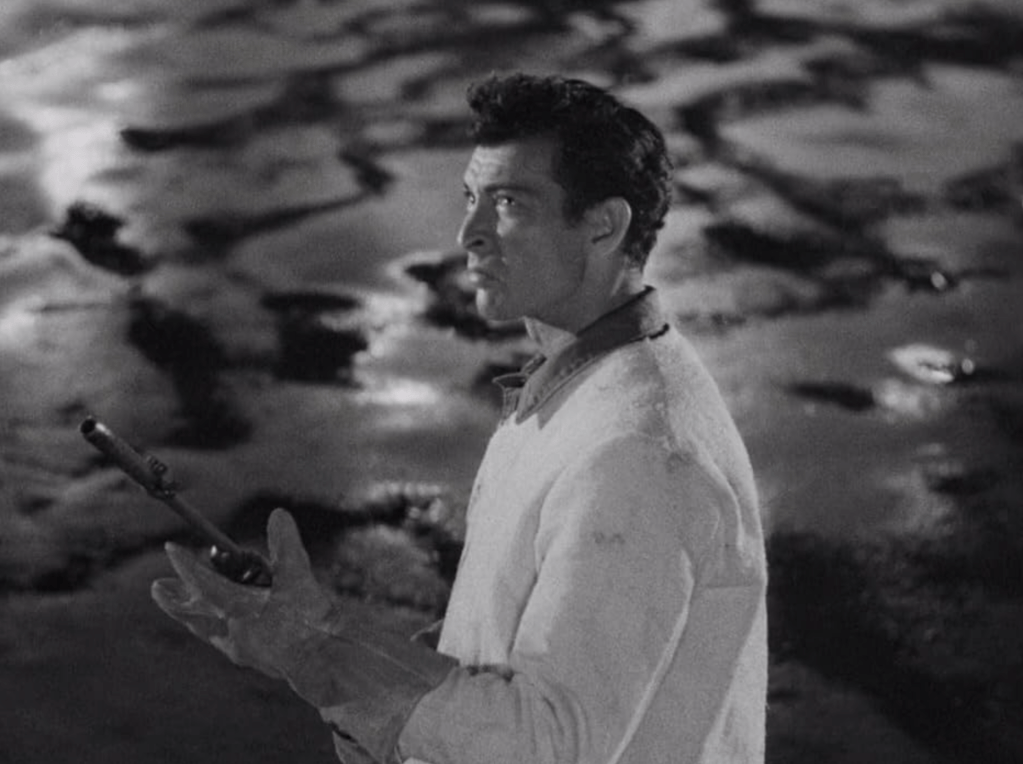
Lee Van Cleef plays Corp. Stone in THE BEAST FROM 20,000 FATHOMS
Lee Van Cleef plays military sharpshooter Corporal Stone in THE BEAST FROM 20,000 FATHOMS

IMAG: The late Lee Van Cleef played the guy who kills the beast.

RAY: That was long before he became a big name in the spaghetti westerns.

IMAG: You went on to make more dinosaurs come to life in THE ANIMAL WORLD, ONE MILLION YEARS B.C. and THE VALLEY OF GWANGI. Why do people still have this fascination for dinosaurs?
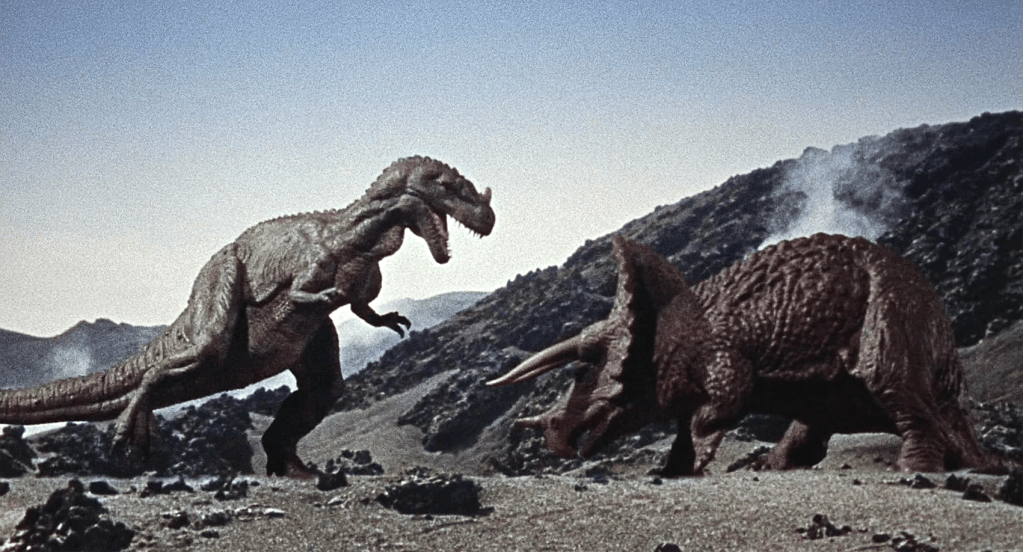
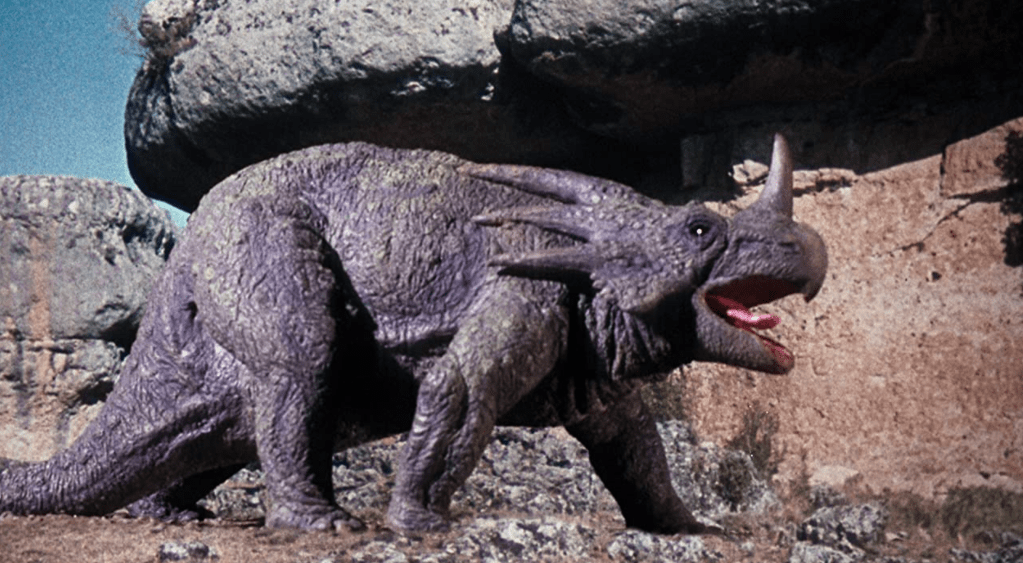
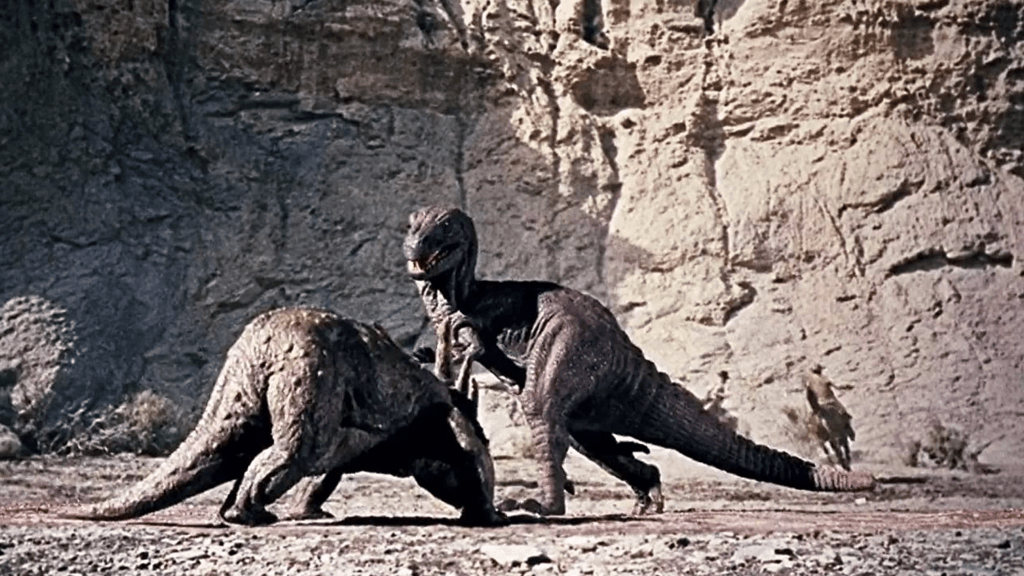
A Ceratosaurus and a Triceratops battle to the death in ONE MILLION YEARS B.C.

RAY: Well, dinosaurs were actual living creatures and every child goes to the museum and is brought up seeing the skeletons. The whole point of the medium of dimensional animation, particularly from Willis O’Brien’s point of view when he made THE LOST WORLD in 1925, was that you were putting on the screen something you couldn’t photograph in real life. You can’t find a dinosaur today so you have to create one, and the best way to create it, rather than glueing fins on known lizards, is through the medium of stop motion.

I would have liked to have re-made THE LOST WORLD because I think I could do it better.
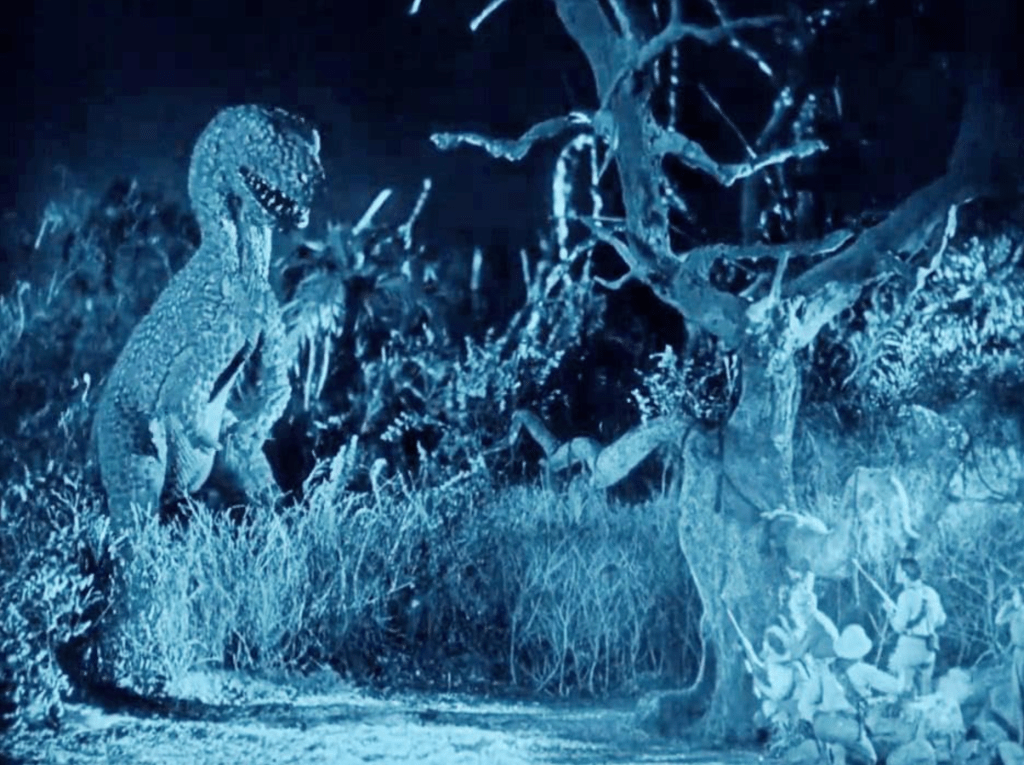
Wow, I REALLY would've liked to have seen Ray's version of THE LOST WORLD!
Wow, I REALLY would’ve liked to have seen Ray’s version of THE LOST WORLD!

The only reason I accepted re-making ONE MILLION B.C. (1940) was because I didn’t think the first one did it right. They had to hide some of the animals because some of them were so dreadful, particularly the allosaurus; you could hardly see it hidden behind the bush.

IMAG: It was a man in a suit.

RAY: I felt I could improve upon it. I always hesitated re-making KING KONG because it is a classic and, even with many of its shortcomings, it’s still one of the greatest fantasy films ever made.
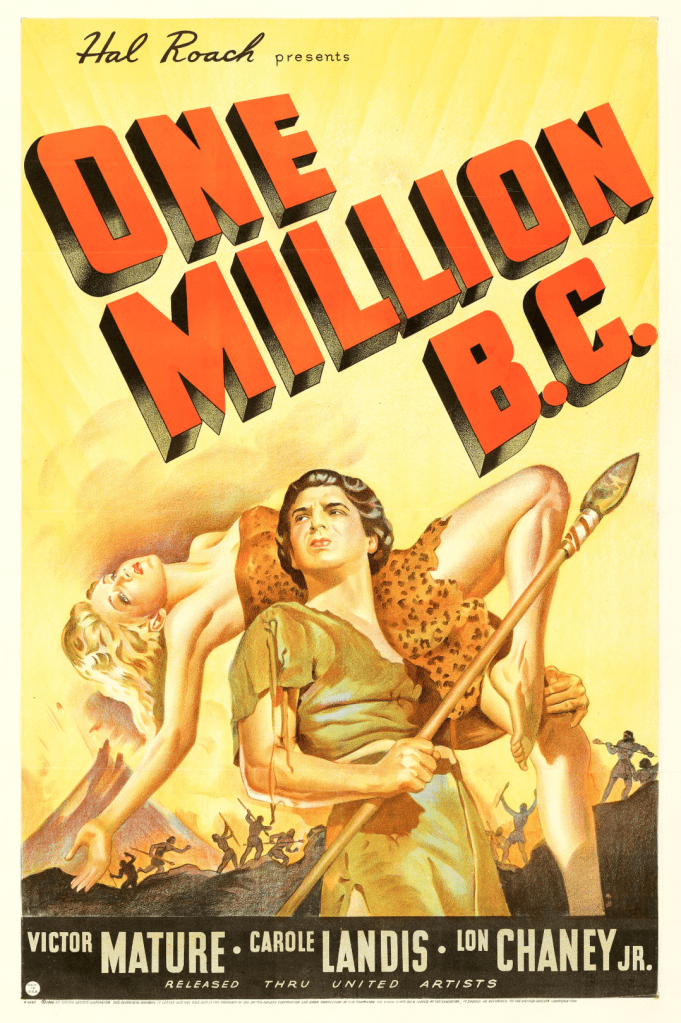
ONE MILLION B.C. (1940) was titled MAN AND HIS MATE in the UK
Poster for ONE MILLION B.C. (1940). The film was titled MAN AND HIS MATE in the UK
The awesome Centaur from THE GOLDEN VOYAGE OF SINBAD

IMAG: You’ve created some great mythical characters; the Cyclops from THE 7TH VOYAGE OF SINBAD and the Centaur from THE GOLDEN VOYAGE OF SINBAD come to mind. I’m interested in why you chose to have the mechanical Minoton rather than a flesh-and-blood Minotaur for the third Sinbad film?
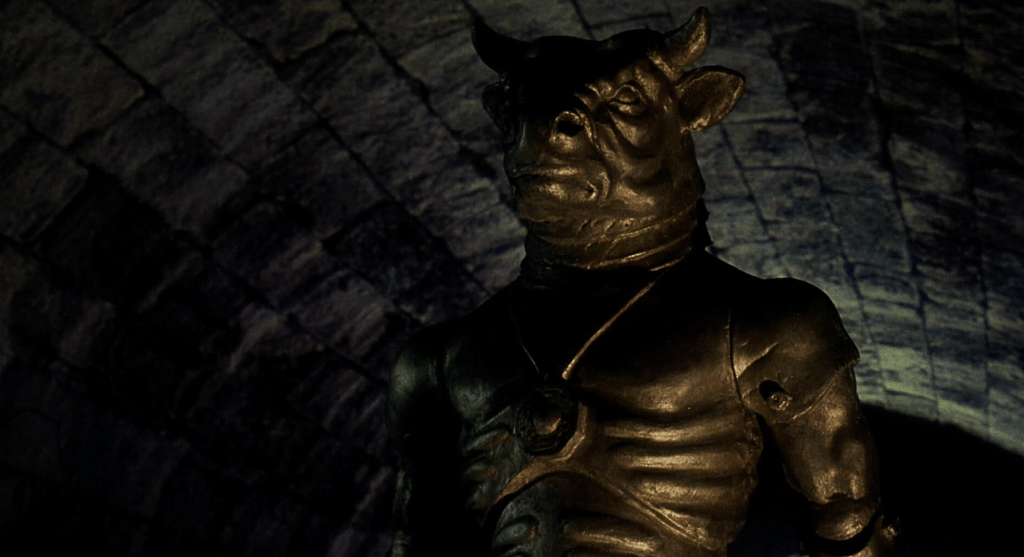
The Minoton from SINBAD AND THE EYE OF THE TIGER

RAY: We felt we wanted Zenobia, the sorceress, to create mechanical-like thing, like a Frankenstein, rather than have it an actual living thing. It was a servant, not a wild beast; you’d have to approach the story from a completely different point of view if it was alive.

IMAG: The Phororhacos in MYSTERIOUS ISLAND (1961) is frequently mistaken for a giant chicken because the thing’s origin was not gone into in the final film. What were you going to do to illustrate the prehistoric nature of the bird?

RAY: The script went through a number of changes as many screen stories, when they’re being composed, go through. At one point we wanted to approach MYSTERIOUS ISLAND from a prehistoric point of view; that they would land on this island which is populated by prehistoric animals. We were going to have all kinds of dinosaurs and things on it. But we abandoned that idea and the Phororhacos was a leftover from that. So then we adapted the idea of having Captain Nemo making these animals big, like the crab and the bee, through experimentation. So that was a combination of two different approaches to the same story.
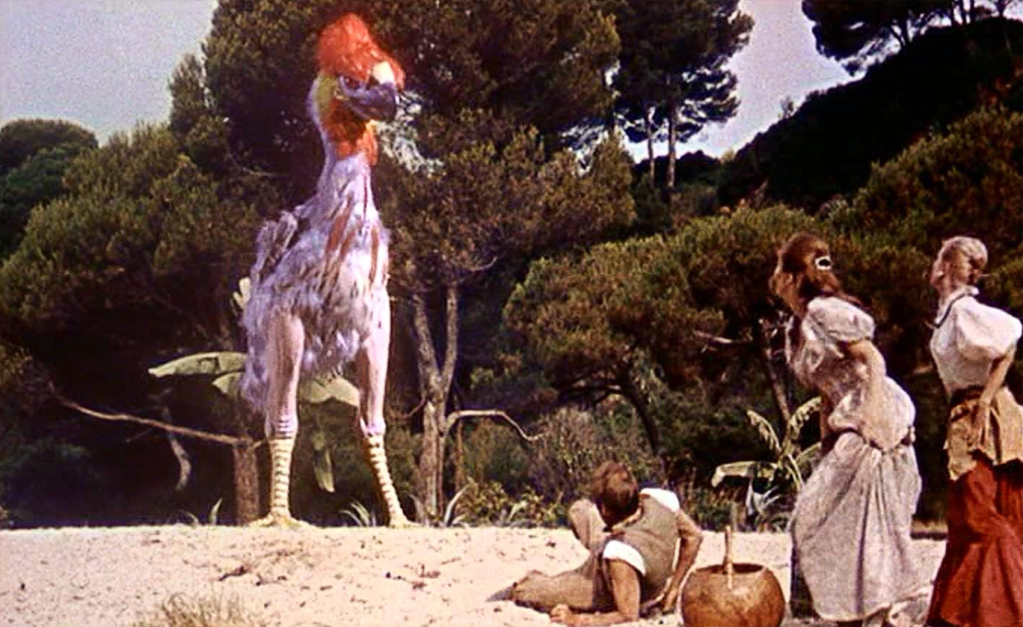
The Phororhacos!
The Phororhacos!

IMAG: So you didn’t mind people thinking that it was a chicken?

RAY: No, it was a slightly comical effect and Bernie Herrmann, of course, put a semi-comical score to it.
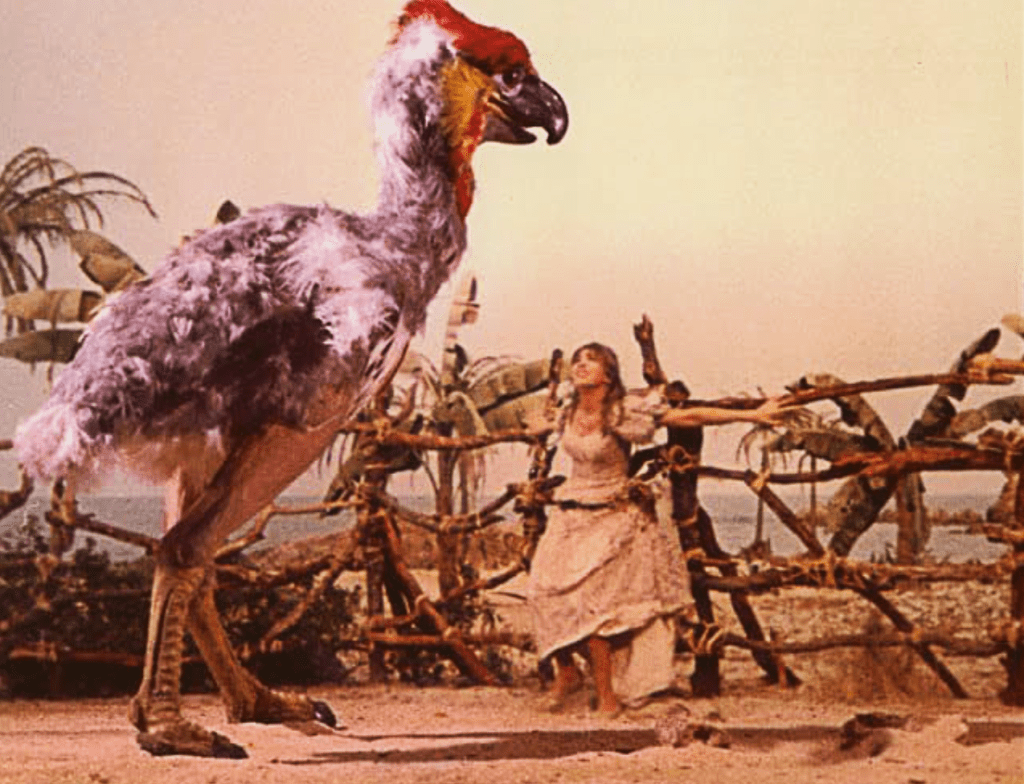
The Phororhacos sequence boasts an amazing musical accompaniment courtesy of  Bernard Herrmann
The Phororhacos sequence boasts an amazing musical accompaniment courtesy of Bernard Herrmann
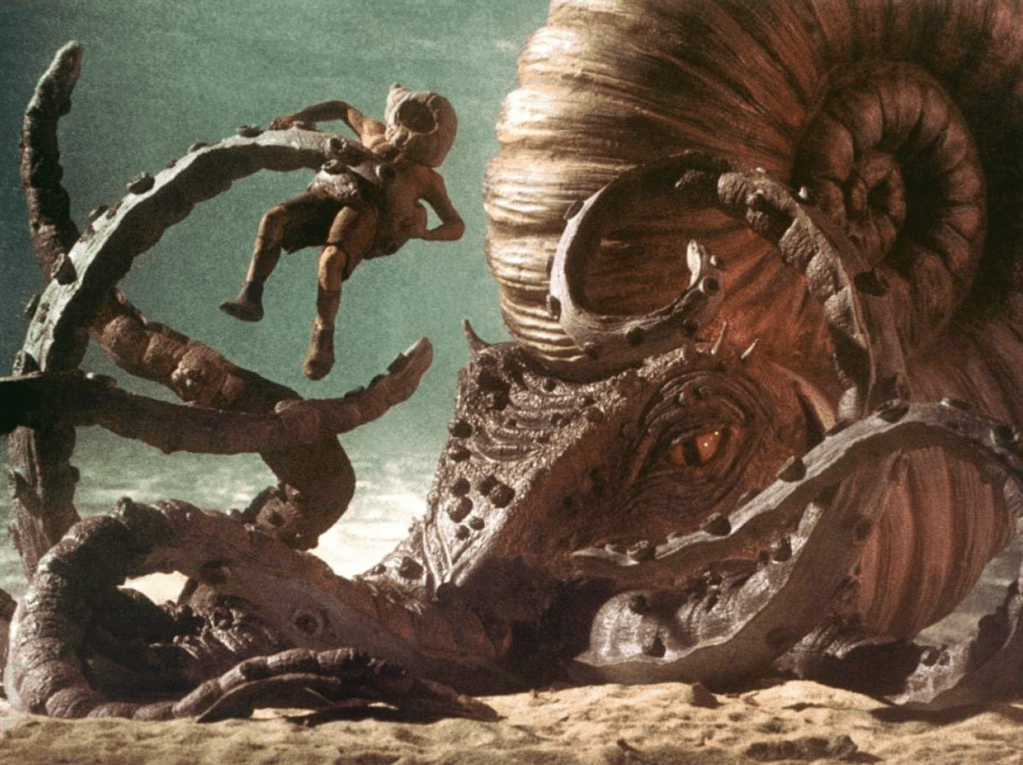
The Nautilus creature! I love it!

IMAG: What about the squid-like creature at the end; the Nautilus? That was intended to be a prehistoric thing too, wasn’t it?

RAY: That was sort of a hang-over from the prehistoric period, yes.

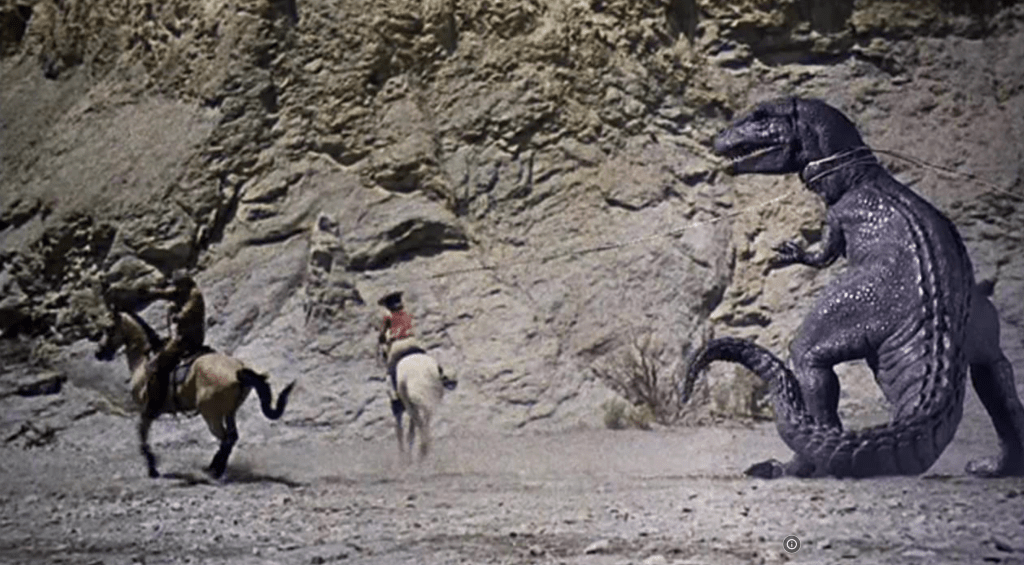
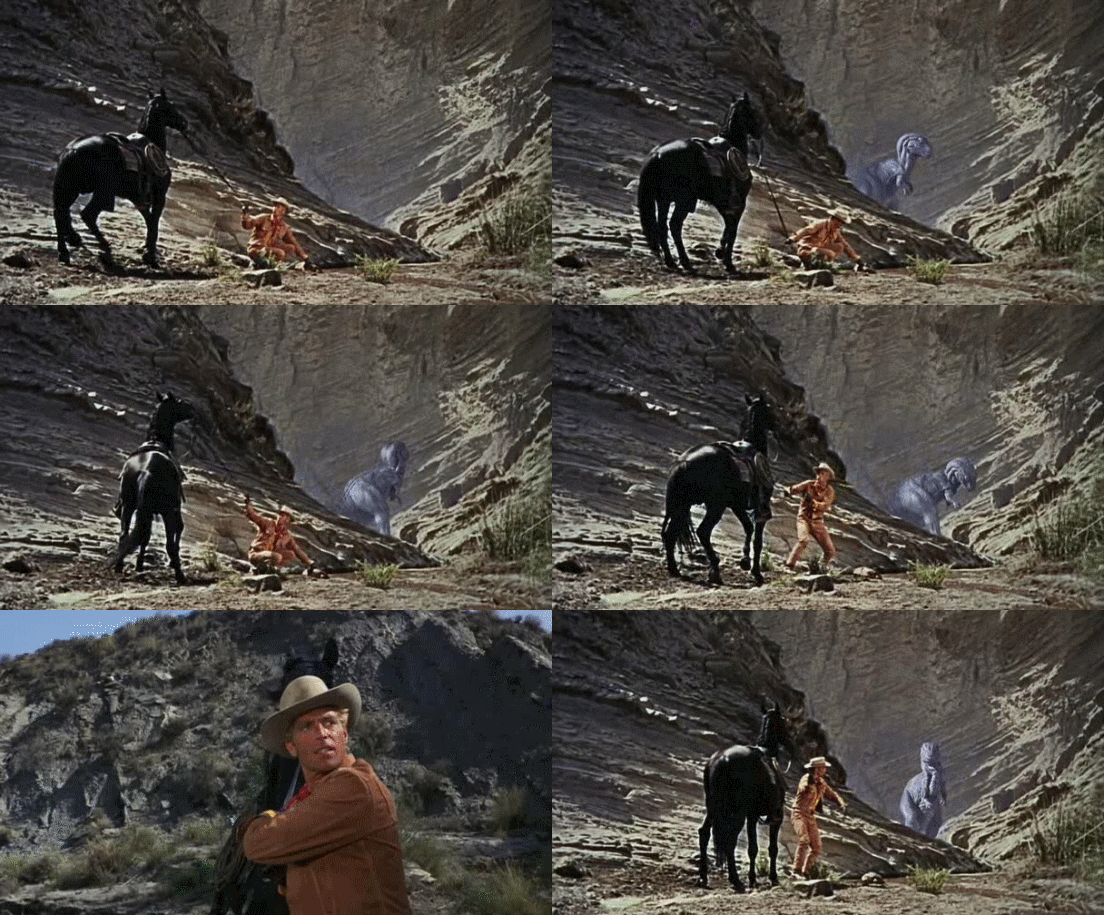
IMAG: You have animated lots of complicated set-ups, such as the roping of the allosaurus in THE VALLEY OF GWANGI and the skeleton fight from JASON AND THE ARGONAUTS. What has given you the biggest headache in any of your films?
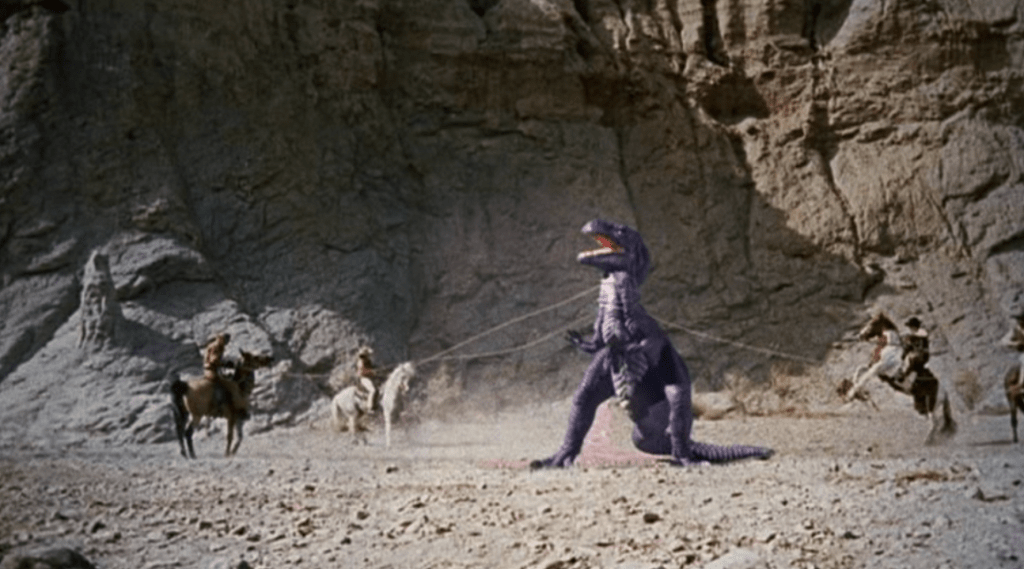
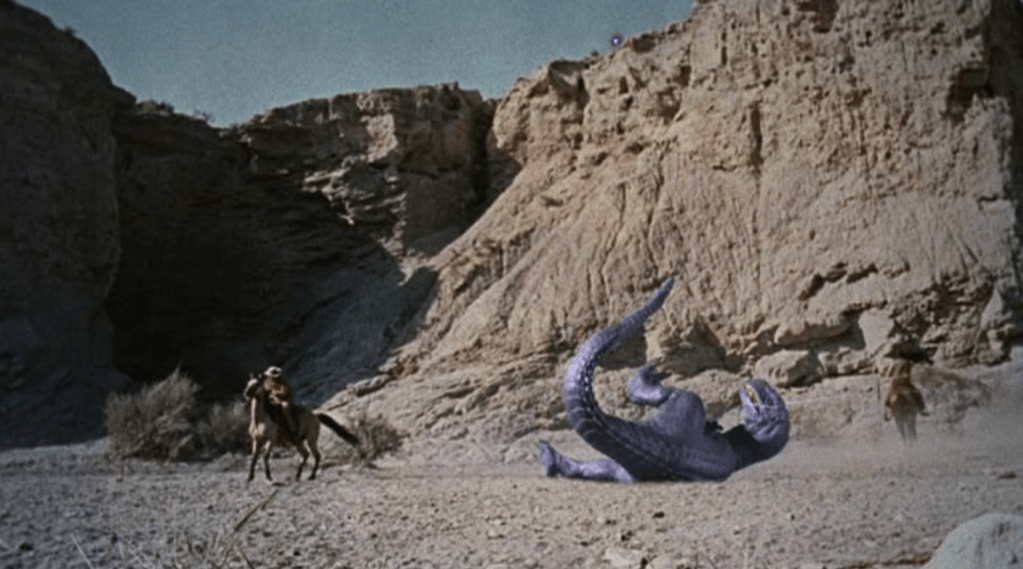
Above: two shots from the stupendously exciting roping sequence from GWANGI!

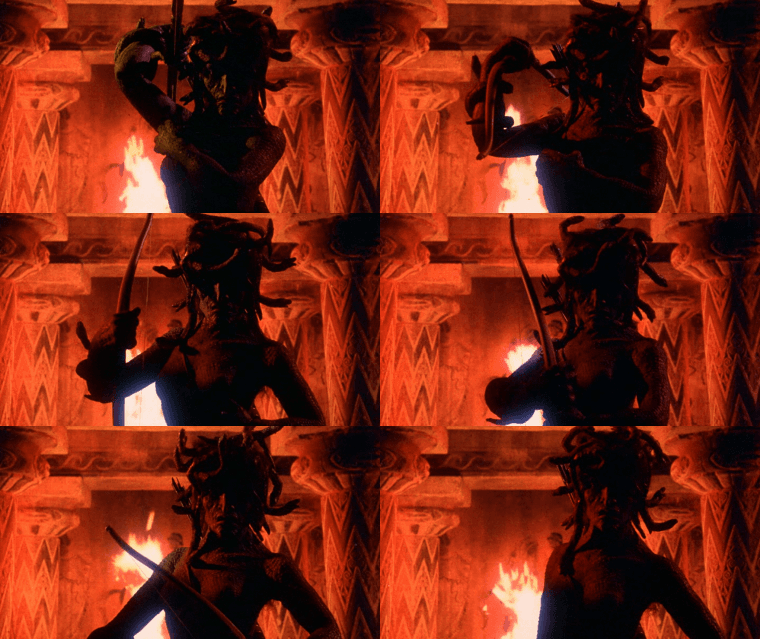
RAY: GWANGI had a lot of problems, and anything involving multiple heads has its problems – the Hydra, and Medusa; she had 12 snakes in her hair. When you start animating 12 snakes, keeping them moving all the time, plus the tails, plus Medusa herself shooting arrows from her bow and rattling her tail, it gets quite complicated to remember all the moves, whether the head is moving backwards or forwards – particularly if the phone rings!
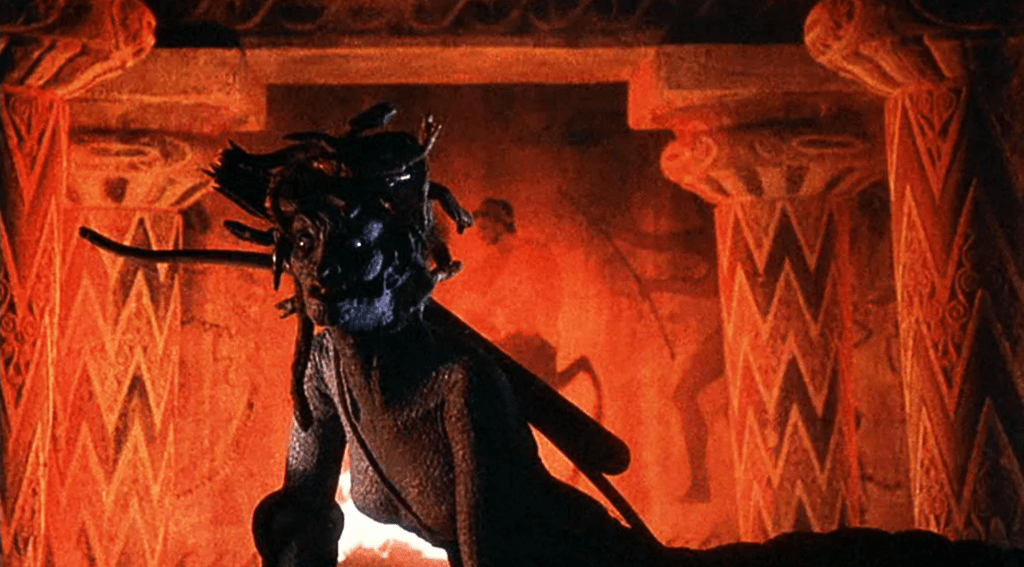
All of Ray’s hard work animating Medusa paid off as this is one of his all-time best set pieces!
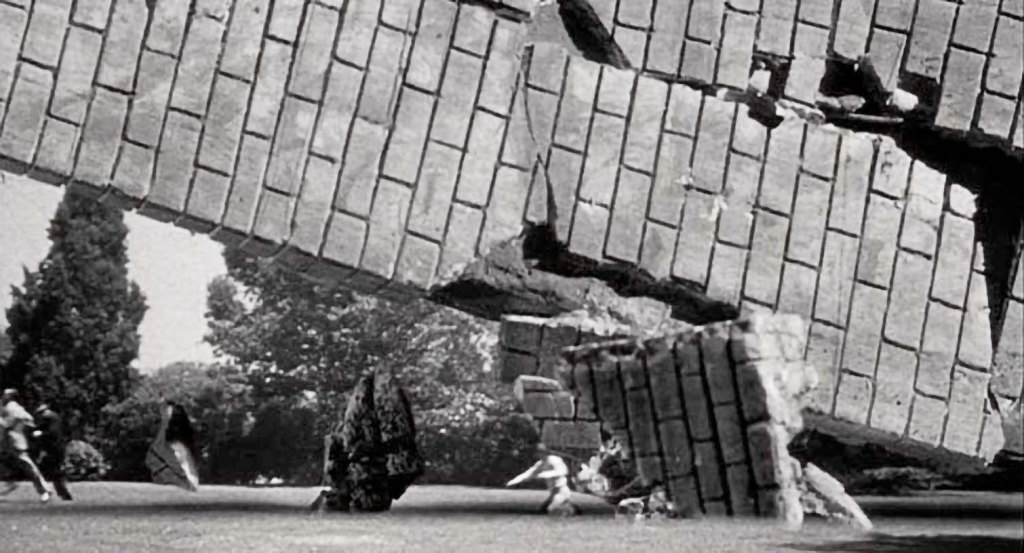
The Washington Monument collapses in EARTH VS. THE FLYING SAUCERS!

IMAG: It must’ve been headache-inducing to animate the buildings and famous landmarks getting wrecked in EARTH VS. THE FLYING SAUCERS (1956). You animated the falling bricks individually!
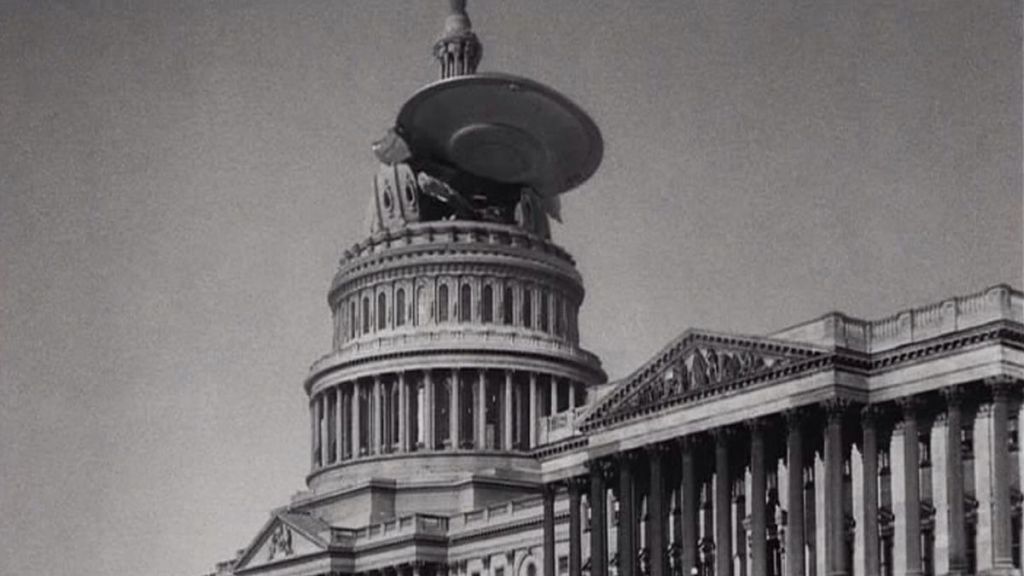
Ray had to animate the flying saucers AND all the falling rubble in EARTH VS. THE FLYING SAUCERS
Ray had to animate the spinning flying saucers AND all the falling rubble in EARTH VS. THE FLYING SAUCERS!

RAY: We did that simply because we couldn’t afford high speed photography. The budget was so low that we just couldn’t have the set-up where you have to have a couple of dozen people on a high speed camera. I wouldn’t do it again; it was an experience I went through but it never looked as convincing as high speed photography.
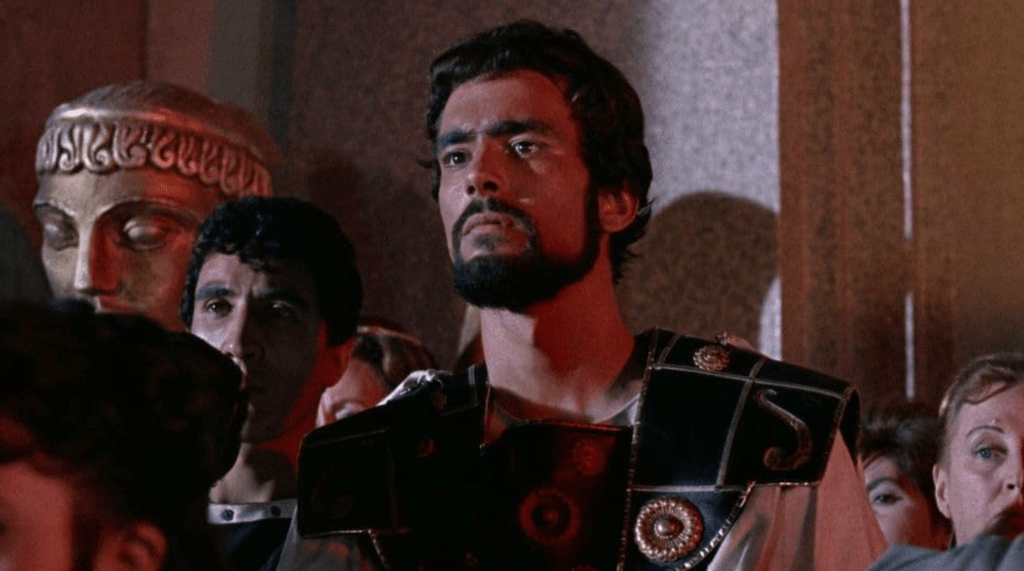
Todd Armstrong in JASON AND THE ARGONAUTS

IMAG: Whatever happened to Todd Armstrong?

RAY: I’ve no idea.

IMAG: The only other film that I’ve seen him in was the POW story, KING RAT.

RAY: I never saw him in that.

IMAG: He’s not a major character in KING RAT.
In JASON AND THE ARGONAUTS he had to be dubbed, right?
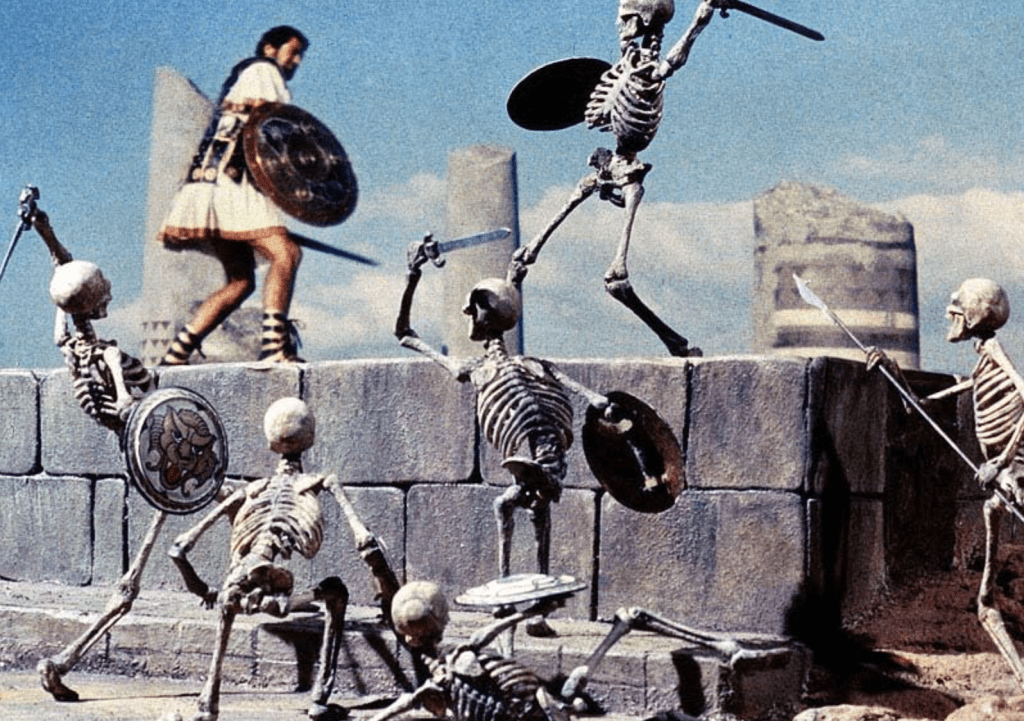
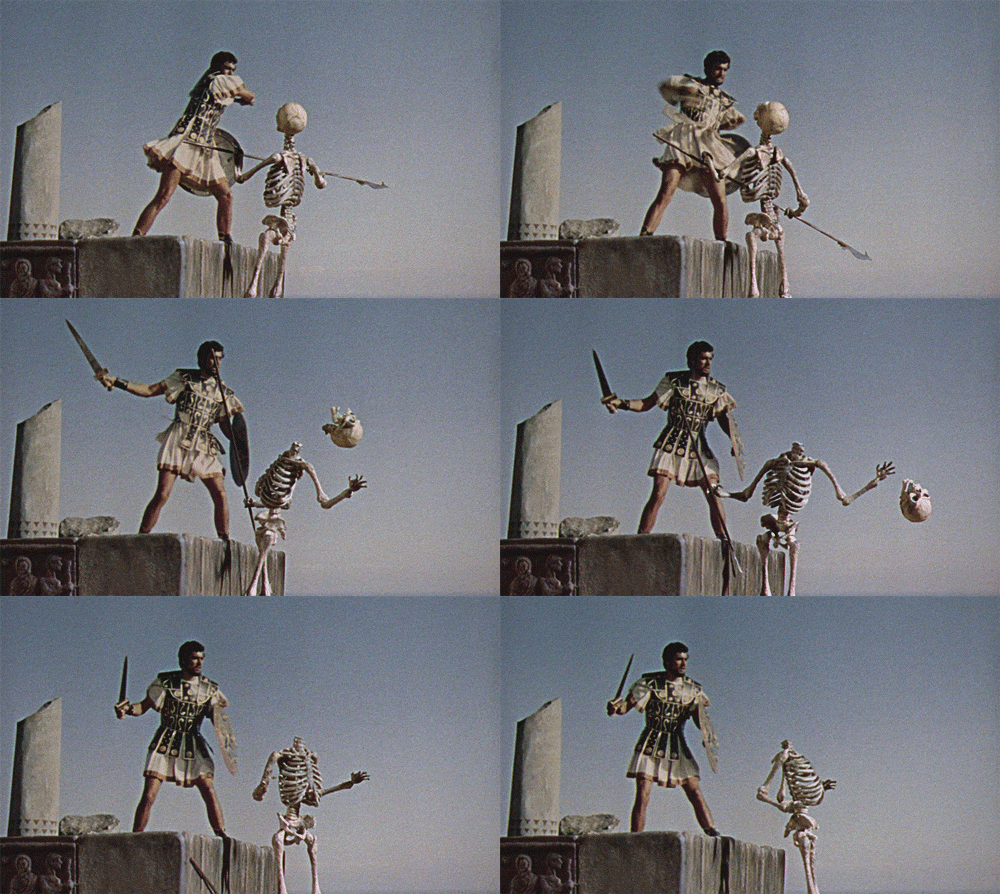
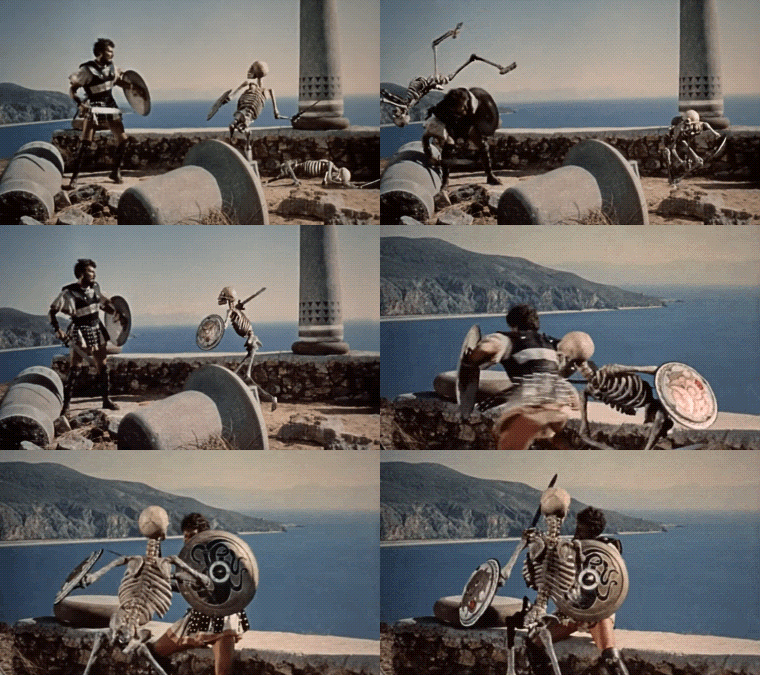
Todd Armstrong, as Jason, fighting the 'Children of the Hydra's Teeth'; skeleton warriors!
Todd Armstrong, as Jason, fighting the ‘Children of the Hydra’s Teeth’; skeleton warriors!

RAY: We had a lot of English actors that were all from the stage, and they had a certain type of accent. Todd had a good voice but he had a very strong American accent which collided when we put everything together. That was the reason he was dubbed; we had someone with a voice that sounded very much like him but without the strong American accent.

IMAG: That’s quite unusual as many producers went out of their way to make sure the lead character HAD an American accent.
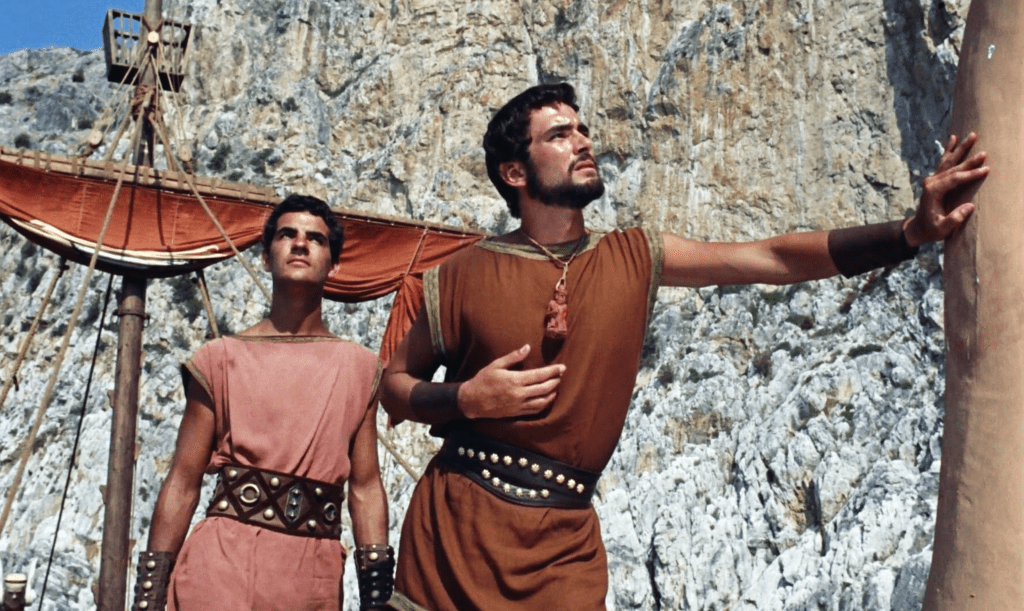
odd in a scene with Gary Raymond, who played the treacherous Acastus
Todd in a scene with Gary Raymond, who played the treacherous Acastus

RAY: I know. He was chosen because the head office felt that they wanted an American in it, you know. We had the same problem with CLASH OF THE TITANS. John Gielgud was up for the role of Ammon, the playwright, but the front office said we had to have more Americans in it or people will think it is a foreign film.

IMAG: Fortunately, Burgess Meredith was chosen. I quite like him in the role.
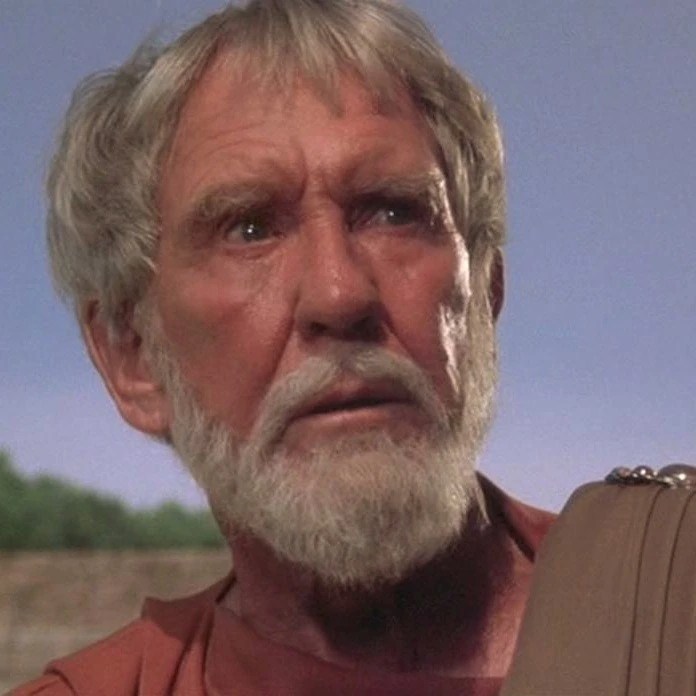
Burgess Meredith as Ammon

RAY: He did a good job. He was American and so, of course, was Harry Hamlin, who was quite unknown. Now he’s made a big name in LA LAW.
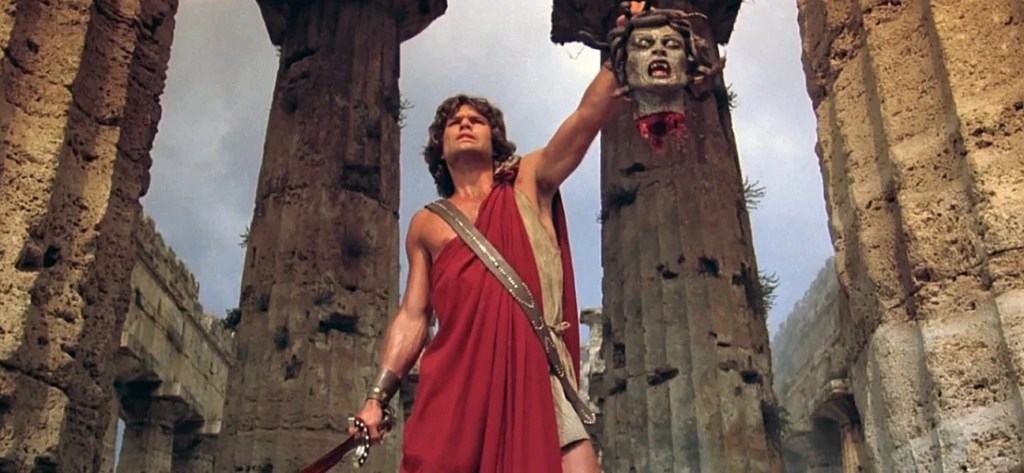
Harry Hamlin as Perseus, holding the severed head of Medusa
Harry Hamlin as Perseus, holding aloft the severed head of Medusa

IMAG: Who would you rate as the actor you were most impressed with?

RAY: Of course we were delighted to have Laurence Olivier play Zeus. Who else could play Zeus? This was after his prime but I thought he did a beautiful job.
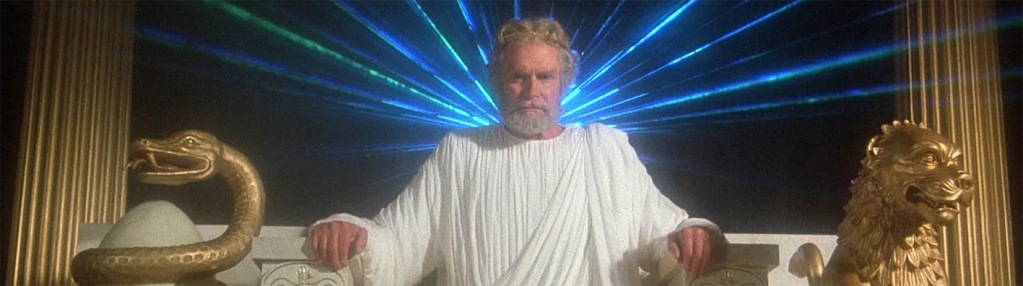
Laurence Olivier as Zeus

IMAG: I like his later films; MARATHON MAN and the 1979 version of DRACULA.

RAY: He was excellent in THE BOYS FROM BRAZIL, I thought. These films were made when he’d got to that stage in life when the critics like to tear you down because they built you up.
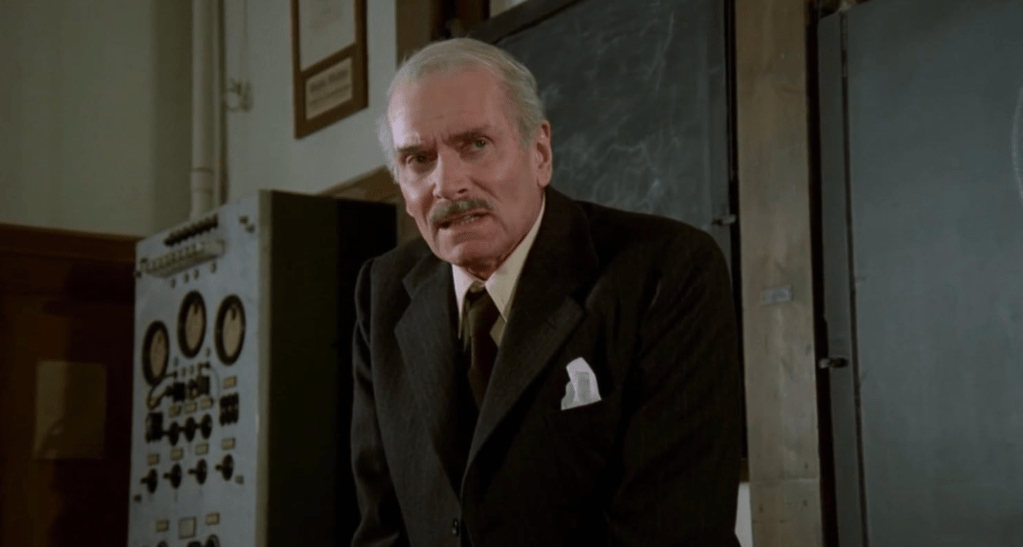
Laurence Olivier playing the character Ezra Lieberman in THE BOYS FROM BRAZIL

IMAG: I saw some storyboards from THE 7TH VOYAGE OF SINBAD that involved giant rats. Why didn’t the rodents feature in the film?

RAY: The whole sequence was dropped. I designed it then Charles Schneer and I talked it over and he felt that rats were too repulsive. At first we had wanted to make Torin Thatcher’s role much more diabolical by having him associate with big rats.
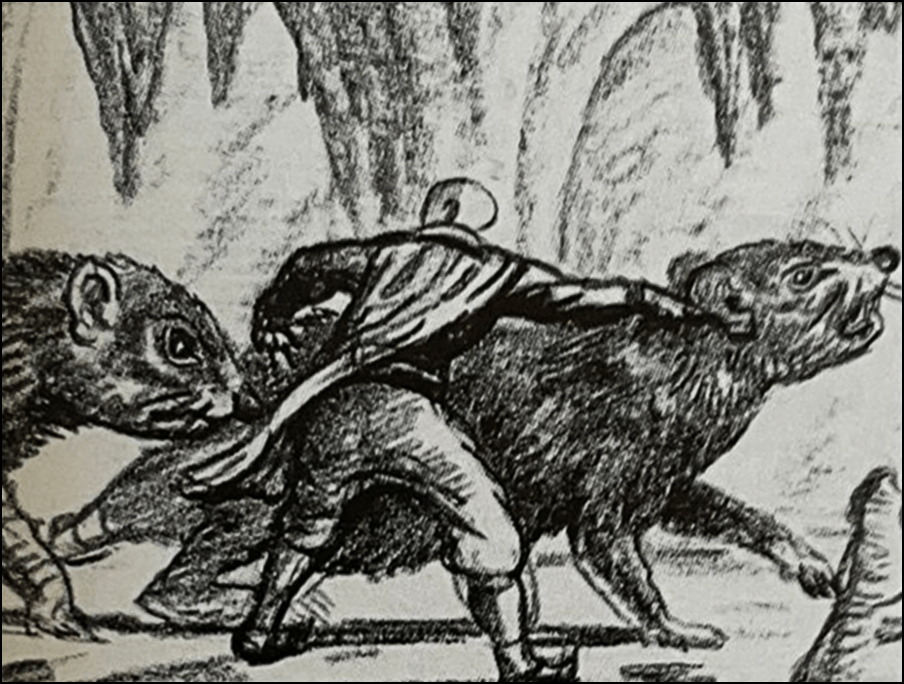
One of the storyboard panels for the giant rats sequence that was dropped

IMAG: Can you tell me anything about the unmade film SKIN AND BONES?

RAY: That was a film I wanted to do at one time based on a published story (by author Thorne Smith). It was a comedy, but we never got around to it; I made one drawing to illustrate how it could have been done. I think it would have made an amusing film.

IMAG: Would it have been a horror comedy?
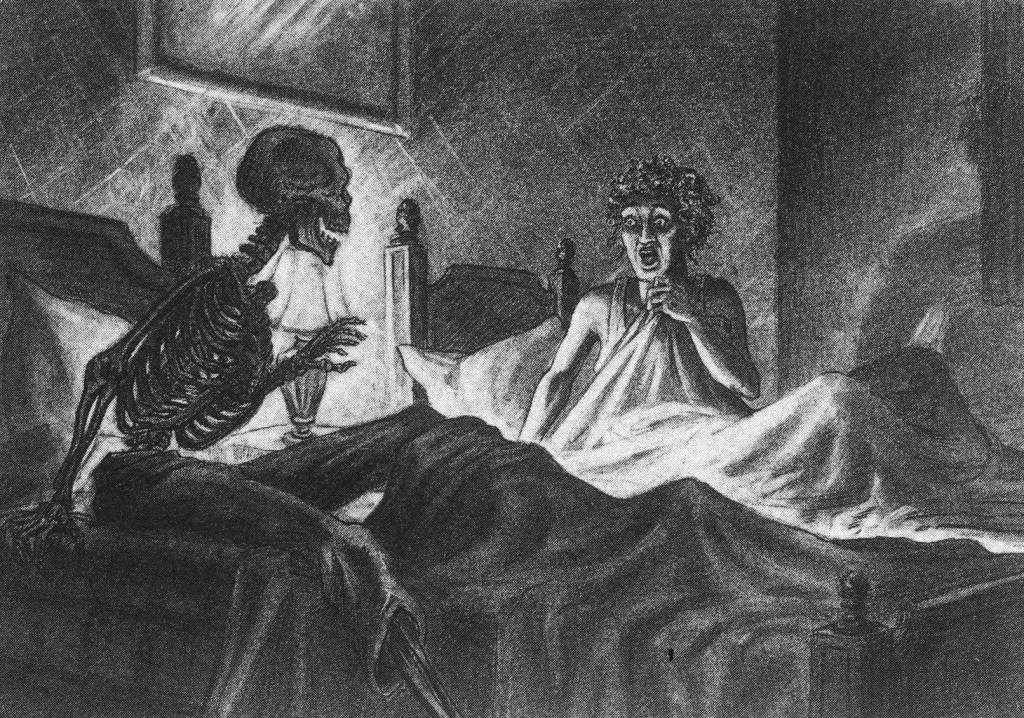
Ray's concept drawing for the unmade SKIN AND BONES
Ray’s concept drawing for the unmade SKIN AND BONES

RAY: No, it would have been like something from the TOPPER series. An amusing, ghoulish concept.

IMAG: How did the skeleton you drew for the conceptual drawing figure in the story?

RAY: He was a photographer who took a chemical that, every time he drank liquor, turned him into a skeleton. The story it was based on didn’t really have an important ending, we ran into a lot of script problems when we were trying to develop it, and so we abandoned it.
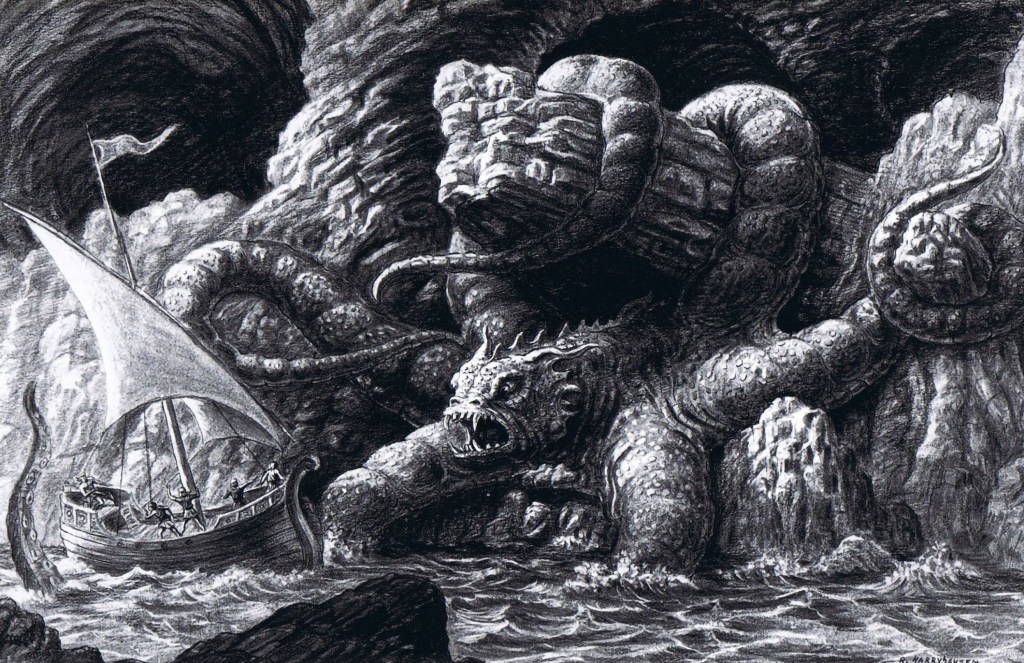
Ray's stunning concept art showing how the sea monster Charybdis would have looked in FORCE OF THE TROJANS
Ray’s stunning concept art showing how the sea monster Charybdis would have looked in FORCE OF THE TROJANS

IMAG: What was the proposed film FORCE OF THE TROJANS about?

RAY: That was to have come after CLASH OF THE TITANS. It was a story about the founding of Rome.

IMAG: Would it have been a costume period picture without mythical creatures?

RAY: It would have been similar to CLASH OF THE TITANS, with the Sphinx and many different creatures in it.
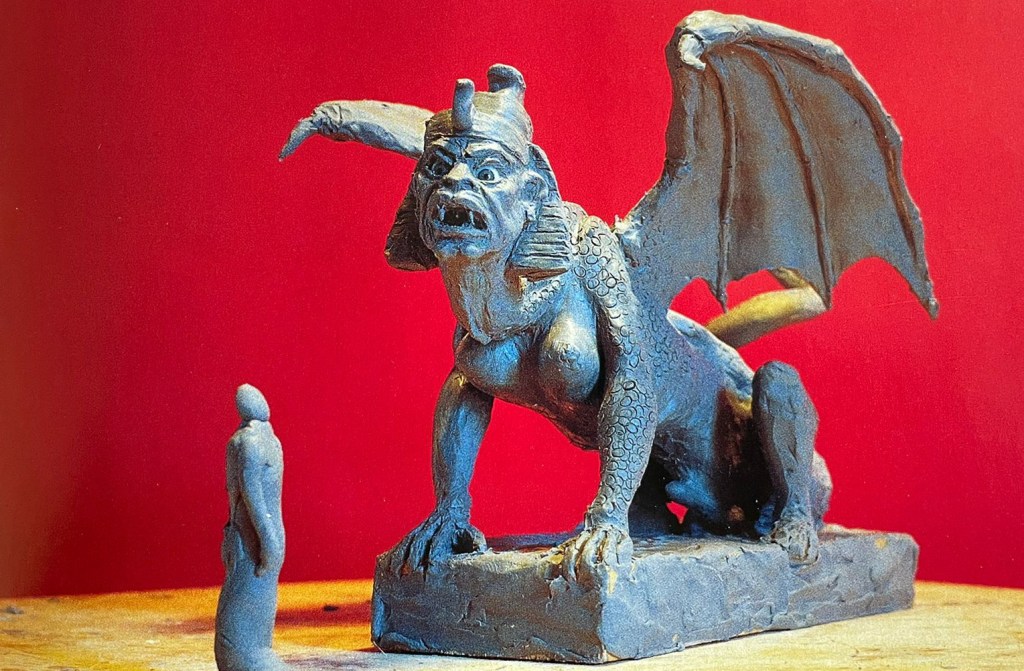
A clay model of the Sphinx created by Ray for the project FORCE OF THE TROJANS, a movie that never got made. What a shame!

IMAG: The Sphinx? So it had an Egyptian element in it.

RAY: Yes. We went to Egypt to find the locations.

IMAG: Egypt would’ve been a good setting for a fantasy film as it possesses many gods and creatures in its mythology.

RAY: We were also, when we were going to make a film called SINBAD GOES TO MARS, going to start the picture in Egypt.
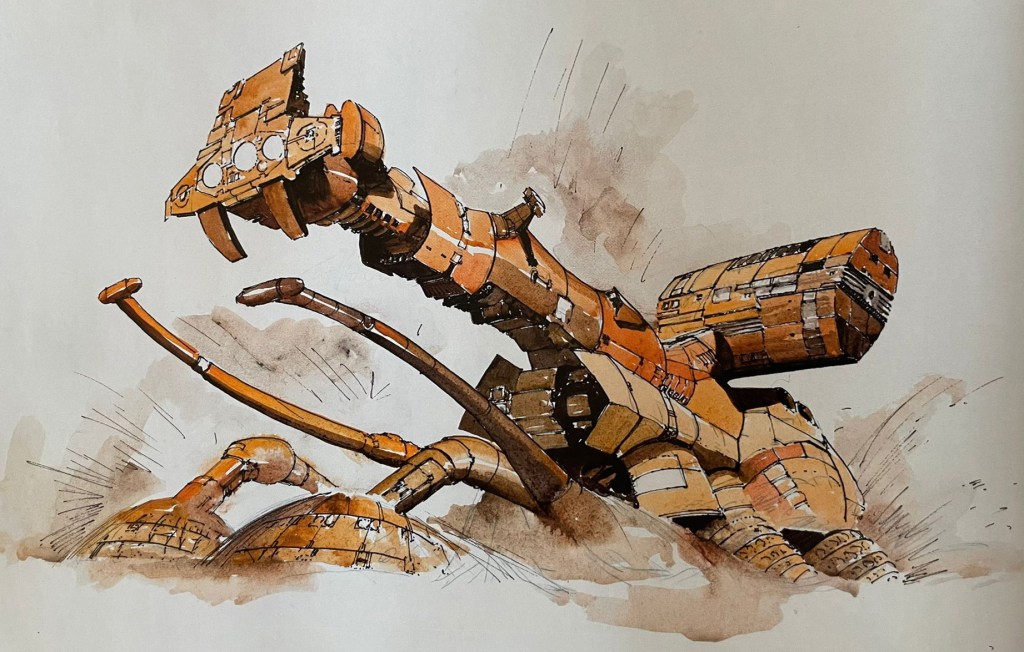
One of sci-fi artist Chris Foss’ spaceship concept drawings he did for the unmade film SINBAD GOES TO MARS

IMAG: Sounds like SINBAD GOES TO MARS would’ve tapped into that vein of heroic fantasy/science fiction that is typified by Edgar Rice Burroughs’ books of John Carter; fantasy set on another world. That kind of space opera/swashbuckling pulp story would’ve made a good film.

RAY: JOHN CARTER OF MARS kicked around Hollywood for years. We got it sent to us one time after we’d made 7TH VOYAGE and, for some reason, we didn’t pursue it – the story wasn’t strong enough I think.

IMAG: I’ve seen a photo of an animation model that was made based on one of the four-armed alien Tharks.

RAY: Oh yes. Several young fans have developed and made models based on their desire to do the picture.
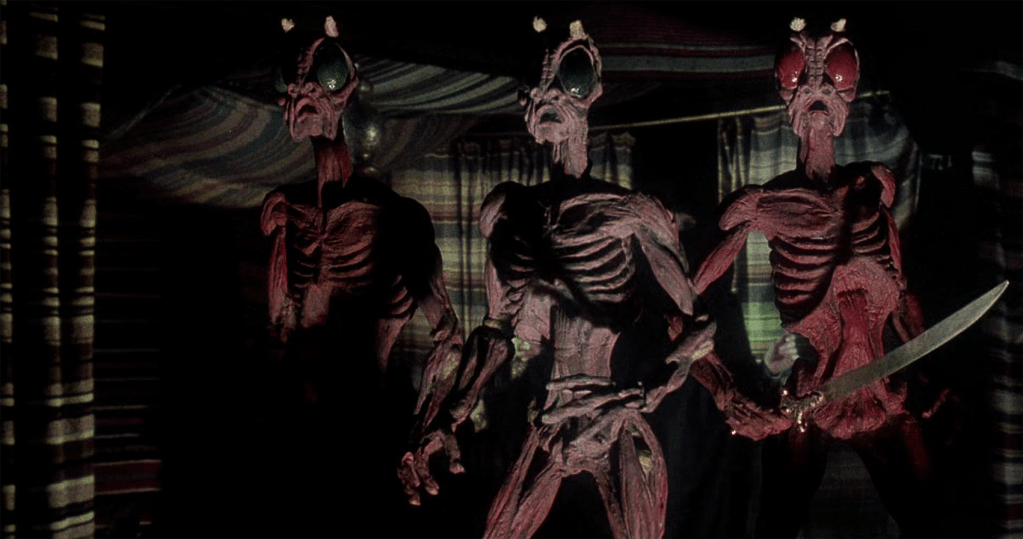
The horned, skeletal, bug-eyed zomboid ghouls from SINBAD AND THE EYE OF THE TIGER

IMAG: Though not a horror filmmaker, you do have dark elements in some of your films; you had the Gorgon being beheaded with goo flowing from her neck in CLASH, zomboid ghouls in EYE OF THE TIGER, and people eaten by dinosaurs in various films. Did you have some form of self-censorship as to how far you would go?
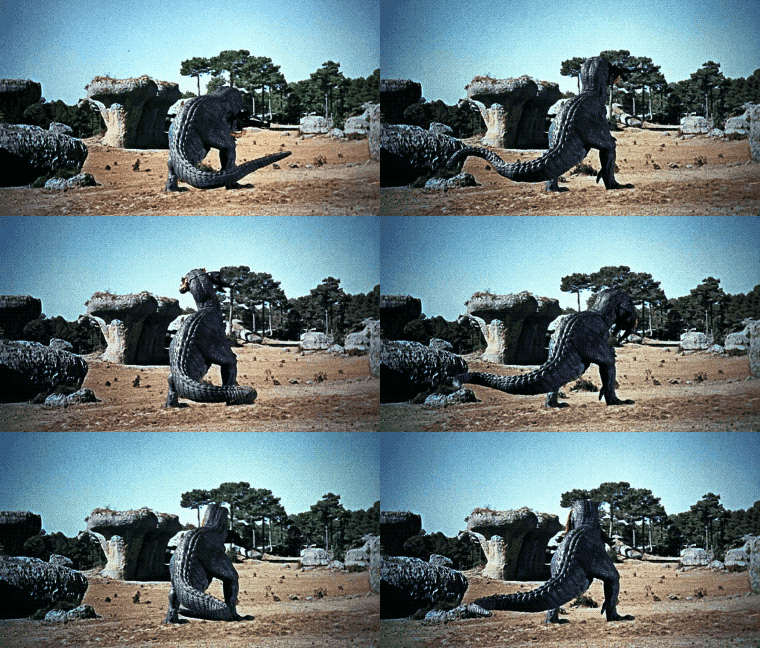
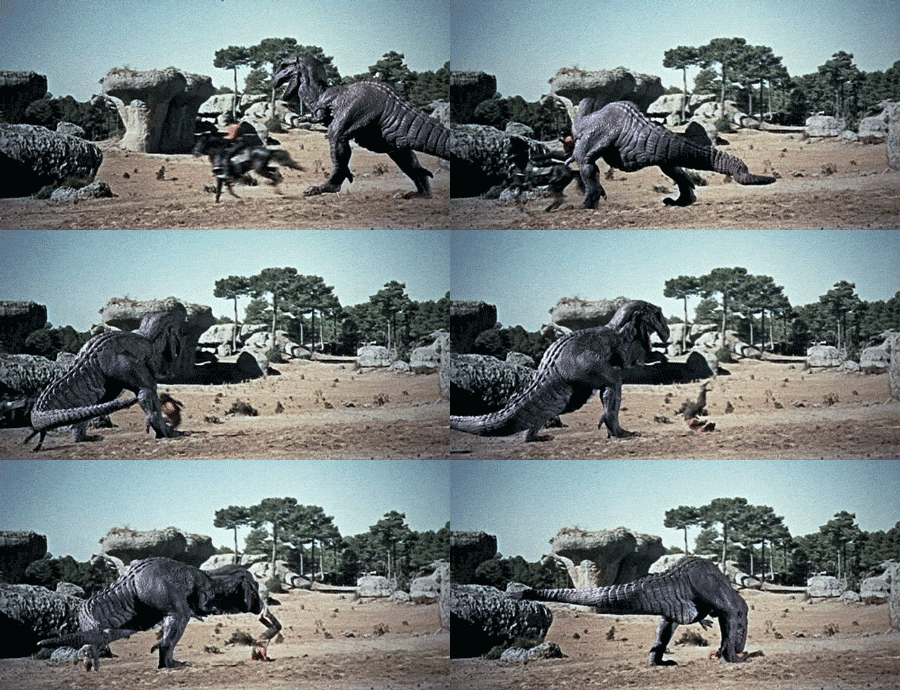
A cowboy gets chewed in THE VALLEY OF GWANGI!

RAY: Yes, because we didn’t want to alienate children. Young people were our biggest audience. When 7TH VOYAGE originally came out in Britain they cut out the whole skeleton sequence because the skeleton was too frightening for children. We thought we’d have seven Xs when we made JASON! They didn’t seem to mind if it was daylight (the skeleton scene in JASON is in daylight whilst the duel in 7TH VOYAGE is set in a dark cavern – Ed.) When I saw the print (of 7TH VOYAGE) here in London the whole sequence was cut out; there was just a big hole there!
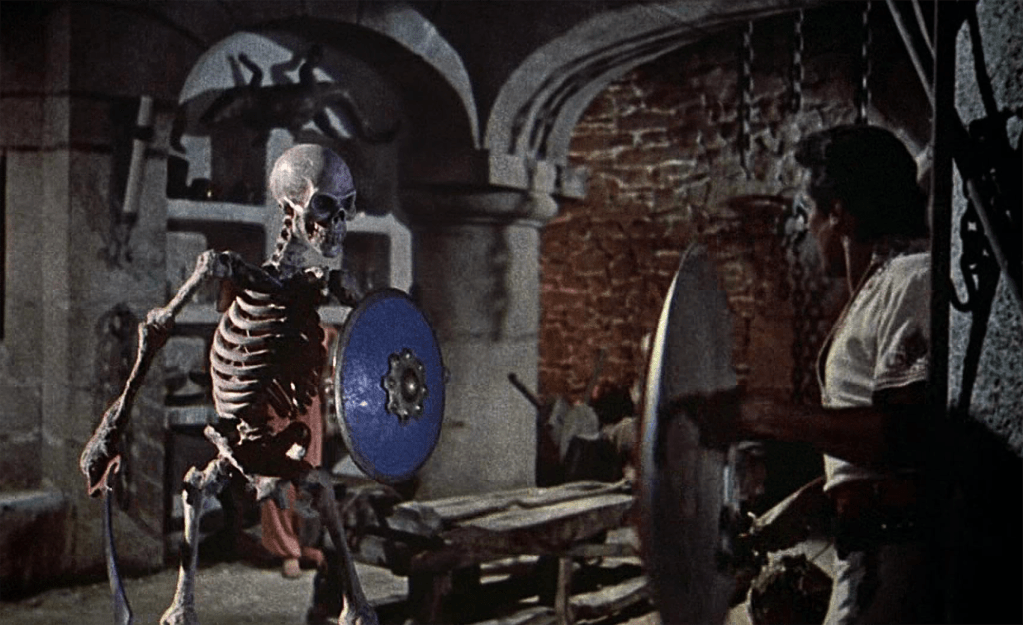
The superb, sinister skeleton from THE 7TH VOYAGE OF SINBAD!

IMAG: In modern films they aren’t afraid to show gore in close-up.

RAY: We tried to have a minimum of blood because we were making fantasy films, not blood and gore films. You’ve got to have a certain amount of blood because, if you didn’t when somebody gets eaten, why they would just look the same as before they’d been eaten! We’d jab spears into Cyclops and dinosaurs, but it’s a different thing to showing severed arms, people’s guts coming out, and axes embedded in people’s heads; that’s a different story.
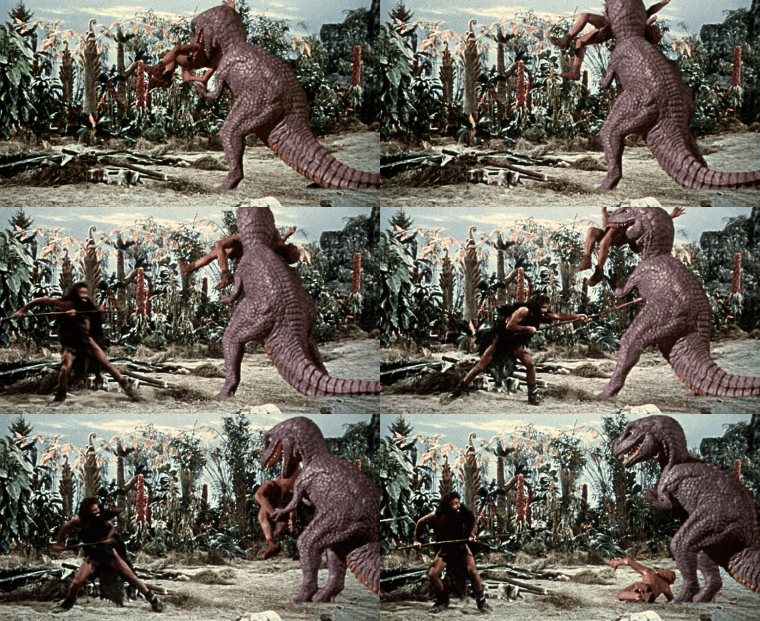
A caveman gets munched on by an Allosaurus in ONE MILLION YEARS B.C!
A caveman gets munched by the Allosaurus in ONE MILLION YEARS B.C!

IMAG: Have you seen the ALIEN movies and THE THING; types of movies that use animatronic effects?

RAY: Yes.

IMAG: If you were making a film now, would you be tempted to use animatronic FX with model animation?

RAY: It depends on the story you are telling.

IMAG: You did mix makeup effects with stop-motion animation for the Calibos character in CLASH OF THE TITANS.

RAY: We had to. Originally Calibos was supposed to be a dumb mute and then, when we re-wrote the story, we had to include dialogue and I couldn’t see myself spending weeks and weeks and weeks trying to form the alphabet with an animated model, so we decided to take the easy way out and have an actor play the close-ups.
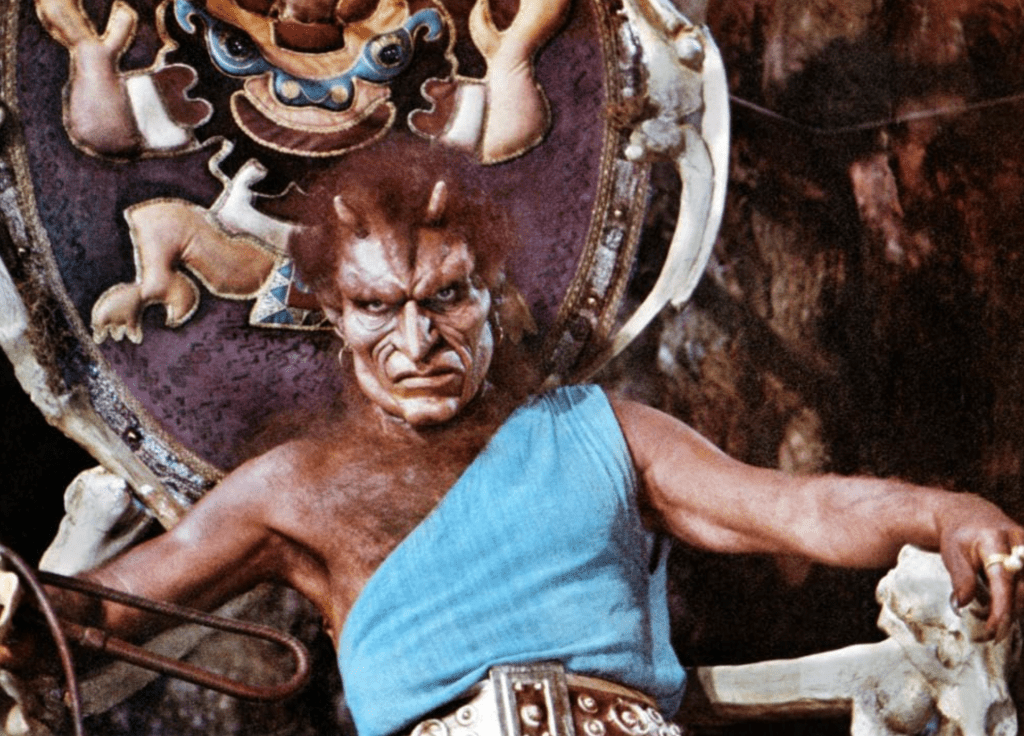
Neil McCarthy played Calibos in prosthetic makeup for the close-up dialogue shots in CLASH OF THE TITANS

IMAG: But what of animatronics? As an example; if you were to do another dinosaur film, would you consider using an animatronic head for close-ups?

RAY: Well, we did for THE ANIMAL WORLD and it always looked like what it was; a mechanical thing.
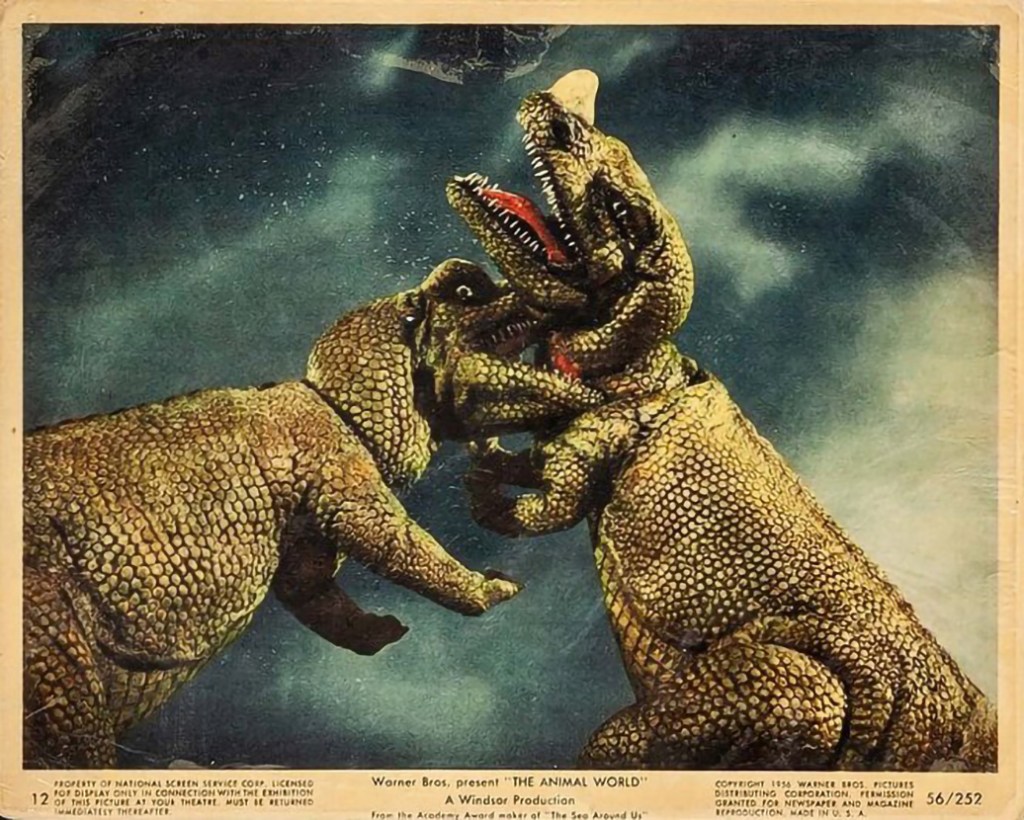
Lobby card for THE ANIMAL WORLD, showing two of the mechanical dinosaur models

IMAG: THE ANIMAL WORLD is hard to get to see.

RAY: It was shown years ago. It was a documentary like the Disney true life adventure films, only it was much more gory.

IMAG: A lot of your black and white SF films are hard to find.

RAY: I don’t think that they’re available on video over here – you can get them on 16mm. Nobody pushes these old films unfortunately. The only way they get exposure is on television.

IMAG: Yes, but what irritates me with TV is the companies’ lack of imagination. When the BBC shows a season of ’50s SF films, for instance, they ALWAYS televise the same films; FORBIDDEN PLANET, THE DAY THE EARTH STOOD STILL, THIS ISLAND EARTH, and so on. I really wish they’d show your earlier stuff, like 20 MILLION MILES TO EARTH, more often on television, plus other less-televised ’50s products like AIP’s SF exploiters.
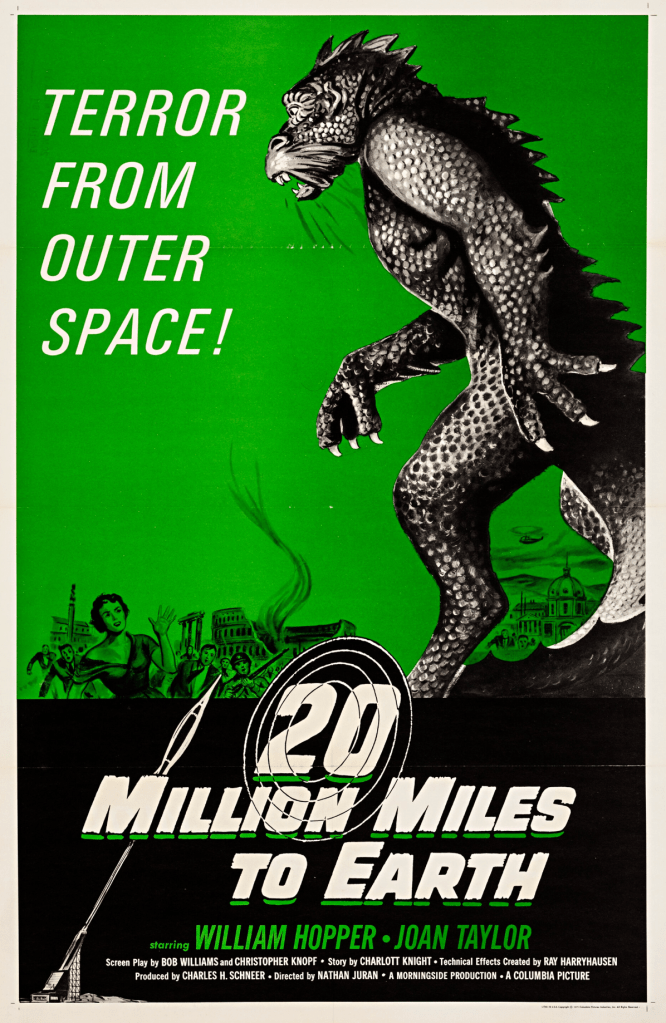
One sheet poster for 20 MILLION MILES TO EARTH

RAY: There are also a lot of wonderful things made back in the silent days that could be shown.

IMAG: Yes, films such as O’Brien’s THE LOST WORLD.
Talking of Willis O’Brien, his KING KONG is THE film that captured your imagination as a child. Well, I wouldn’t be editing this magazine today if it wasn’t for the fact that I saw ONE MILLION YEARS B.C. when I was a very young, dinosaur-obsessed child. It really drew me into its prehistoric world. The location photography was really impressive; was it an arduous shoot?
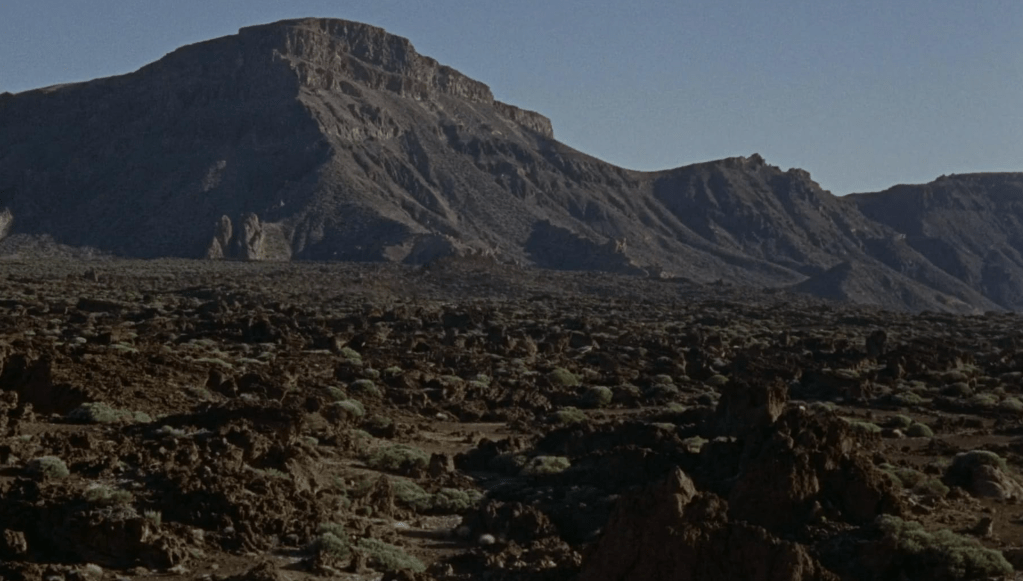
ONE MILLION YEARS B.C. boasted lots of fine rugged scenery

RAY: No, we went to the island of Lanzarote in the Canary Islands for the shots and Las Palmas as well. We had a very nice hotel there. There was only one then, but now there are many hotels there.
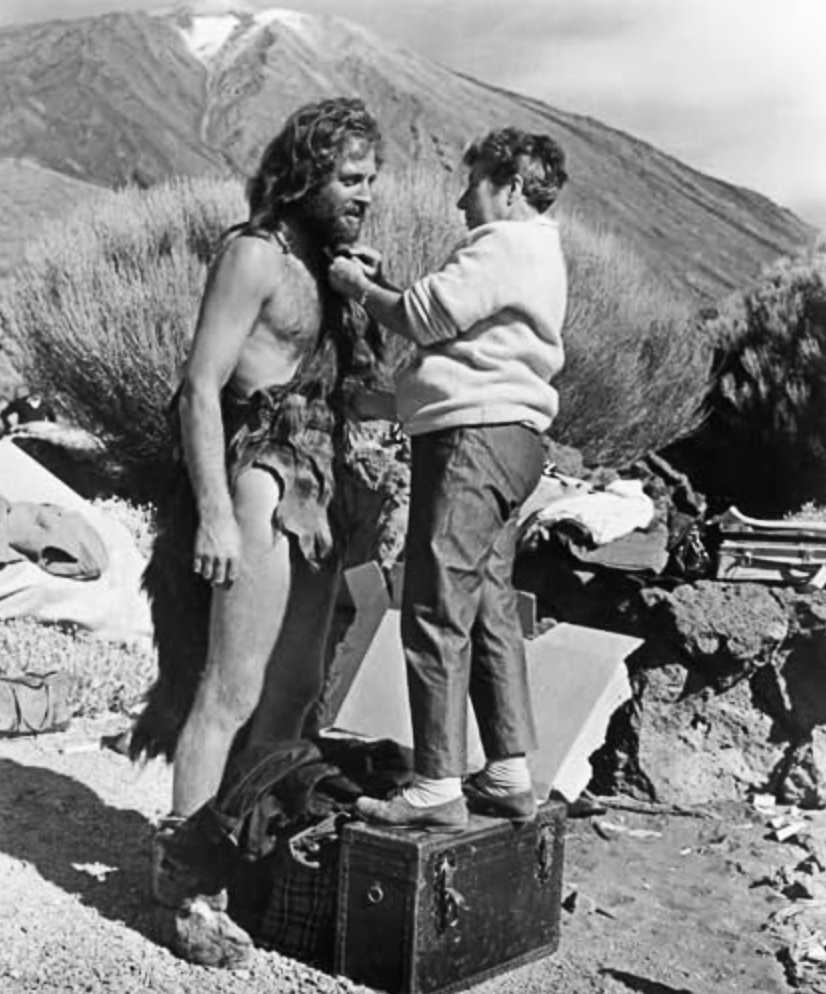
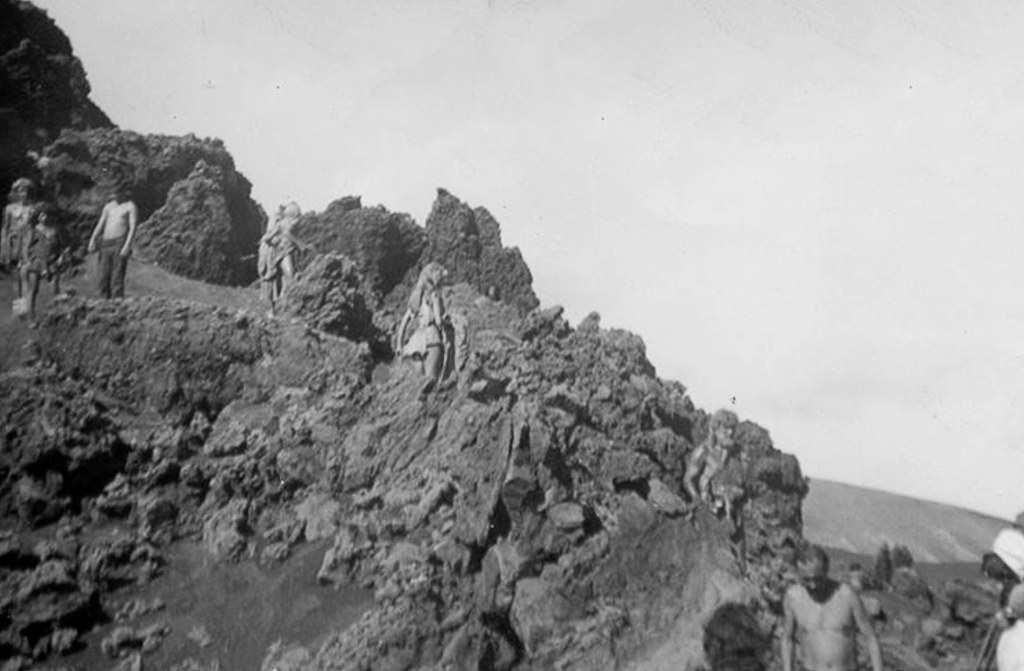
John Richardson with costume designer Ivy Baker on location during the filming of ONE MILLION YEARS B.C.
A behind the scenes shot of the filming on Lanzarote

IMAG: Mario Nascimbene’s music utilises apt, primitive-sounding sound effects, and Loana’s theme is quite haunting.

RAY: Yes, it’s used when she’s carried away by the pterodactyl.
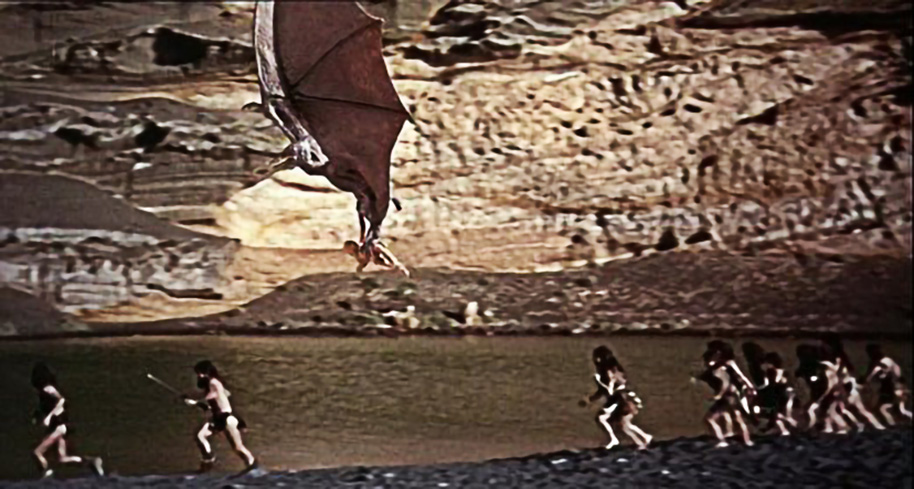
The Pteranodon flies off with Loana

IMAG: The story didn’t need dialogue, it was pure cinema, really; visuals and music.

RAY: Harold Pinter wouldn’t have written it that way (laughs).

IMAG: Were you ever irritated by people who took easy potshots at the movie because there were women in fur bikinis and no dialogue?
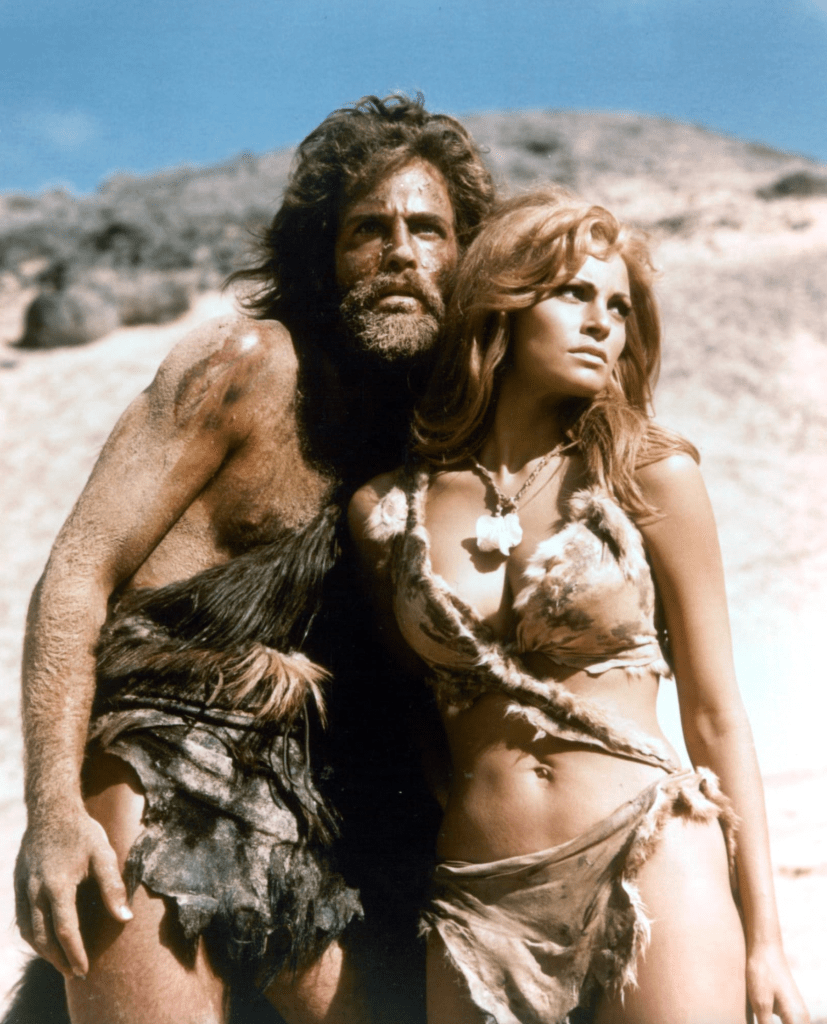
John Richardson and Raquel Welch were a very good looking prehistoric couple!

RAY: I was irritated by the critics because many of them expected something else; a girly show, and we didn’t approach it from that point of view. We wanted to try to capture that period. It doesn’t mean the critics are right just because they give an opinion. There are certain critics who just seem to say that everything stinks.

IMAG: Raquel Welch became a real ’60s icon after that film.
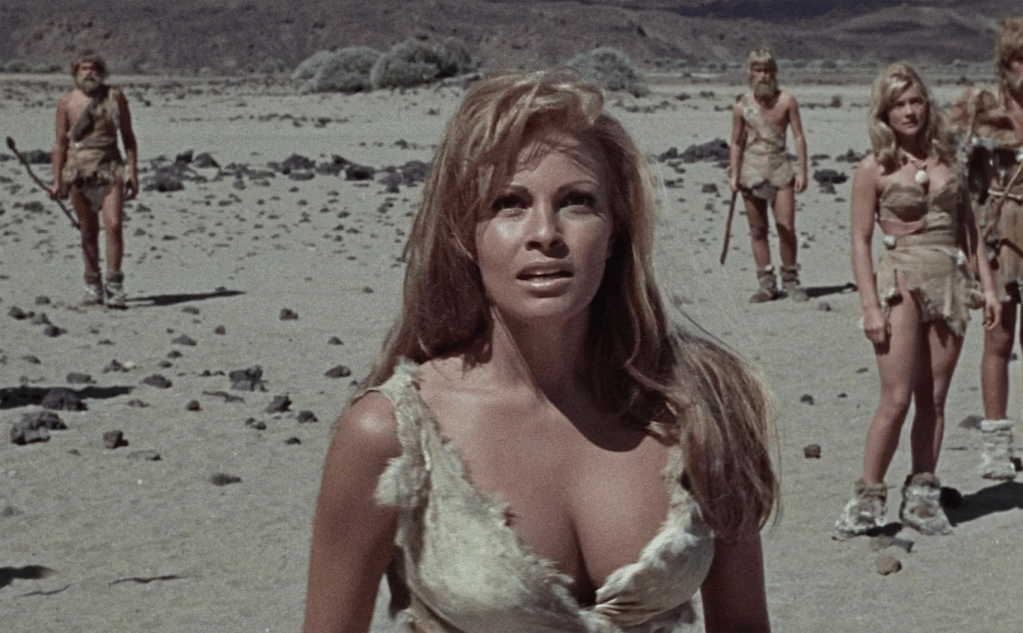
Raquel Welch as the lovely Loana

RAY: ONE MILLION YEARS B.C. helped put her on the map.

IMAG: When I was young I saw the film again when it was re-released in a double bill with Hammer’s SHE (1965). I feel quite sorry for actor John Richardson as he was in both films but was overshadowed by the striking leading ladies.
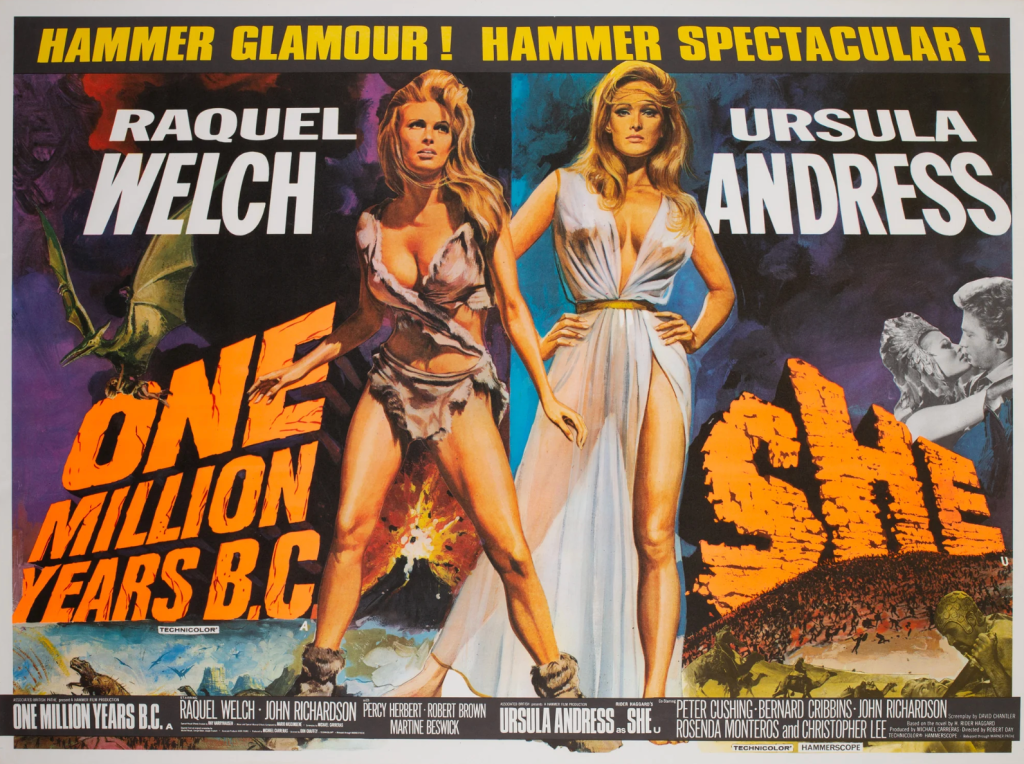
I saw this double bill in the cinema - and I own the poster!
I saw this double bill in the cinema – and I own the poster!

RAY: I thought he did a good job in ONE MILLION YEARS B.C. but he never got recognised for some reason. I thought he was very competent in that film.

IMAG: I think that it was due to the fact that in films like BLACK SUNDAY, ONE MILLION YEARS B.C. and SHE he was always playing second fiddle to the impactful female characters in the movies.
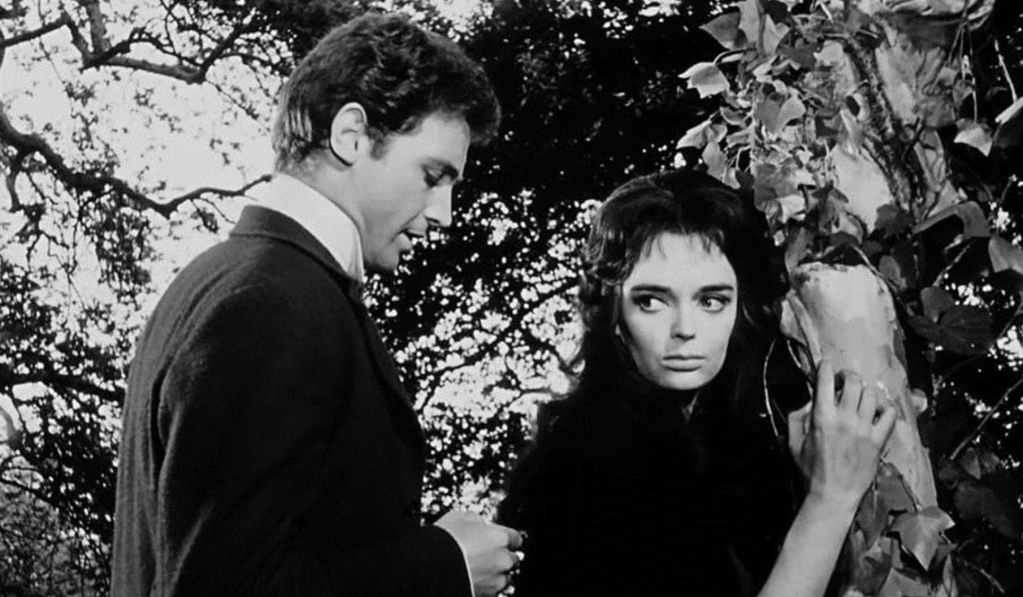
John Richardson with Barbara Steele in BLACK SUNDAY 
John Richardson with Barbara Steele in BLACK SUNDAY (1960) 

RAY: They were well-publicised leading ladies.
Did you ever see the SHE (1935) made by Merian C. Cooper after KONG? That’s the definitive SHE; it was a really magnificent film.
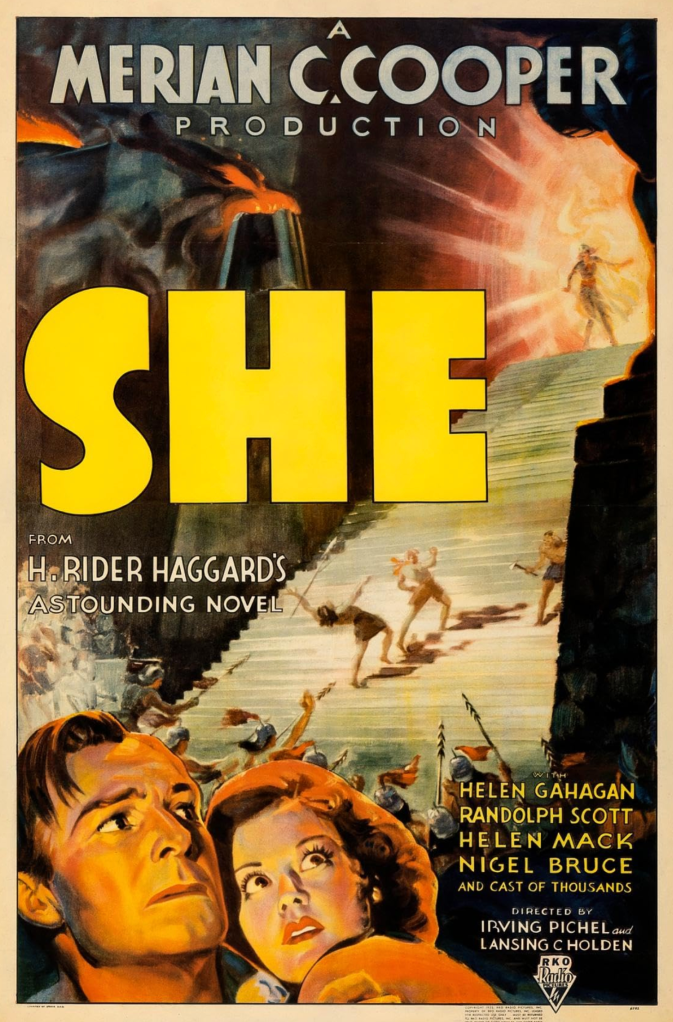
One sheet poster for RKO's original version of SHE
One sheet poster for RKO’s original version of SHE

IMAG: Isn’t there a frozen saber-toothed tiger in it?

RAY: Yes, they went to the North Pole – they changed the locale. It was much more imaginative, with a sensational dance in the Hall Of Kings that doesn’t compare with the remake. They (Hammer) made SHE into a sex idol when that wasn’t the point of the story at all.
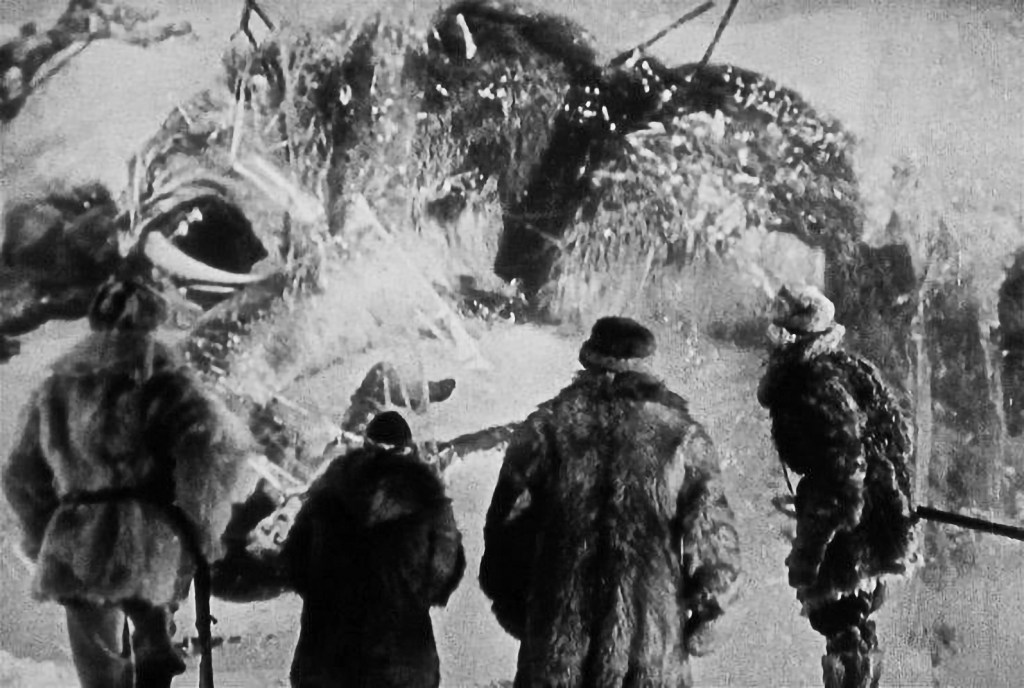
The sabre-toothed tiger found frozen in ice in SHE (1935)

IMAG: A bit of glamour doesn’t harm a film. Raquel was a selling point for ONE MILLION YEARS B.C. Would you have preferred a less glamorous approach?

RAY: They made one in Europe called QUEST FOR FIRE (1981). It only works for a limited audience; who wants to go see grotesque-looking people lusting in the dusk? Raquel Welch was chosen because she’s very good to look at. The sexual overtones were all implied rather than shown. The sequel, WHEN DINOSAURS RULED THE EARTH, didn’t have the same feel as ONE MILLION YEARS BC, the whole approach was different. We tried to capture a naive quality.
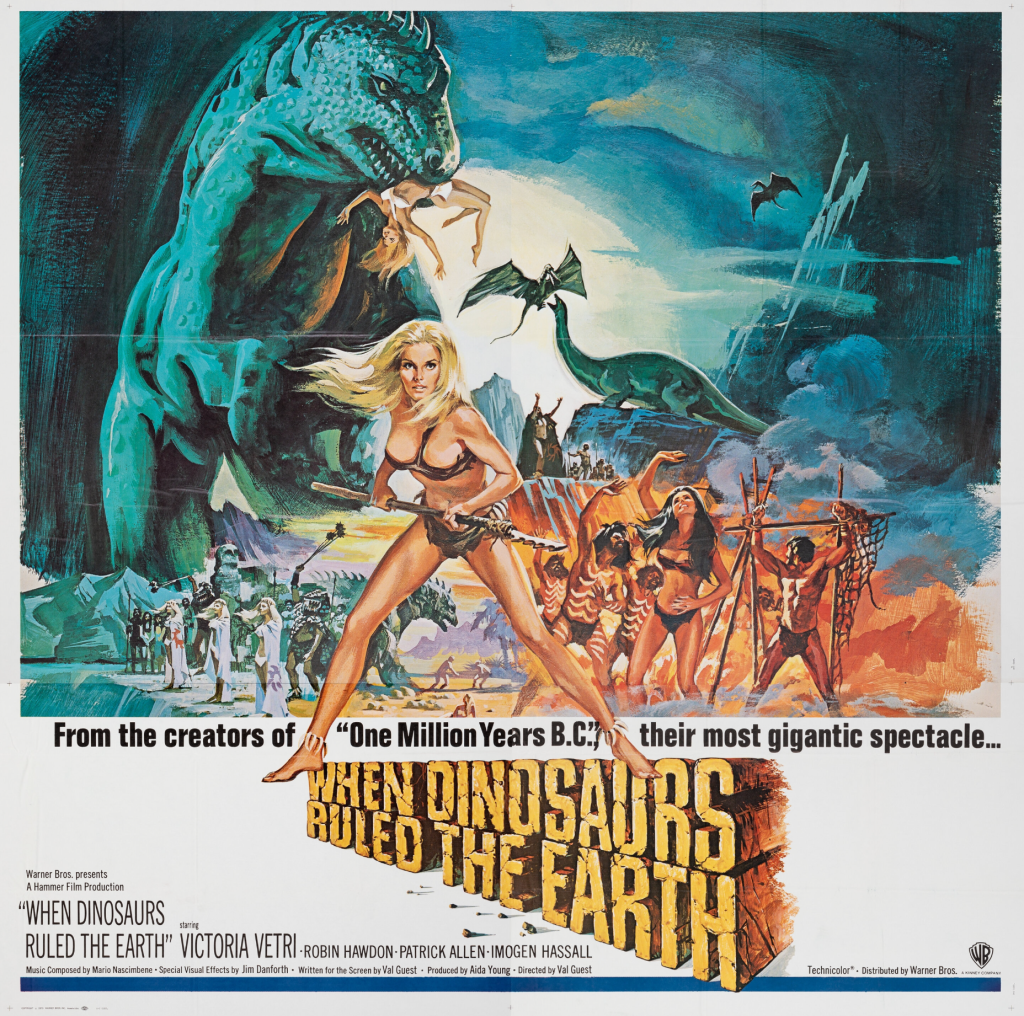
Six sheet poster for WHEN DINOSAURS RULED THE EARTH, the Hammer follow-up to ONE MILLION YEARS B.C.

IMAG: I do like WHEN DINOSAURS RULED THE EARTH, it’s just that it has a different, slightly more explicit atmosphere to it. You were unable to do that film because you were working on THE VALLEY OF GWANGI. What do you think, in general, of WHEN DINOSAURS RULED THE EARTH?
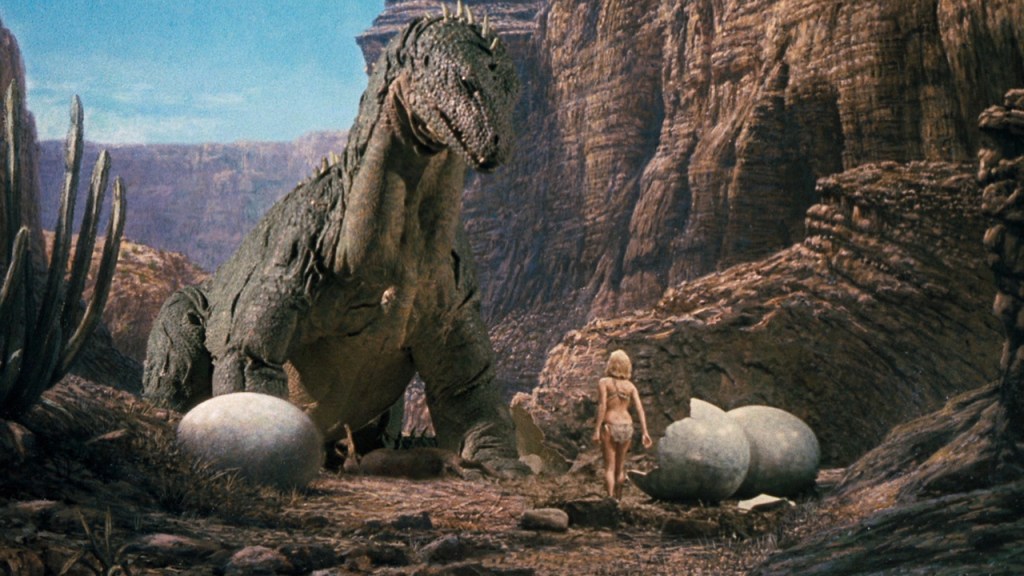
The mother dinosaur from WHEN DINOSAURS RULED THE EARTH, animated by Jim Danforth

RAY: Well, I didn’t care for it as a picture, but Jim Danforth did some quite nice animation.

IMAG: The end of ONE MILLION YEARS B.C. goes into sepia tones; why was that?

RAY: We were originally going to have the atomic bomb on the horizon. During the earthquake smoke develops from the volcano and forms almost a symbol of what’s to come; the atomic bomb. That was abandoned and they decided to take all of the colour out and make it look like they’re coming back to a dreary world.

IMAG: Your eruption special FX are re-used for the earthquake depicted in Hammer’s CREATURES THE WORLD FORGOT (1971).

RAY: I never saw the film.
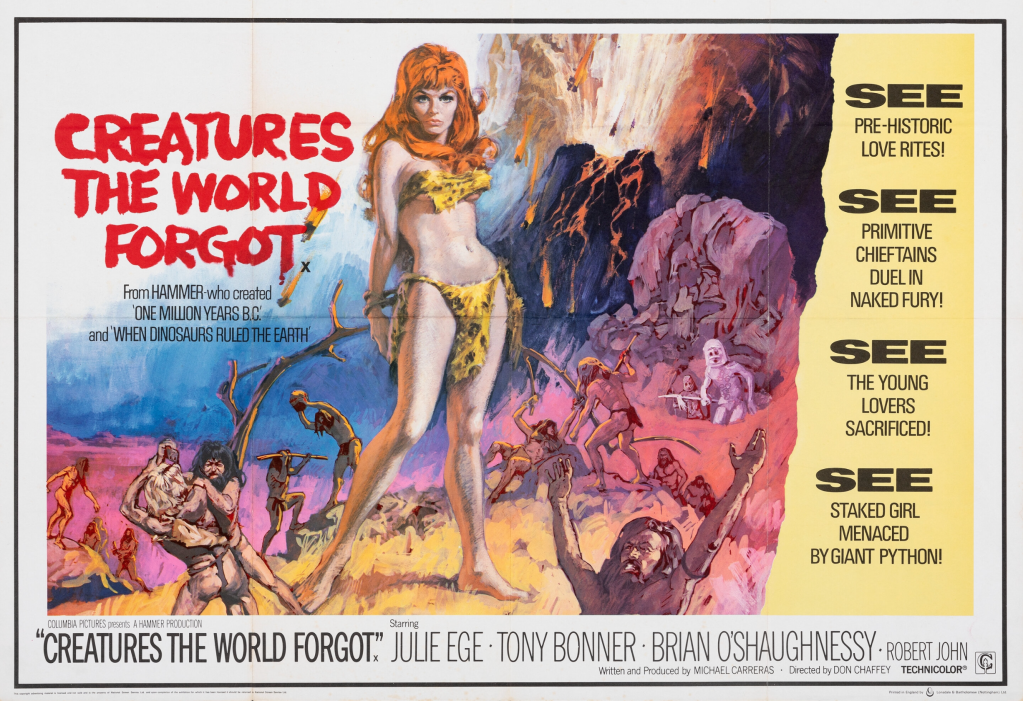
UK quad poster for CREATURES THE WORLD FORGOT. Ray never watched this film and I can't say that I blame him!
UK quad poster for CREATURES THE WORLD FORGOT. Ray never watched this film and I can’t say that I blame him!

IMAG: From a monster movie fan’s perspective, CREATURES THE WORLD FORGOT was pretty depressing; they didn’t have any dinosaurs in it.

RAY: It must have been depressing for Don Chaffey.

IMAG: The film has a wonderful, evocative title – but the ‘creatures’ turn out to be an antelope, a porcupine and a man in a bear suit!

Getting away from prehistoric things, I’ve read that MIGHTY JOE YOUNG (1949) originally had a tinted burning orphanage sequence?

RAY: Yes, the original release was tinted yellow and red.
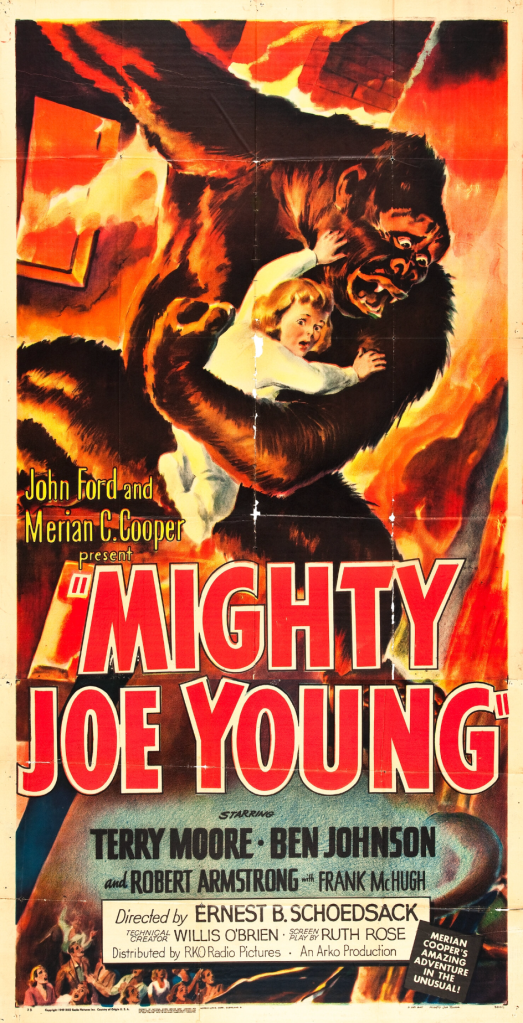
Three sheet poster for MIGHTY JOE YOUNG

IMAG: Does that print exist any longer?

RAY: I don’t think so, I’ve not seen one since. I’ve seen a colourised version of MIGHTY JOE YOUNG; it destroys all the matte paintings because it makes them look so flat.
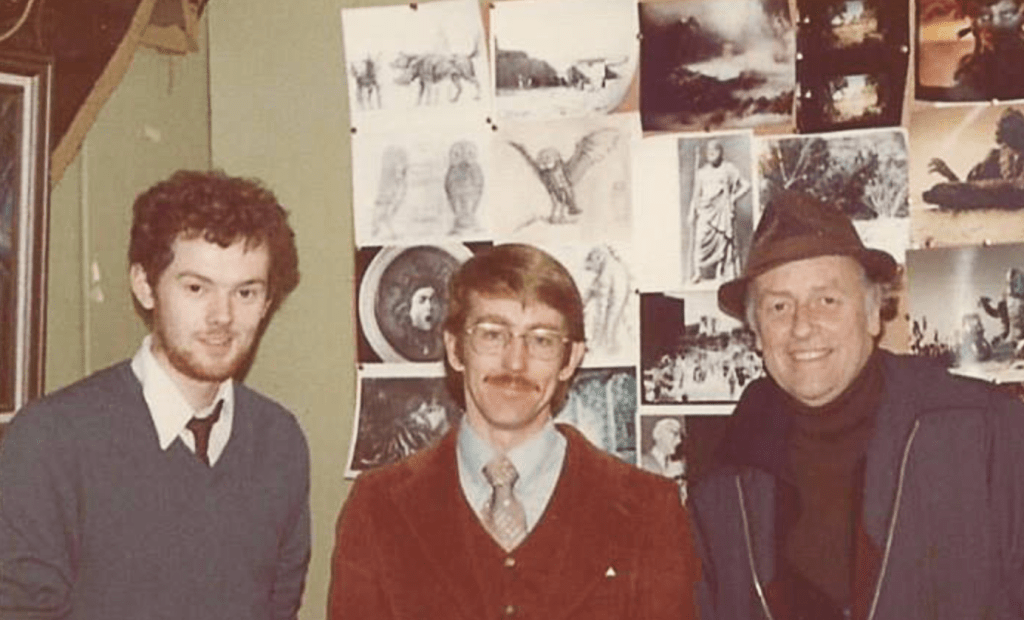
Animators Steve Archer, Jim Danforth and Ray Harryhausen

IMAG: Jim Danforth worked with you on CLASH OF THE TITANS, together with Steve Archer. Would you consider working on another film, perhaps, in a supervisory position maybe?

RAY: No, I don’t want to get involved again because it just takes up too much of your life. The type of film that I was always involved with – I did most of the animation. CLASH is the only one on which I had assistance and it just got too much to tackle a picture that way. I enjoyed putting my final mark on the screen and, if you have it watered down by other people, it’s not a product that you feel you’ve created.
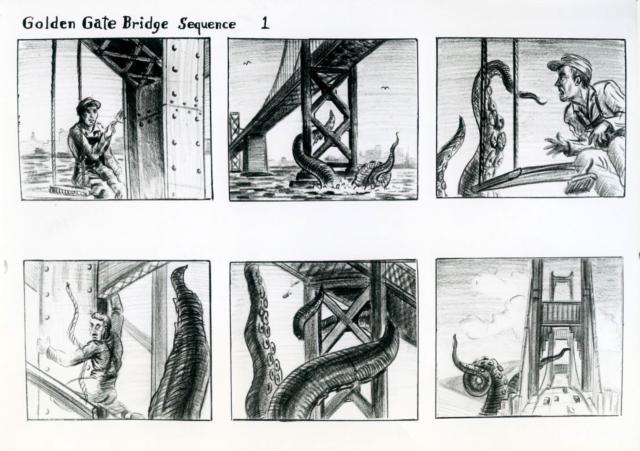
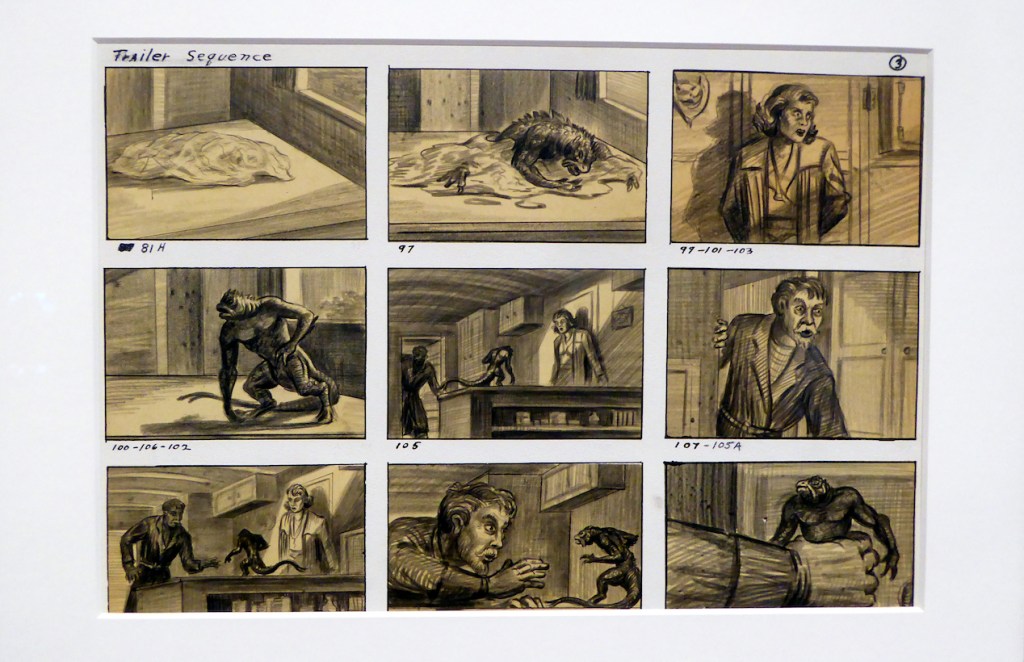
Storyboard panels for IT CAME FROM BENEATH THE SEA (1955)
Storyboard frames for IT CAME FROM BENEATH THE SEA (1955)
Storyboard panels for 20 MILLION MILES TO EARTH
Storyboard frames for 20 MILLION MILES TO EARTH

IMAG: You’ve got a strong visual sense, as illustrated by your nicely composed storyboards. Were you ever actually tempted to direct? 

RAY: I’d have liked to have directed one picture at least. But it’s a big deal and you’ve got to learn how to handle people – make them do exactly what you want. My (model) actors always do exactly what I want, they have no choice (laughs).
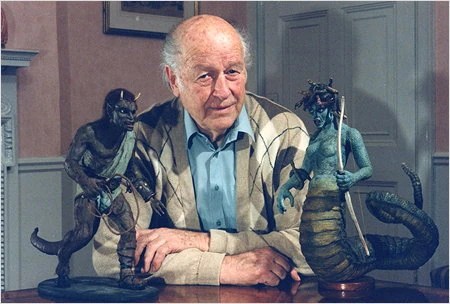
Ray’s model actors always did exactly what he wanted them to do!

IMAG: What sort of films do you enjoy watching?

RAY: I love musicals, I love Bette Davis, Joan Crawford and Dietrich pictures. I like Humphrey Bogart. I love the great pictures of the ’40s.
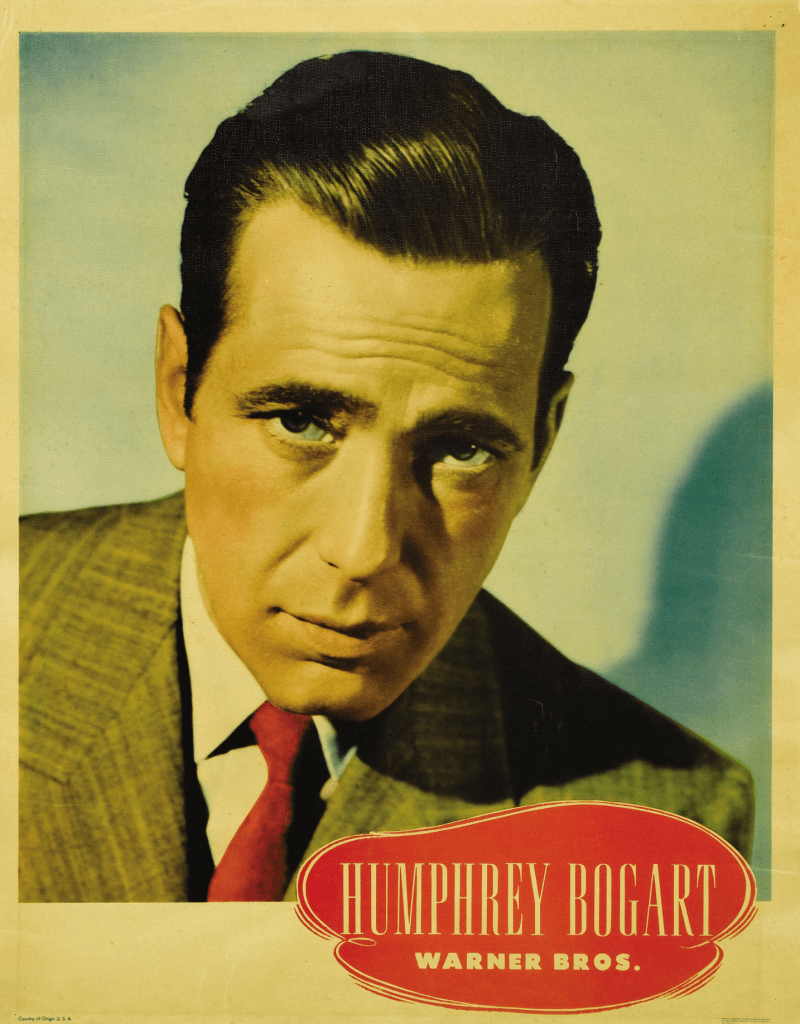
Ray liked Humphrey Bogart - and so do I!
Ray liked Humphrey Bogart – and I like Bogart too!

I do love a good musical. FUNNY FACE I saw many times and THE BAND WAGON. MY FAIR LADY was, I thought, beautifully made.
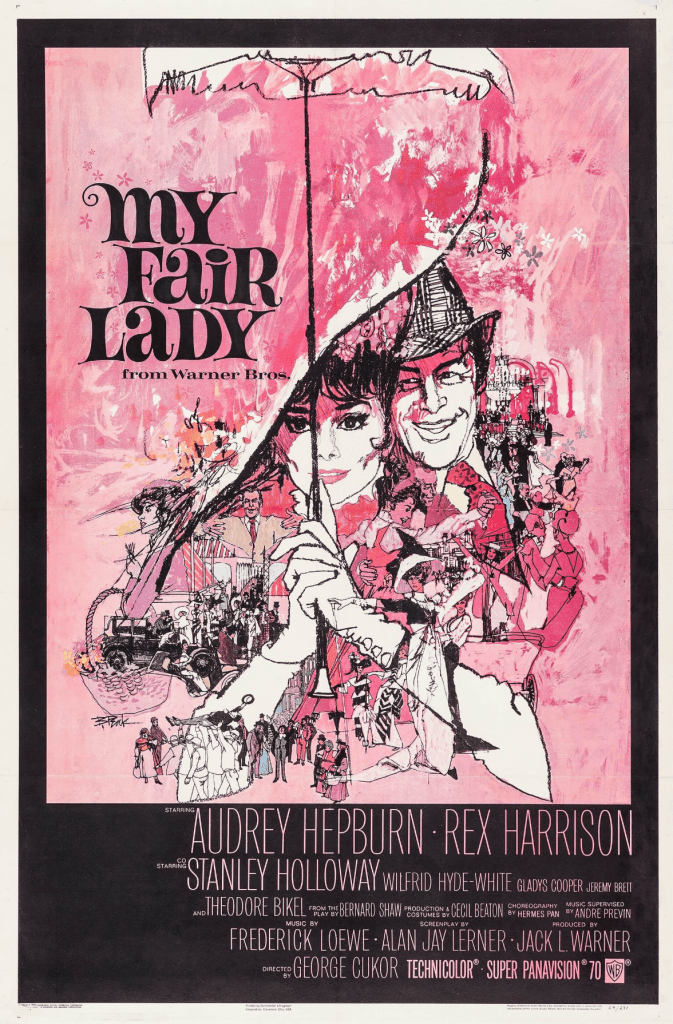
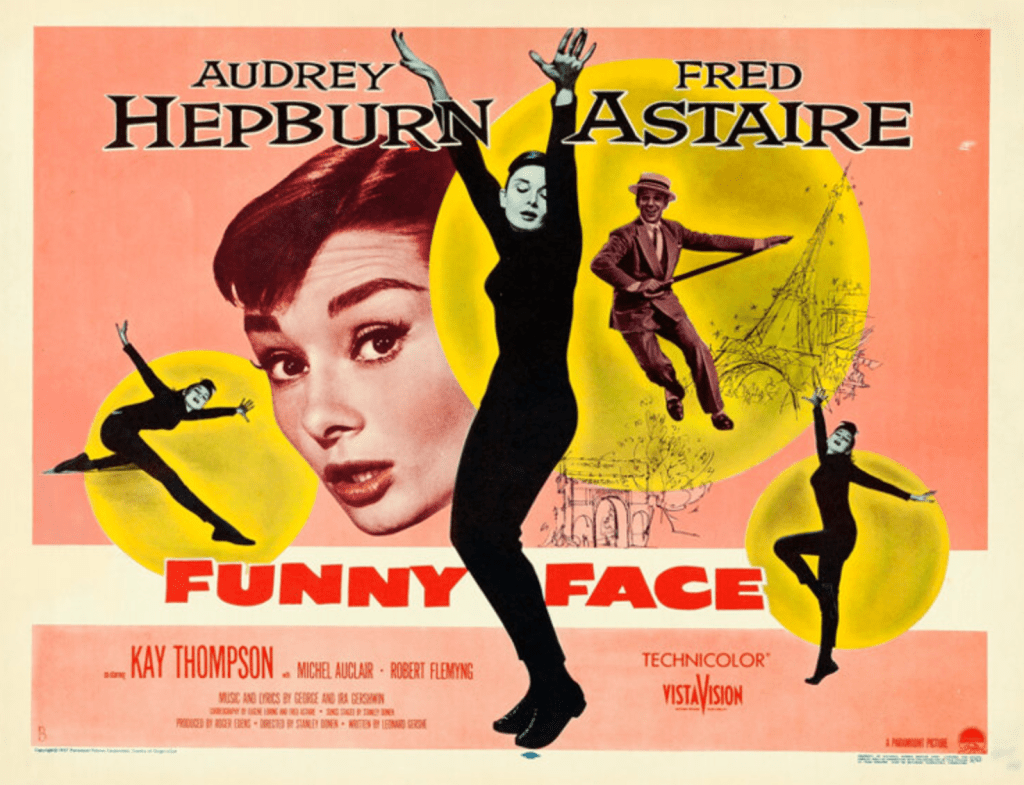
Above: two of the musicals that Ray liked - MY FAIR LADY and FUNNY FACE
Above: two of the musicals that Ray liked – MY FAIR LADY and FUNNY FACE

(At this point Ray’s wife, Diana, momentarily popped into the room and reminded him that he also likes LAUREL AND HARDY. Now that’s good taste!)

IMAG: Is there any recent stuff that you’ve been particularly impressed with?

RAY: Not that I would go back time and time again to see. There are a lot of good films out today; RAIDERS OF THE LOST ARK (1981) is a most exciting film.
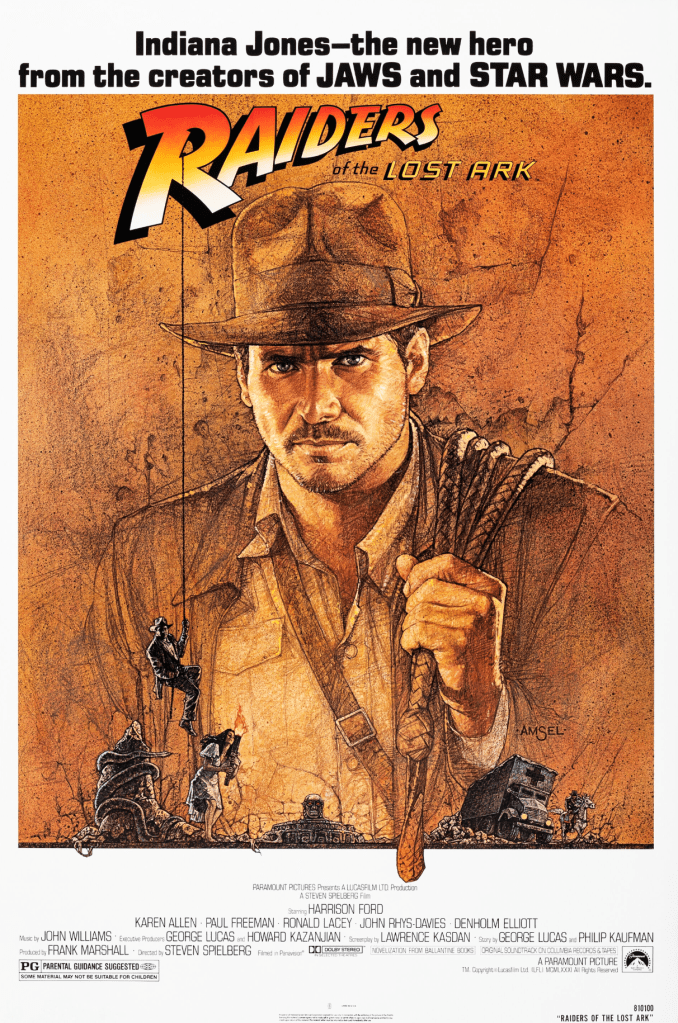
I think RAIDERS is an exciting movie - and Ray thought the same!
I think RAIDERS is an exciting movie – and Ray thought the same!

They don’t seem to have the magic any more that some of the earlier films had. I still find BRIDE OF FRANKENSTEIN (1935) a fascinating film.
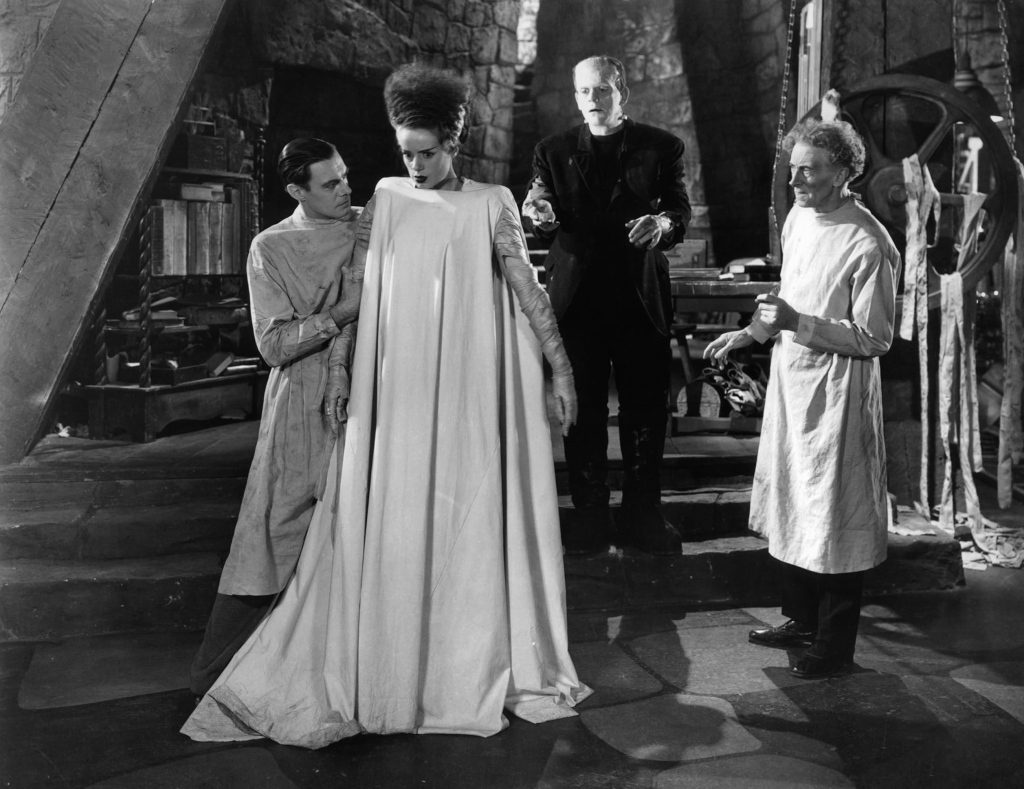
Colin Clive, Elsa Lanchester, Boris Karloff and Ernest Thesiger in BRIDE OF FRANKENSTEIN

IMAG: There is a certain stylistic quality to the very early Universal Frankenstein films, isn’t there?

RAY: That was largely due to James Whale. He was a very talented director, and he had a macabre sense of humour that took it out of the category of being simply a horror film. 
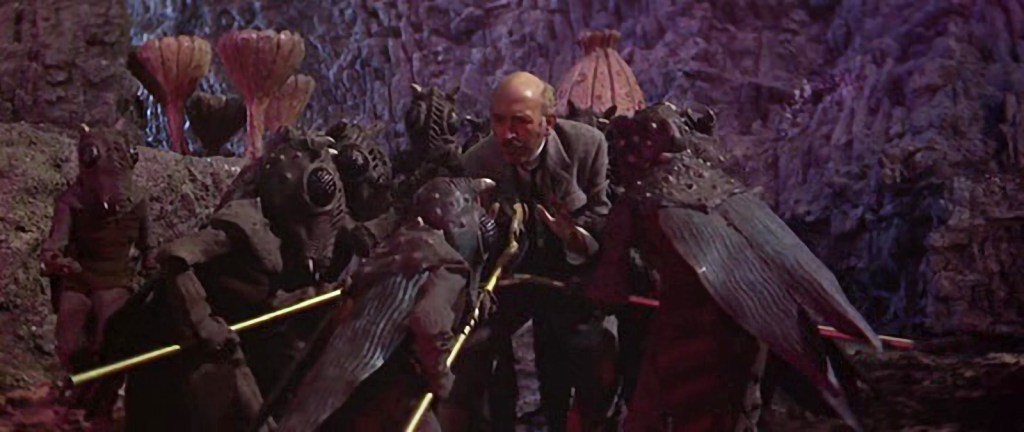
Worker Selenites (children in costumes) surround Joseph Cavor (Lionel Jeffries) in FIRST MEN IN THE MOON

IMAG: You’ve included several men-in-suit creations in your films, like the selenites in FIRST MEN IN THE MOON (1964). And the minoton was, sometimes, a man in a suit in SINBAD AND THE EYE OF THE TIGER (1977). Are there any man-in-suit monsters that you were impressed with, such as the gill-man in 1954’s CREATURE FROM THE BLACK LAGOON?

RAY: You’re always aware that it’s a man in a suit, to me, I never was impressed with them. I was impressed with Frankenstein but he was supposed to be a human that was synthetically made. But I was never impressed with CREATURE FROM THE BLACK LAGOON or some of those other movies out at the same time.
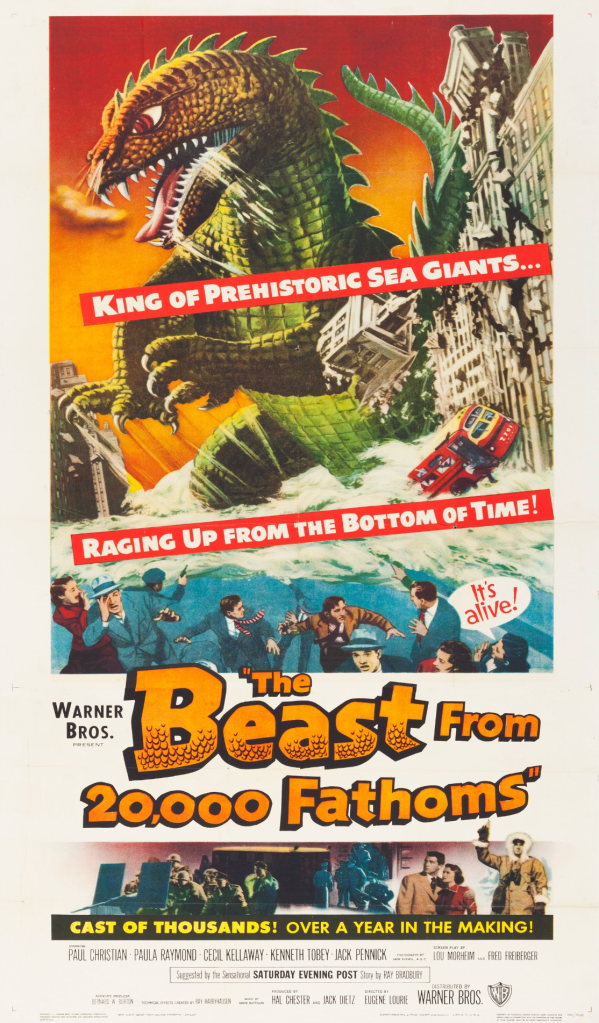
Three sheet poster for THE BEAST FROM 20,000 FATHOMS

IMAG: Your film THE BEAST FROM 20,000 FATHOMS was the movie that triggered the re-awakened monster cycle of films, which included GODZILLA (1954).

RAY: Oh yes, it was a direct copy, basically.
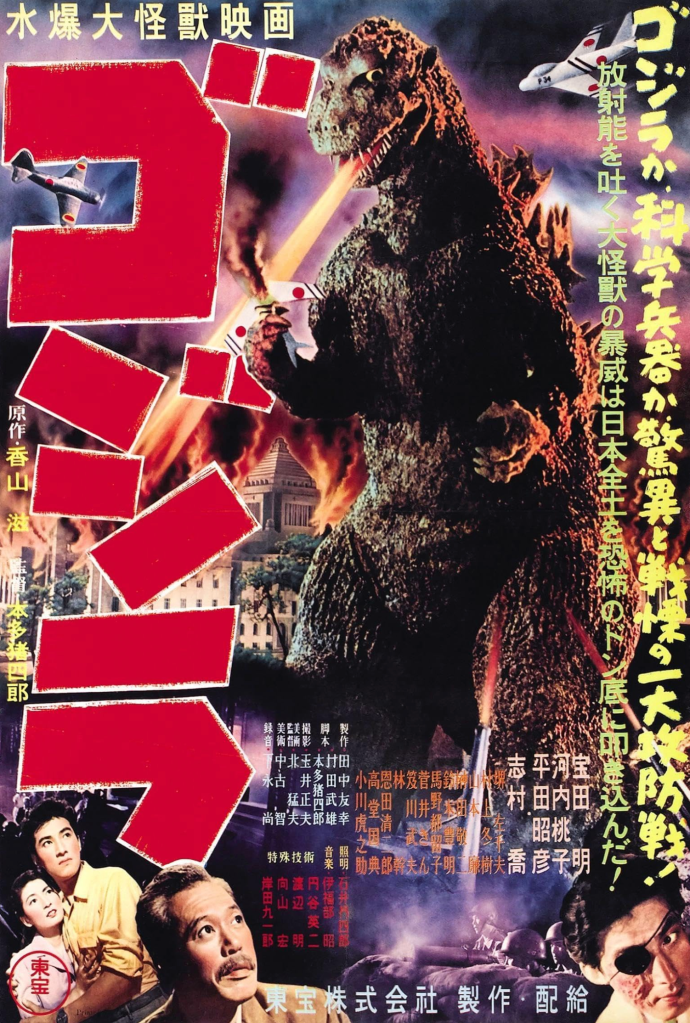
Japanese B2 poster for GODZILLA aka GOJIRA (1954)
Japanese B2 poster for GODZILLA, aka GOJIRA (1954)

IMAG: Godzilla movies have garnered many fans who like them in spite (or because) of knowing that Godzilla is a man in a suit.

RAY: A lot of people don’t care. I think that the biggest insult I ever received was when some fellow came up to me at a convention and said, ‘Oh, you make films like GODZILLA’ (laughs).

IMAG: You should’ve made an animated version of it and then you could have shown everyone what Godzilla would’ve looked like if you had made it!

RAY: You know, a lot of people are not aware of the technicalities of making a film; one monster looks like another monster to them, with no way of separating the good ones from the bad ones.
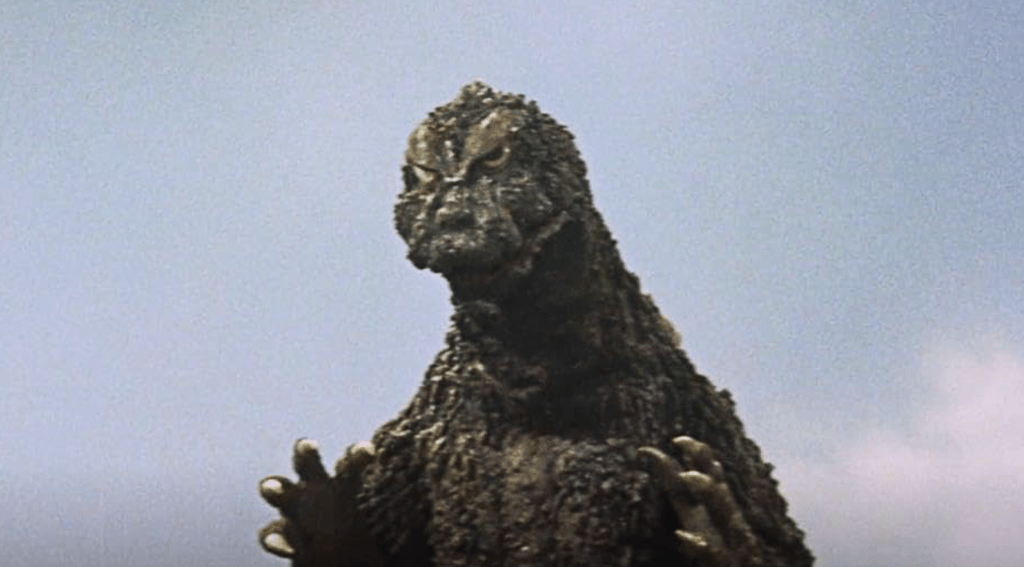
Would I have liked to see Ray animate a Godzilla film? You bet!

IMAG: I’m a monster movie fan and I must admit that I do end up watching a film because there’s a monster in it; and one can glean a bit of fun and enjoyment by watching an obviously fake-looking creature.

RAY: But you don’t just accept anything.

IMAG: Obviously, I prefer GOOD, well-made creatures, and I appreciate your skills a great deal. Yet monster movie fans do end up viewing creature features of all qualities as long as there IS a beast in it. The rod puppet creations for THE LAND THAT TIME FORGOT (1974) don’t hold a candle to your dinosaurs and yet I still watched that film when it was televised this year; though better than enlarged lizards with fins stuck to them, those puppets are severely restricted with what they can do.

RAY: It’s really limiting what you can do with a rod puppet.
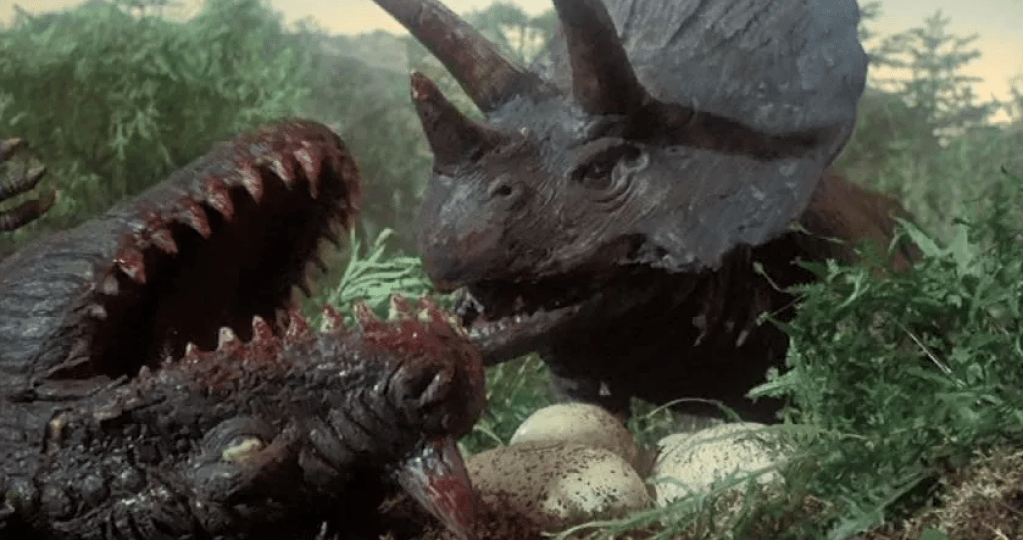
A couple of the rod puppet dinosaurs, built by Roger Dicken, from THE LAND THAT TIME FORGOT
A couple of the rod puppet dinosaurs, built by Roger Dicken, as seen in THE LAND THAT TIME FORGOT. Now, I like Roger’s work on this film…
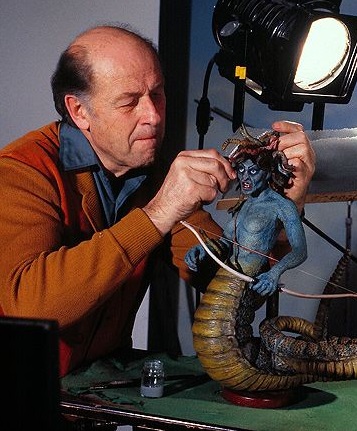
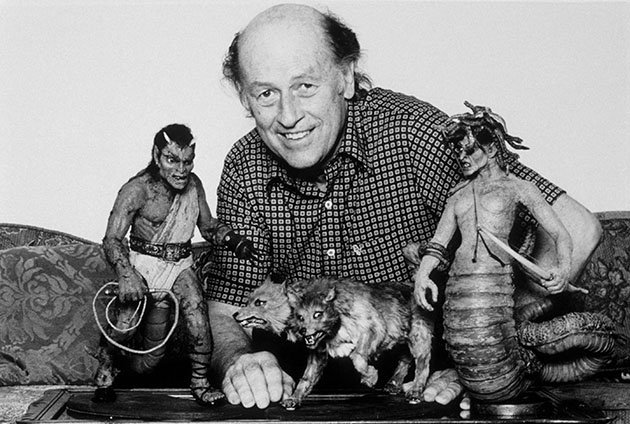
Ray with his wonderful Medusa stop-motion model; there's no way she could've been brought to the screen as a rod puppet!
…but there’s no way Medusa with her writhing snake-hair in CLASH could’ve been brought to the screen as a rod puppet!

IMAG: Rod puppets would never be a match for your animated models, that’s for sure.

(I pause here before I ask my final, very important question…)

Right then, Ray, this is a plea from a lifelong fan (ie myself); can’t you be tempted to do another film? Please?!

RAY: (Laughs) It’s just too much work.

I find I have to live, eat and sleep it 24 hours a day, and you neglect your family and many things in life that are important after all.

I hope you enjoyed reading through this interview as much as I enjoyed doing it all those years ago.

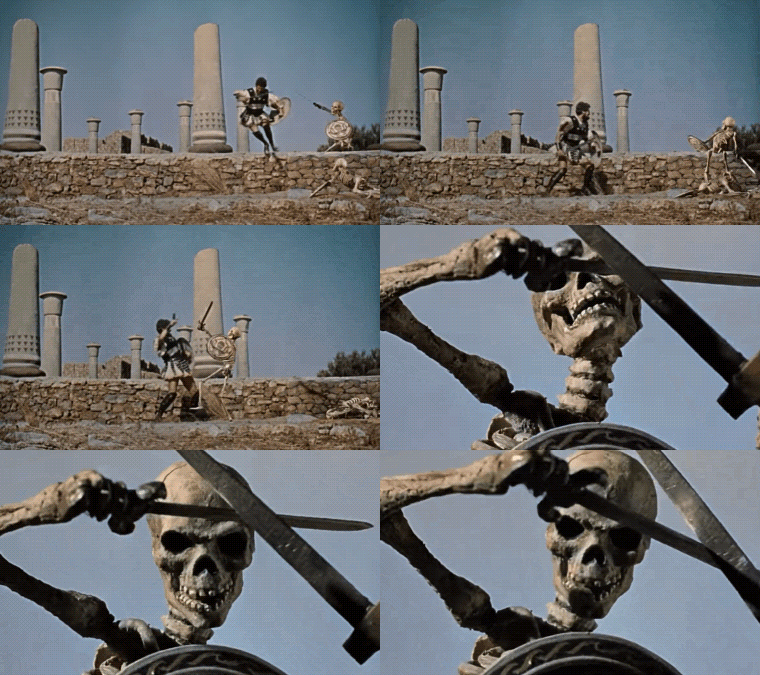
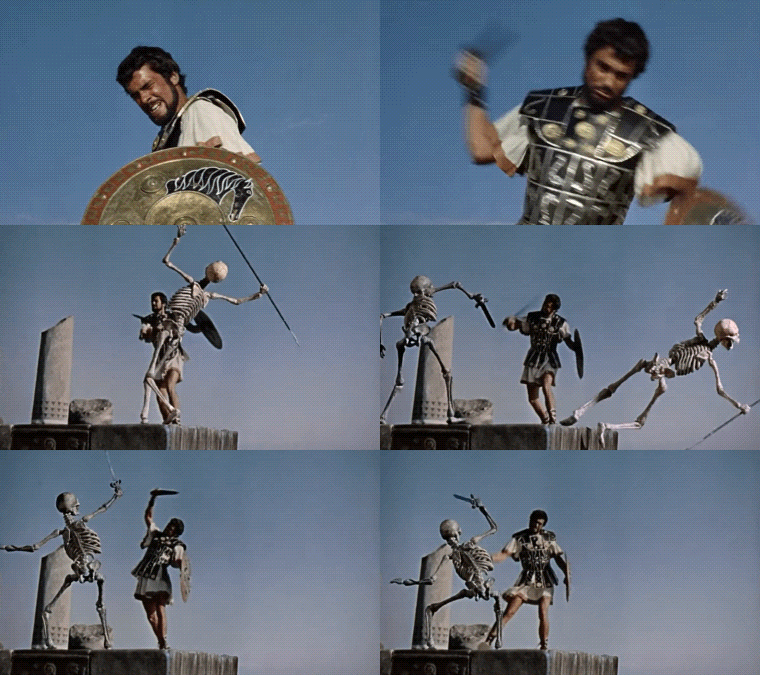
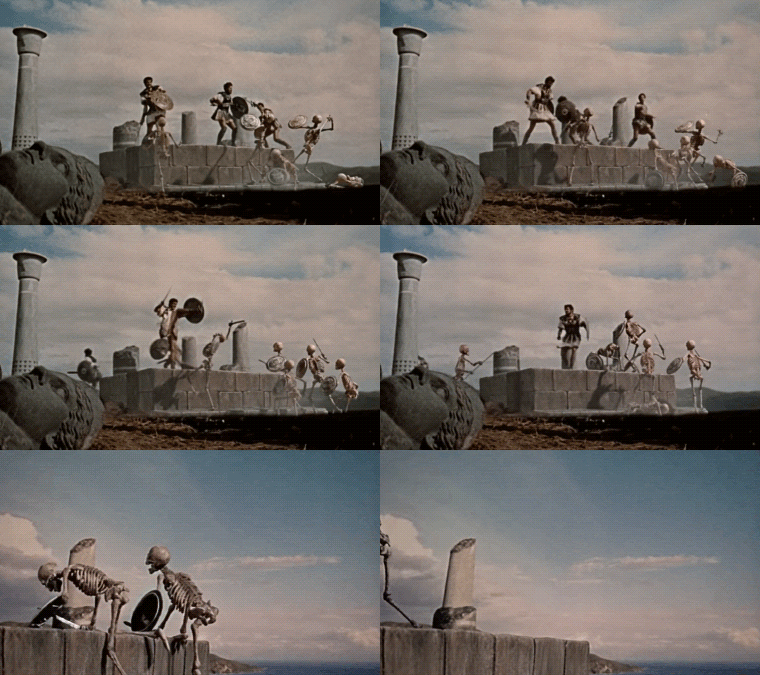
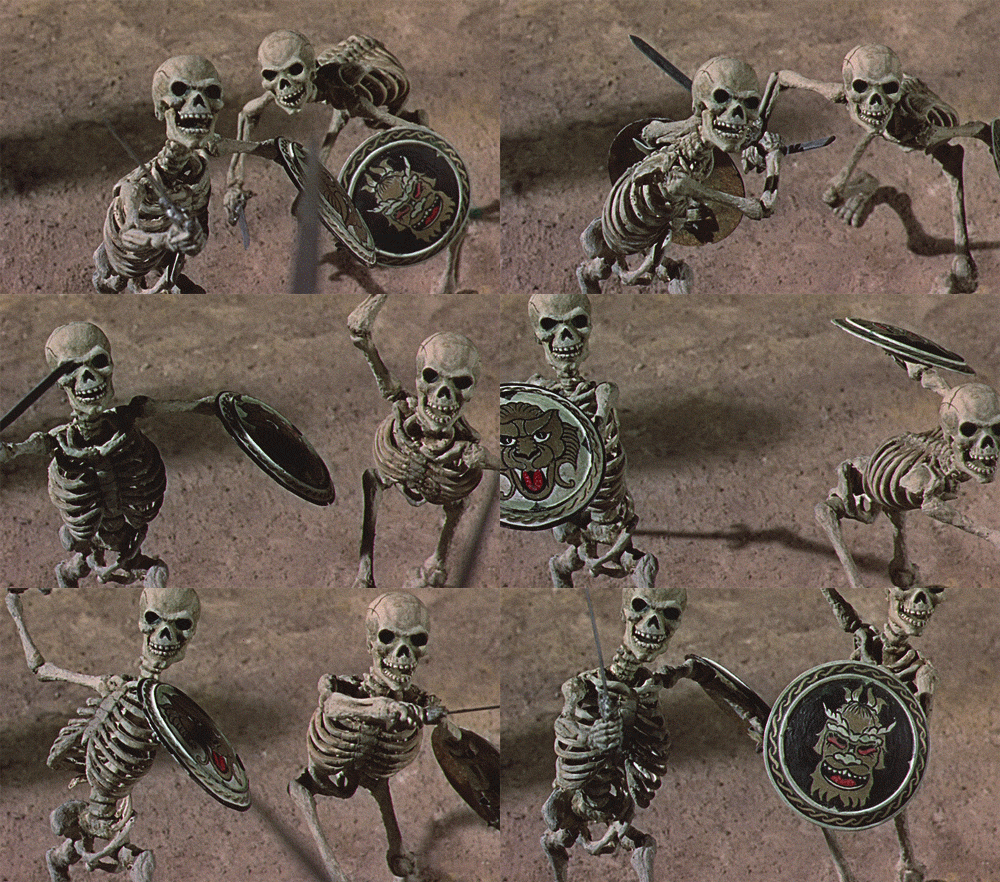
There are just SO MANY great moments in Ray’s films, but if I had to choose one set piece as the best, most exciting example of his work? I would have to pick the skeleton battle at the end of JASON AND THE ARGONAUTS. It is the stunningly thrilling jewel in the crown of fantasy cinema. A classic.

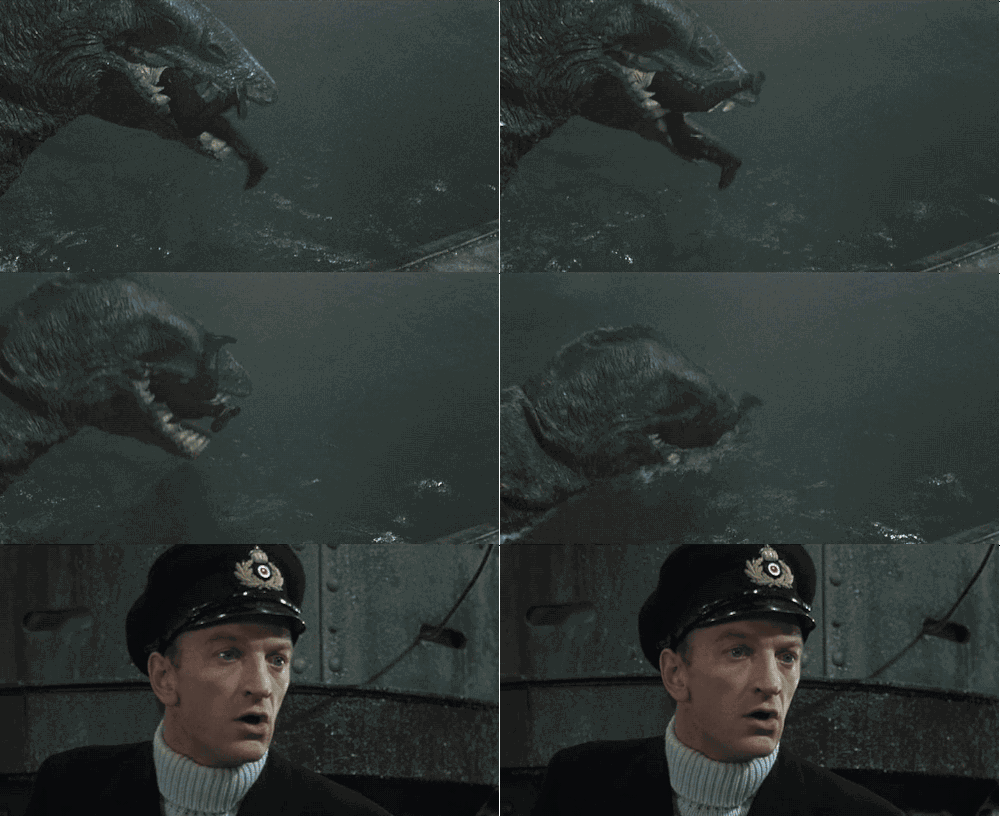
Here are some gifs…
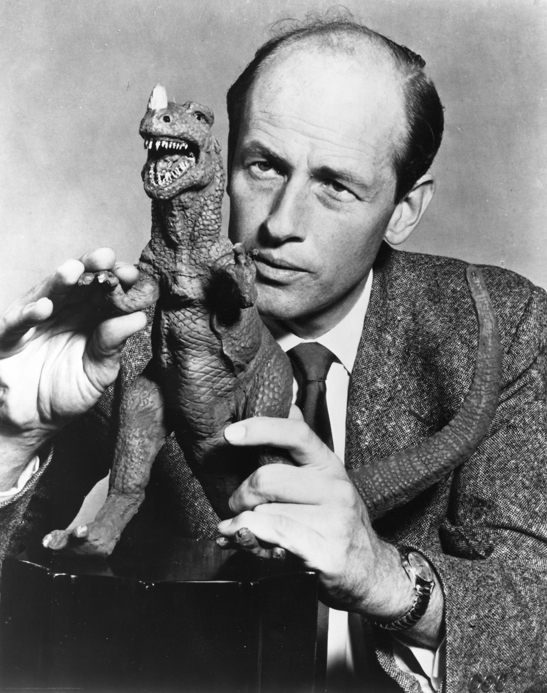
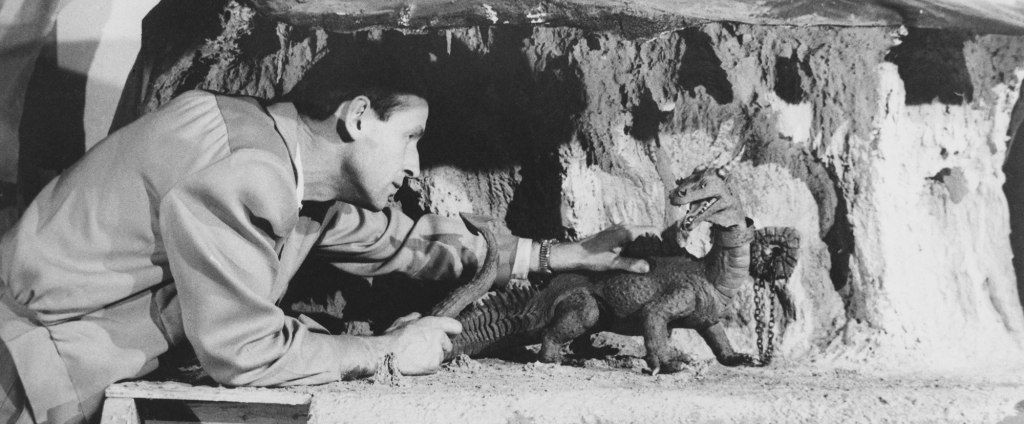
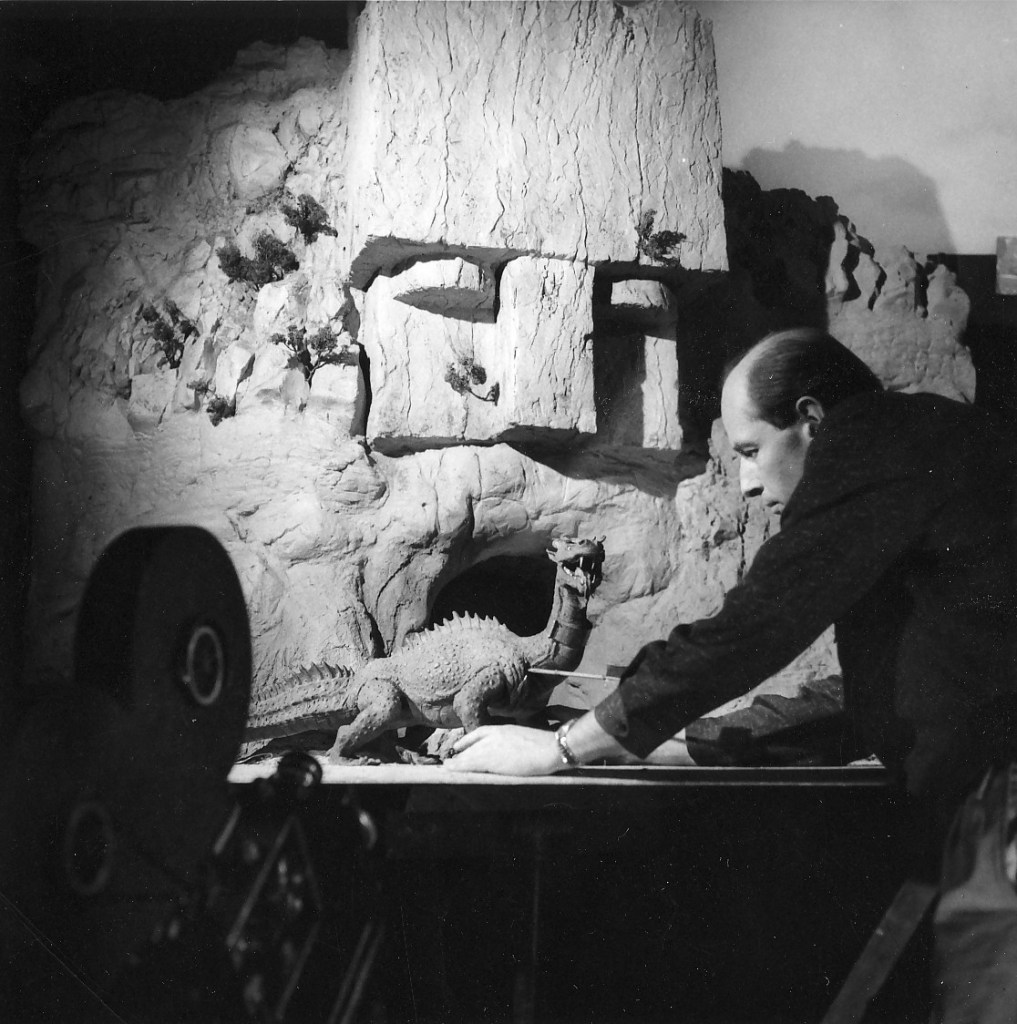
To finish, here’s a selection of shots of Ray with some of his beloved stop-motion characters…
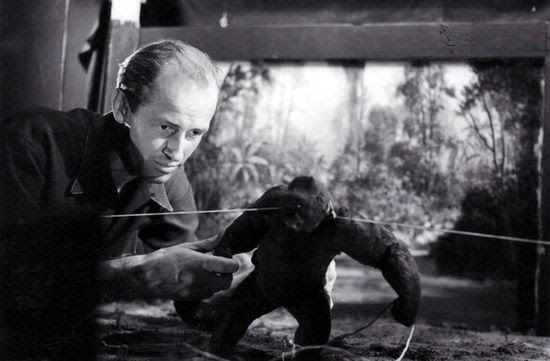
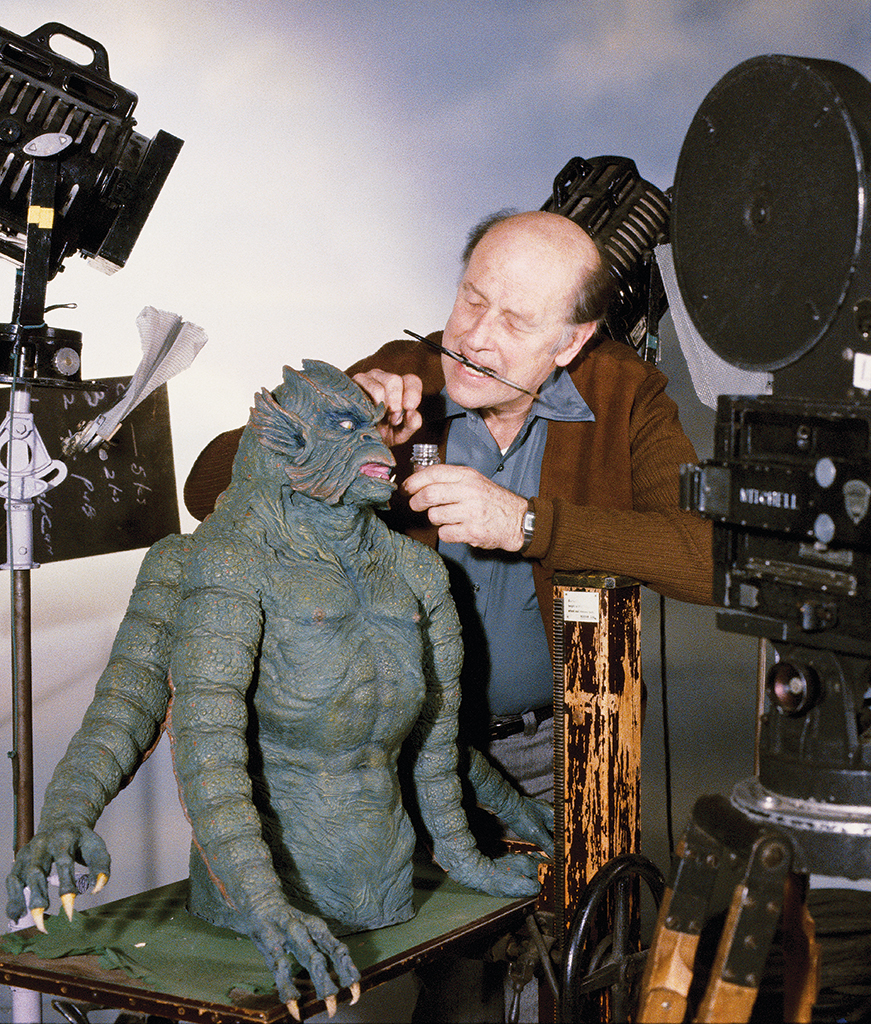
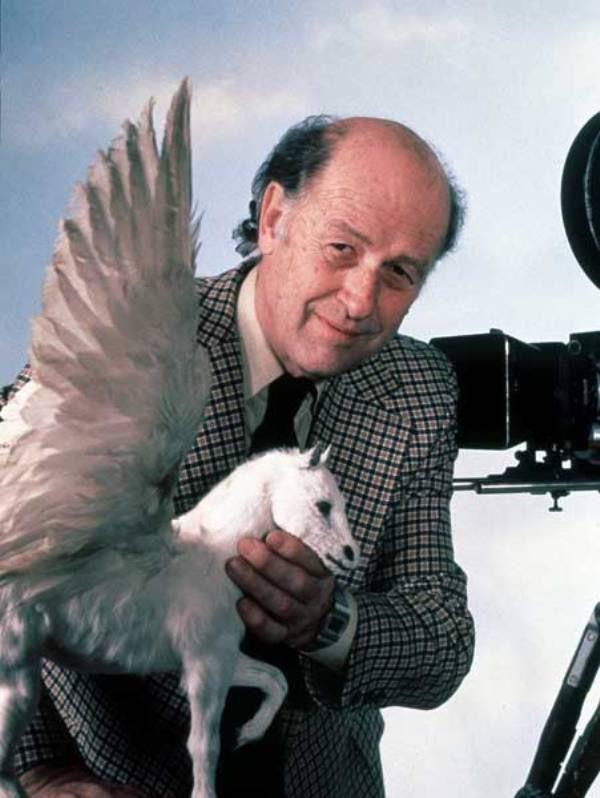
Ray photographed by Mark Mawston, courtesy of The Ray and Diana Harryhausen Foundation
What a legend!
What a legend!

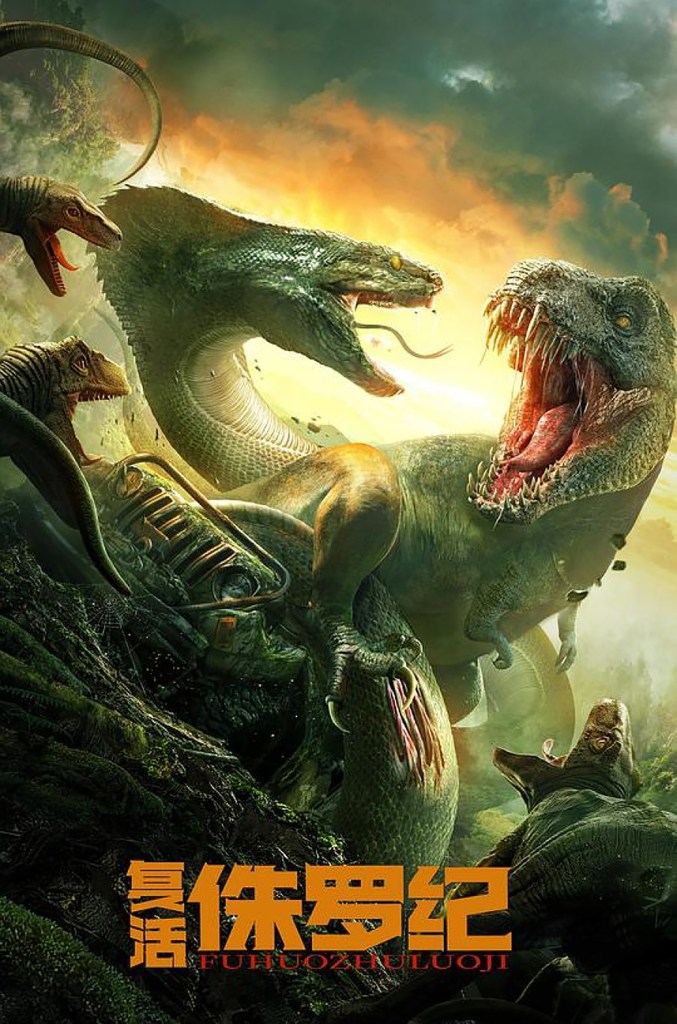
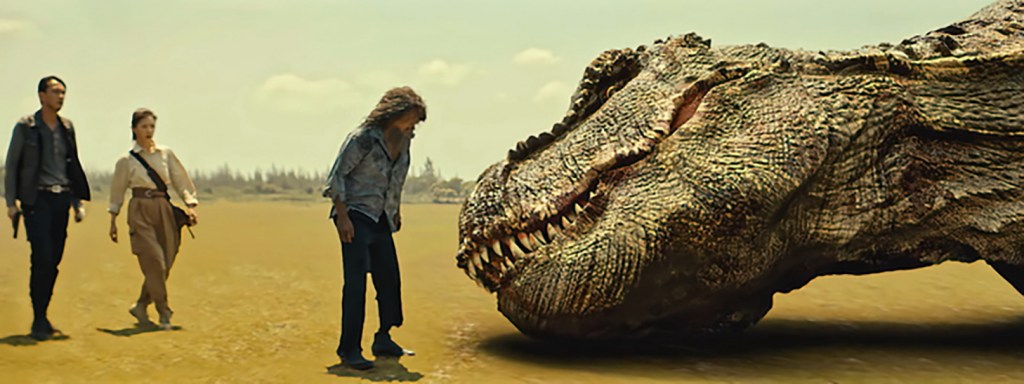
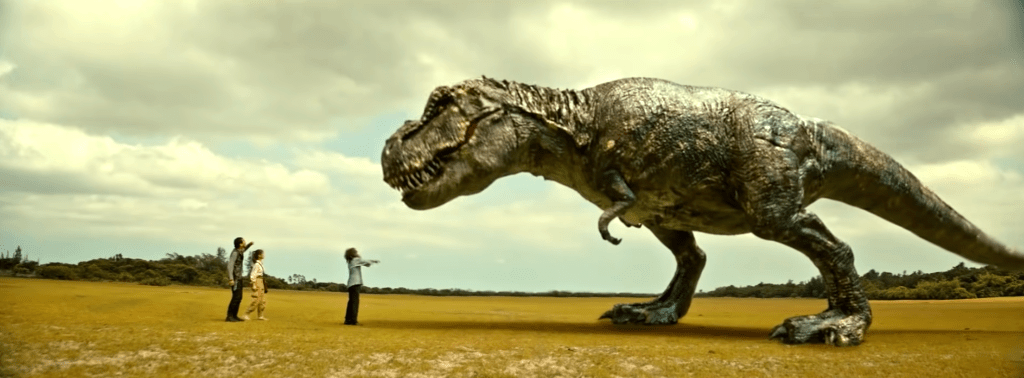
Jurassic Revival (2022)

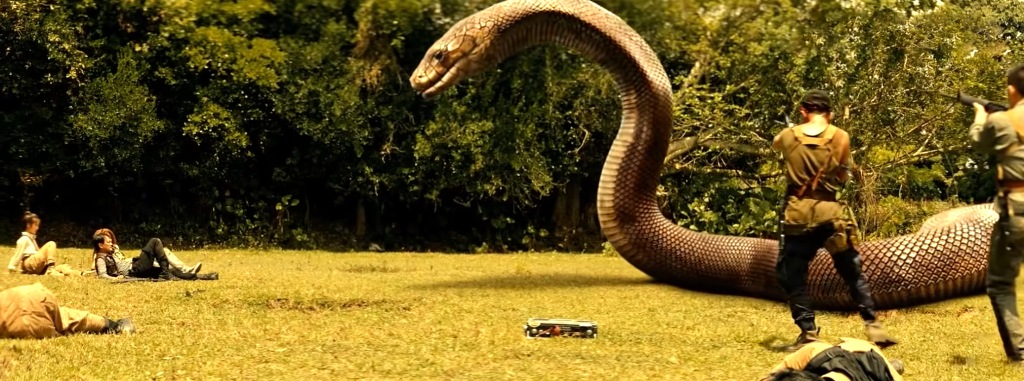
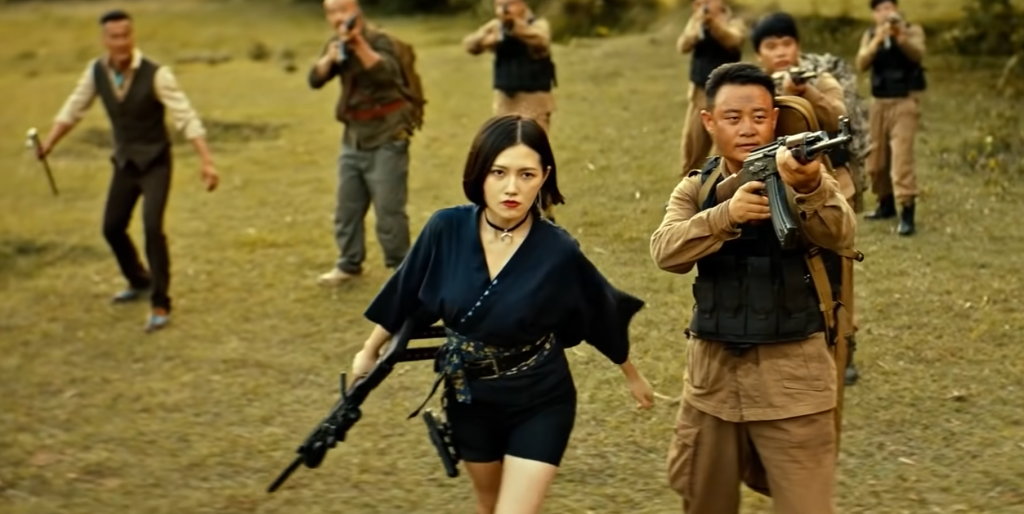
Armed team members shoot at the massive snake!

Starring Ma Xinyu, Feng Qilong, Yang Qiyu, Shen Yunzhong and Qiao Yaona, written by Li Wei, directed by Zhao Cong and produced by Xu Yawei.

Okay, I know I often say this, but here I go again: If only the movie was as good as this promo artwork
Okay, I know I often say this, but here I go again: If only the movie was as good as this promo artwork!

This begins in the 1980s, on a newly-discovered island (the ghost island), where we see a T-Rex attack the researchers and guards at an encampment. Loads of bullets are fired at this T-Rex, but it keeps on attacking, and even dynamite does little to slow it down. One particular scientist is shown running about, clutching a dinosaur egg, and then the story skips to the present day (as stories often do in these flicks), and we’re introduced to Zhao (Xinyu), the daughter of the guy-with-the-egg seen in the prologue. Zhao is asked by the despicable Mr Du (Qiyu) to accompany him and his team on a new mission to ghost island, the location of which he has rediscovered by comparing cloud formations on photographs taken at different times (a rip-off of an idea used in the 1976 version of KING KONG). Against her better judgement, Zhao goes with Mr Du and his armed goons to the island. Other team members include Laka, a dreadlocked demolition expert, Sangji, a survival expert, and Yuzi, an attractive, stony-faced, gun-toting she-merc who likes to wear snug-fitting shorts.

Yuzi doesn't like to smile
Yuzi doesn’t like to smile

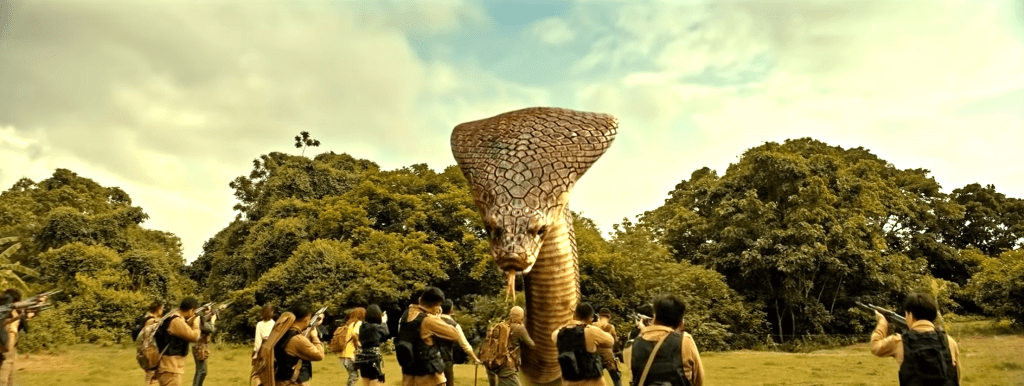
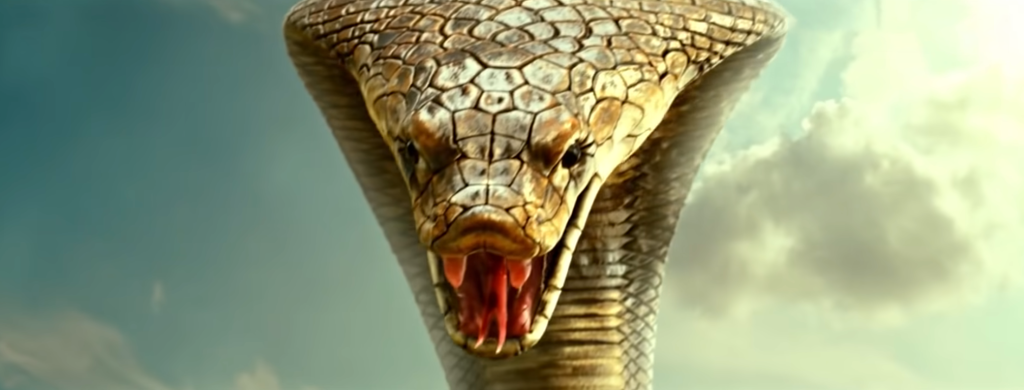
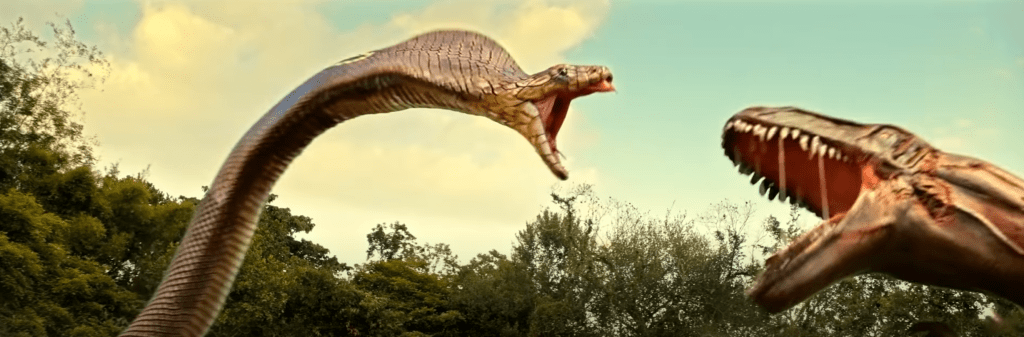
Once on ghost island, a member of the group coughs-up blood and dies after a bug flies into his mouth (but these wasp-like bugs are never encountered again), and then a super-gigantic cobra goes on the offensive (of course there’s a huge snake in this movie: Chinese creature features just LOVE to include giant snakes if they get the chance!)

Giant cobra!
Giant cobra!
A close-up shot of the serpent!

The team are unable to kill this huge serpent with all their firepower, and are fortunately saved when a carnosaur rocks up and quickly bites the cobra in two! The team get away from the reddish-brown predatory dino, which will turn up again later. 

The big cobra and the huge carnosaur roar at each other!

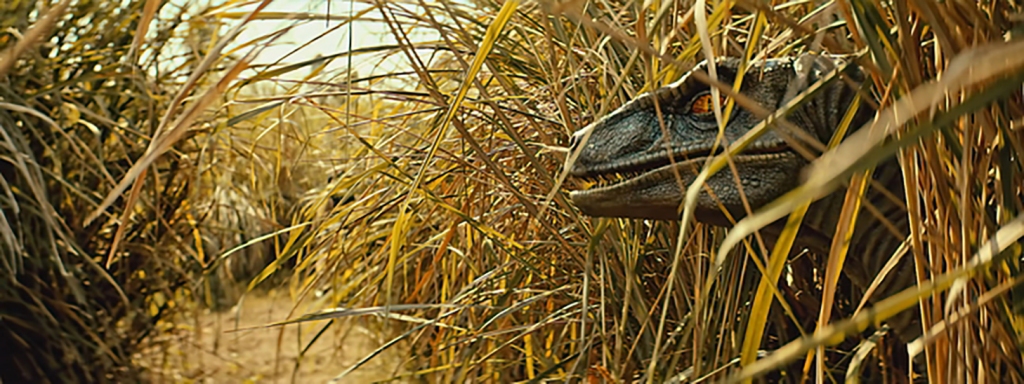
An encounter with Velociraptors in an area of long grass happens next, and it is handled pretty well. There’s even a decent-looking full scale raptor prop head used in this sequence, as well as a full-body raptor costume.

The practical effects raptor head looks pretty damn good

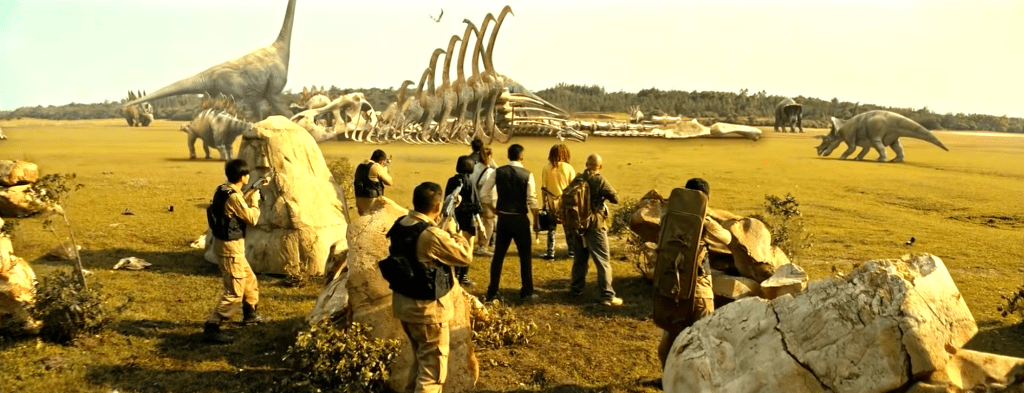
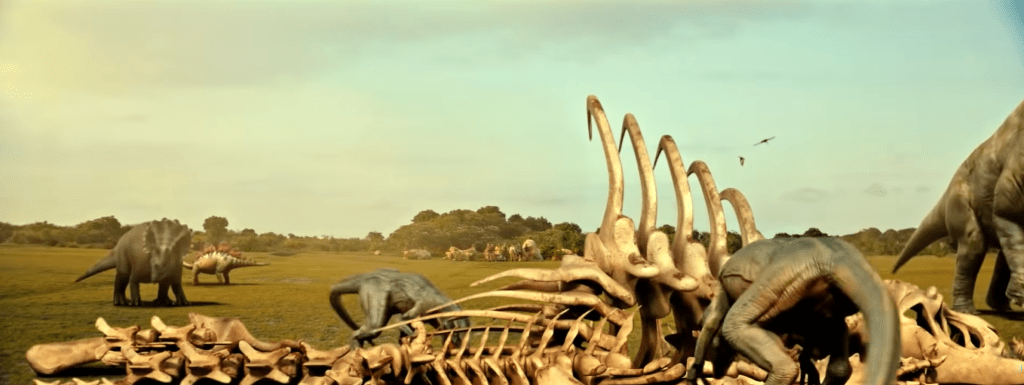
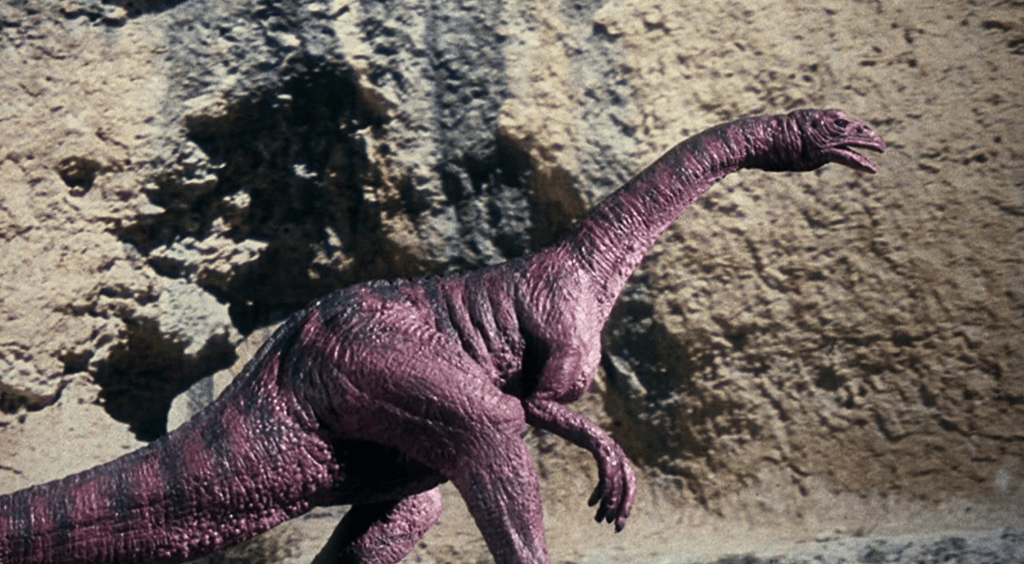
The characters eventually reach the island’s open plains, which is populated by Stegosaurs, Triceratops, sauropods, pterosaurs, and other dinos.

Dinos roam the open plains

All dinosaur movies should include shots of a big skeleton at some point. This movie does just that, so I am pleased!

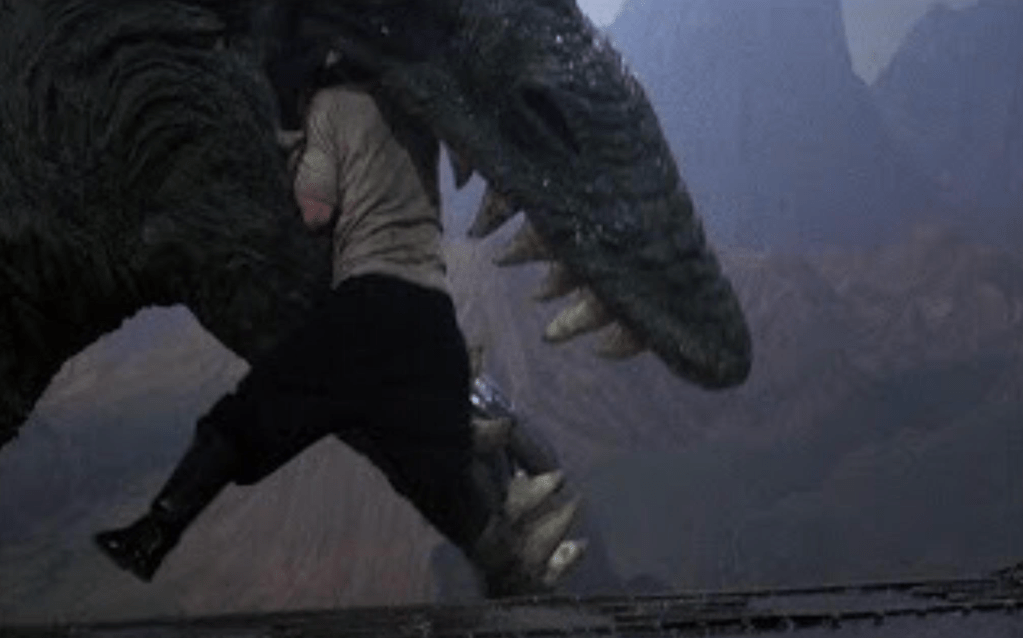
The quality of the special effects does vary throughout the film, with some of it looking particularly weak. One such example of low quality FX is the reddish-brown carnivore (which we saw kill the cobra earlier) that now reenters the story. This critter moves about with a clunky, awkward gait that is not of a very high standard, effects-wise. But a T-Rex that shows up at this point, with Zhao’s wild-haired father riding on its back, is a better example of the CGI, boasting a more impactful body design and good skin texture details. It turns out that Zhao’s dad has raised this T-Rex from the egg he was carrying about, and now the dino is his loyal pet! This is a fun, goofy idea, but the filmmakers waste the opportunity to show lots of dino-riding action, and simply have the dad tell the T-Rex to chill out while he joins the team, as Mr Du searches for a special meteorite.

The wild-haired father's pet T-Rex is hurt after a fight...
The wild-haired father’s pet T-Rex is hurt after a fight with the reddish-brown carnosaur…
...but it gets back up
…but it gets back up: the pet T-Rex is okay, folks! Yay!

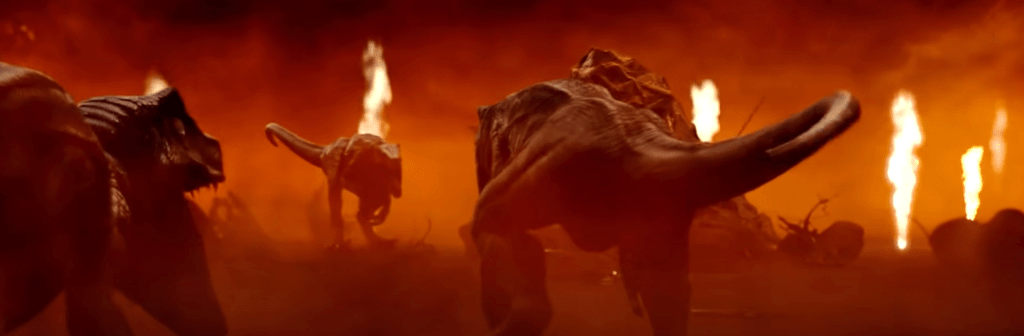
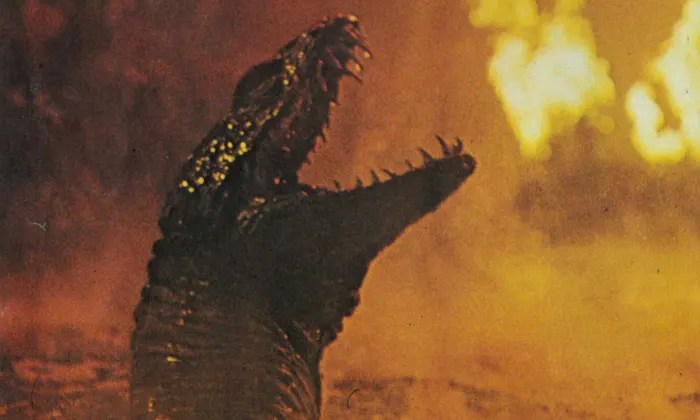
The explorers reach a hot, volcanic landscape, dotted with jets of flame, which is the location of the meteorite. Mr Du wants to blow this hunk of rock up (presumably because it contains valuable minerals), but Zhao’s father says that the meteorite’s magnetic field is related to the life of the entire island, so if the rock gets destroyed every living thing on the isle will perish. So, after a raptor attack, the team members inevitably split into two factions, as some try to protect the meteorite, and others attempt to blow it up. 

Raptors in the volcanic zone

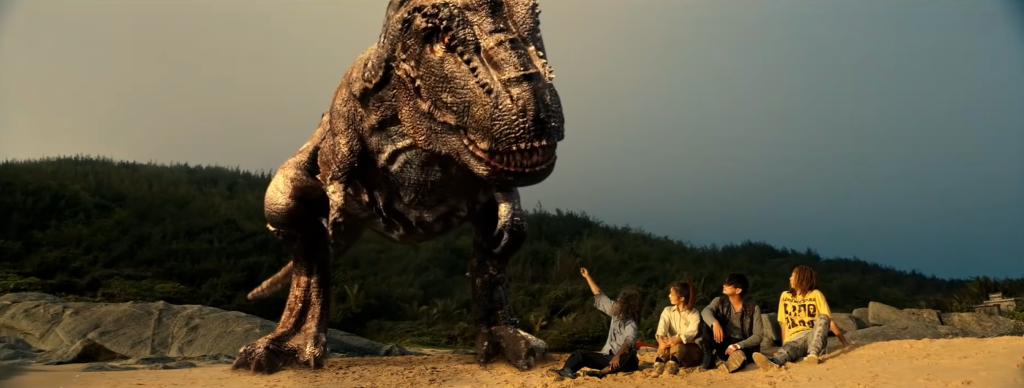
The orange-hued, fiery zone, where this finale takes place, is quite stylised and theatrical-looking, exuding a more fantastical, cinematic vibe (compared to the naturalistic locations used elsewhere), and it definitely suits the pulpy requirements of this lost world film. So it’s a shame that it is used as the setting for a protracted hostage standoff situation, with Mr Du holding Zhao at knifepoint, which is all rather anticlimactic. We do get to see the pet T-Rex again, though, at the very end, as the survivors wait on the beach to be rescued.  

Chillin' on the beach with the pet T-Rex
Chillin’ on the beach with the pet T-Rex

As the film fades to black, some copy informs us that Laka, Zhao and Sangji were sentenced to six years in prison for breaking the local law. But could someone please answer this question for me: how the hell does a lost, prehistoric island happen to have its own local law?!

Chinese monster movies like to include Asian Lara Croft-types in their stories!

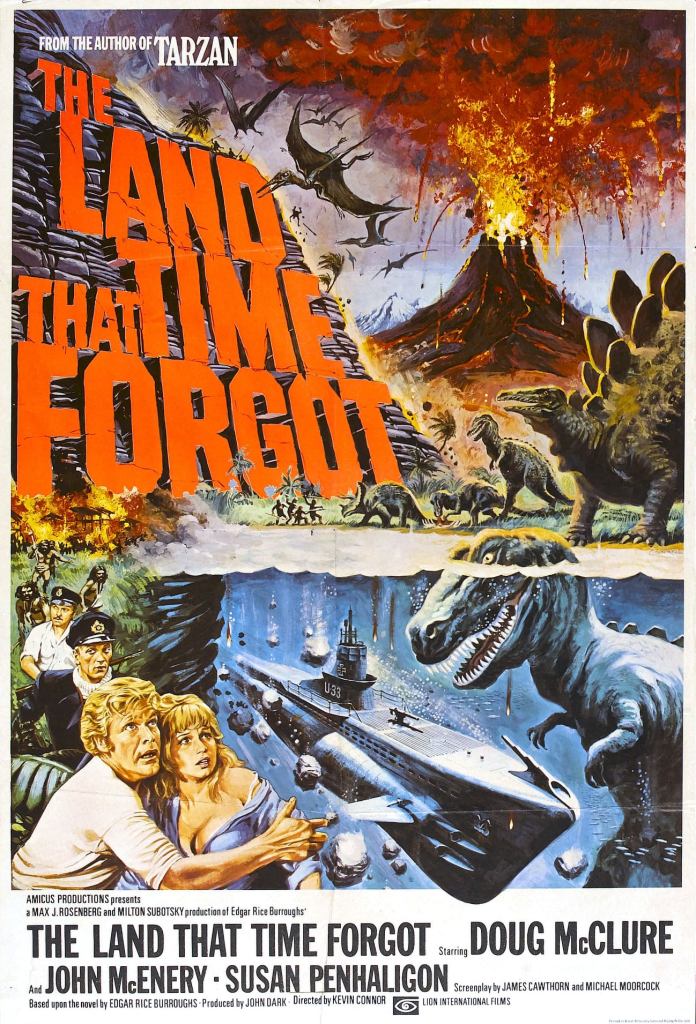
The Land That Time Forgot (1974)

Okay, now THIS is what you call a movie poster!
Battlin' water beasts
Battlin’ water beasts

Directed by Kevin Connor, produced by John Dark, Max Rosenberg and Milton Subotsky, starring Doug McClure, John McEnery, Susan Penhaligon, Keith Barron, Anthony Ainley, Godfrey James, Declan Mulholland and Bobby Parr. Made by Amicus Productions.

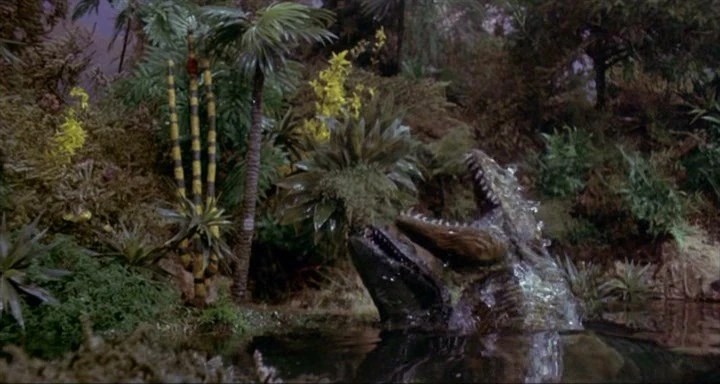
Watch out for the Tylosaurus!
Watch out for the Tylosaurus! This is one of my favourite creatures in the movie
Nom, nom, nom...
Nom, nom, nom…

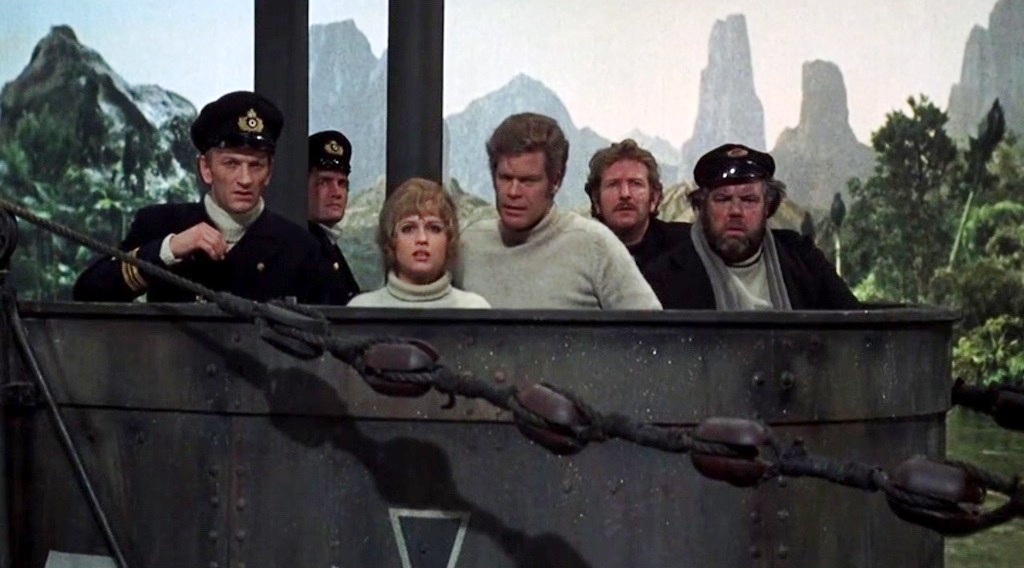
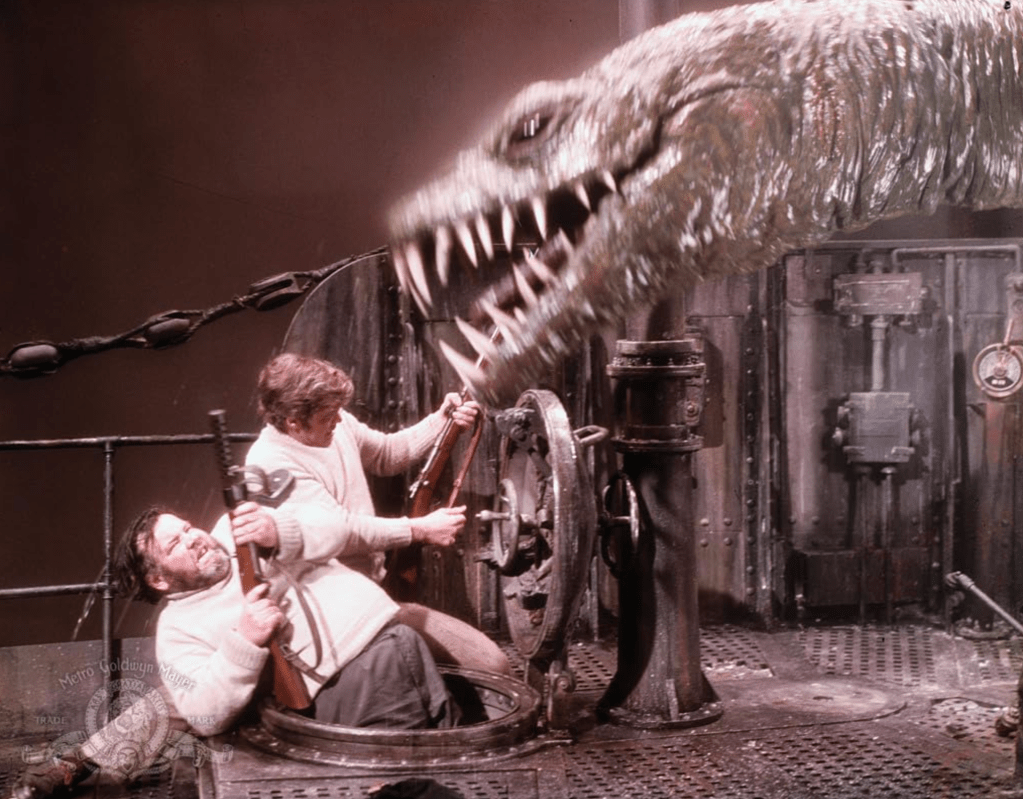
In World War I the survivors of a torpedoed ship manage to take control of the German U-boat that sank their vessel. After finding themselves stranded on the prehistoric continent of Caprona, the two opposing groups form an uneasy alliance to survive in this dinosaur-filled land.

Checking out the lost world...
Checking out the lost world…
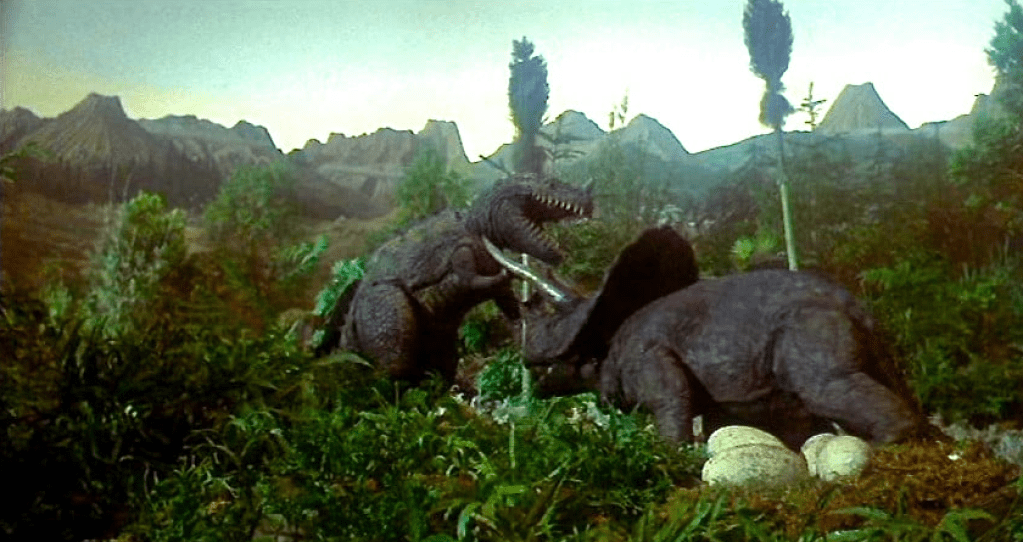
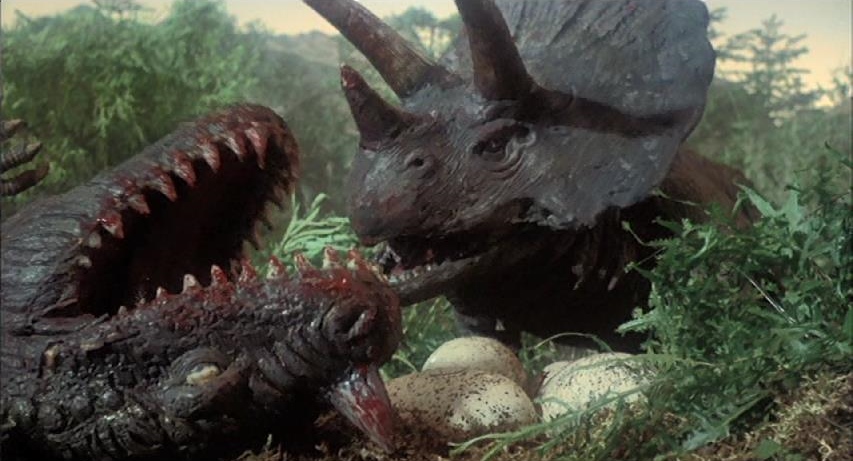
A brief battle between a Ceratosaurus and a Triceratops
A brief battle between a Ceratosaurus and a Triceratops…
...and the Triceratops (guarding its eggs) wins!
…and the Triceratops (guarding its eggs) wins!

Okay, let’s get the dinosaurs and other prehistoric reptiles out of the way first: yes, they’re obviously not as good as stop-motion Harryhausen-style beasties, but Roger Dicken’s rod puppet creations are preferable to real-lizards-with-frills or men-in-dino-suits. They at least resemble dinosaurs and are pretty nice to look at.

A toothy Allosaurus or two
Styracosaurus
Styracosaurus

I was lucky enough to see a couple of these dinosaur puppets when Roger Dicken attended a film festival I co-hosted at London’s legendary Scala Cinema in the early 90s. These lovingly-detailed movie monster models looked really impressive up-close!

Watch out!
Watch out!

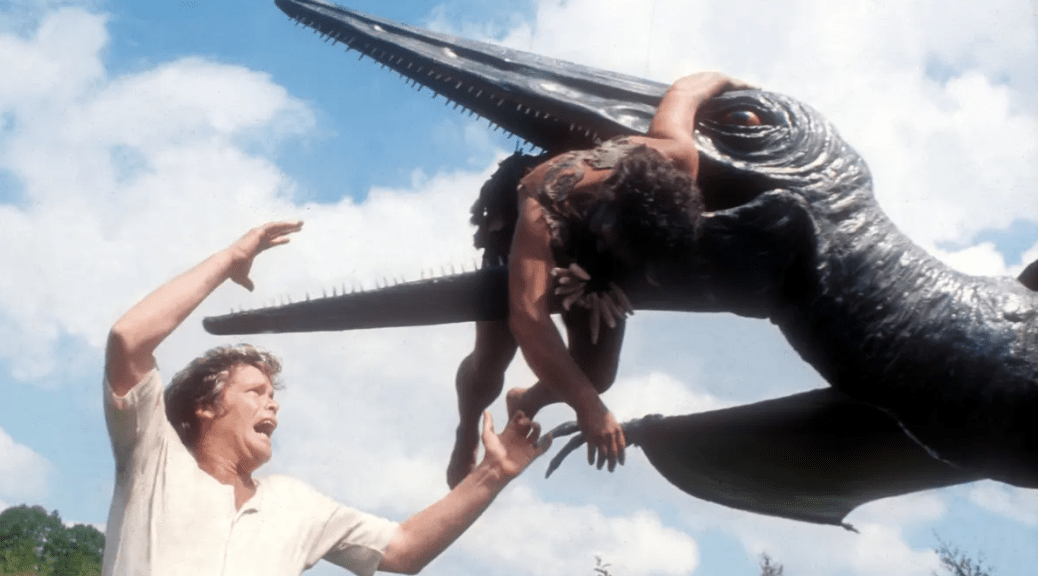
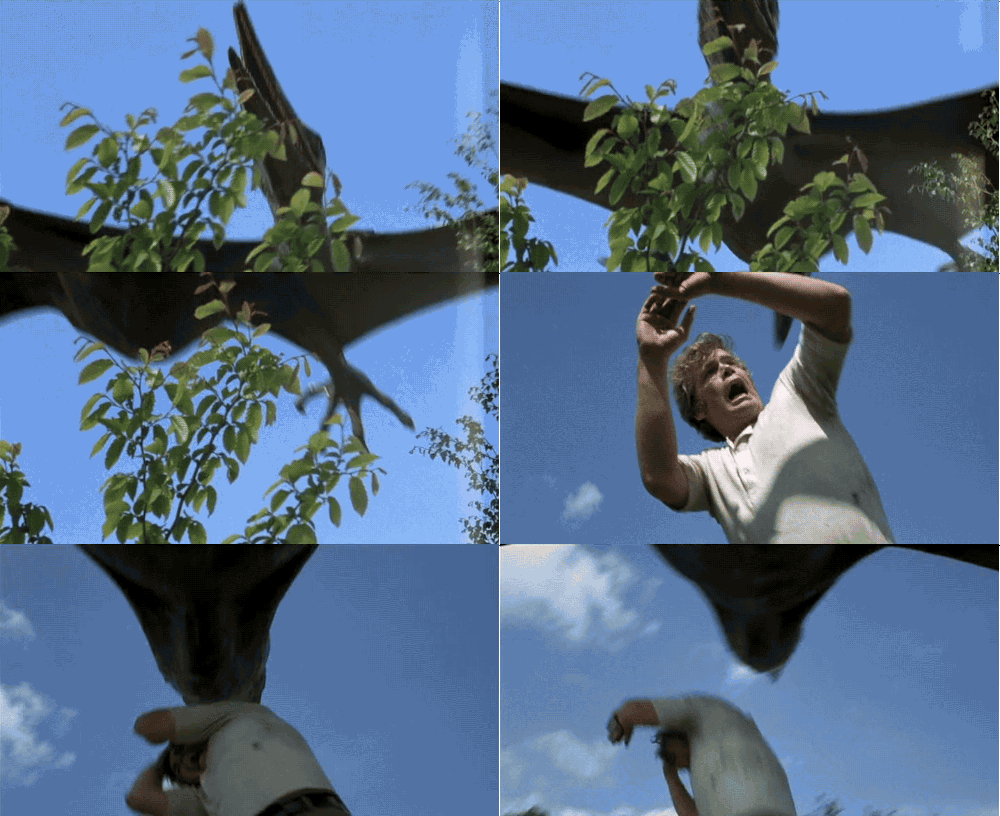
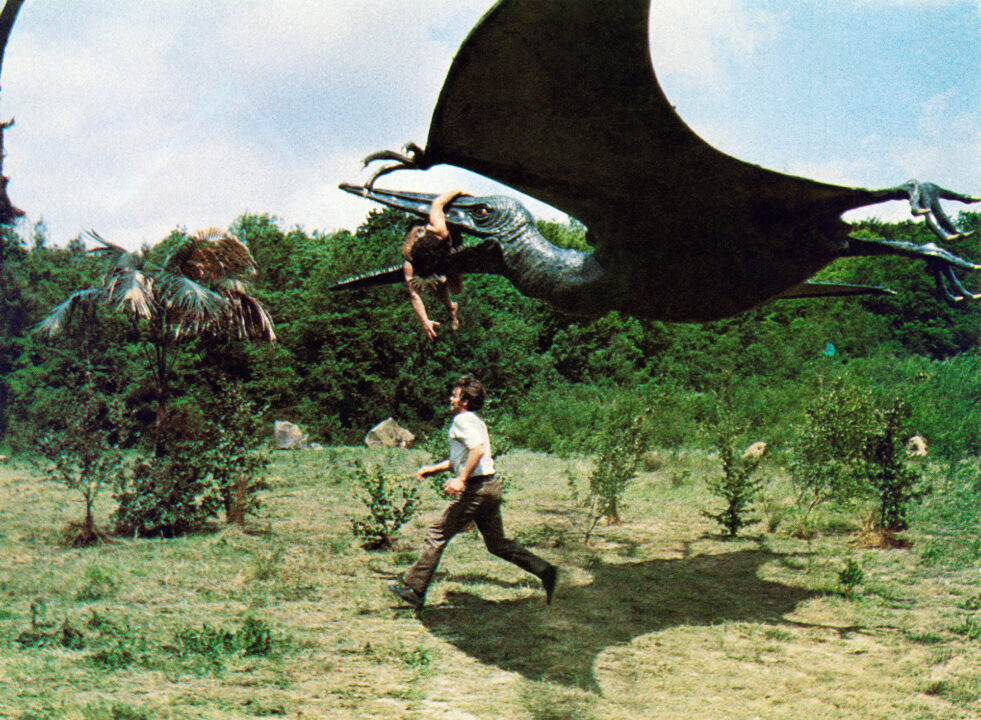
The scenes of the puppet critters are augmented with shots of full-scale models, including a plesiosaur (its head and neck) and a pterosaur that glides away with a friendly caveman!

Low-flying pterosaur!
The full-scale Plesiosaurus prop
The life-size Tylosaurus model head in action
A life-size Tylosaurus model head in action

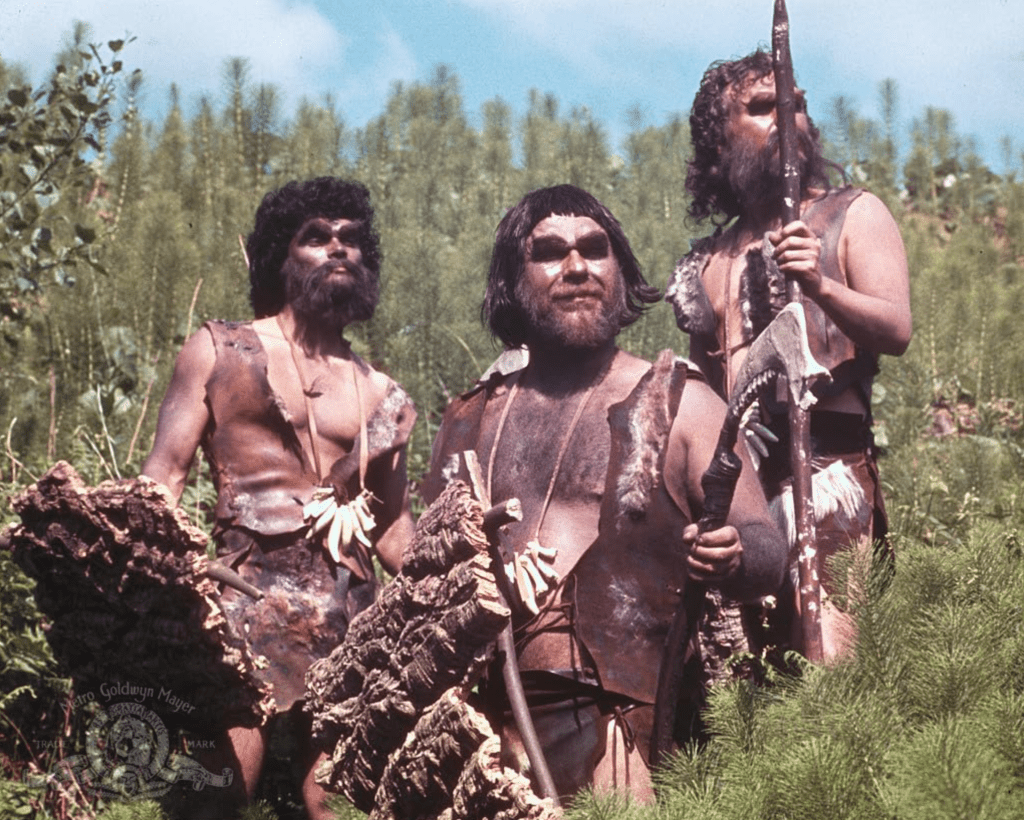
I think the movie’s script, written by Michael Moorcock & James Cawthorn, based on Edgar Rice Burroughs’ novel, is intriguing: the various creatures (including primitive types of human and even bacteria) living in Caprona are continually evolving as they move northwards in this lost world. In the novel (and its sequels) Burroughs included prehistoric mammals like Mammoths (showing them being preyed upon by carnivorous dinos, etc) to illustrate how creatures from different time periods all dwell on the same subcontinent. The movie, maybe due to budgetary reasons, doesn’t include any mammalian beasties, but it does feature tribes of early humans at different stages of sophistication, to visually highlight the concept of evolution advancing as individuals migrate towards Caprona’s northern regions.

A more advanced tribe of early humans

Loads of fights with cavemen, shootouts with dinos, some neat Derek Meddings model submarine work, a volcanic eruption, decent acting and a pretty downbeat finale keep this flick interesting.

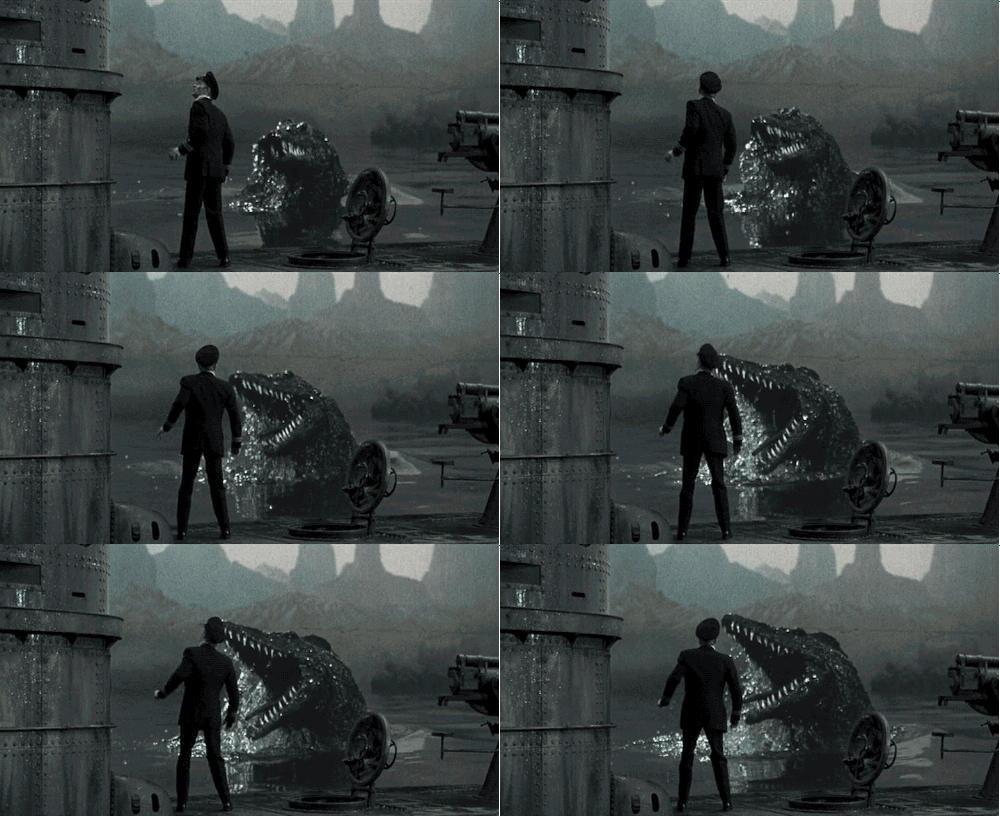
An aquatic reptile roars as the volcanic eruption starts to heat-up the river water

And, of course, the film stars Doug frickin’ McClure, who would go on to fight more monsters in the movies AT THE EARTH’S CORE (1976), THE PEOPLE THAT TIME FORGOT (1977) and WARLORDS OF ATLANTIS (1978), which were all directed by Kevin Connor, and then Doug took on more monsters in HUMANOIDS FROM THE DEEP (1980). What a dude!

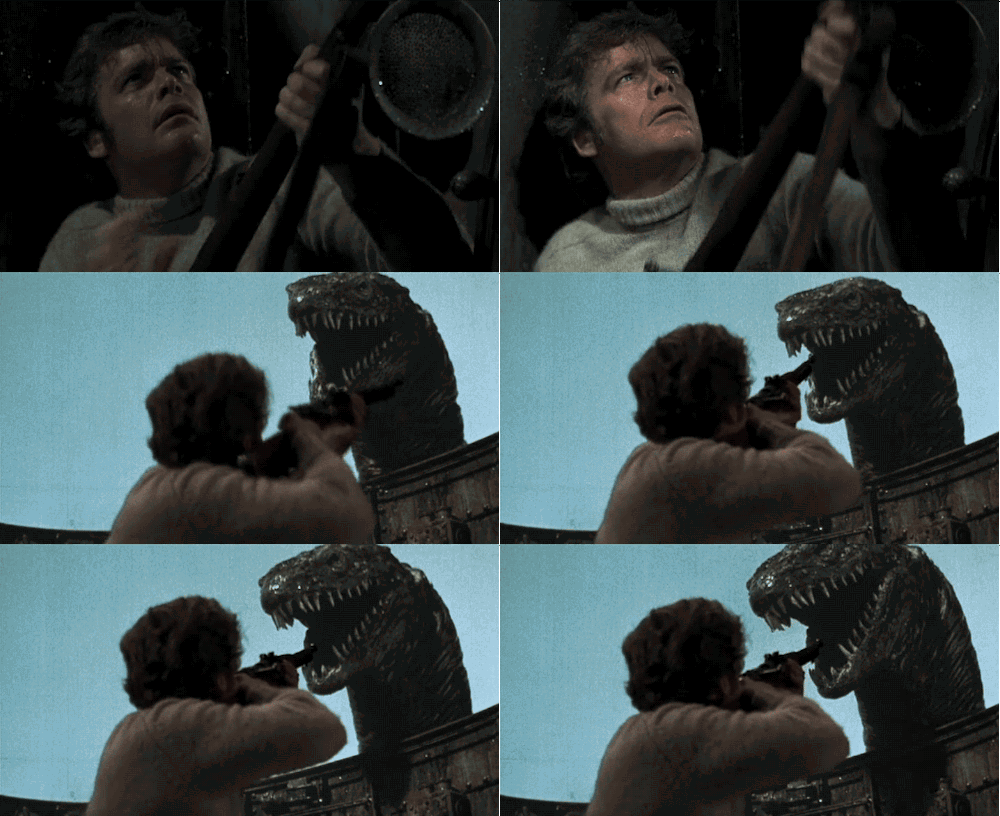
Shoot that Plesiosaurus in the face, Doug!
You can't win a race with a swooping pterosaur, Doug!
Doug, you can’t win a race with a swooping pterosaur!

Let’s check out some posters for the movie…
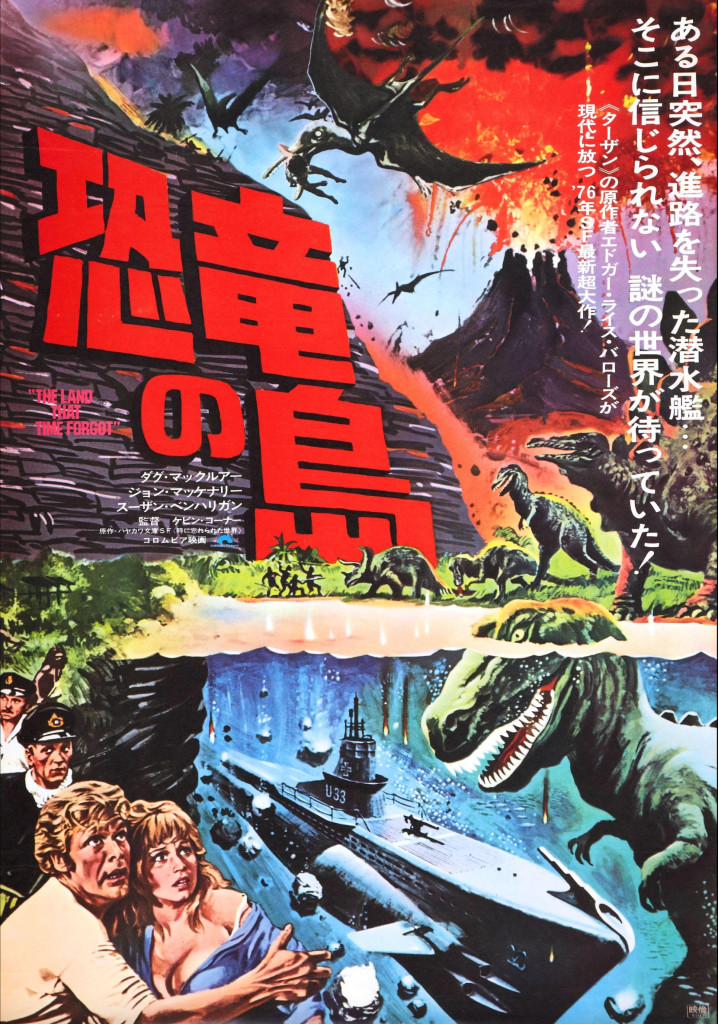
Japanese poster
Japanese poster
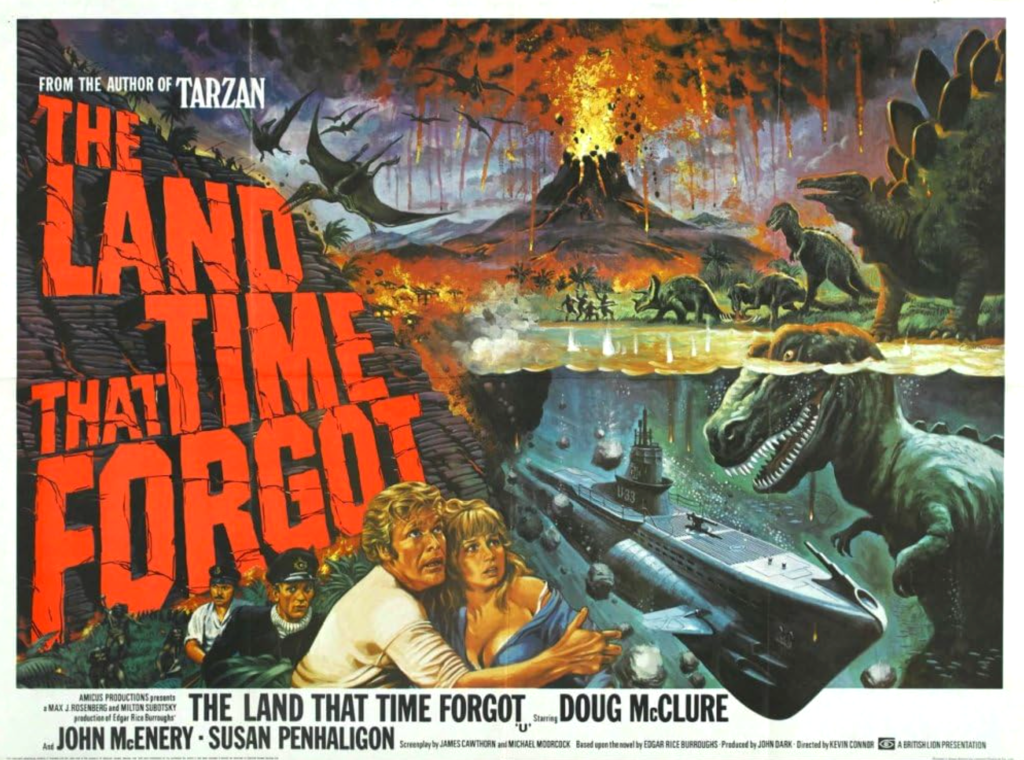
UK quad poster
UK quad poster
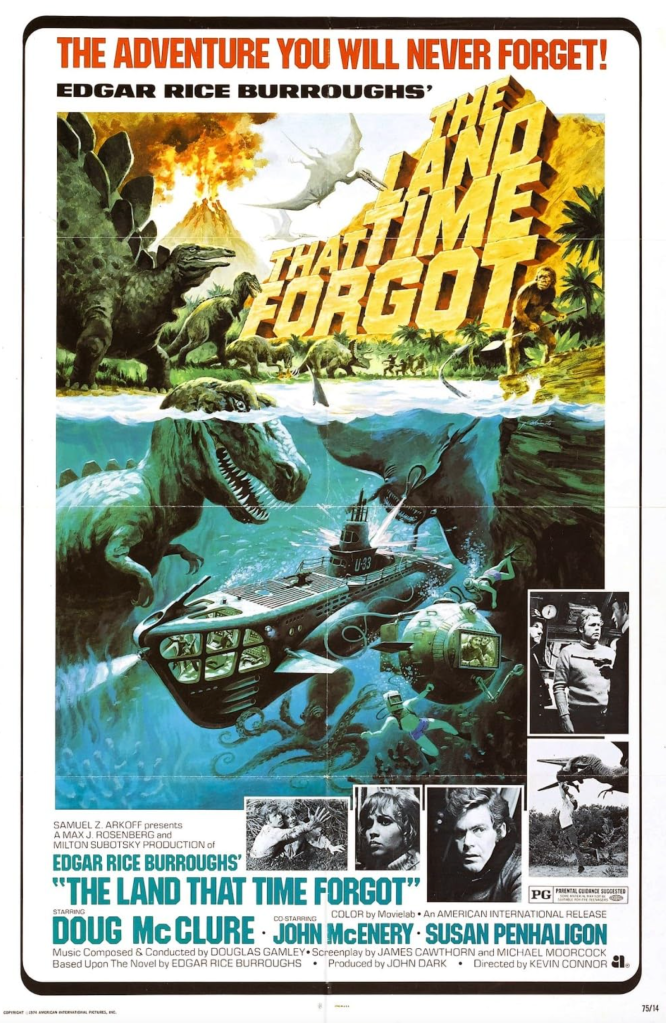
US poster. It's interesting that the American poster includes a laser beam-firing manta ray, a giant octopus and a cool-looking sub with windows!
US poster. It’s interesting that the American poster includes a laser beam-firing manta ray, a giant octopus, a diving bell and a cool-looking sub with windows (none of which feature in the movie)!
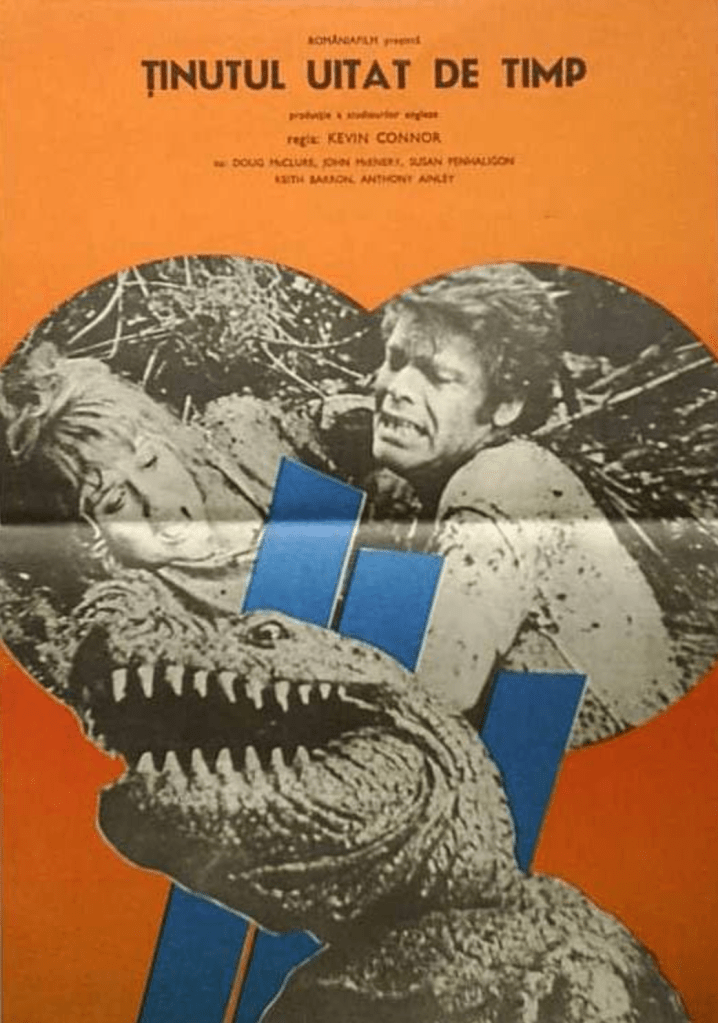
Romanian poster
Romanian poster
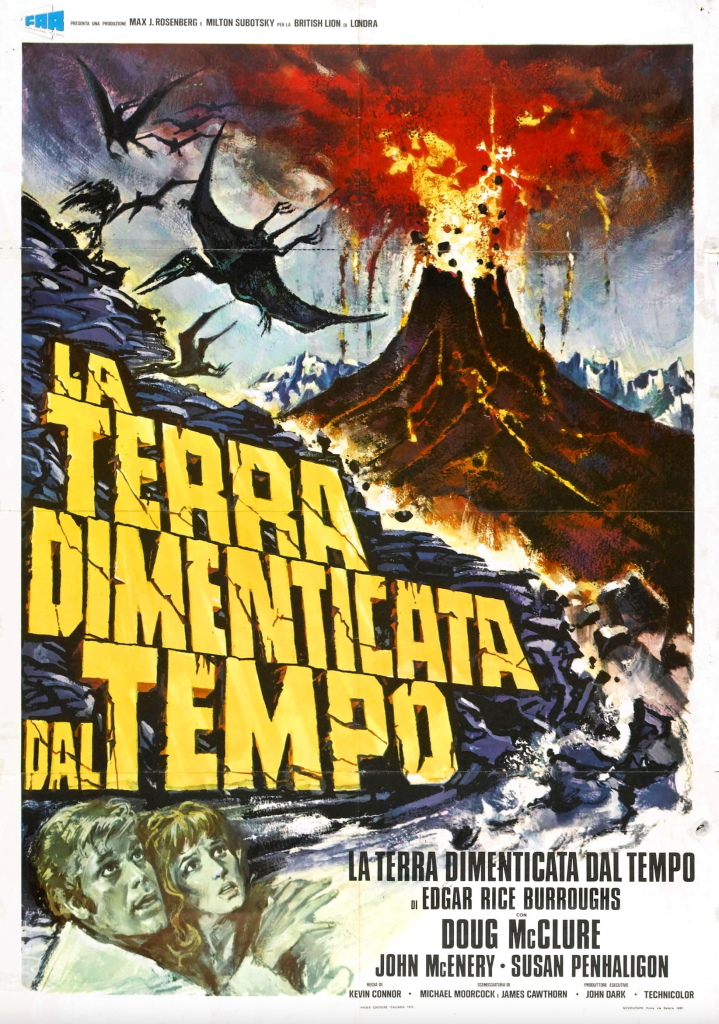
Italian poster
Italian poster
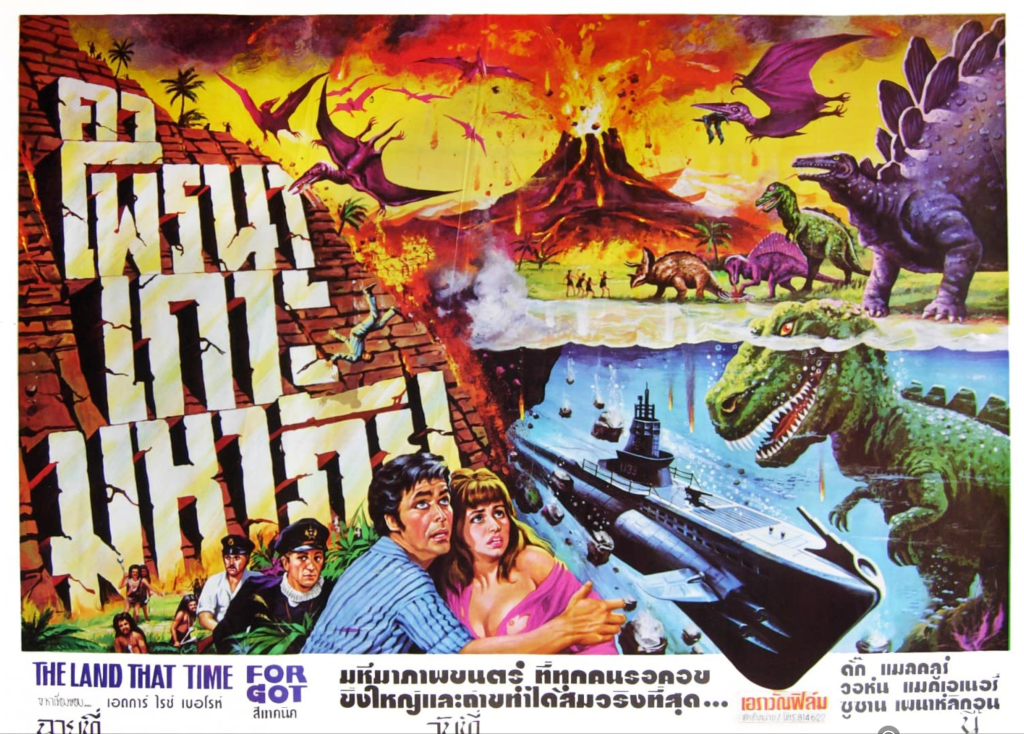
Thai poster
Thai poster: look at Doug’s dark, lustrous hair!
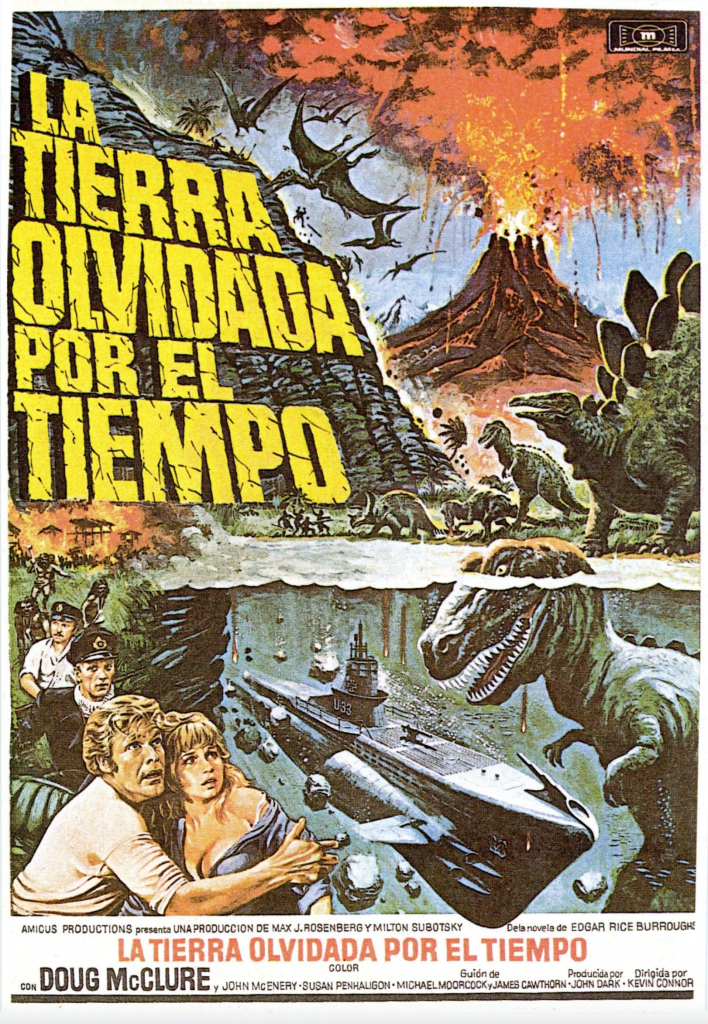
Spanish poster
Spanish poster

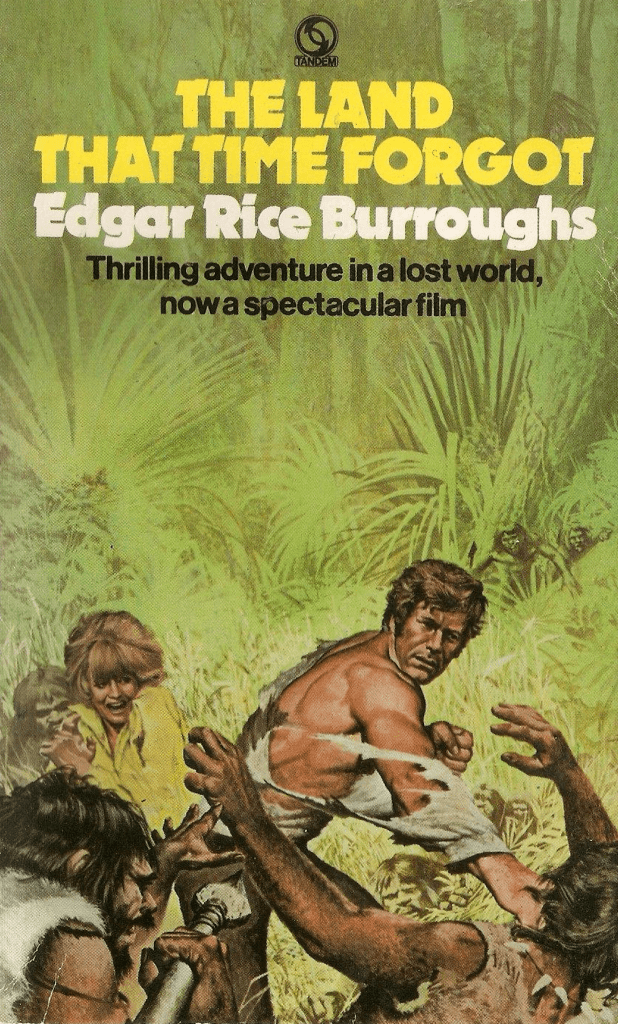
Finally, here’s the cover of the film tie-in rerelease of Edgar Rice Burroughs’ novel, featuring the likenesses of Doug McClure and Susan Penhaligon.
Doug is shown punching a caveman in the face!

I own this novel still!
I still own this version of the novel!

The Valley of Gwangi (1969)

Gwangi snags a cowboy! Yum yum!

Directed by Jim O’Connolly, produced by Charles H. Schneer and Ray Harryhausen, written by William Bast and starring James Franciscus, Richard Carlson, Laurence Naismith, Gila Golan, Curtis Arden and Freda Jackson.

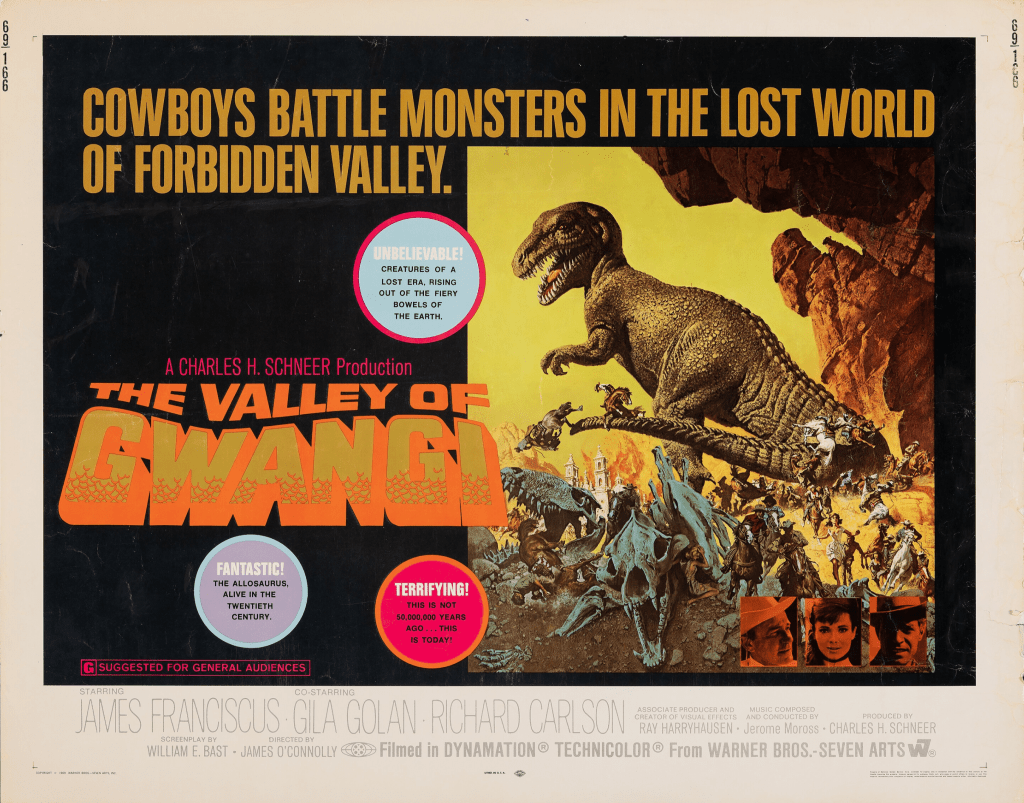
'Cowboys battle monsters in the lost world of Forbidden Valley': how can any self-respecting monster movie fan resist that tag line?!
‘Cowboys battle monsters in the lost world of Forbidden Valley’: how can any self-respecting monster movie fan resist that tag line?!

THE VALLEY OF GWANGI is a dino-tastic story set in Mexico at the turn of the 20th century. It follows the adventures of rodeo circus owner T.J. Breckenridge (a dubbed Gila Golan), her former beau Tuck Kirby (Franciscus), a British paleontologist (Naismith), a Mexican boy called Lope (Arden) and various cowboy members of the circus, as they find themselves in peril in the Forbidden Valley, a rocky zone that is full of prehistoric creatures! Woot!

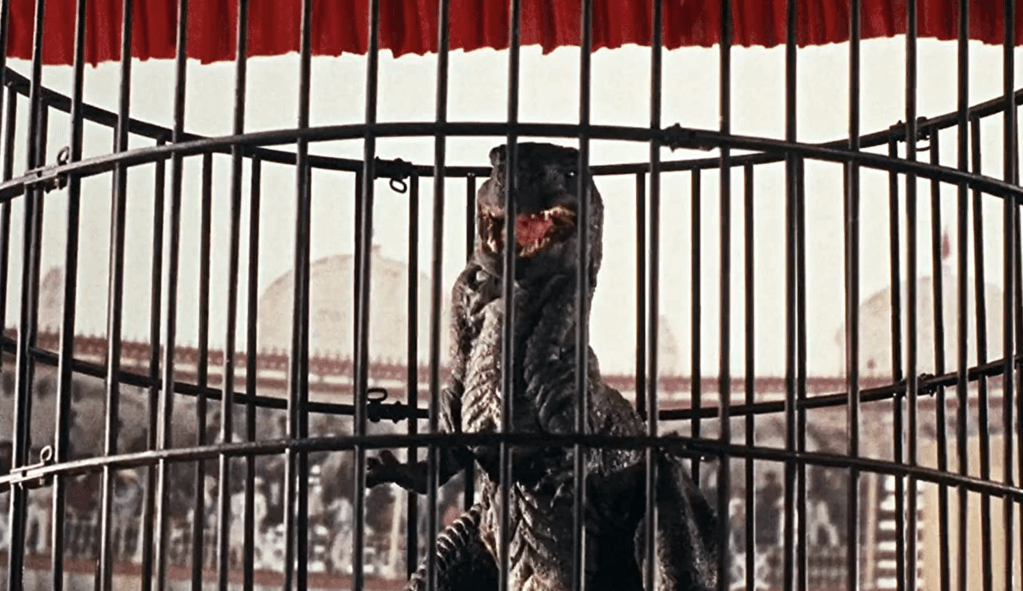
Gwangi won't be caged for long!
Gwangi won’t be caged for long!

THE VALLEY OF GWANGI is a vibrant monster-fantasy-western that features stop-motion effects courtesy of the great Ray Harryhausen, a rousing score by Jerome Moross and likeable performances from the likes of James Franciscus and Richard Carlson.

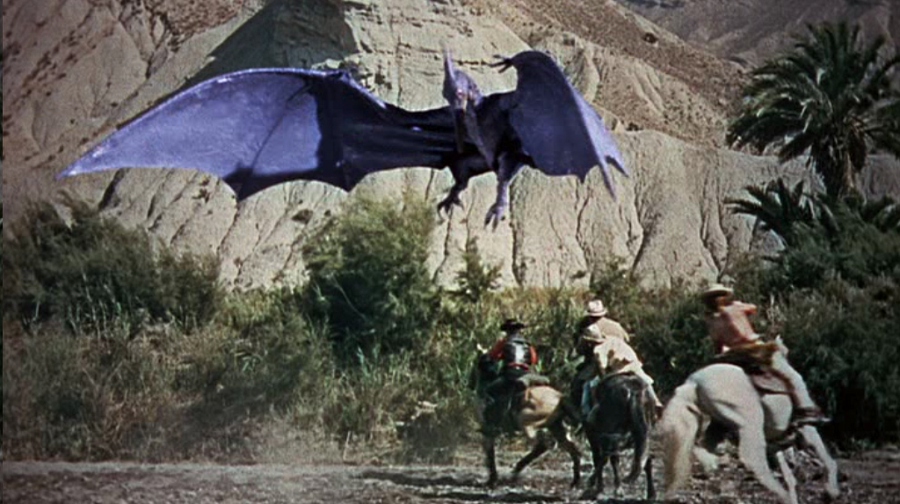
Pteranodon attack!
Pteranodon attack!

Plot-wise, the movie is a lost world adventure with a western twist, which then transitions into a King Kong-style finale, where the titular dinosaur Gwangi is brought back to civilisation to be displayed at Breckenridge’s circus but, as always happens in these tales, the beast escapes and runs amok in the local Mexican town.

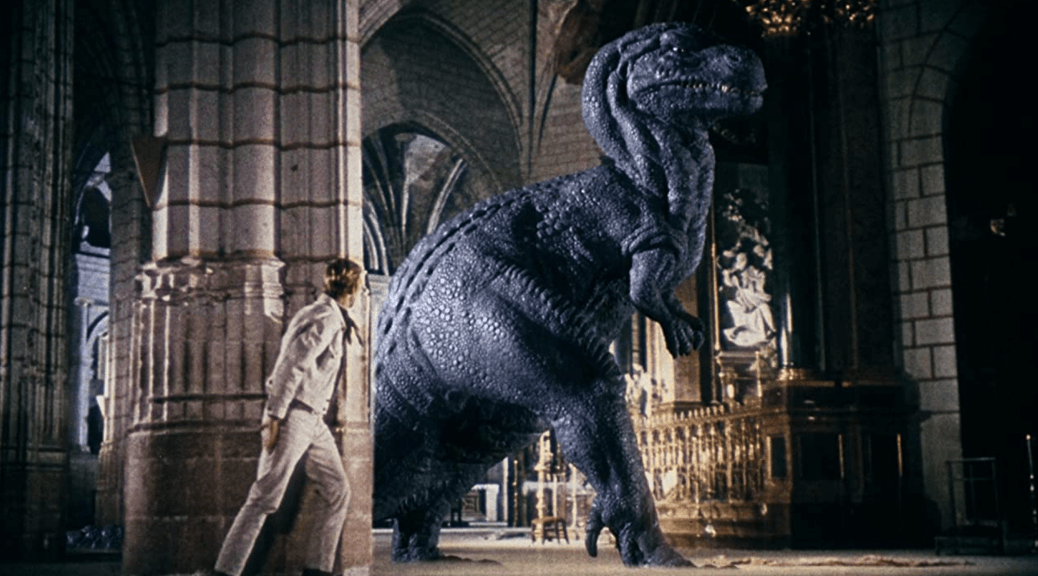
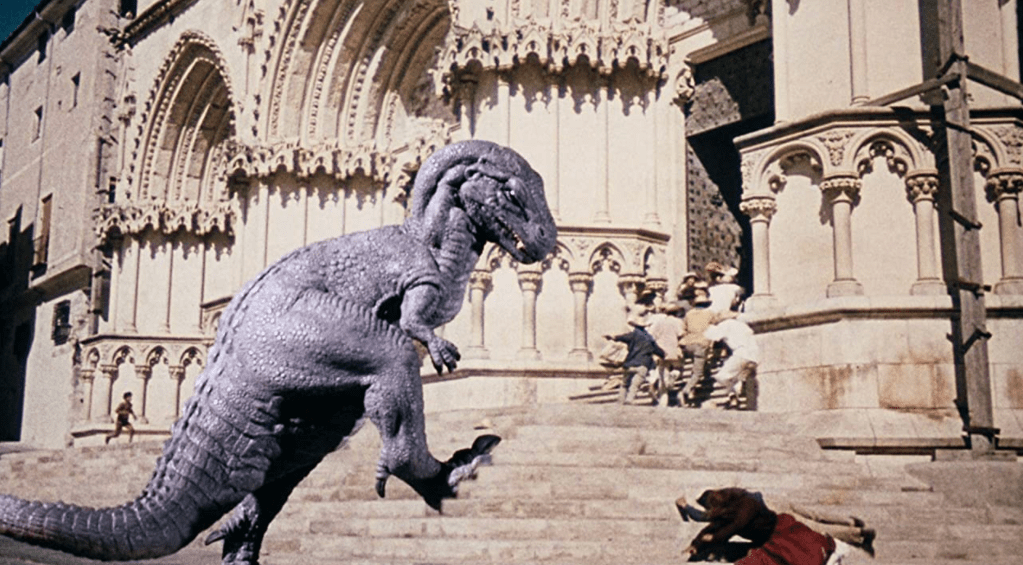
Gwangi on the rampage, reaches the big cathedral...
Gwangi on the rampage! The dinosaur reaches the big cathedral…
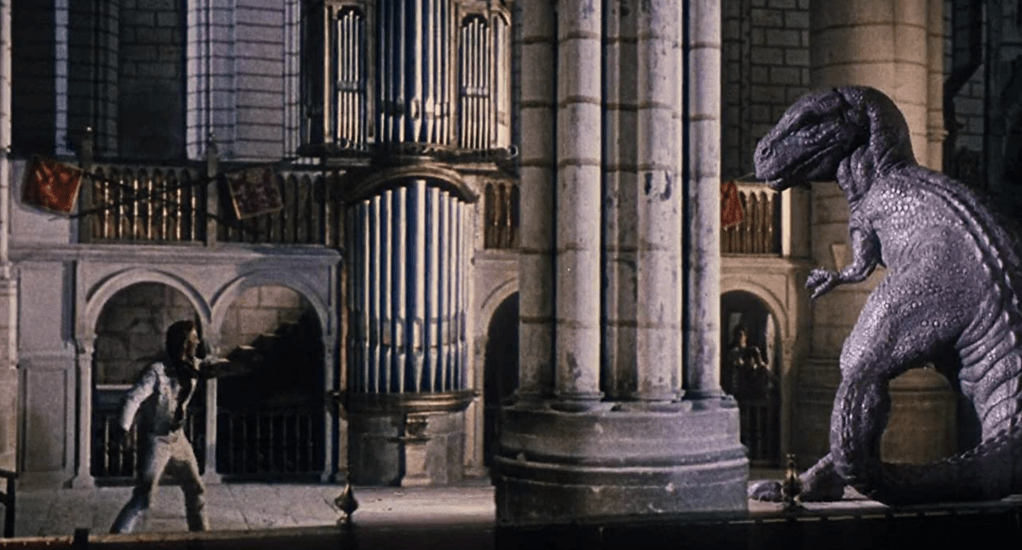
...and there's a cat-and-mouse encounter inside the building, as Tuck takes on the giant predator...
…and there’s a cat-and-mouse encounter inside the building, as Tuck takes on the giant predator…
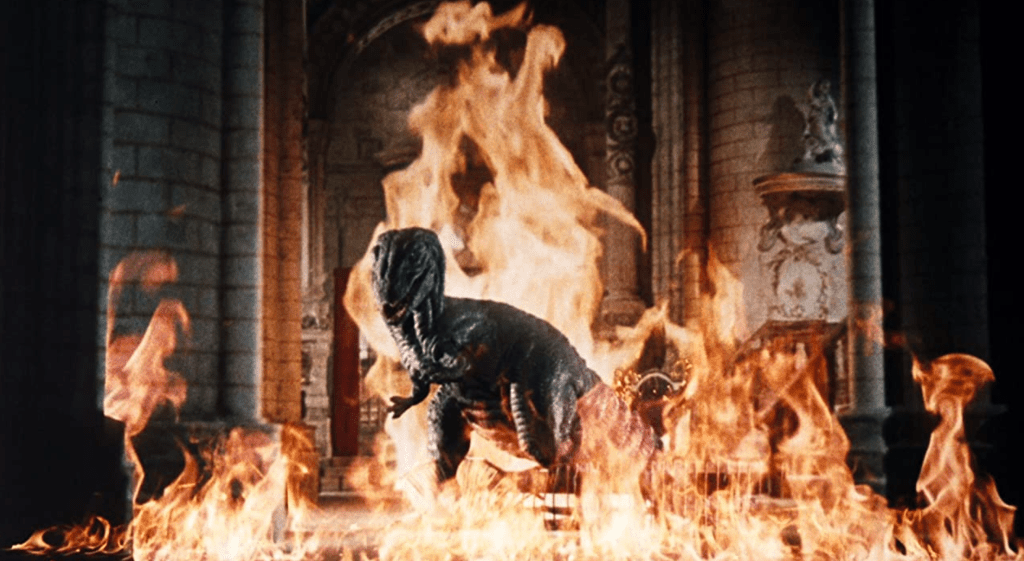
...and eventually Gwangi is burnt to death, as the cathedral catches fire and starts to collapse
…and eventually Gwangi is burnt to death, as the cathedral catches fire and starts to collapse
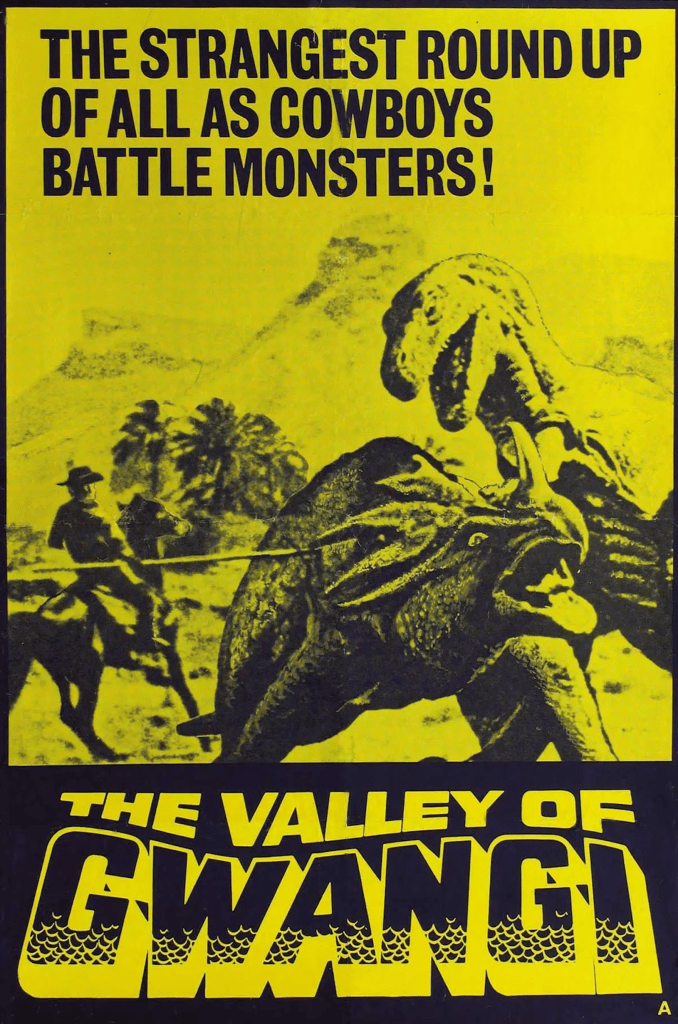
'The strangest round up of all as cowboys battle monsters!'
‘The strangest round up of all as cowboys battle monsters!’

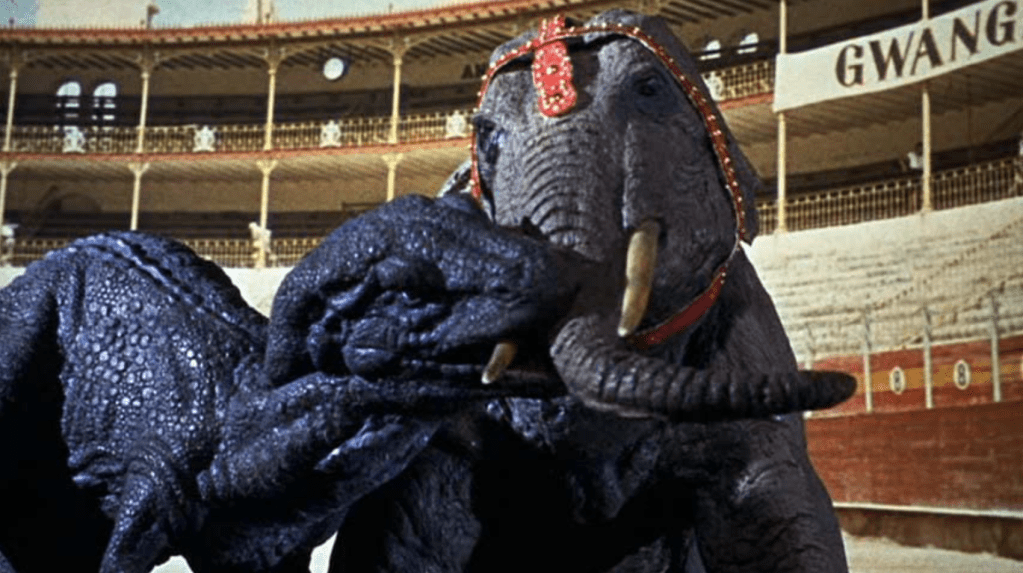
Harryhausen’s effects are definitely the movie’s main selling point, and for this production we get to see an Eohippus, a Pteranodon, an Ornithomimus, a huge Allosaurus (Gwangi) and a Styracosaurus roaming across the screen. A stop-motion model of an elephant is also used when the pachyderm fights Gwangi during the finale.

Ornithomimus
Ornithomimus
Styracosaurus
Styracosaurus
Dinosaur versus elephant!

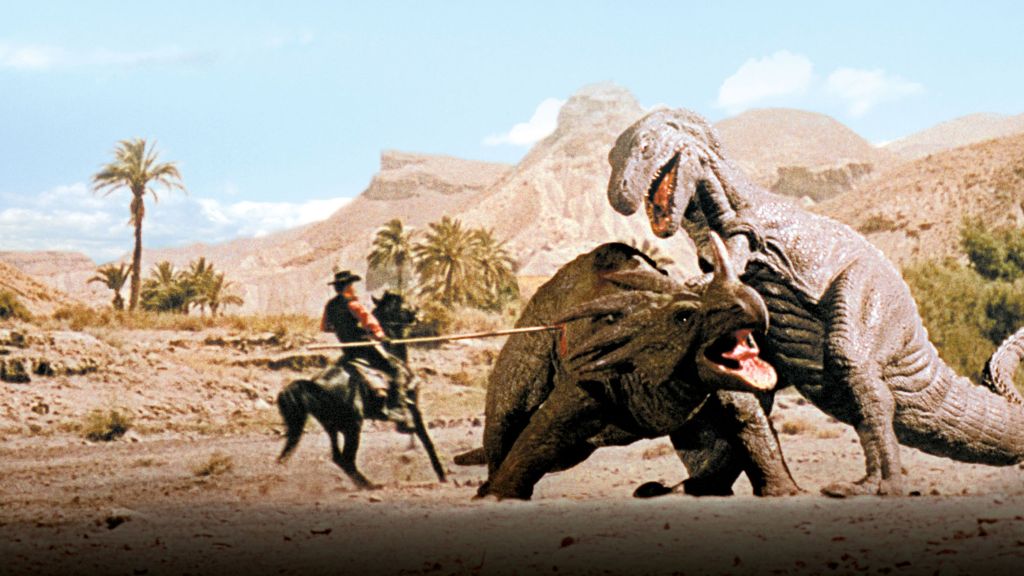
The real stand-out moment is the roping sequence, when the cowboy heroes attempt to capture Gwangi using lassos. This is a wonderful action scene, showcasing Harryhausen’s top-notch stop-motion skills.

The roping scene rocks!

Another mouthwatering effects set piece is Gwangi’s fight with the Styracosaurus. Lots of roaring and biting! I love stop-motion dino battles!

Dinosaurs duking it out!

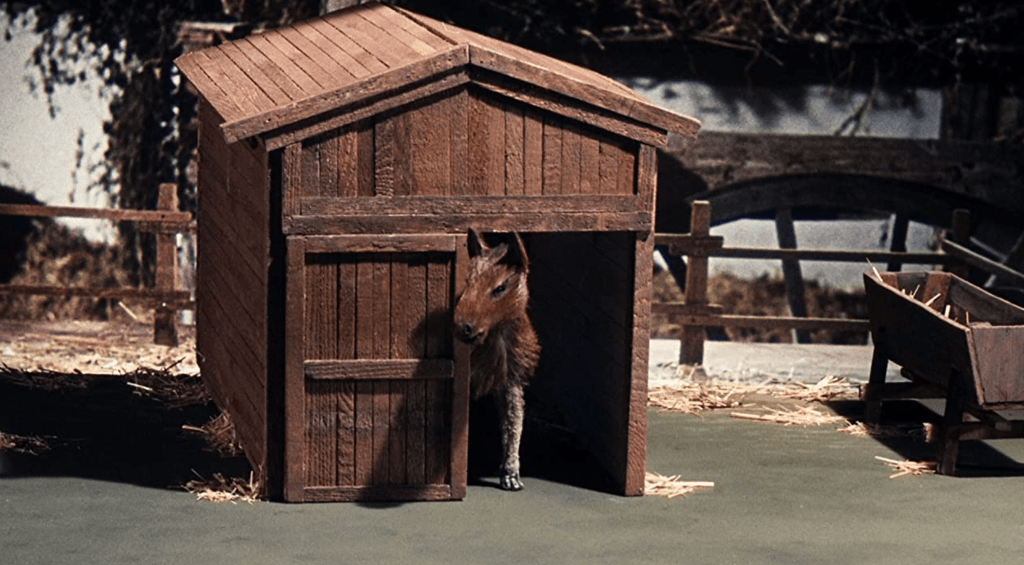
Some earlier scenes with El Diablo the Eohippus, a tiny prehistoric horse, are also memorable, with Harryhausen putting just as much effort into these quieter, sweeter moments as he does with the more bombastic dinosaur encounters later on.

He's a sweet lil' thing, ain't he?
He’s a cute lil’ thing, ain’t he?
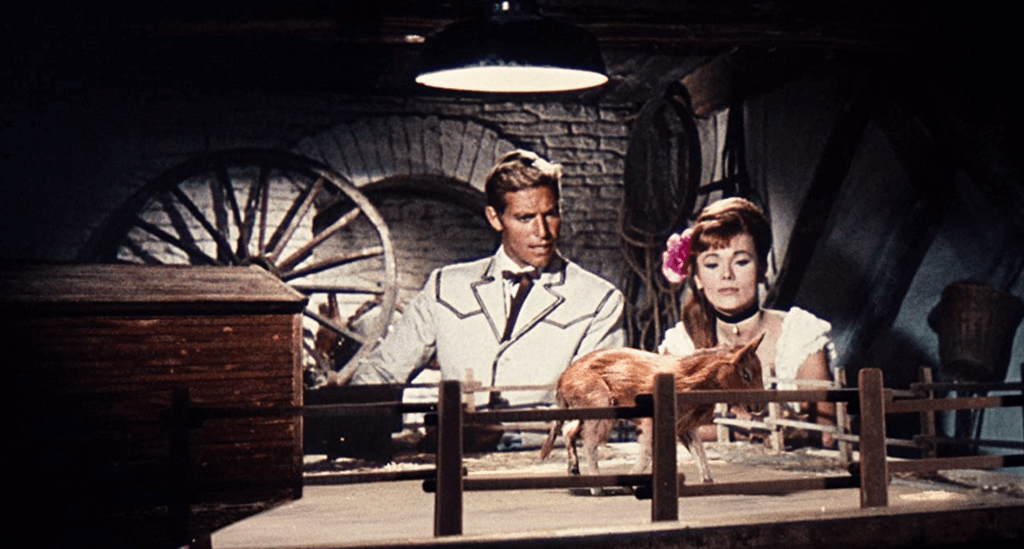
Tuck & T.J. with El Diablo the Eohippus
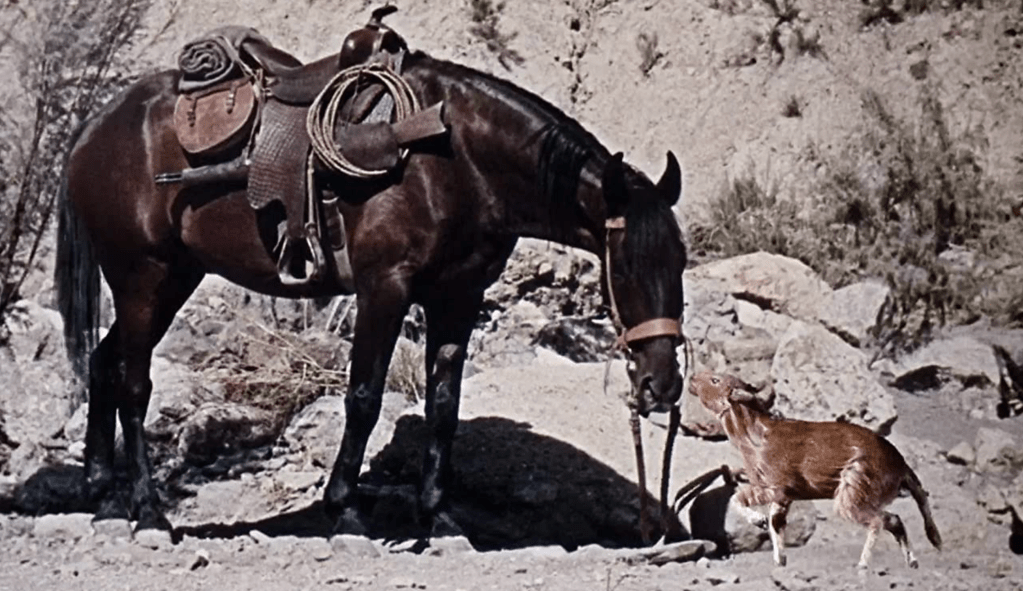
The Eohippus says 'hi' to its much bigger descendant
The Eohippus says ‘hi’ to its much bigger descendant

I’m not a fan of the solid-latex model of Gwangi that’s used for the scenes where the dinosaur knocks itself out while trying to push its way through the narrow gap to escape Forbidden Valley. I think Harryhausen himself was never pleased with these shots, as this inflexible model definitely has no ‘life’ to it: it looks especially stiff in the shots of Gwangi lying unconscious on the ground. Harryhausen had done similar scenes in his previous dinosaur adventure, ONE MILLION YEARS B.C., for instance, where Ray presented us with a marvellous shot of a dying Ceratosaurus lying on the ground, with its belly inflating and deflating as it desperately tries to keep breathing. So it’s such a shame a similar effect couldn’t have been used in GWANGI, though I’m sure Harryhausen was under a lot of budget and time constraints (but the Styracosaurus model in GWANGI was equipped with an inflatable air ‘bladder’ to simulate breathing).

Gwangi’s skin colour changes a few times over the course of the movie because, as there was so much animation to do, Harryhausen didn’t have enough time to do proper colour testing, so Gwangi ranges from grey to blue to purple-ish. I actually don’t think these colour changes are distracting and I’m sure I never spotted them when I viewed the movie as a kid.

I would've liked more atmospheric matte paintings like this one
I would’ve liked more atmospheric matte paintings like this one

The full-scale Pteranodon model and Gwangi head, used for close-ups, are not as effective as their stop-motion counterparts, but I’ll stop quibbling now and reiterate that THE VALLEY OF GWANGI is a colourful, entertaining fantasy flick, replete with monsters, gypsy curses, a belligerent circus elephant and even a dangerous-bull-in-a-bullring scene!

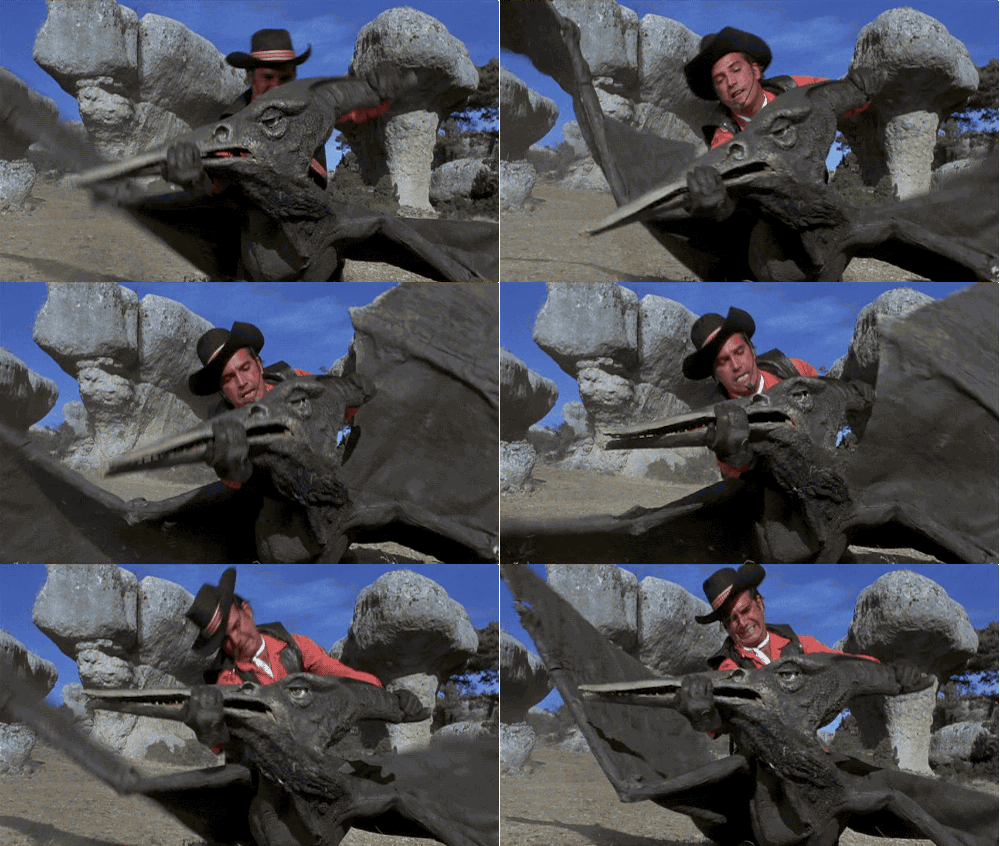
Trying to break the Pteranodon's neck!
Trying to break the Pteranodon’s neck!
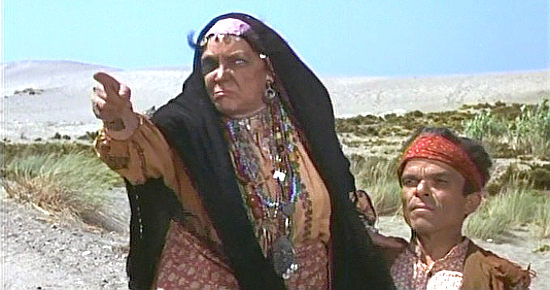
Angry gypsy folk
Angry gypsy folk

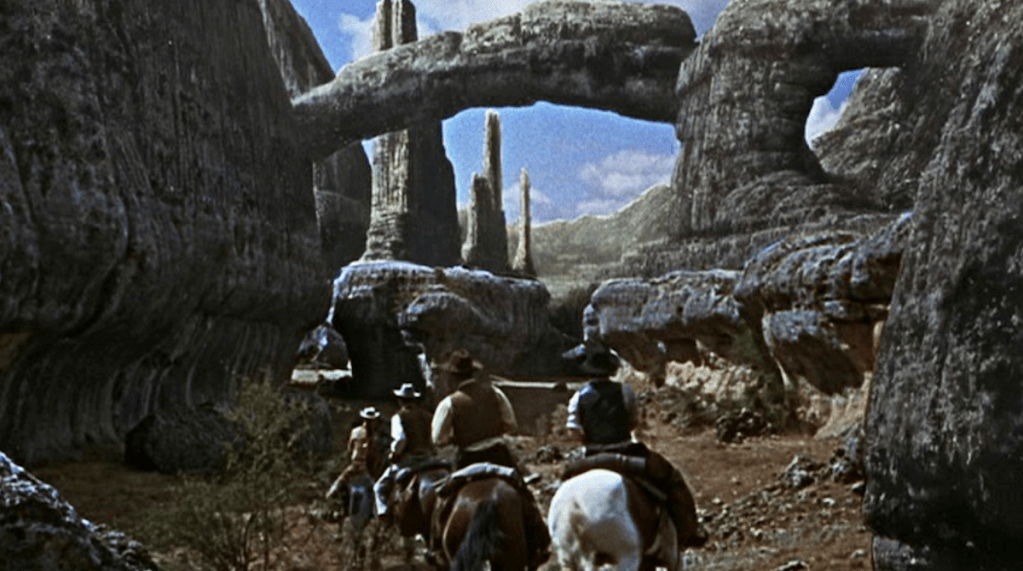
Shot in Spain, which stands in for Mexico, the movie utilises the odd rock formations of La Ciudad Encantada, a distinctive geological site near the city of Cuenca (which is also featured in 1982’s CONAN THE BARBARIAN), to create the prehistoric vistas of the Forbidden Valley.

This shot features some of La Ciudad Encantada's mushroom-shaped rock formations
This shot features some of La Ciudad Encantada’s mushroom-shaped rock formations
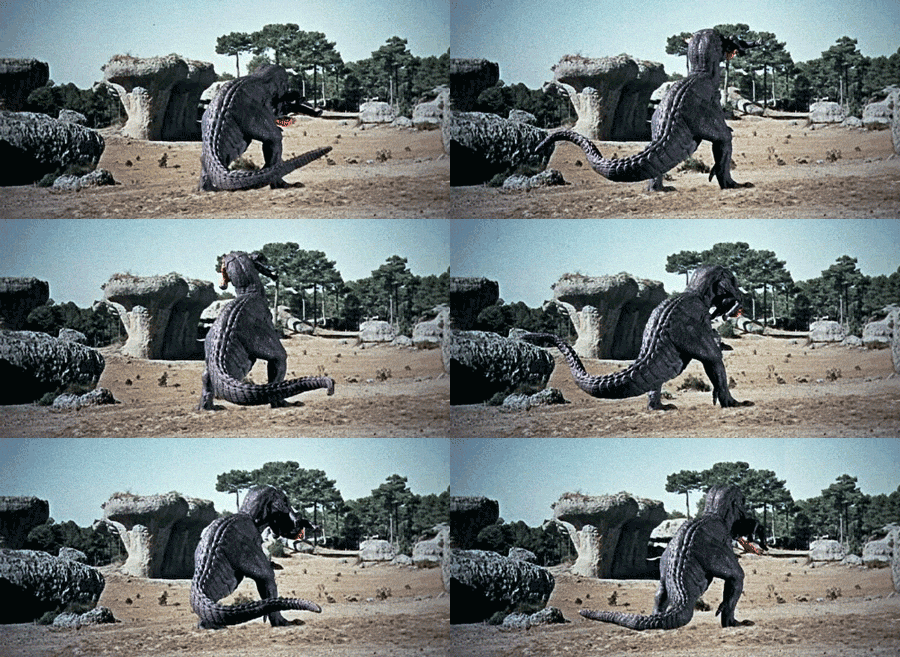
Nom-nom-nom!
Nom-nom-nom!

Jerome Moross, the composer who worked on such films and TV series as THE BIG COUNTRY, GUNSMOKE, WAGON TRAIN and HAVE GUN – WILL TRAVEL, provides a soundtrack that really injects a thrilling, full-blooded western vibe into GWANGI. It’s a great score, with a main theme dripping with urgency (that I happen to be listening to right now as I write this!)

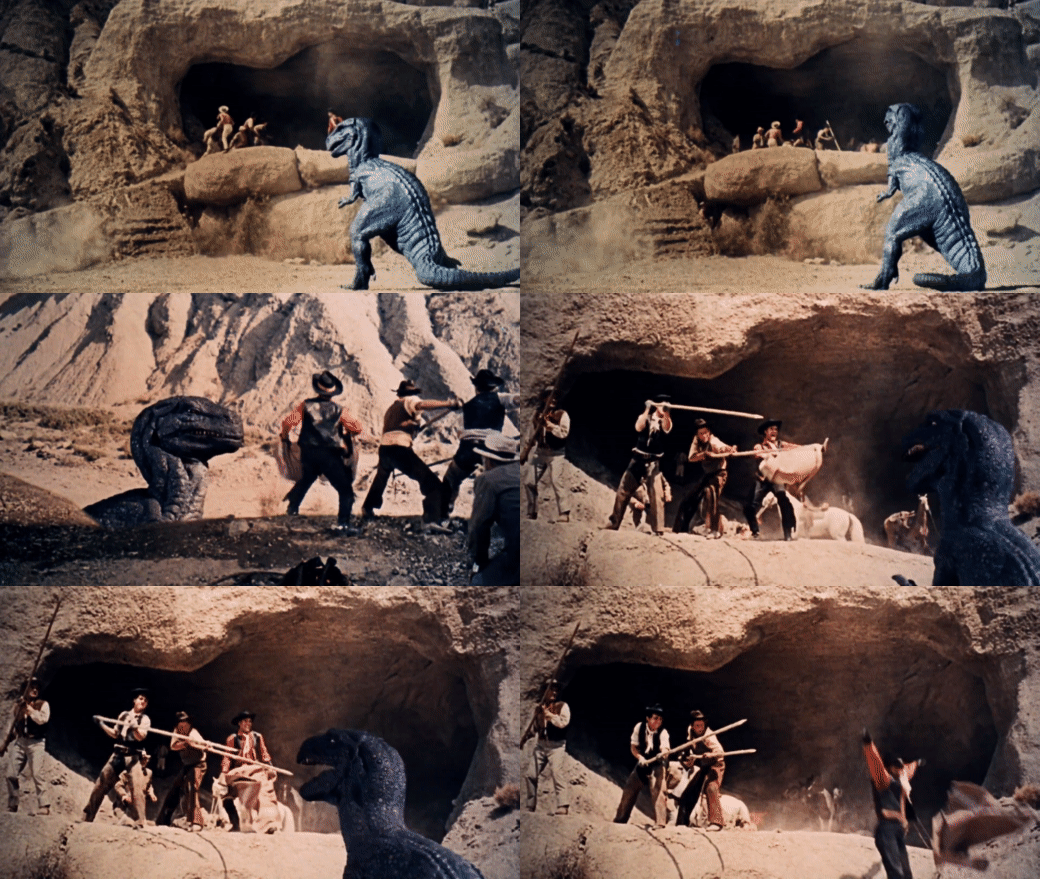
Here's some free advice, cowboy-dudes: don't use a blanket to ward off a vicious Allosaurus!
Here’s some free advice, cowboy-dudes: don’t use a blanket to ward off a vicious Allosaurus!
I was never quite sure why the cowboy decided to spear the herbivore, rather than the more dangerous predator...
I was never quite sure why the cowboy decided to spear the herbivore, rather than the more dangerous predator…

The scene where Gwangi lunges into view and snaps-up the fast-running Ornithomimus in its jaws was later recreated in JURASSIC PARK, this time featuring a Tyrannosaurus Rex plunging into shot to gobble up a fast-running Gallimimus.

Anyway, this is a Ray Harryhausen movie about cowboys venturing into a lost world of dinosaurs, so of course I will always love this movie!

THE WILLIS O’BRIEN CONNECTION
This film was actually a project that Willis O’Brien tried to develop, many decades earlier. It was titled THE VALLEY OF THE MISTS and it had been in preproduction at RKO for a while but, like a lot of O’Brien’s projects, it unfortunately fell through.

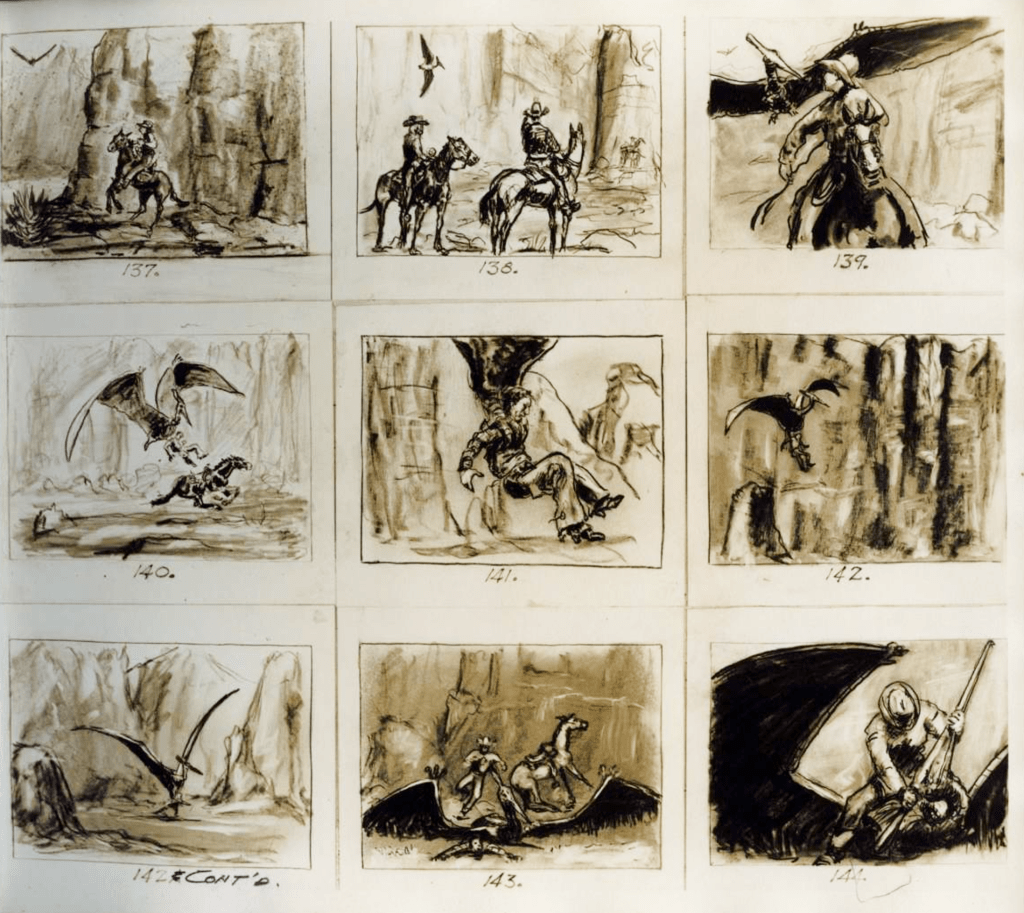
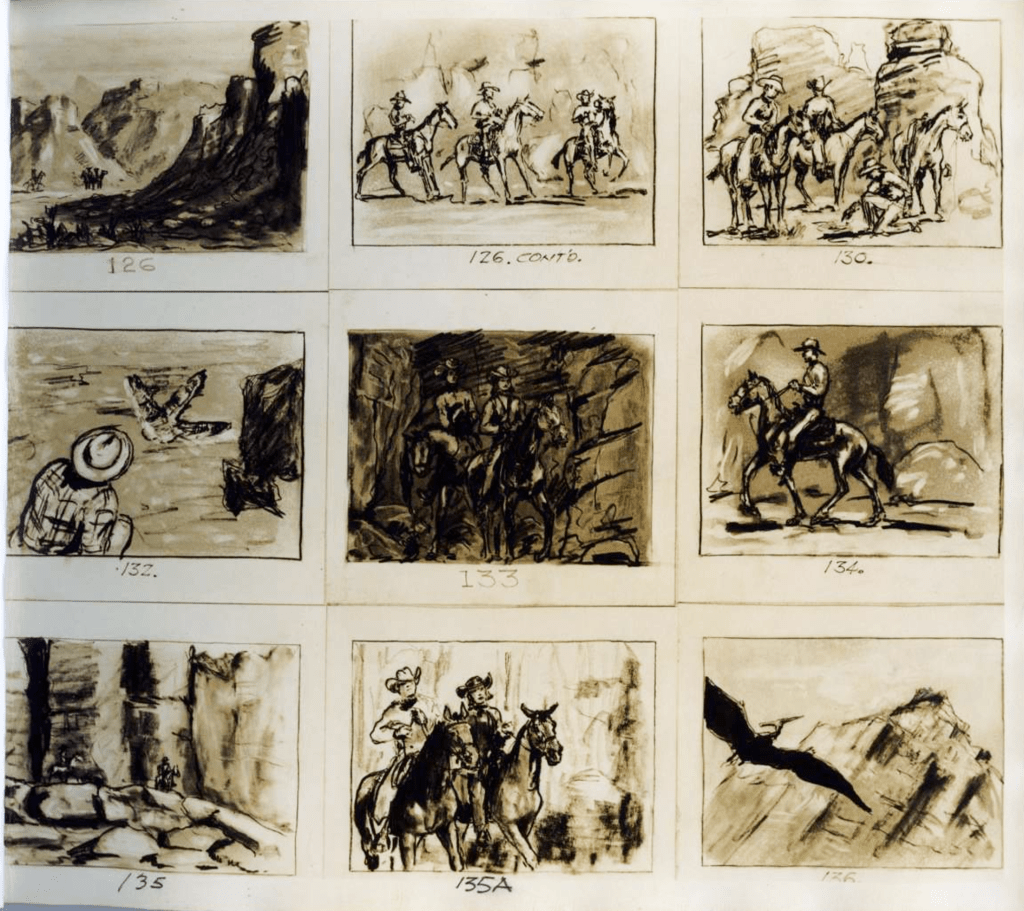
Here are some storyboards drawn by Willis O’Brien…

Willis O'Brien storyboard
Willis O’Brien storyboard
Willis O'Brien storyboard
Willis O’Brien storyboard

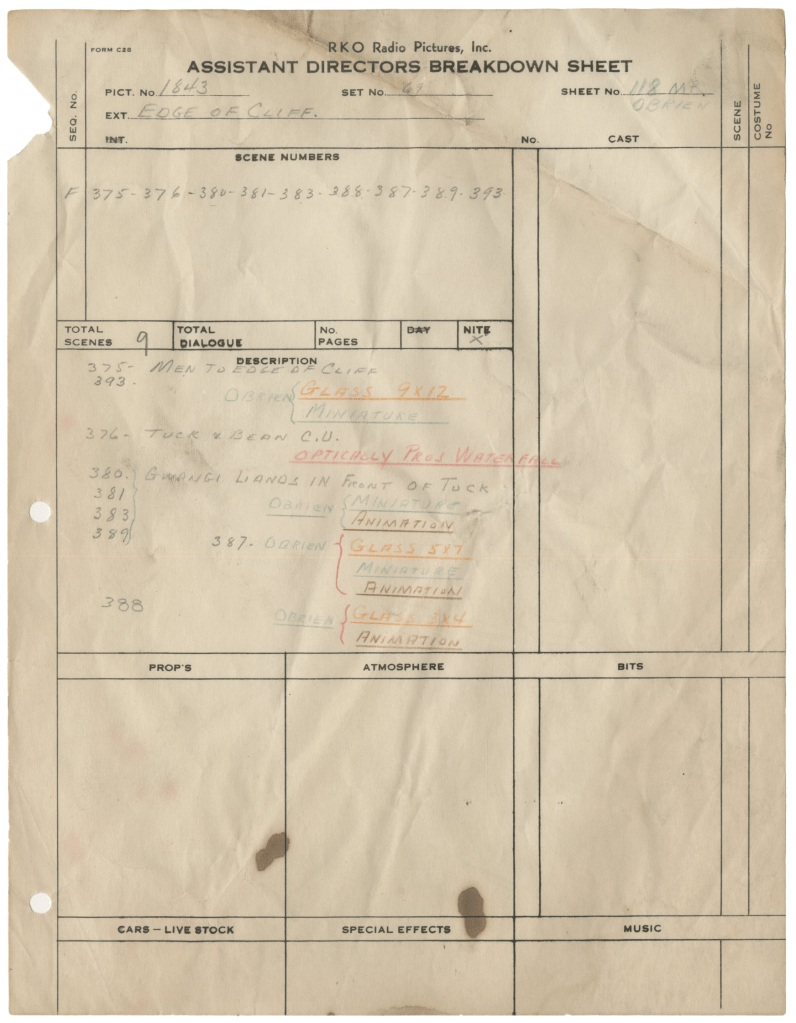
Here’s a hand-filled report (by O’Brien) on a printed RKO Radio Pictures form detailing visual effects requirements for an action sequence titled ‘Edge of Cliff’, which would’ve been featured in his iteration of the Gwangi movie…

RKO Radio Pictures form

Even though Willis O’Brien’s Gwangi movie was never made, some of his old production materials came into Ray Harryhausen’s possession and he proposed making his own version of the film to his producer/business partner Charles Schneer, who agreed that it should be their next project. And so THE VALLEY OF GWANGI finally went into production. Hooray! Though, as some people have pointed out, it’s a shame that O’Brien, who put a lot of effort into conceptualising the original Gwangi concept, didn’t receive a credit in the 1969 movie.

RAY HARRYHAUSEN CONCEPT ART
Here are some really gorgeous examples of Ray’s well-rendered concept art for his movie…

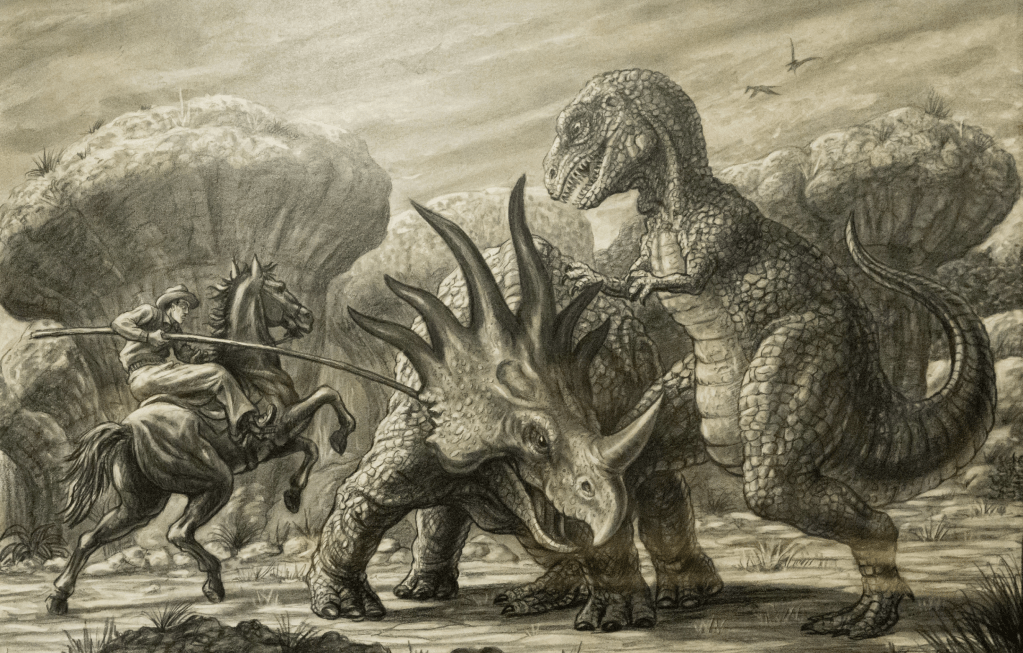
Styracosaurus versus Gwangi
Cowboy chases an Ornithomimus
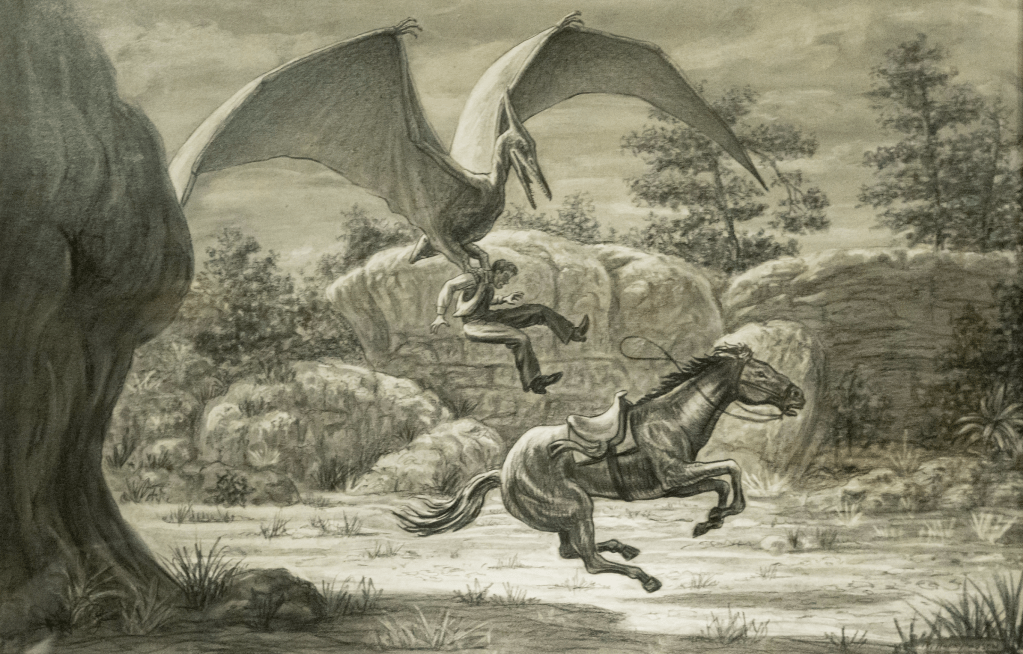
In Ray's concept drawing for the pteranodon attack he drew it with accurate-looking pterosaur wings. In the movie his stop-motion model had Ray's stylised bat-like wings.
In Ray’s concept drawing for the pteranodon attack he drew the flying reptile with accurate-looking pterosaur wings. In the movie his stop-motion model was equipped with stylised bat-like wings.
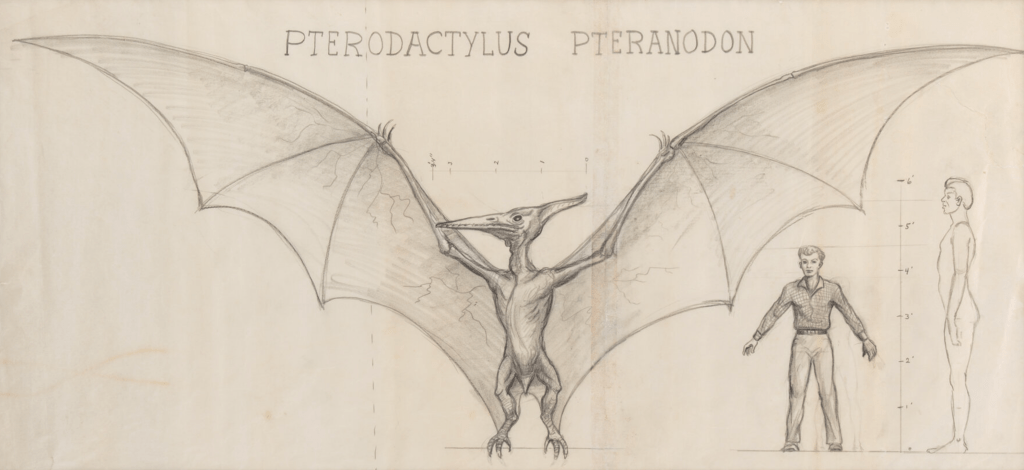
Rays's hand-drawn scale concept for the Pteranodon features Ray's signature bat-like wing design
Rays’s hand-drawn scale concept drawing for the Pteranodon features Ray’s signature bat-like wing design
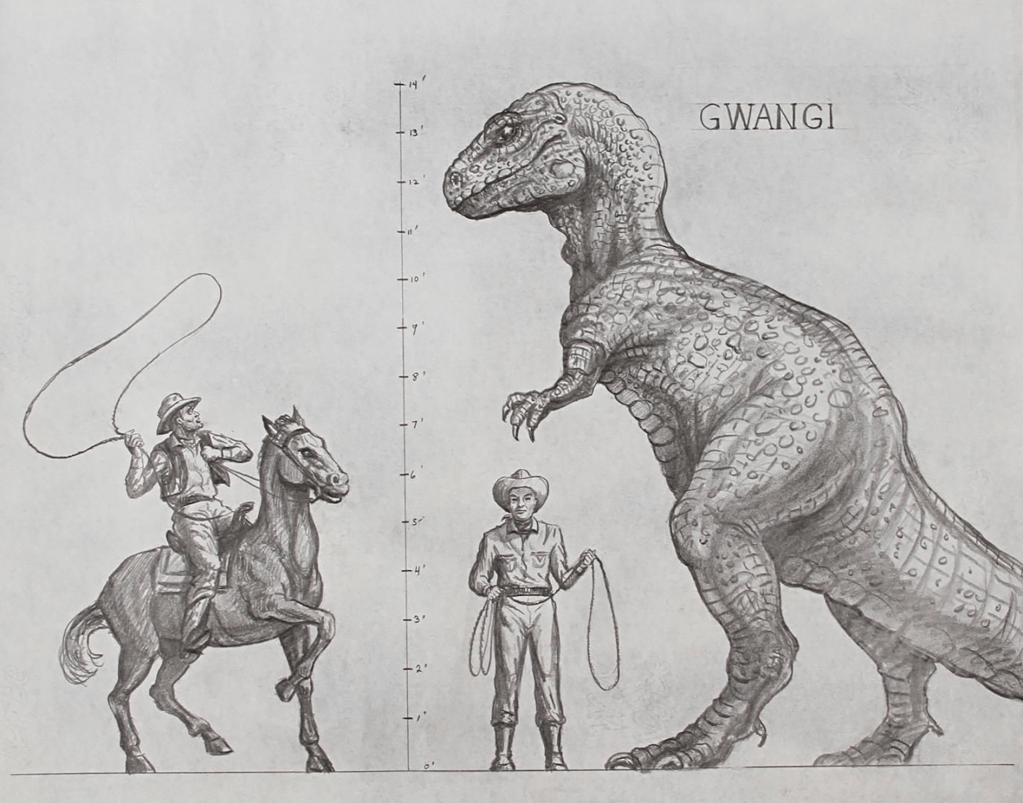
Rays concept drawing for Gwangi, with cowboys and a horse shown  for scale
Ray’s concept drawing for Gwangi, with cowboys and a horse shown for scale

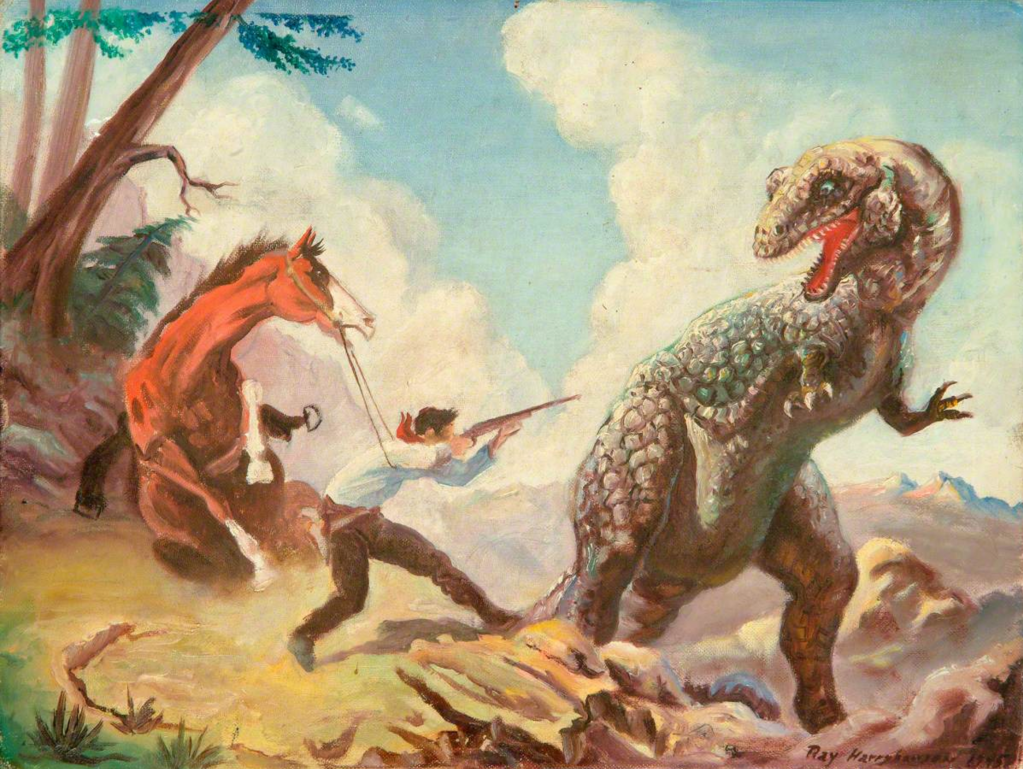
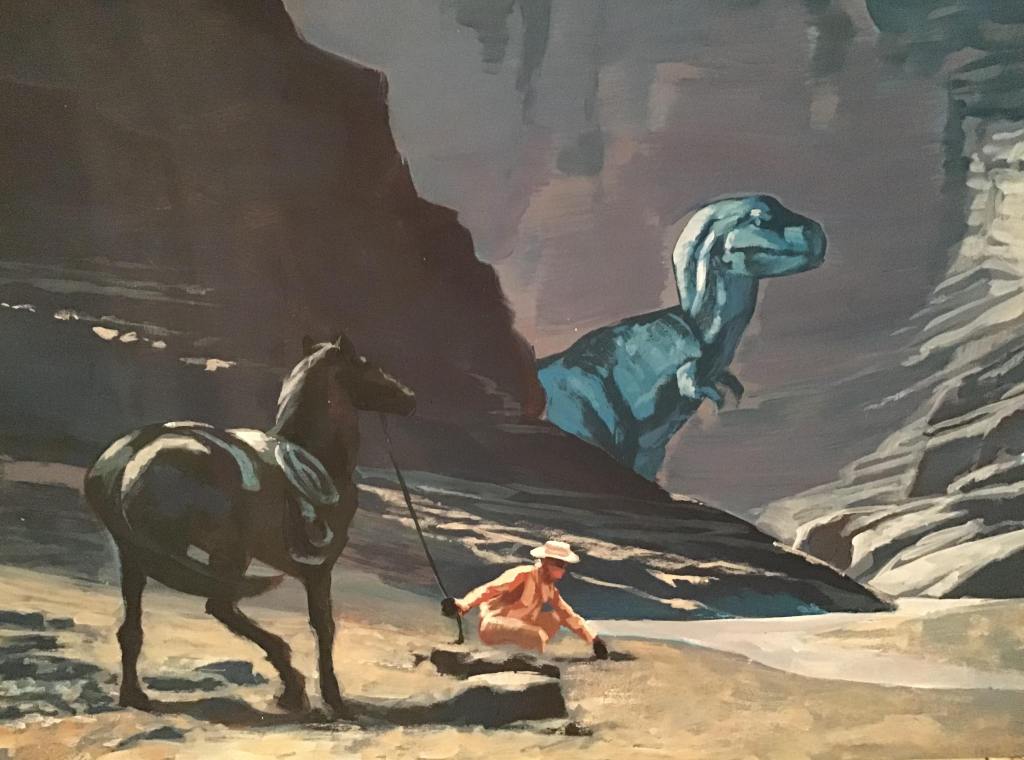
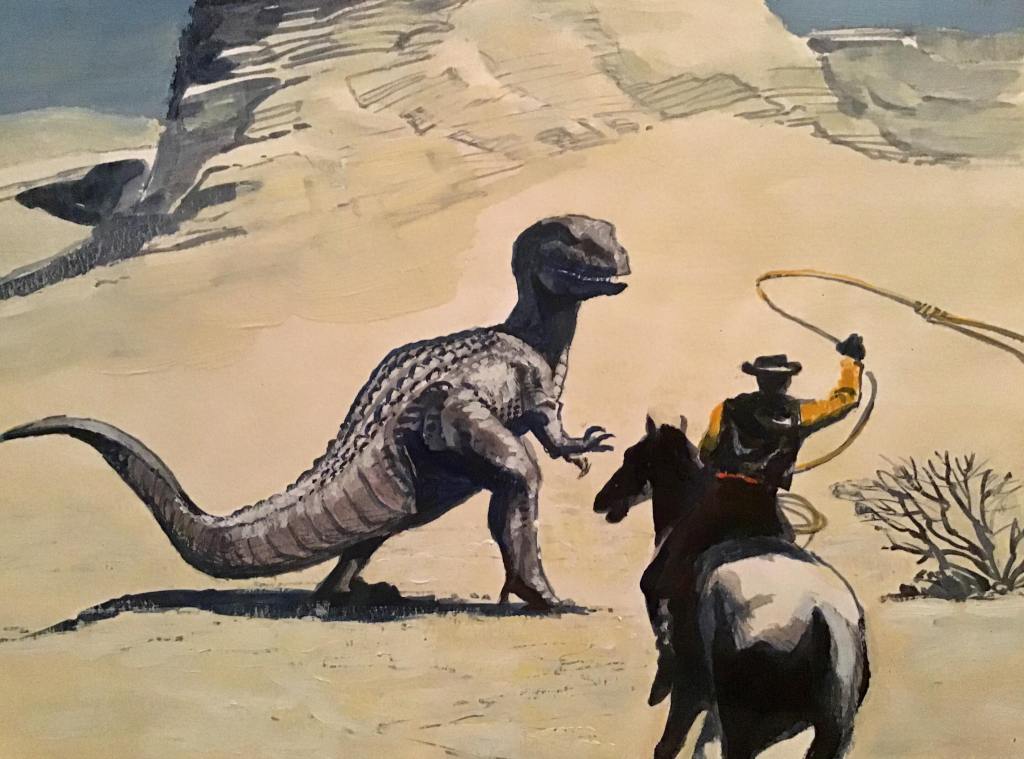
Interestingly, long before Ray Harryhausen made his Gwangi movie, he actually painted this scene, way back in the 1930s. The painting’s title is: ‘Allosaurus attacking a cowboy’. So, I guess Ray was destined to make THE VALLEY OF GWANGI one day…

Lovely painting!
Lovely painting!

POSTERS FOR THE MOVIE
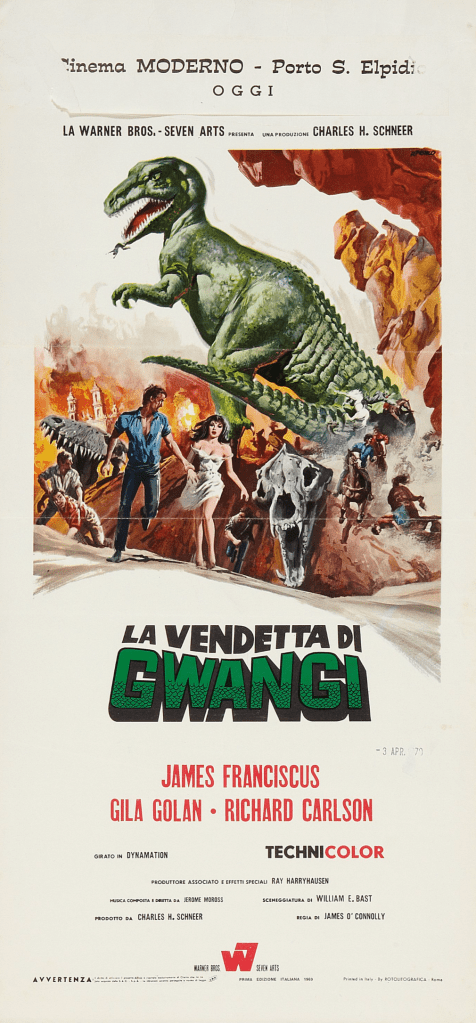
Uber-talented artist Frank McCarthy, responsible for vivid, astounding poster illustrations for DUEL AT DIABLO, THE DIRTY DOZEN, YOU ONLY LIVE TWICE, KRAKATOA EAST OF JAVA, MYSTERIOUS ISLAND, WHERE EAGLES DARE and many more, produced the striking artwork that adorns almost all of the poster versions for THE VALLEY OF GWANGI.

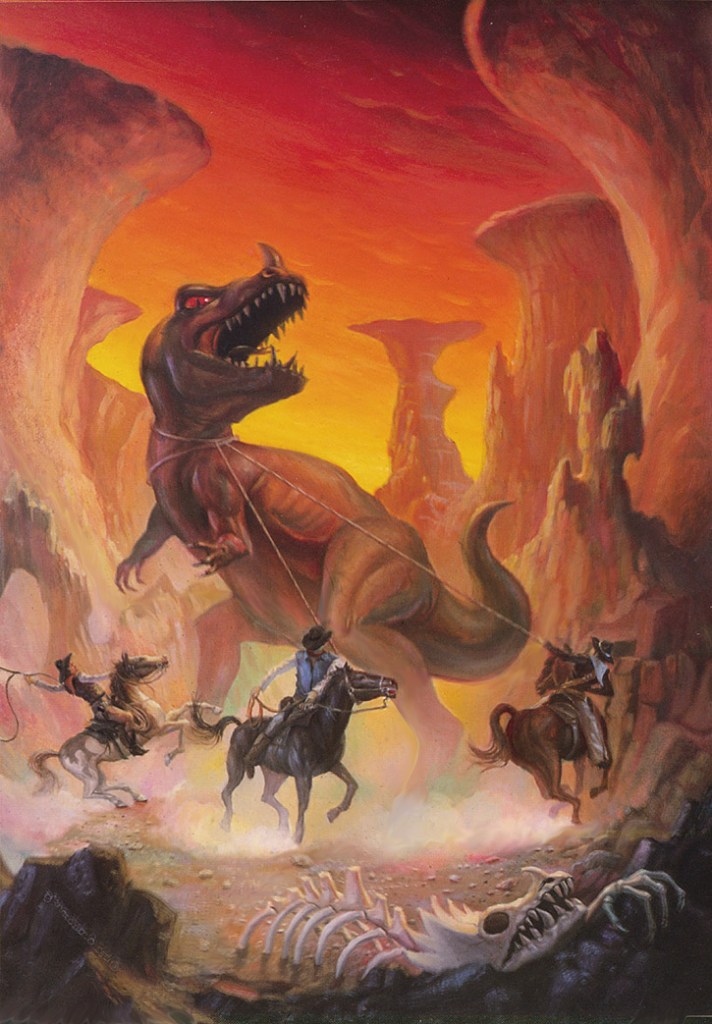
Here’s McCarthy’s illustration without the poster blurb. It’s a glorious piece of promotional art that exaggerates the scale of Gwangi. The mounted cowboys, dwarfed by the size of the mega-Gwangi, ride their steeds away from the dinosaur and gallop past supersized skulls, adding a lot of dynamism to the composition. A couple of scared, attractive women and the burning cathedral (from the end of the movie) add extra flavour to the artwork.

Stunning stuff!
Stunning stuff!

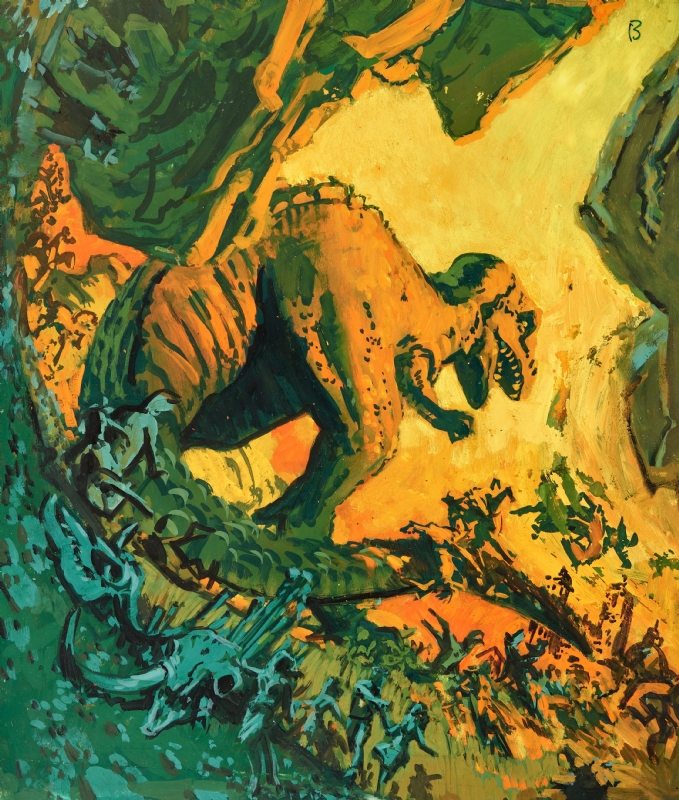
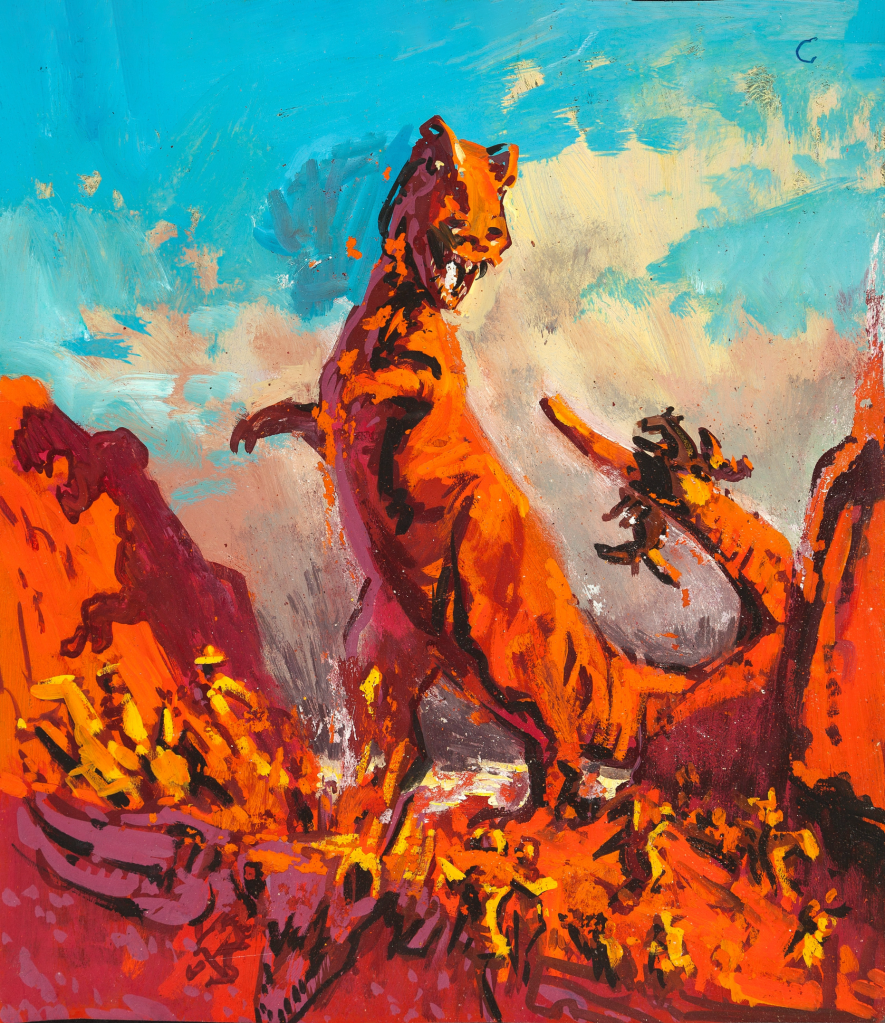
McCarthy produced several preliminary design sketches that explored possible compositions for the Gwangi poster…

This Frank McCarthy preliminary artwork explores showing Gwangi from a reverse angle
This Frank McCarthy preliminary artwork explores the idea of showing Gwangi from a reverse angle
This rough prelim sketch depicts a very upright-looking Gwangi
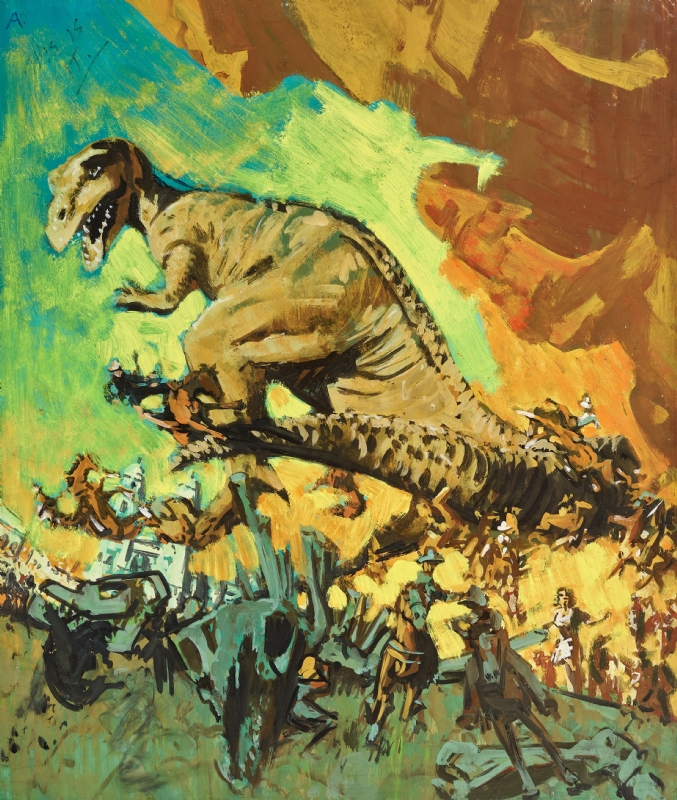
This is the Frank McCarthy preliminary artwork design that was chosen for the poster. 'This is it' is even written on the design!
This is the Frank McCarthy preliminary artwork design that was chosen for the poster. ‘This is it’ is even written on the design!

Let’s check out a whole bunch of Gwangi posters now…

US three sheet poster
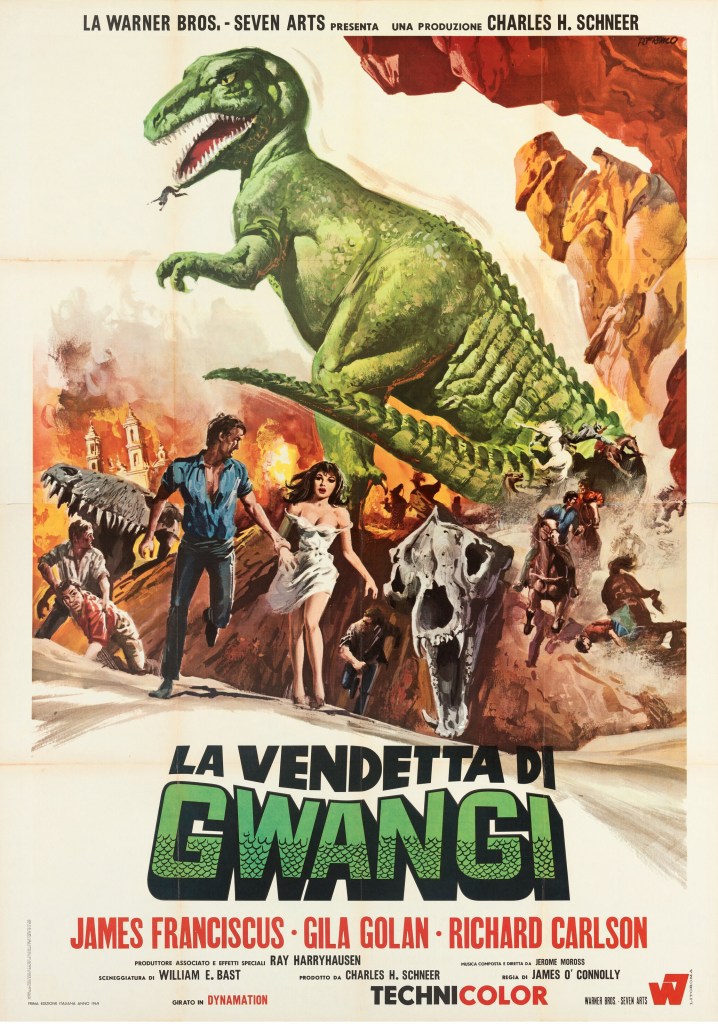
Italian poster. This puts a scantily-clad female at the front of the action. Those Italians!
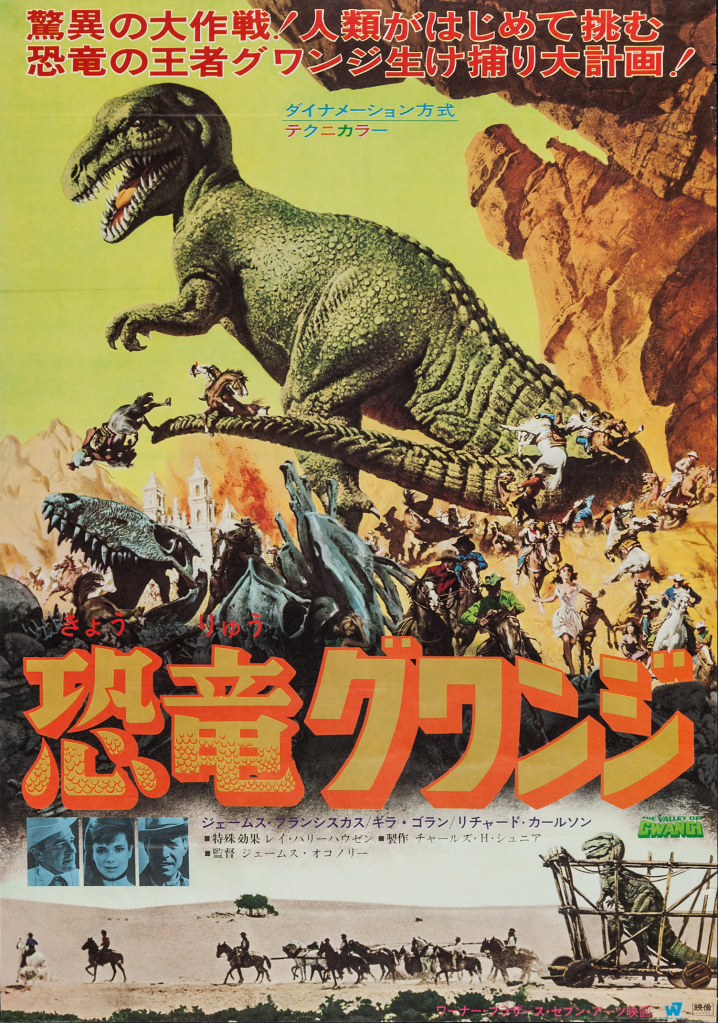
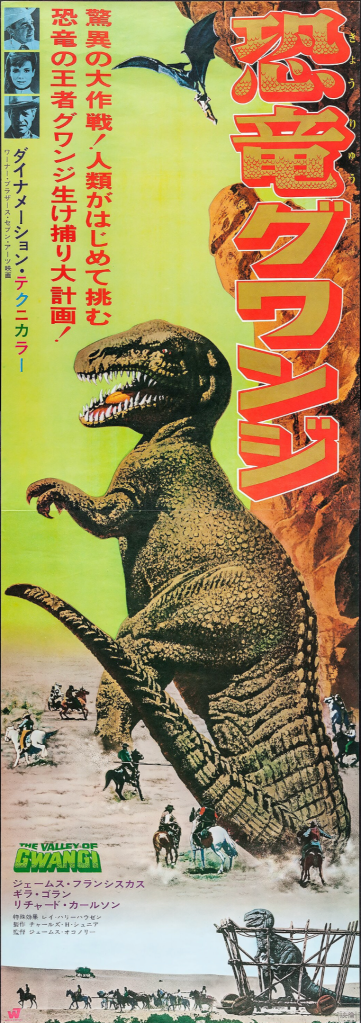
Japanese B2 poster
Japanese B2 poster
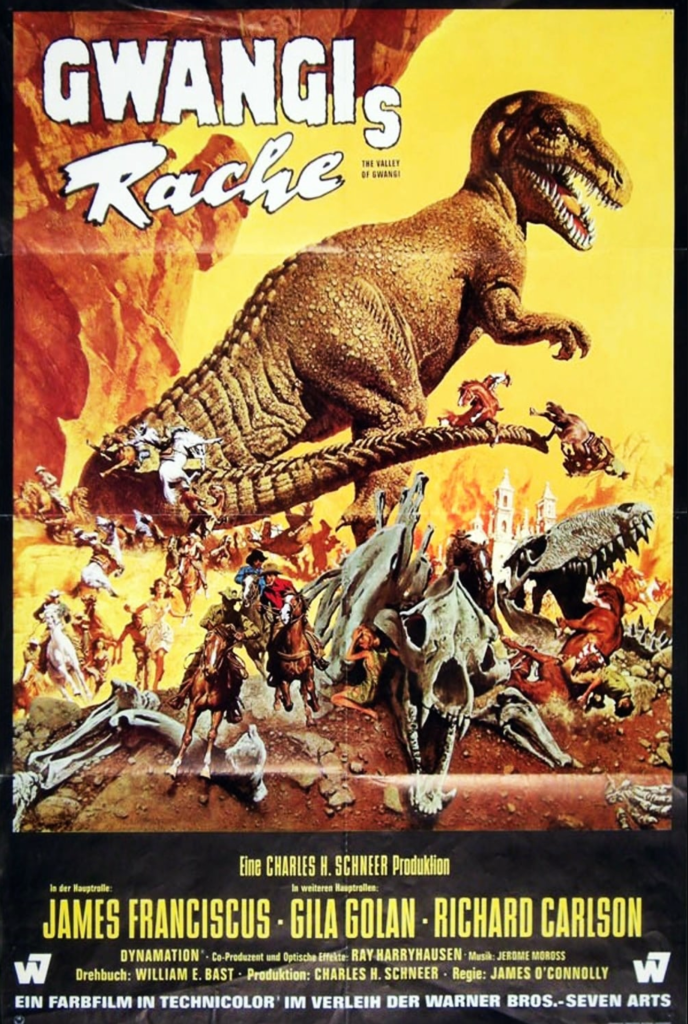
German poster
German poster
US six sheet poster
US six sheet poster
Japanese STB poster
Japanese STB poster
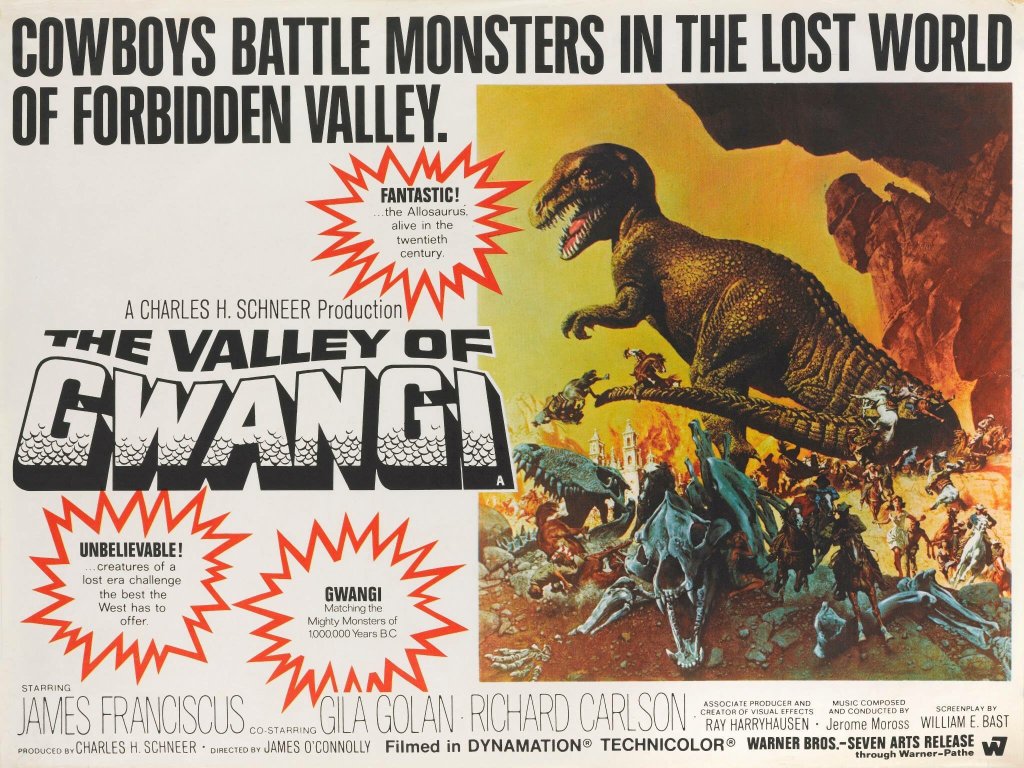
UK quad poster
UK quad poster
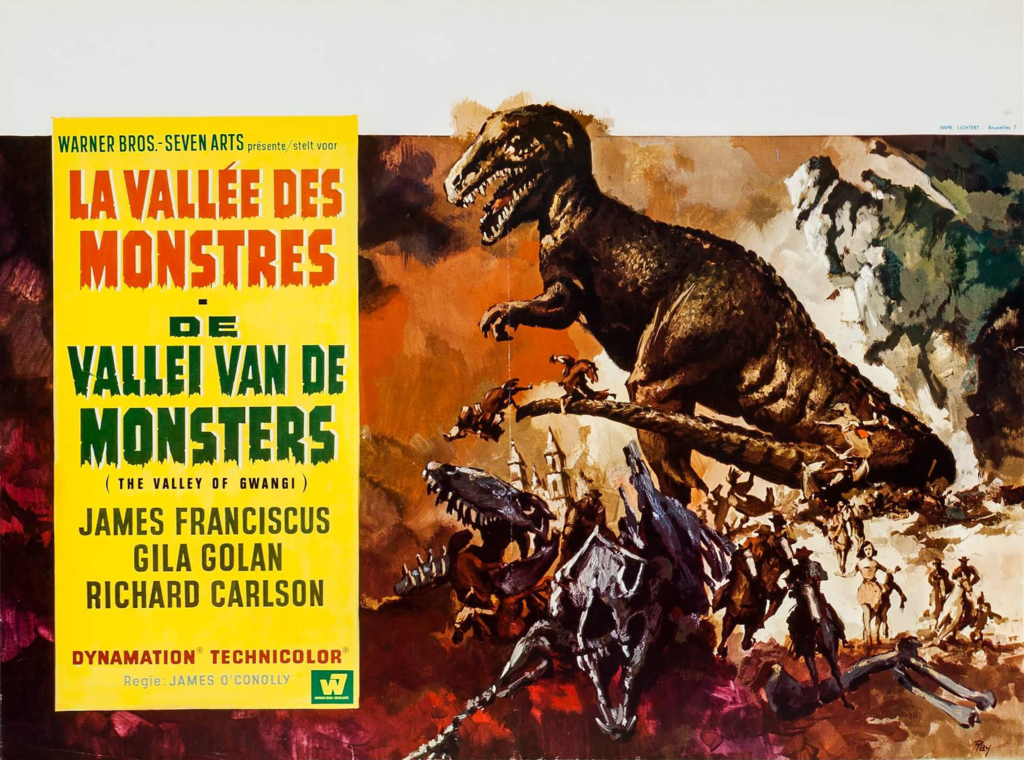
Belgian poster
Belgian poster
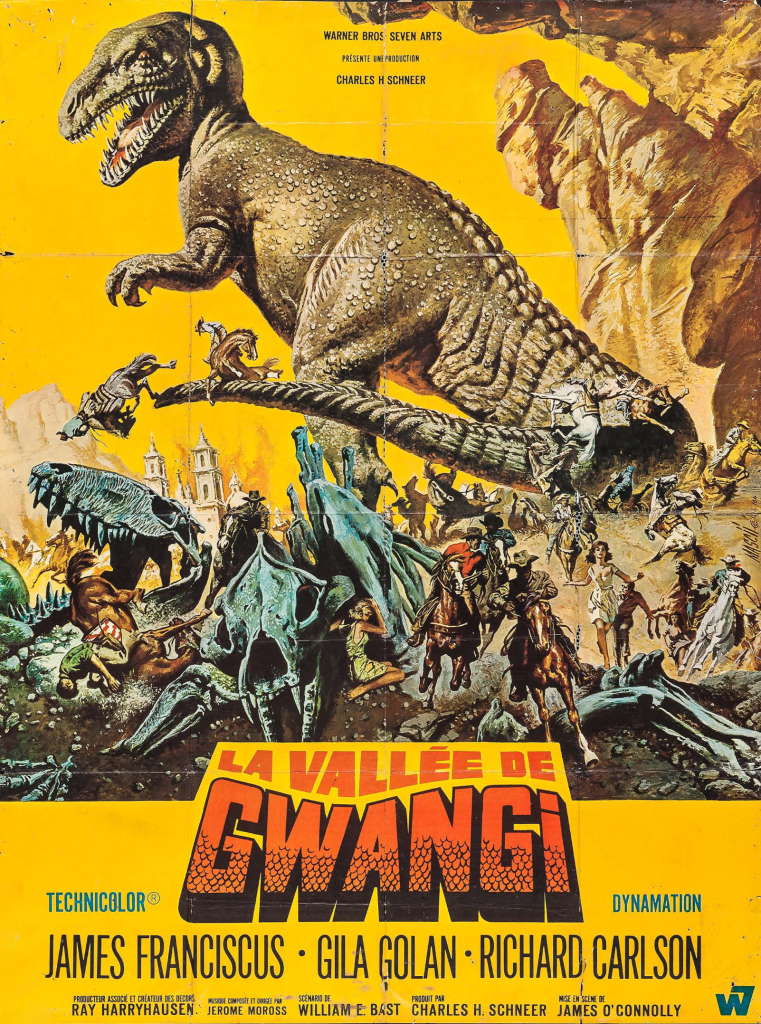
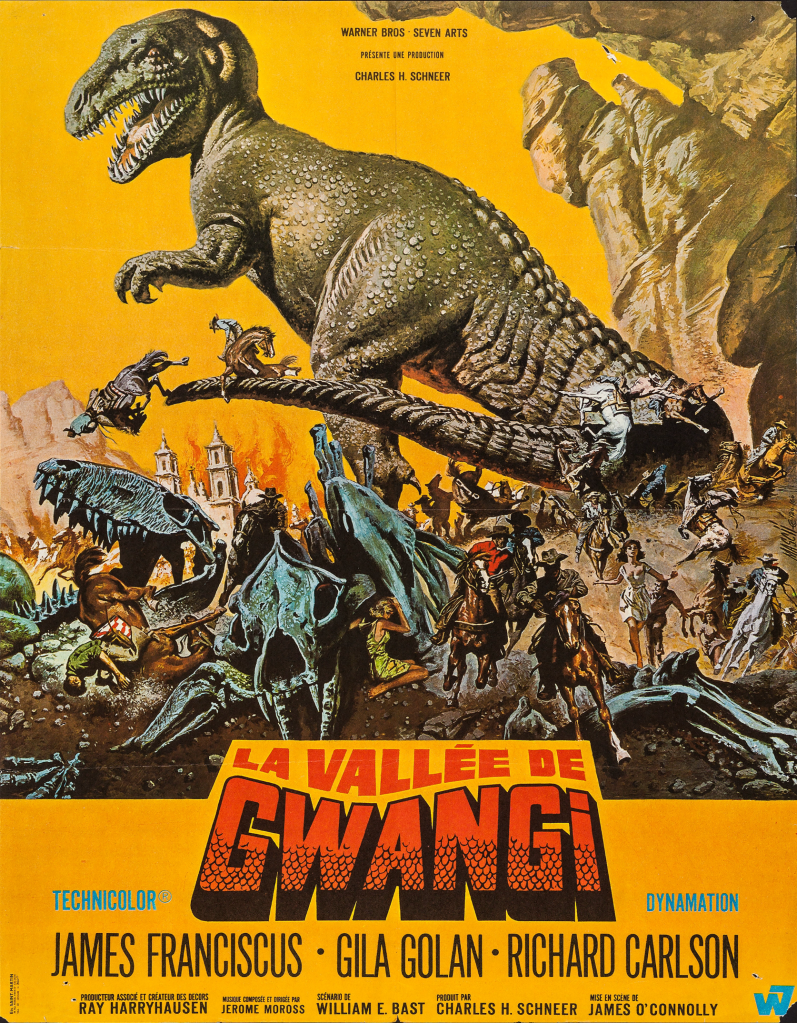
French grande poster
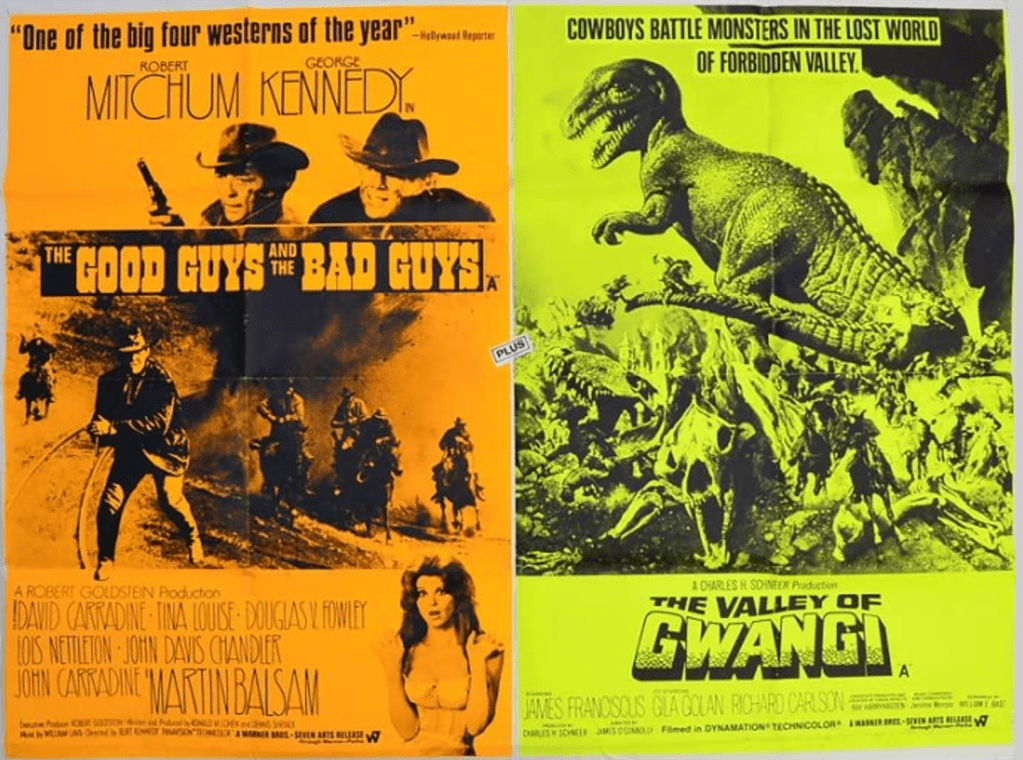
UK quad double bill poster
US half sheet poster
Italian locandina poster
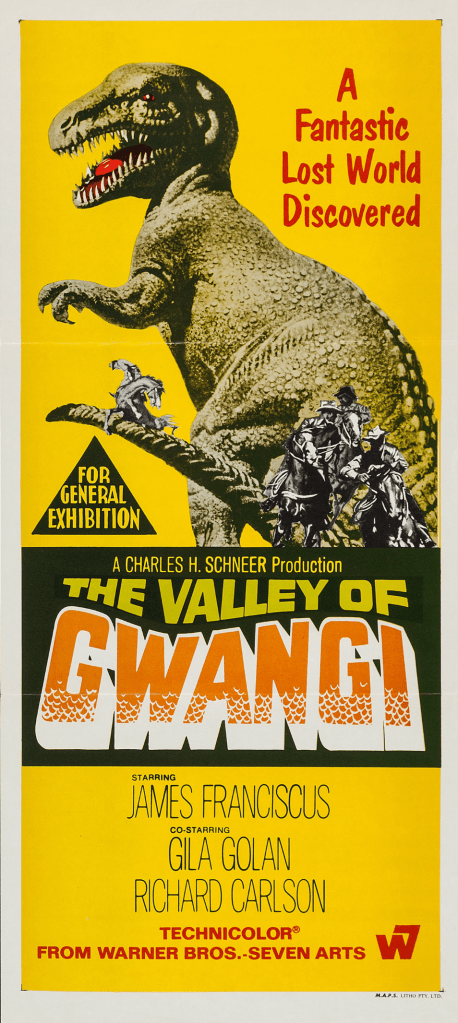
Australian daybill poster
French moyenne poster
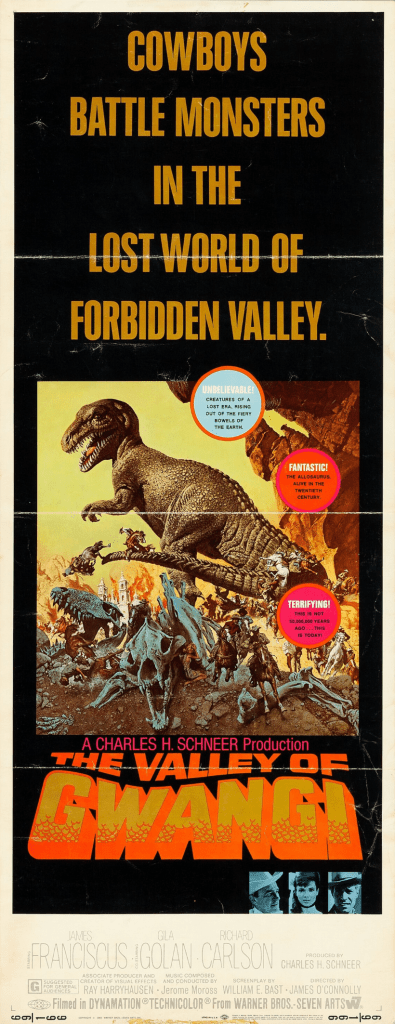
US insert poster
US insert poster
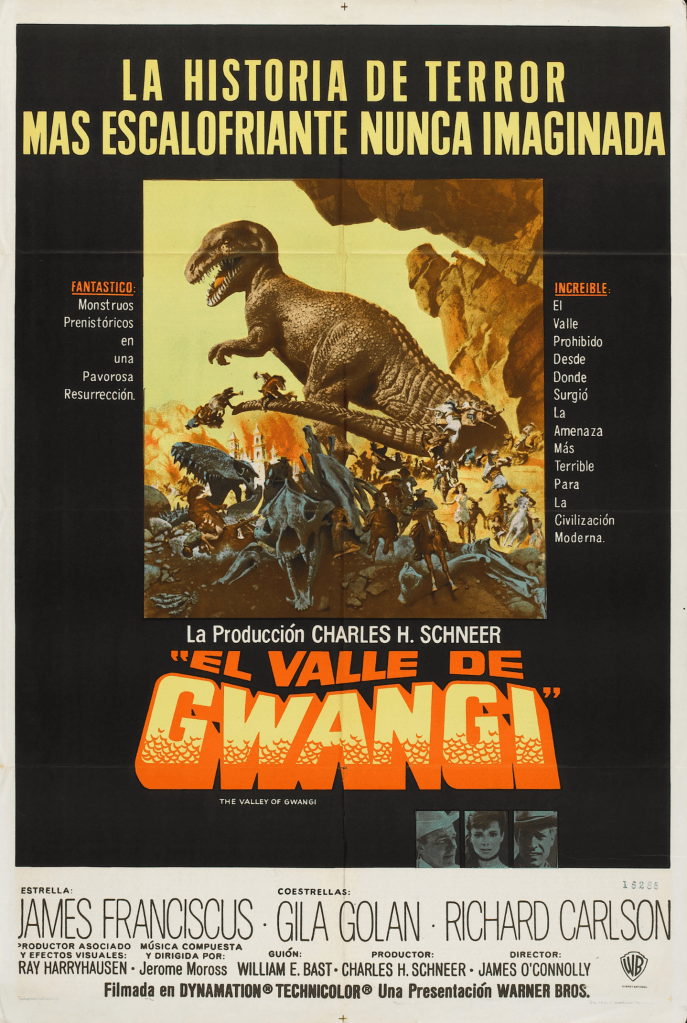
Poster from Argentina
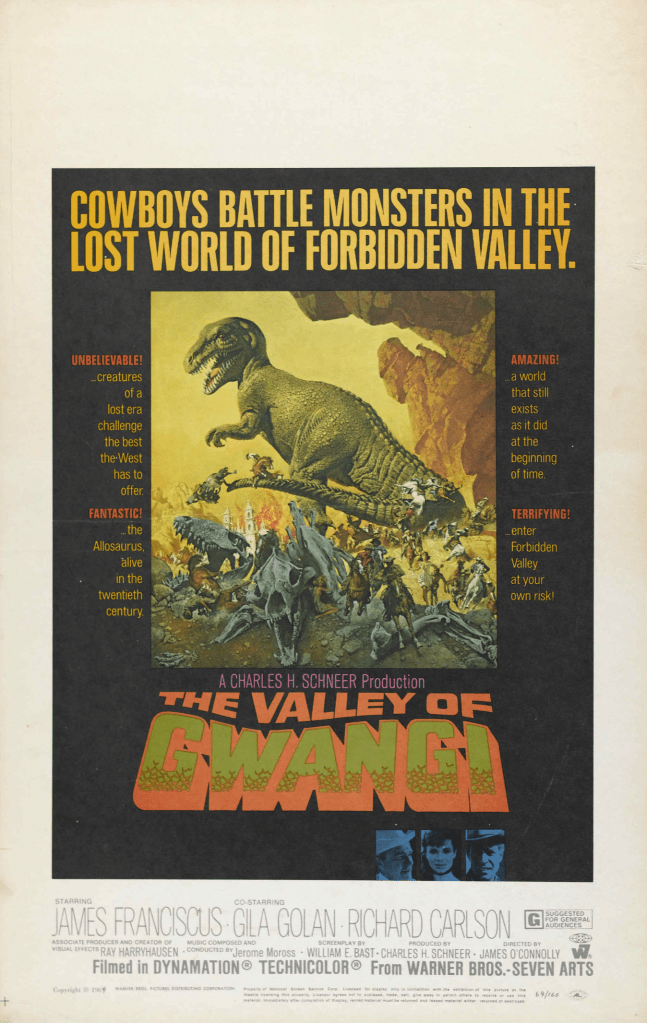
US window card
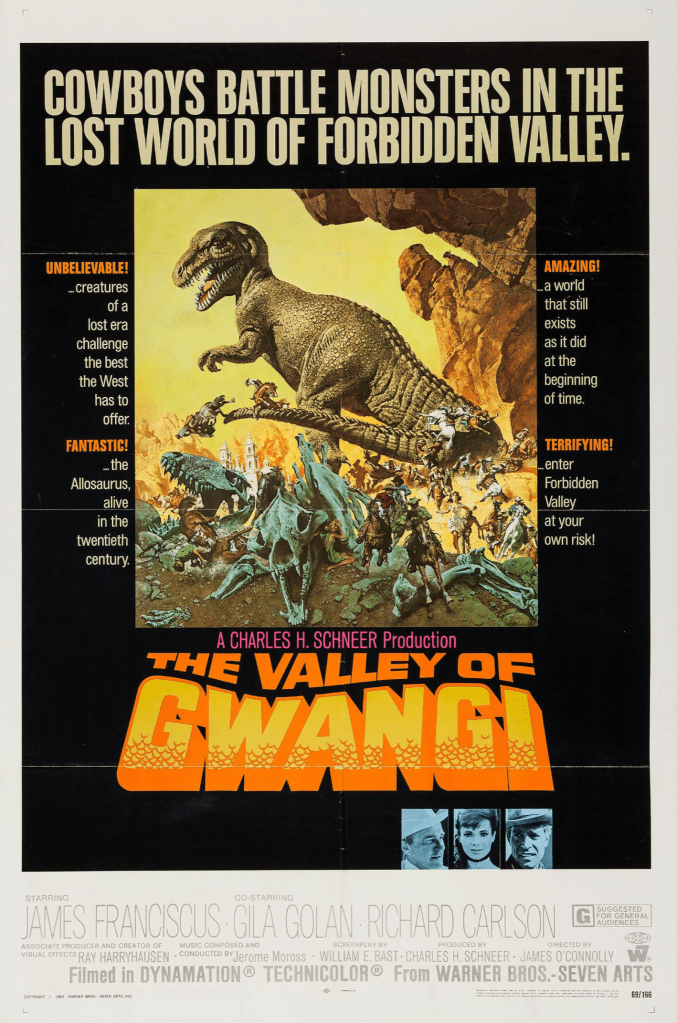
US one sheet
US one sheet
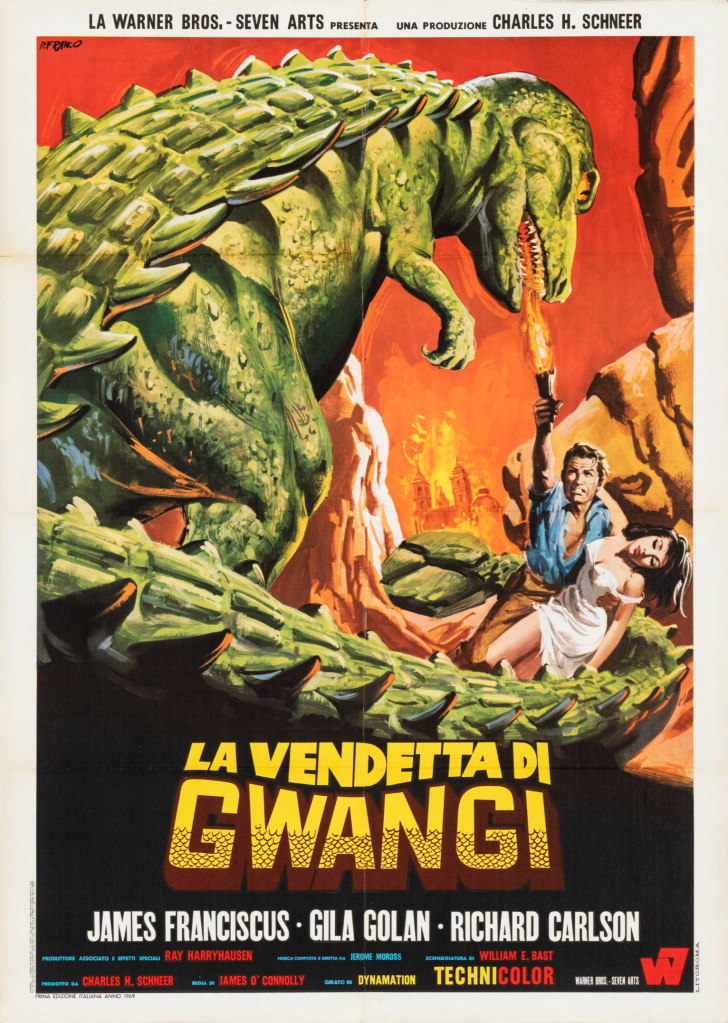
Italian poster. This one actually doesn't use Frank McCarthy's dinosaur illustration: it features a spike-backed carnosaur (cribbed from a comic book)
Italian poster. This one actually doesn’t use Frank McCarthy’s dinosaur illustration: it features a spike-backed carnosaur instead (which was cribbed from a comic book)
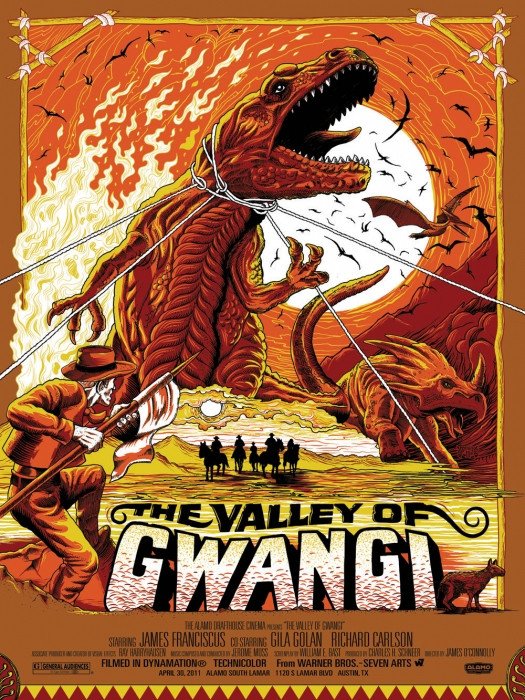
A much more recent Mondo poster for the movie, designed by Mike Saputo
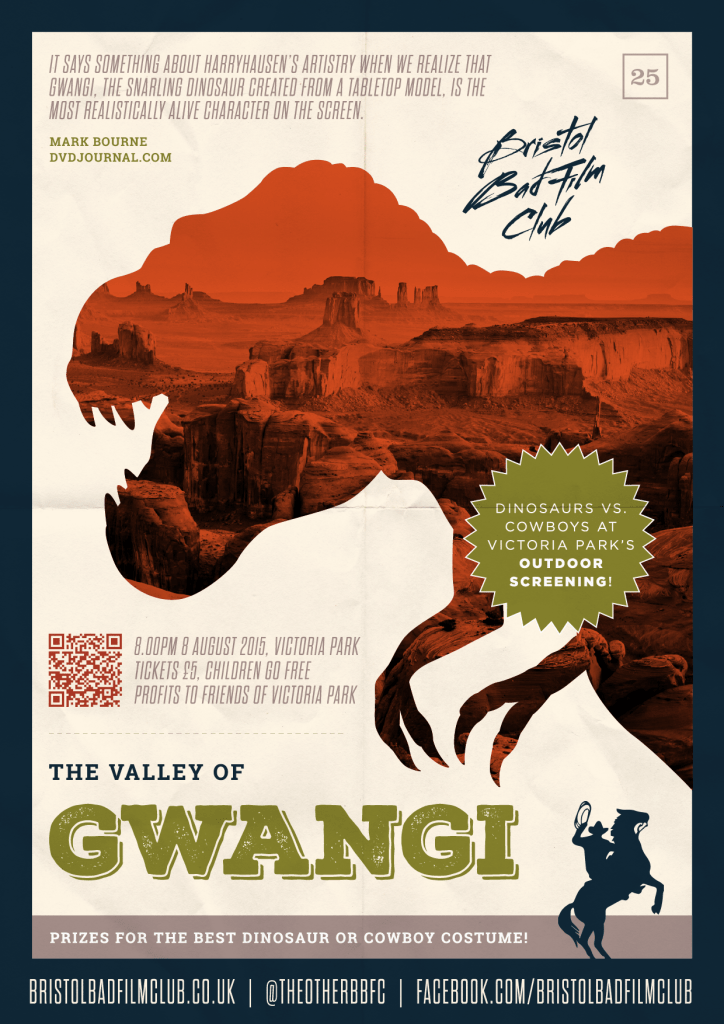
Poster for a screening of the movie by the Bristol Bad Film Club (I'm sure the club didn't think this movie was actually bad!)
Poster for a screening of the movie by the Bristol Bad Film Club (I’m sure the club didn’t think this movie was actually bad!)

LOBBY CARDS
Here are just some of the bobby cards for the film…

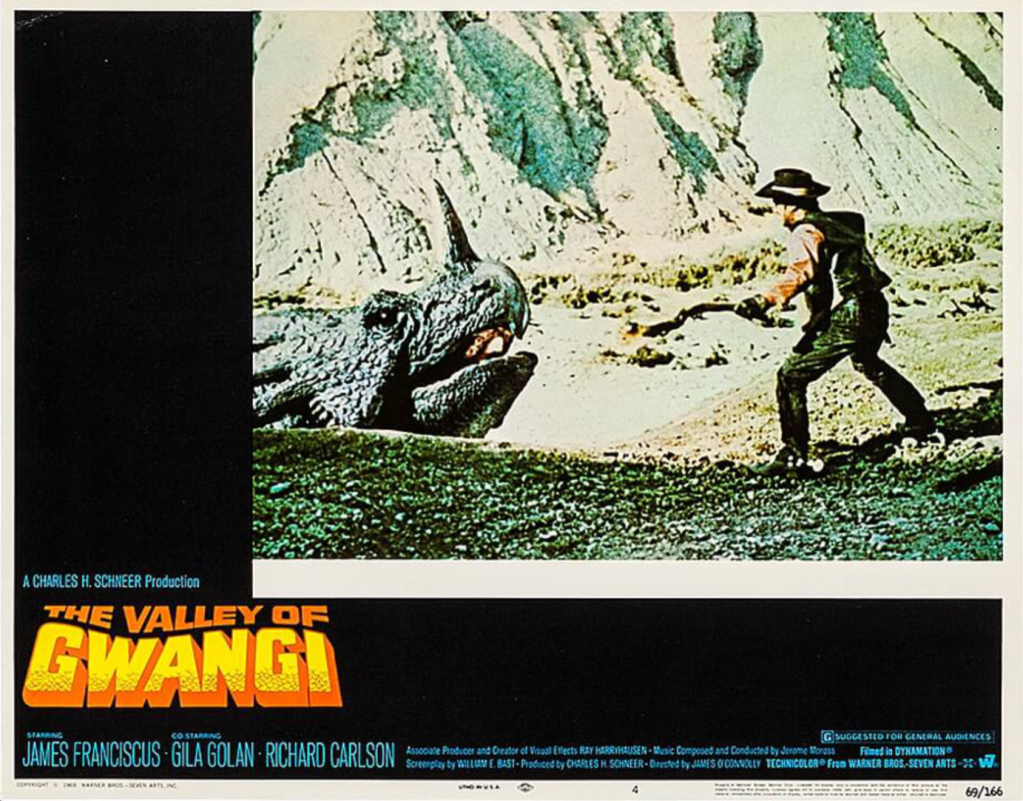
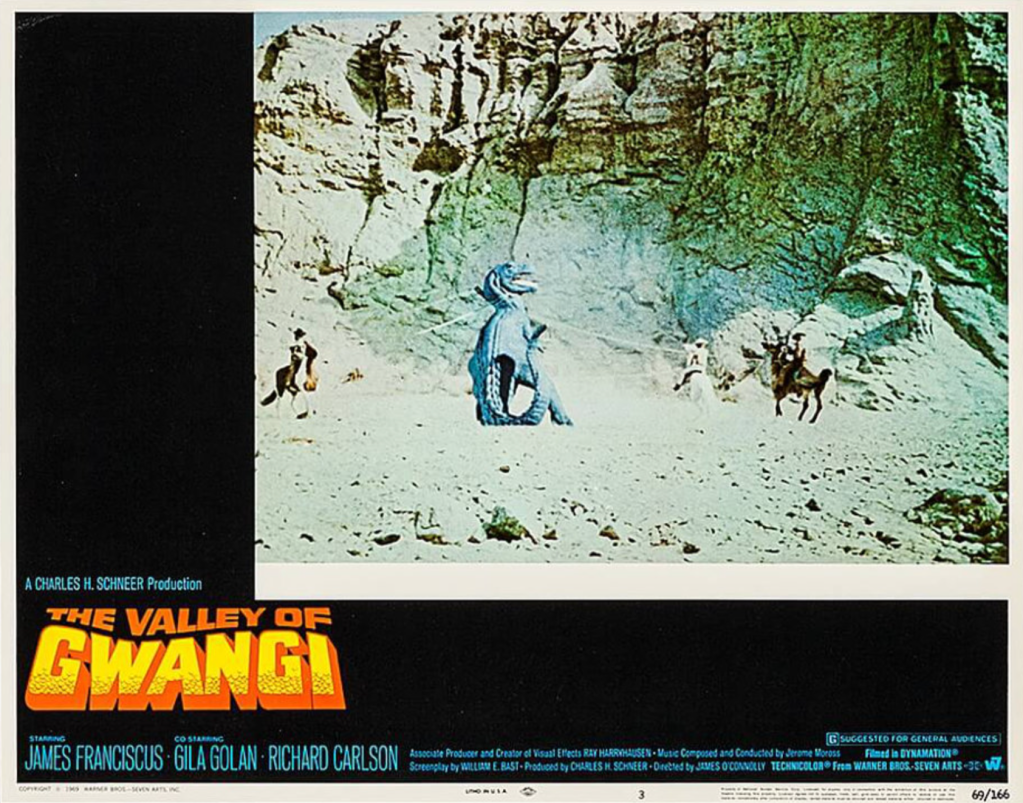
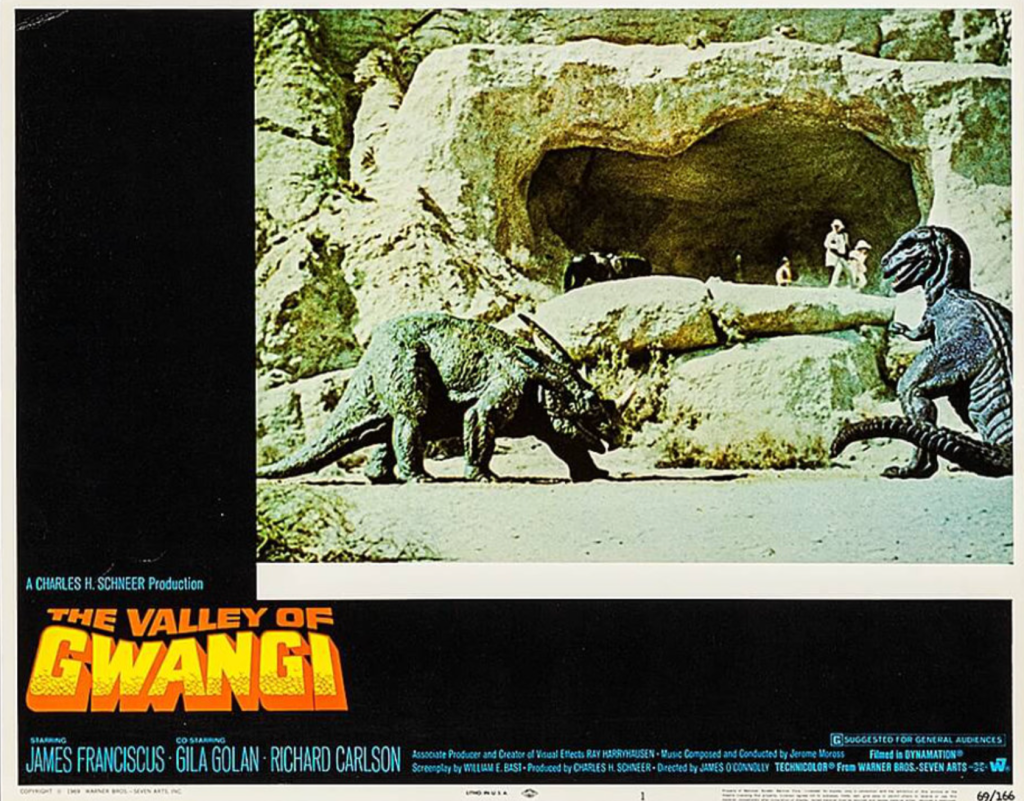
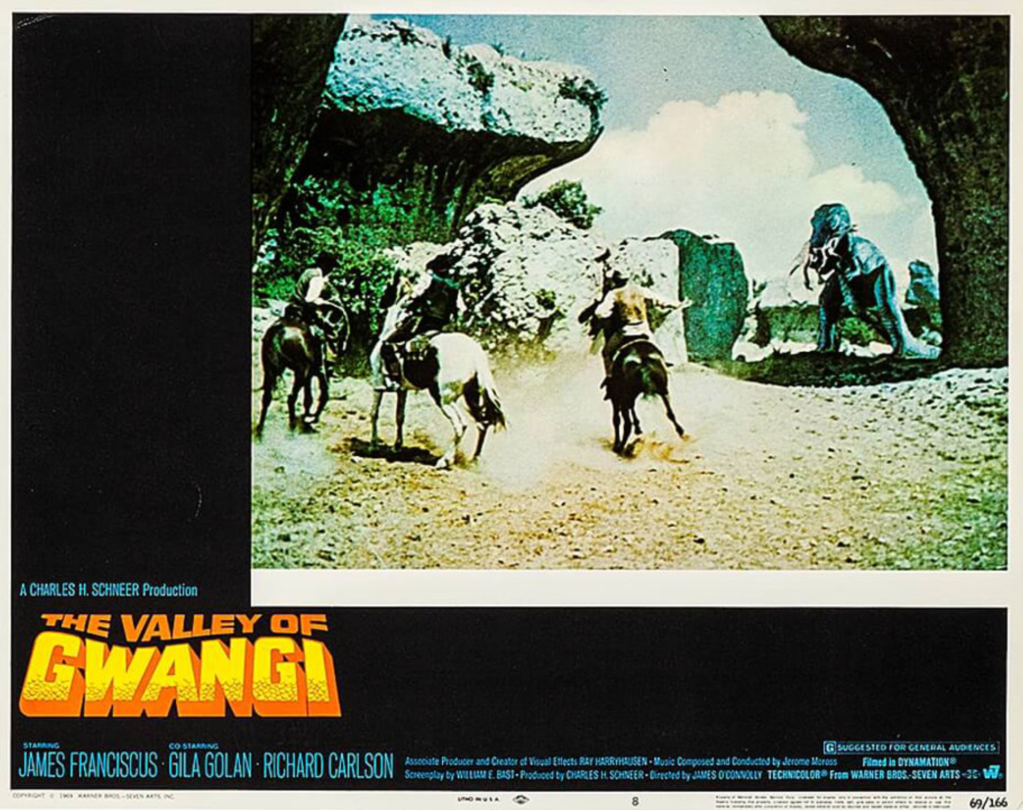
Lobby card
Lobby card
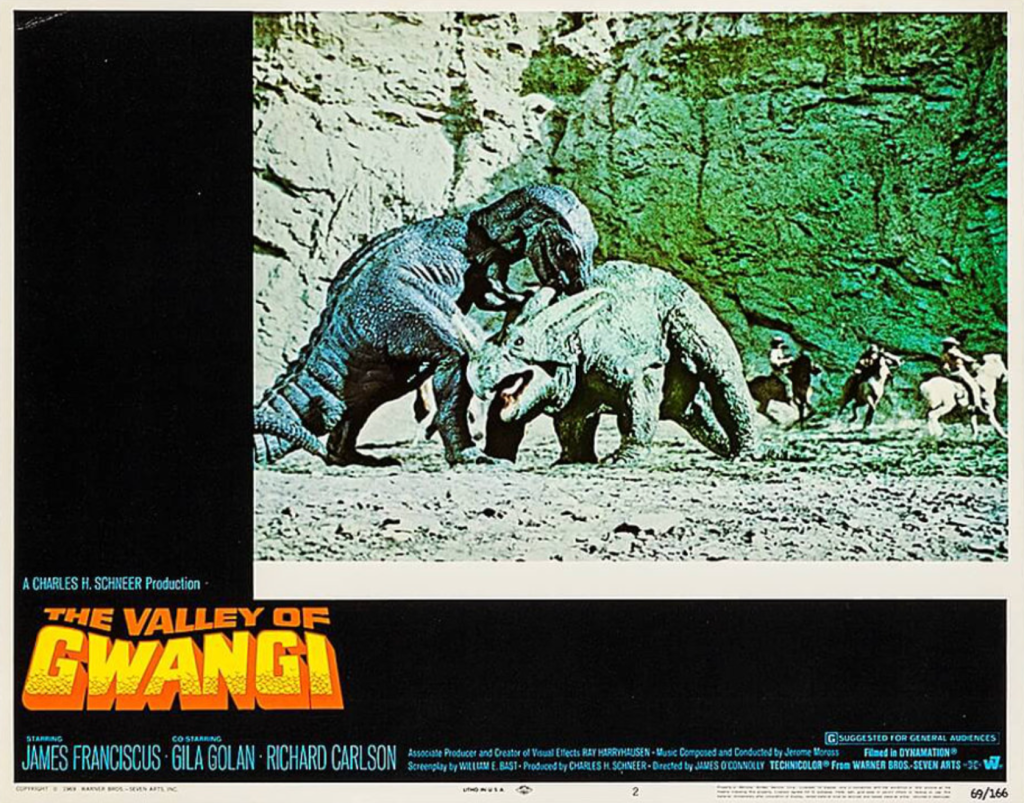
Lobby card. Laurence Naismith is just about to get squashed!
Lobby card. Dino fight!!!
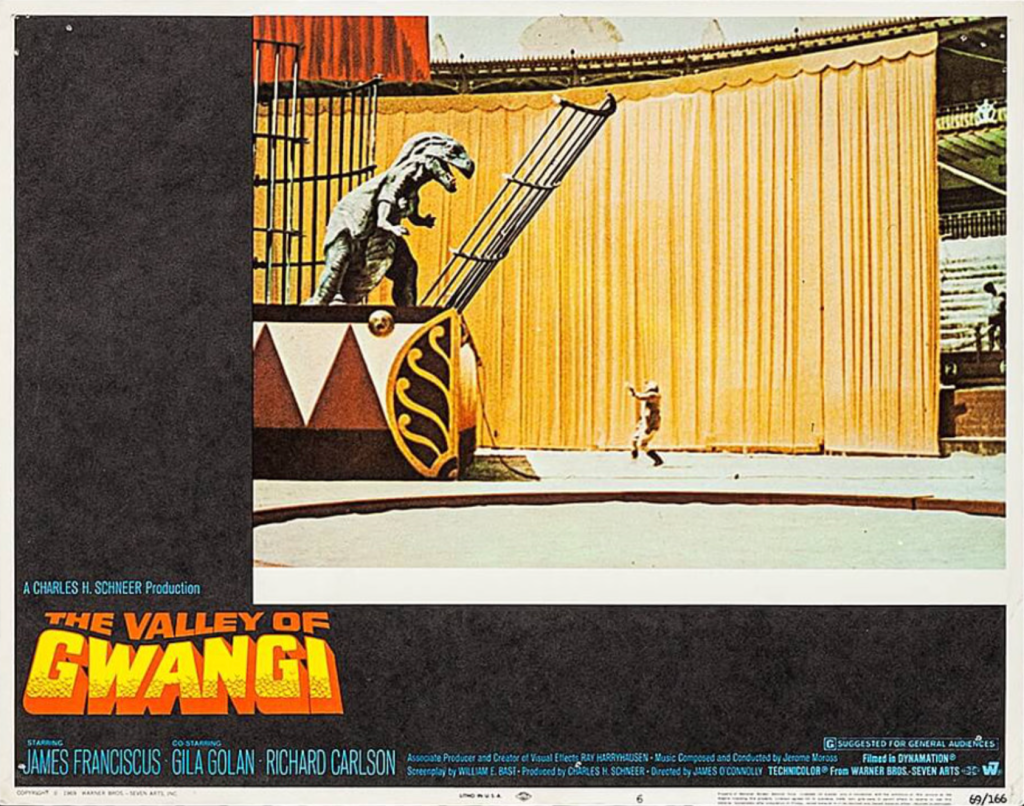
Lobby card
Lobby card
Lobby card. Two big prehistoric beasts have a face-off!
Lobby card. Gwangi gobbles up an Ornithomimus!

ART INSPIRED BY THE VALLEY OF GWANGI
Here are some cool artworks by illustrators who were inspired by the movie…

Gwangi-inspired cover art for the 1983 May issue of 'Fantasy Book' magazine, by Alan Gutierrez
Gwangi-inspired cover art for the 1983 May issue of ‘Fantasy Book’ magazine, by Alan Gutierrez

Here are some Gwangi-tastic illustrations by the very prolific and very talented artist Jamie Chase…

Tuck encounters Gwangi
It's lasso time!
It’s lasso time!

William Stout…

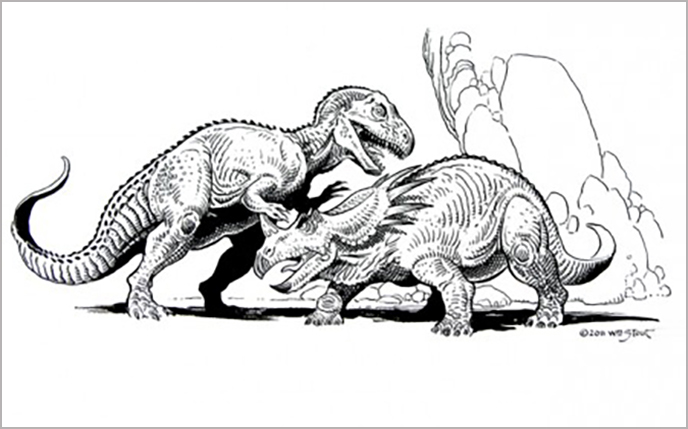
William Stout's rendition of the Gwangi vs Styracosaurus battle
William Stout’s rendition of the Gwangi vs Styracosaurus battle

Illustrator & designer Ross Persichetti produced some illustrations, featured on ArtStation, that were inspired by THE VALLEY OF GWANGI. Ross’ faux Gwangi sequel was called ‘Return to the Valley of Gwangi’

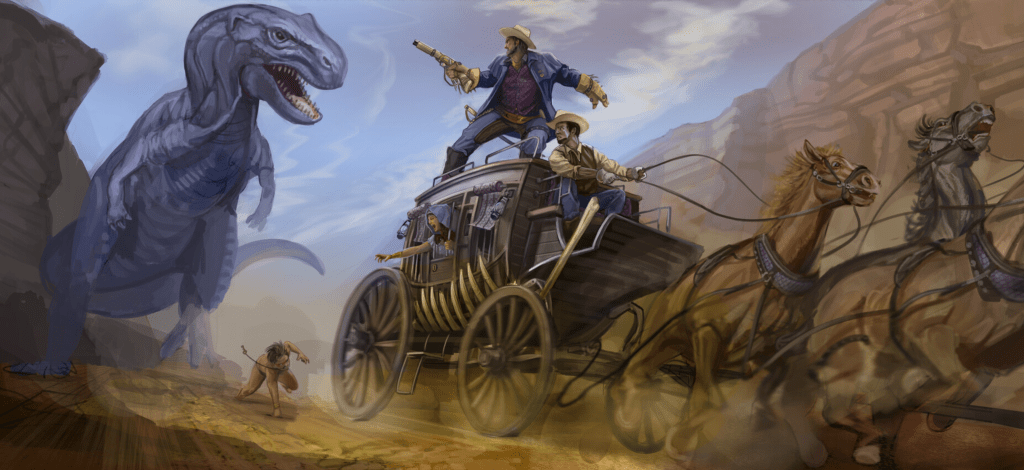
Gwangi chases a stagecoach!
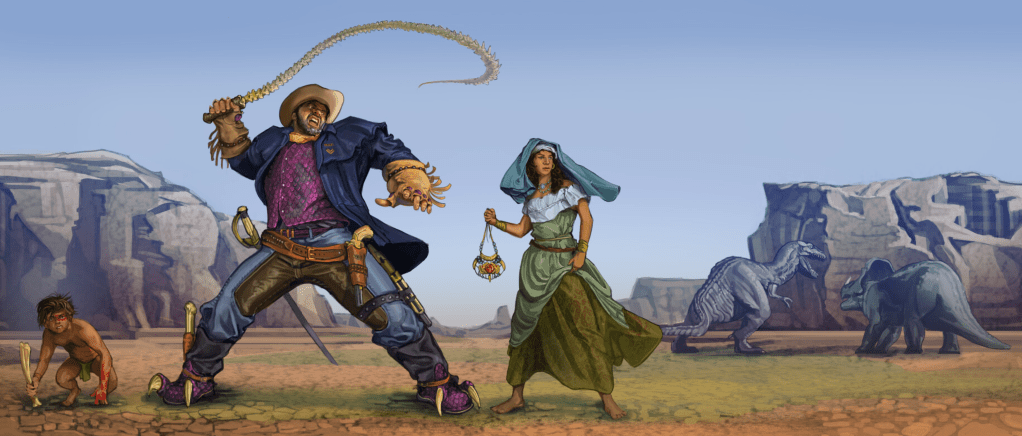
Another faux 'Return to the Valley of Gwangi' concept illustration by Ross Persichetti
Another faux ‘Return to the Valley of Gwangi’ concept illustration by Ross Persichetti

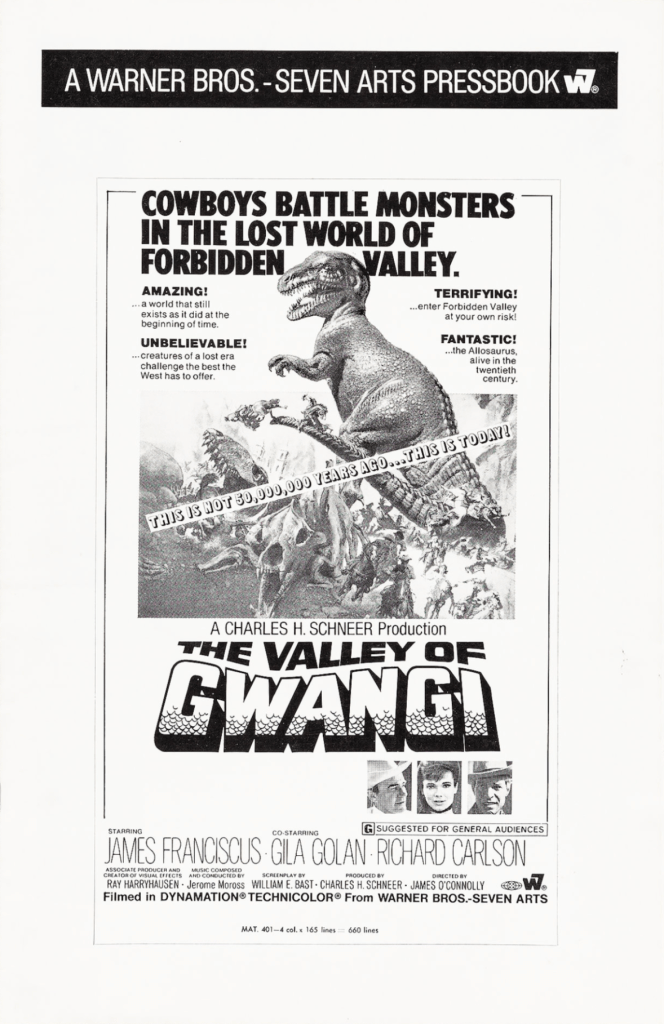
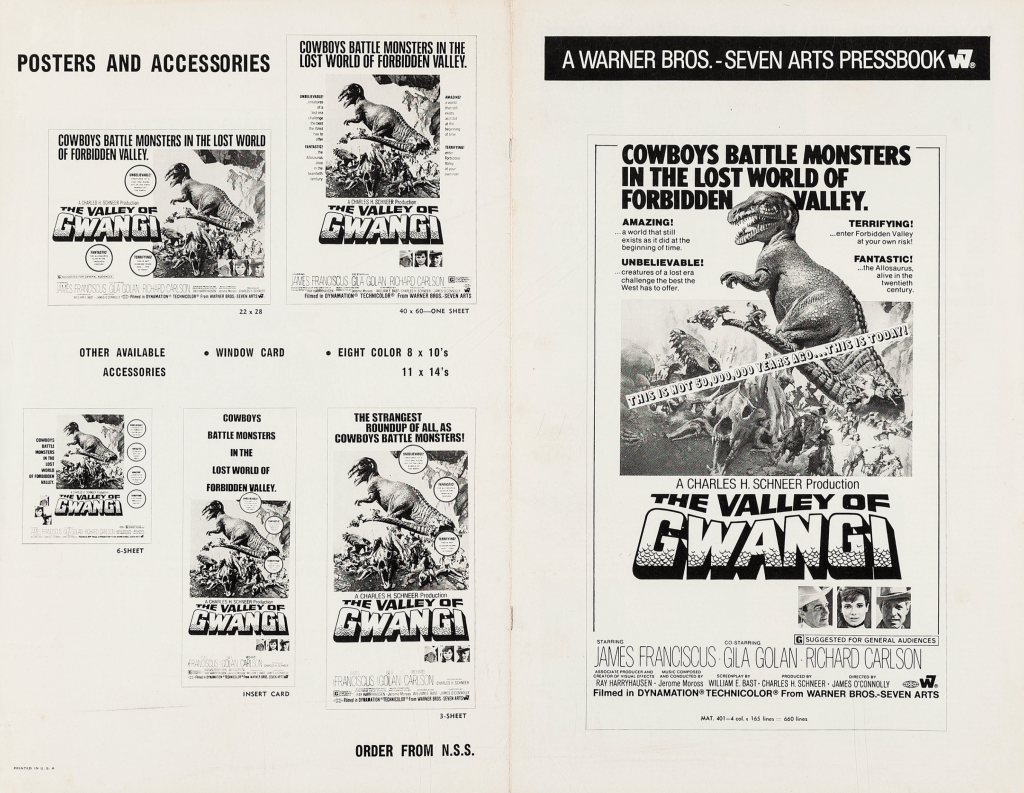
PRESSBOOK
Pages from the Gwangi pressbook…

'This is not 50,000,000 years ago... this is today!'
‘This is not 50,000,000 years ago… this is today!’
Page depicting various posters and accessories

VARIOUS BITS AND PIECES
Here’s a bunch of different Gwangi-related items…
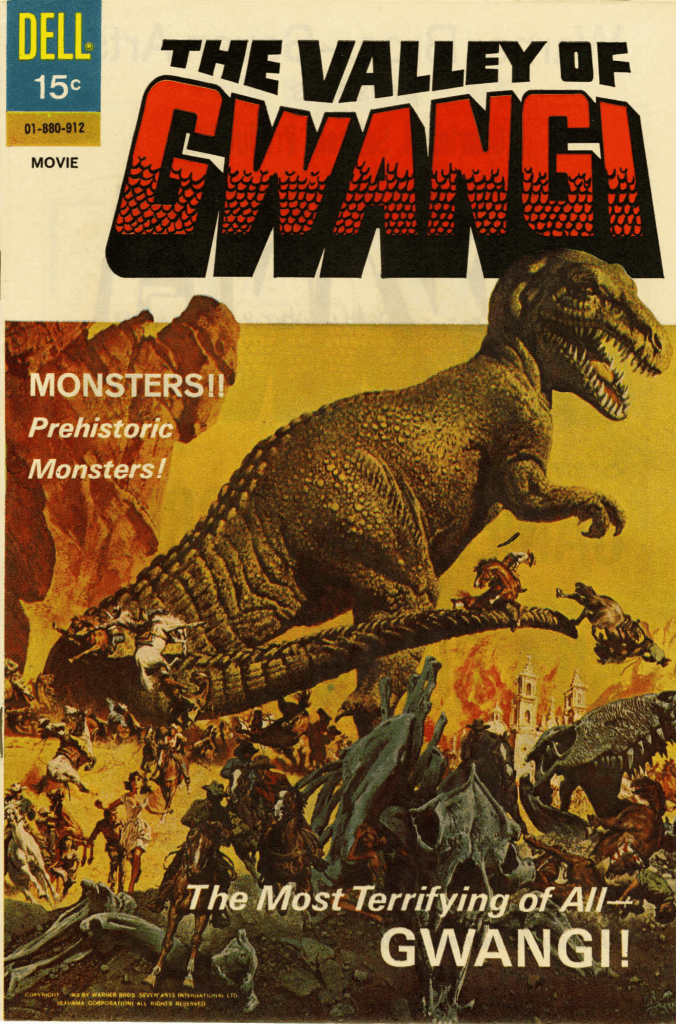
Dell movie adaptation comic cover
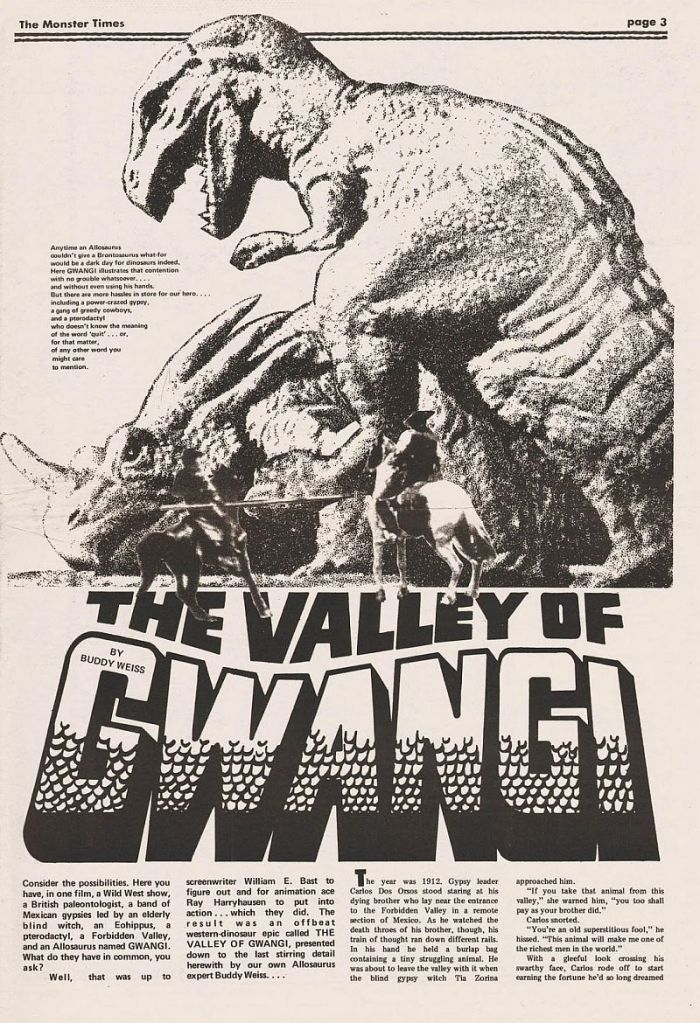
A page from 'The Monster Times' magazine
A page from ‘The Monster Times’ magazine
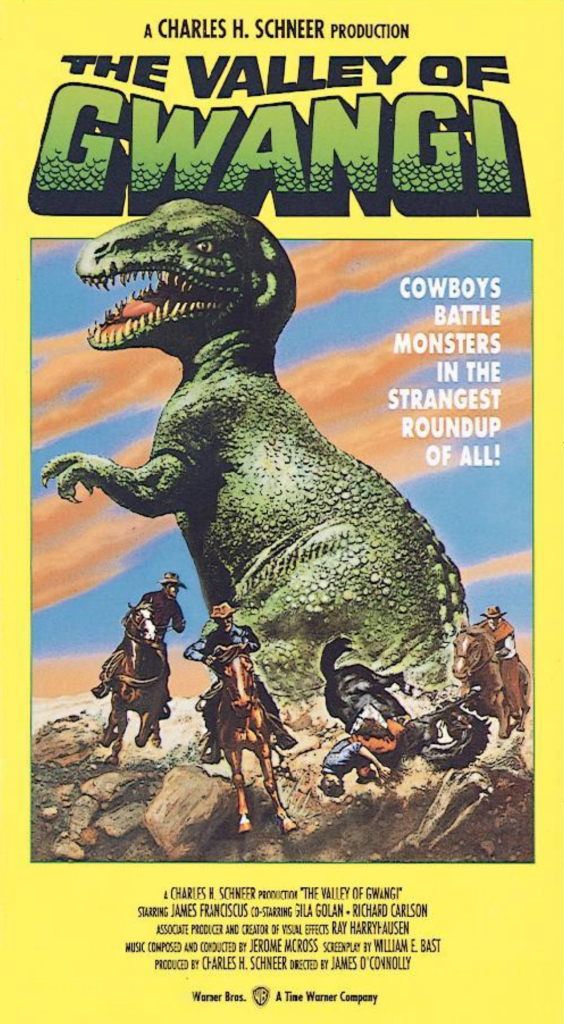
VHS cover
VHS cover
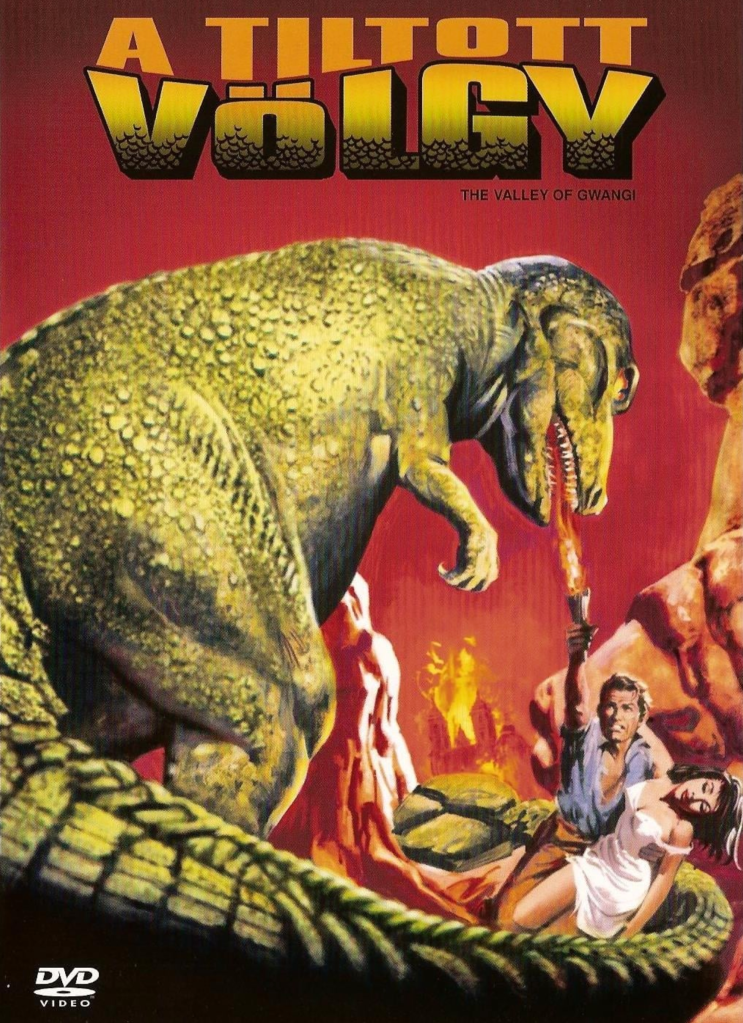
Hungarian DVD cover
Hungarian DVD cover
UK DVD sleeve
UK DVD sleeve
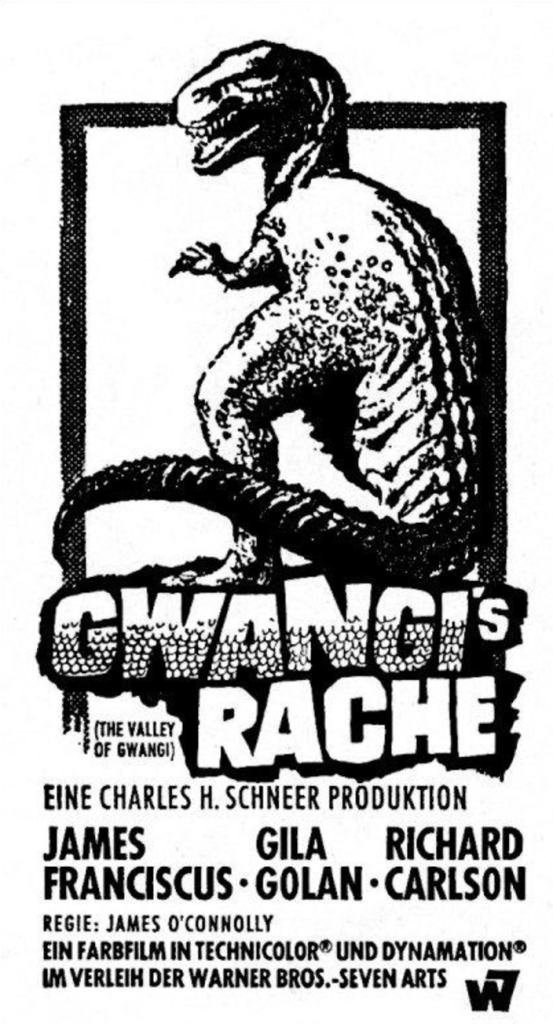
German black and white ad
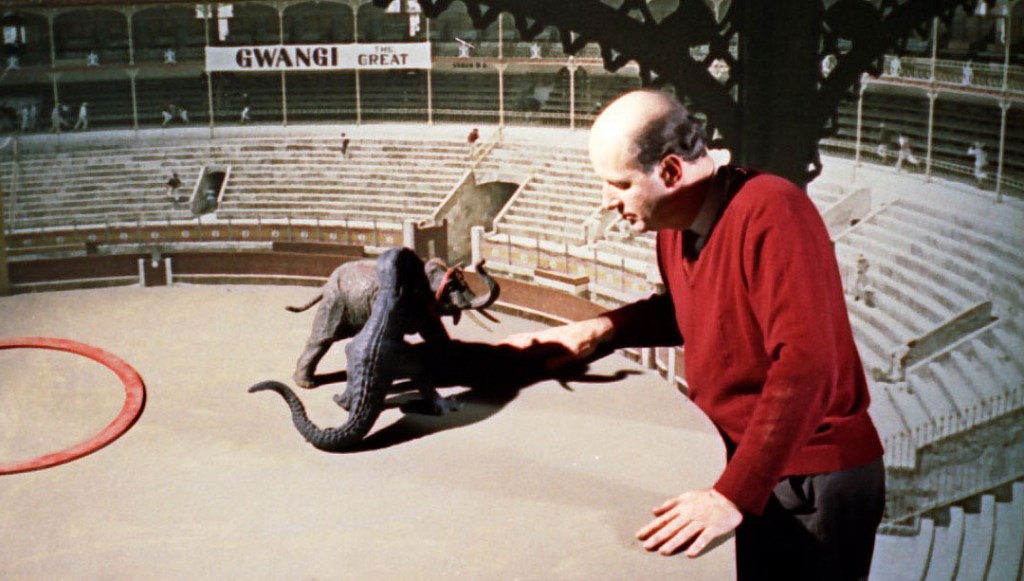
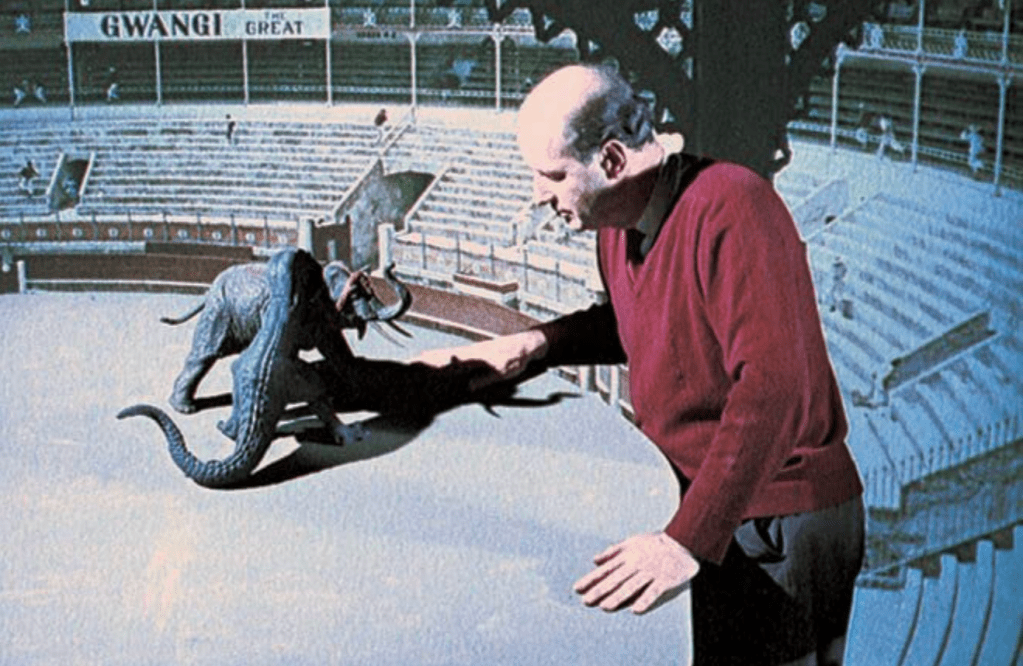
A shot of Ray Harryhausen with his clever set-up for the Gwangi vs elephant fight scene

Finally, here’s one more look at Gwangi in action…
I love how Gwangi stops to scratch his nose! Such a great touch from Ray, that adds more 'life' to the animated star of the movie
I love how Gwangi stops to scratch his nose! Such a great touch from Ray, that adds more ‘life’ to the animated star of the movie. It is, of course, also a nice nod from Ray to Willis O’Brien’s dinosaur from KING KONG, which had an itchy snout too.

Attack of the Super Monsters (1982)

This film is odd, okay? You've been warned!
This film is really odd, okay? You’ve been warned!
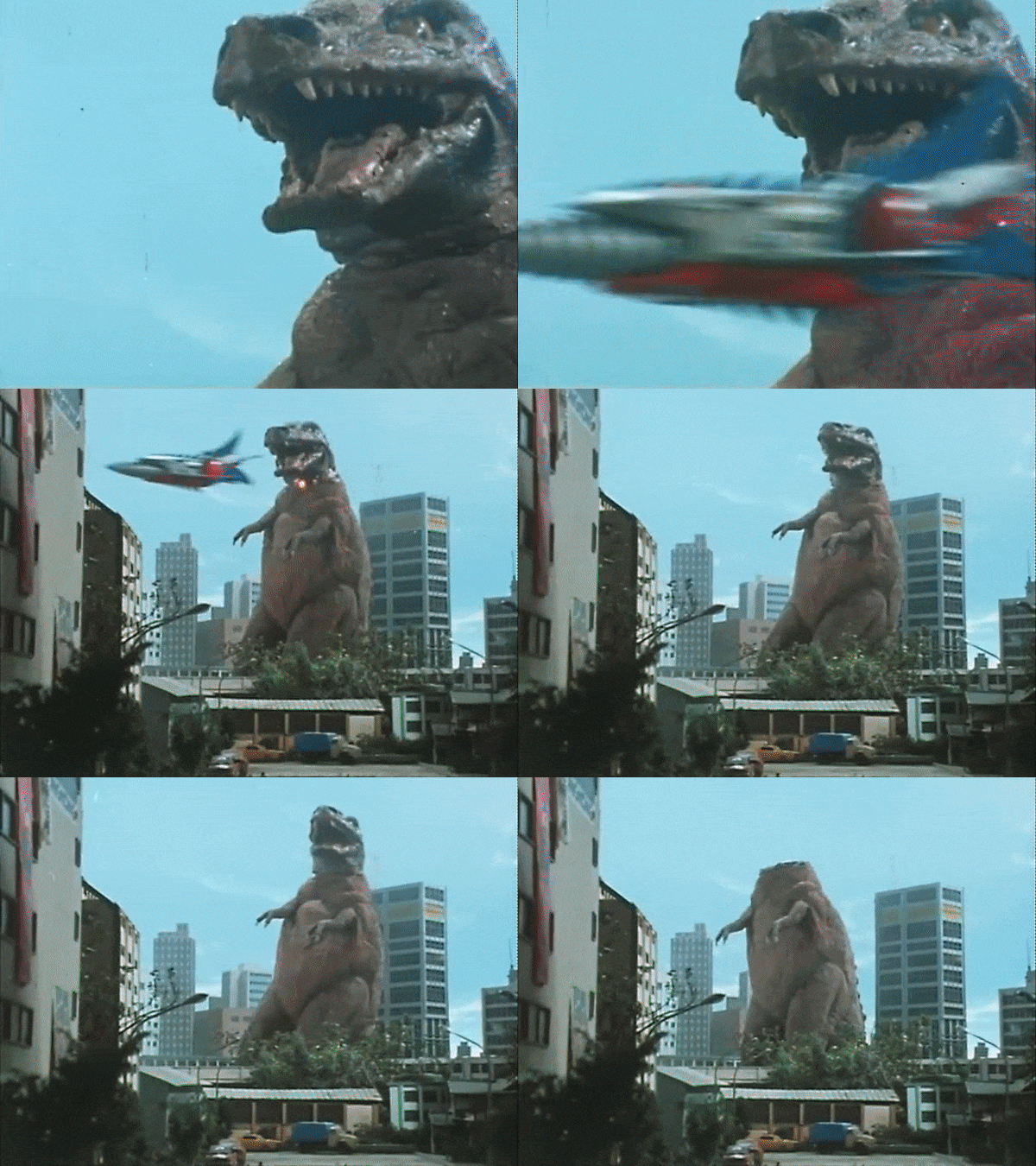
Off with its head!

Directors: Toru Sotoyama and Tom Wyner. Writers: Masaki Tsuji, Ifumi Uchiyama and Tom Wyner. Voice cast: Tom Wyner, Dan Woren, Robin Levenson, Cam Clarke, Mike Reynolds and Joe Perry.

Zap!
Zap!
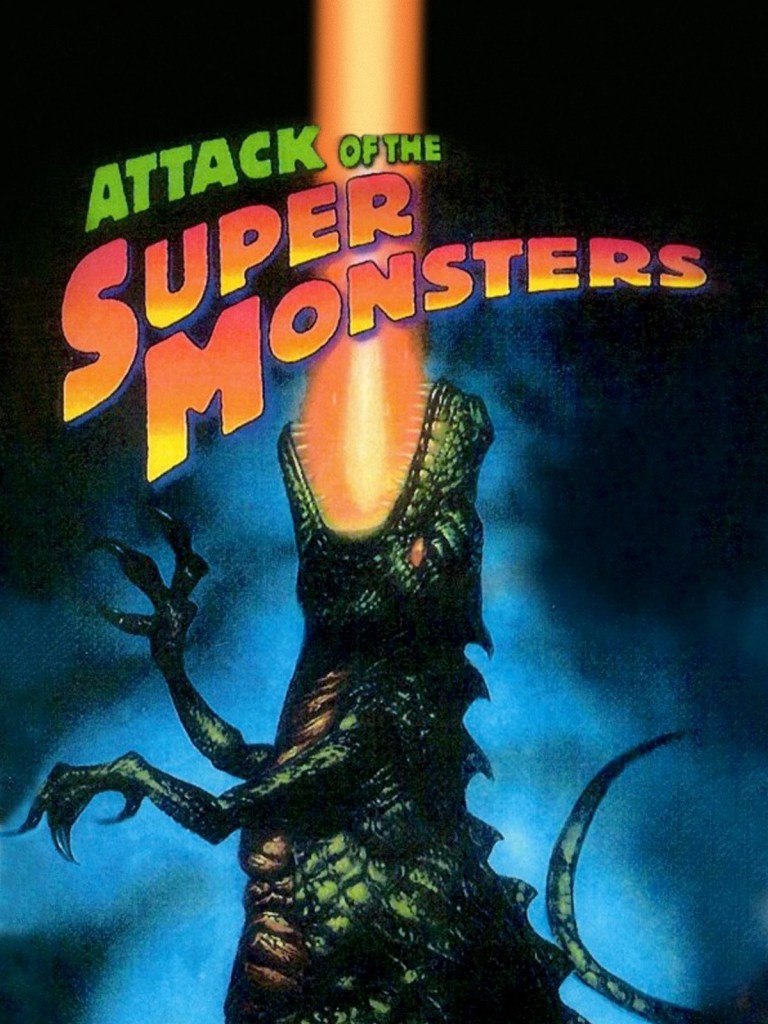
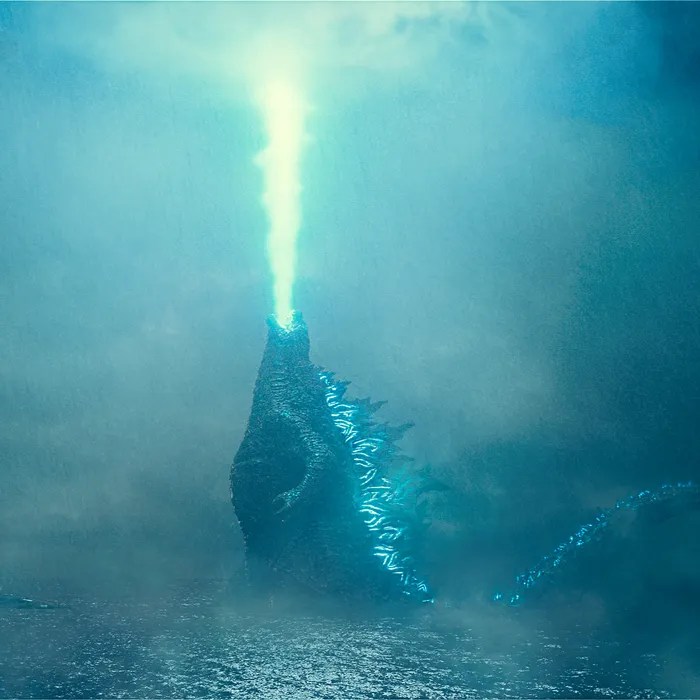
This distinctively-posed dinosaur illustration was used for the ATTACK OF THE SUPER MONSTERS VHS cover…
...when Godzilla posed in a similar fashion in GODZILLA: KING OF THE MONSTERS (2019)
…and Godzilla posed in a very similar way in GODZILLA: KING OF THE MONSTERS (2019) many years later

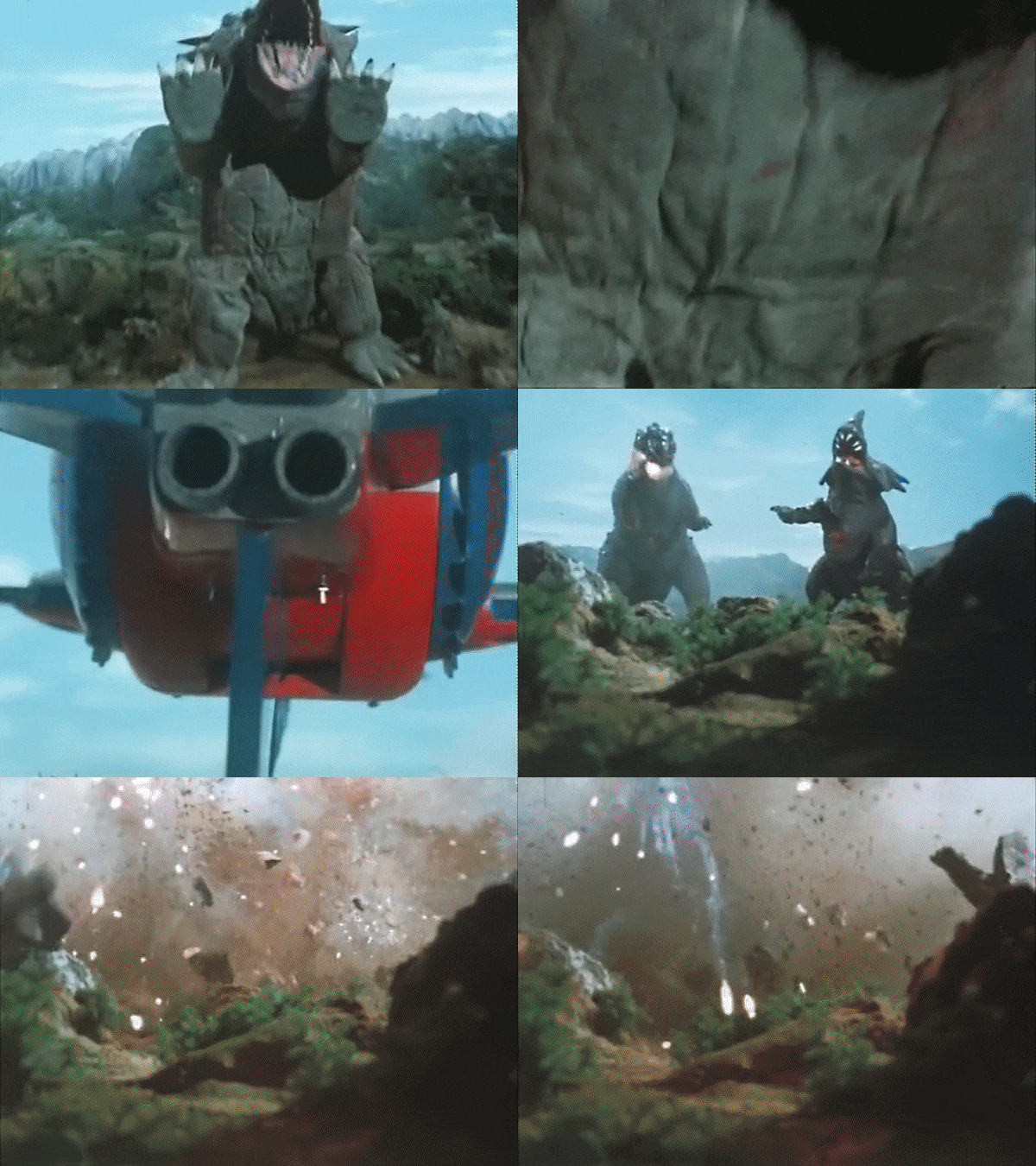
This film, released on VHS in the USA, is actually an edit of episodes from Japanese TV series DINOSAUR WAR IZENBORG, which was produced by Tsuburaya Productions, airing from 1977 to 1978 on TV Tokyo.

American voice actor Tom Wyner is the unhinged genius who decided to splice four of the 20-minute episodes together and dub them into English. He deserves a medal! 

DVD cover
DVD cover from 2007

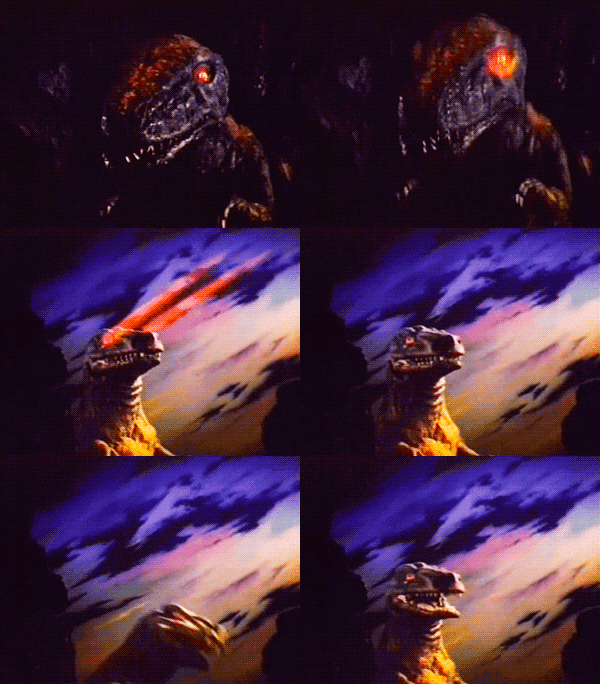
This is the story of dinosaurs returning to the Earth’s surface to attack mankind. These monster dinos are super-large, telepathic, can talk and breath fire! They can also turn normal Earth animals, such as dogs and rats, into monsters.

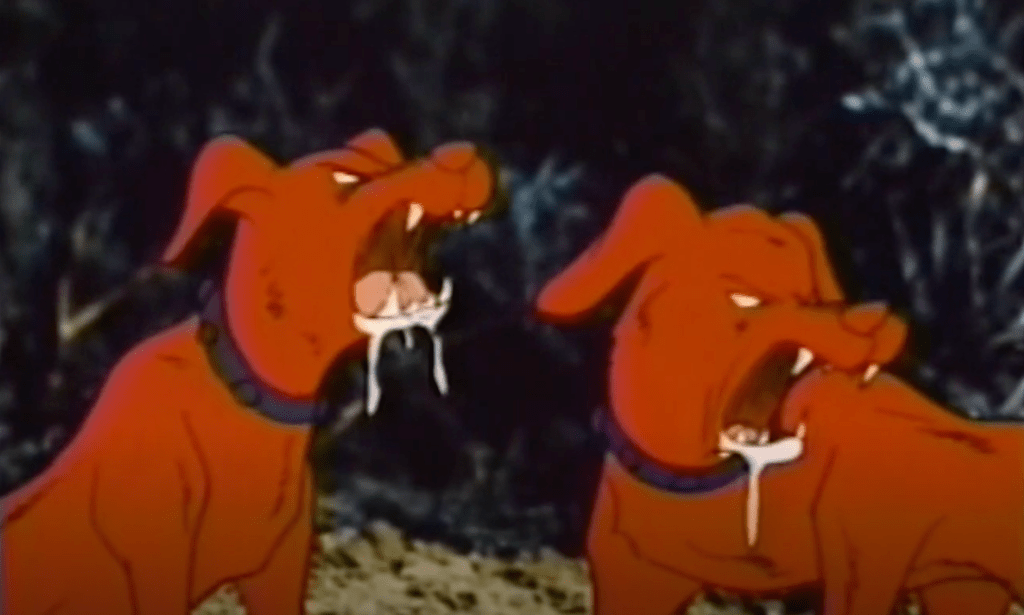
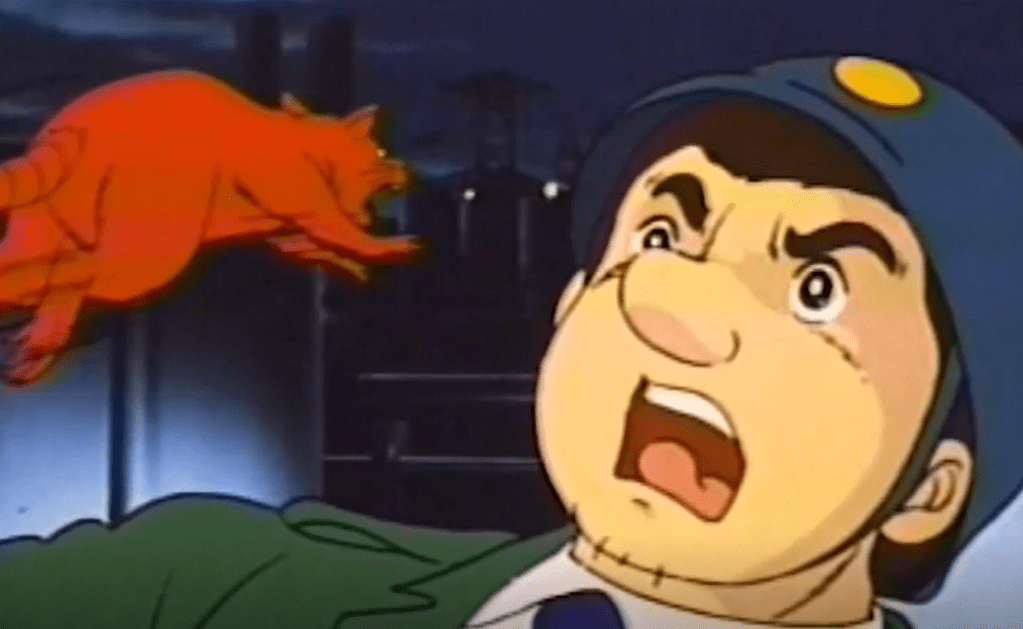
This talking Tyrannosaurus Rex can aim eye-beams at dogs...
This talking Tyrannosaurus Rex can aim eye-beams at dogs…
 ...and turn them into red, slavering killers!
…and turn them into red, slavering killers!

ATTACK OF THE SUPER MONSTERS is a super-weird production: a mix of live action, anime and some stop-motion!

Two harpoons are fired into this dinosaur's mouth... and he just eats them!
Two harpoons are fired into this dinosaur’s mouth… and he just eats them!
The red-eyed brute breaths-out radioactive dust

The human characters are portrayed via cartoon animation, whilst the monsters are a mixture of suitmation, some stop-motion (for the underground ‘normal’ dinosaurs) and props. The Earth animals that go mad are either anime (the dogs, rats) or props (rubber bats on wires.)

There’s a lot of scale model work used too, for the buildings, vehicles and landscapes.

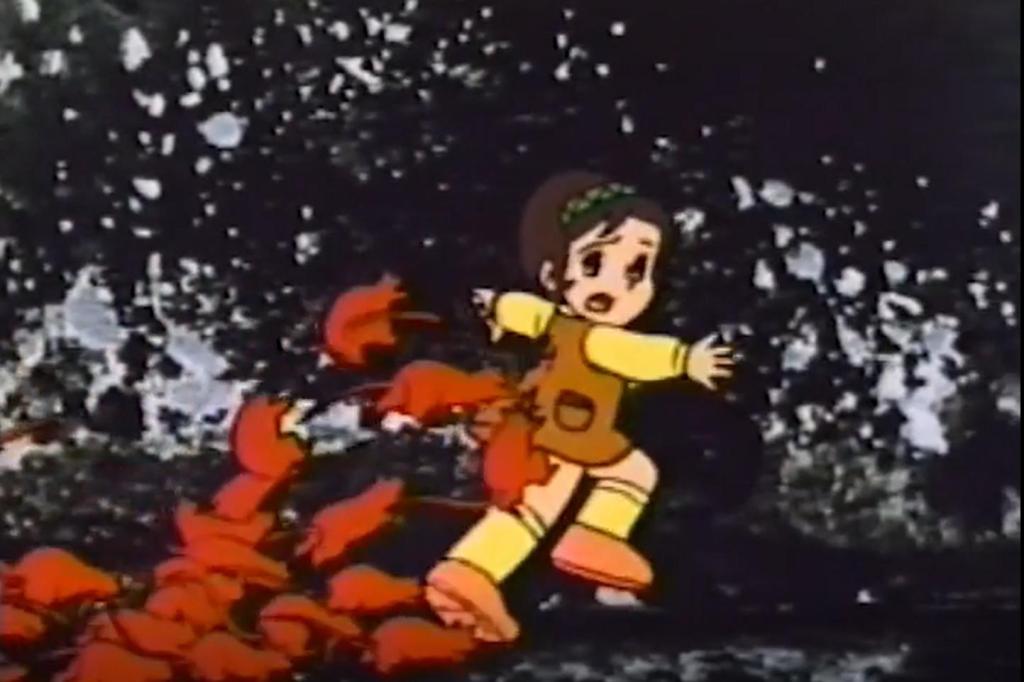
Red rats attack a little girl!
A subterranean stop-motion sauropod
These cave-dwelling stop-motion dinosaurs are rather crudely animated

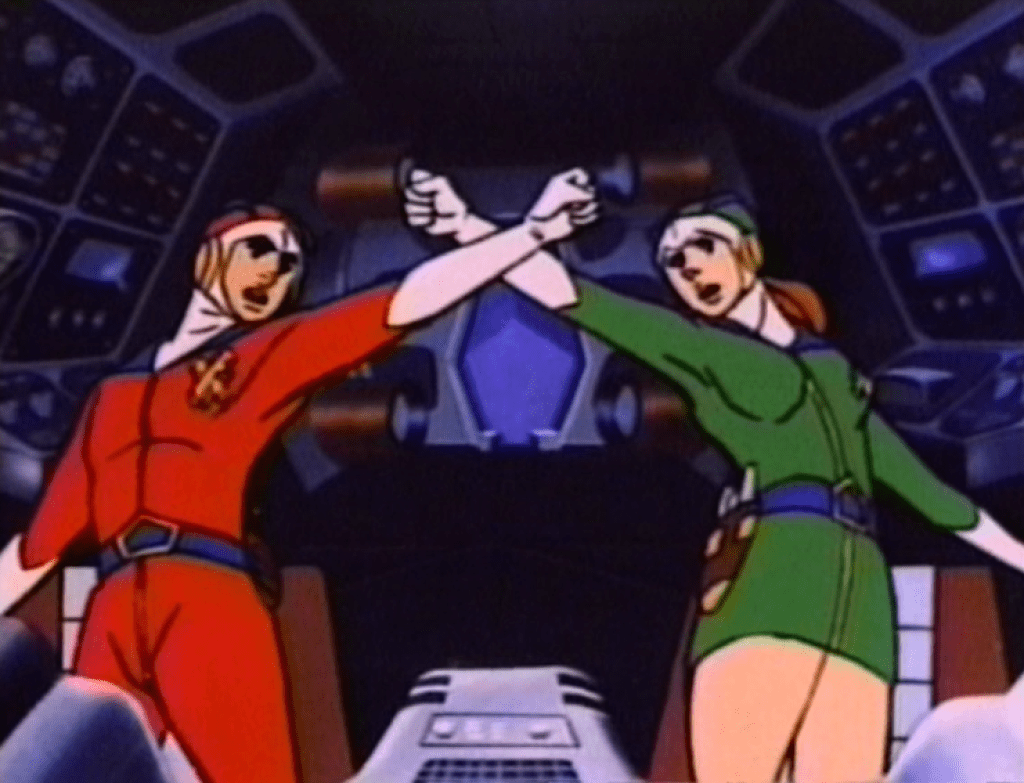
The world is defended by Gemini Force, which is led by the semi-android brother and sister duo of Jim and Gem Starbuck… who can ‘combine’ in a ‘Gemini transfer’ that joins their ‘life essences’ together so that they can beat the monsters.

"Gem.. Gem... Gemini!"
“Gem.. Gem… Gemini!”

One of the super monsters is a glowing-eyed stegosaurus that can vibrate its back-plates to turn cartoon rats into killers! Gemini Force uses its drill-nosed flying Gemini Ship to slice off some of the dinosaur’s back-plates… and then our heroes bore their vehicle straight through the stegosaurus’ belly! The dino then blows up, of course.

This stegosaurus can talk and control hordes of cartoon rats!
Watch out for the red rodent!
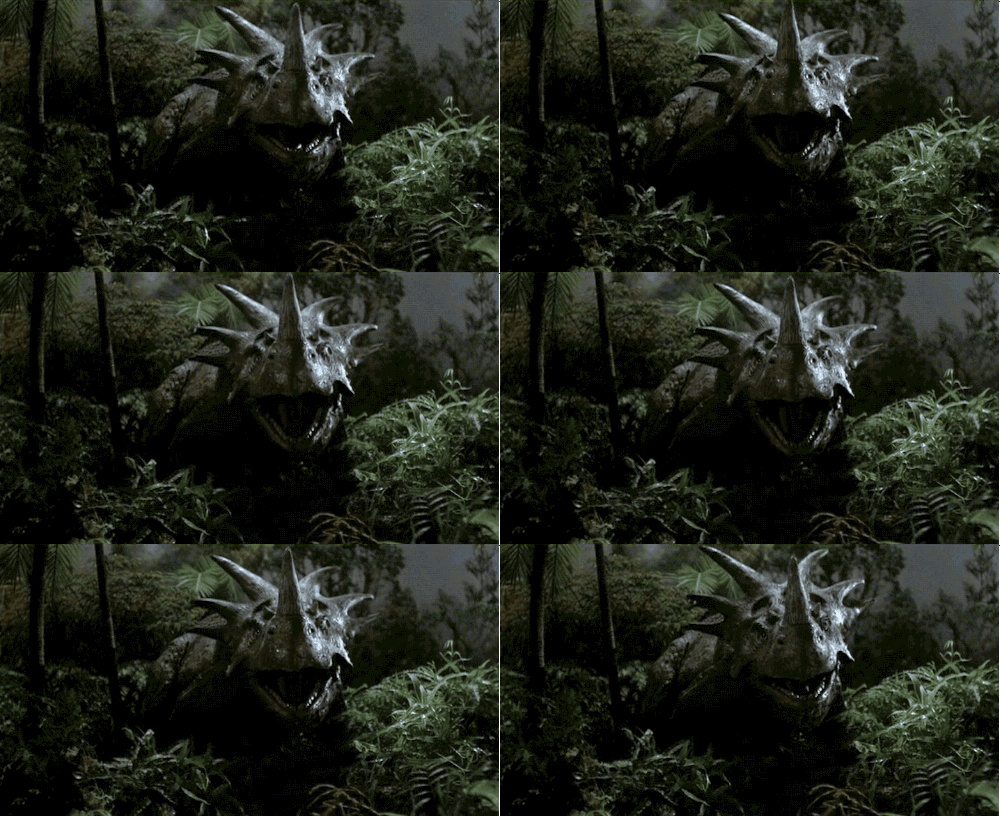
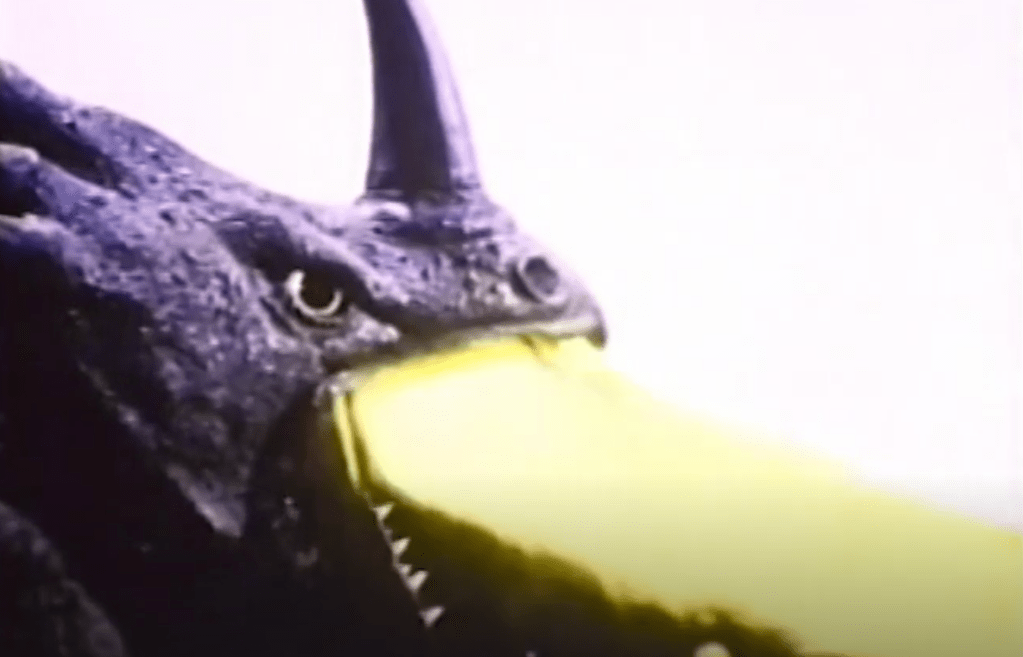
A super-styracosaurus can emit yellow beams from its mouth!
A super-styracosaurus can emit a yellow beam from its mouth…
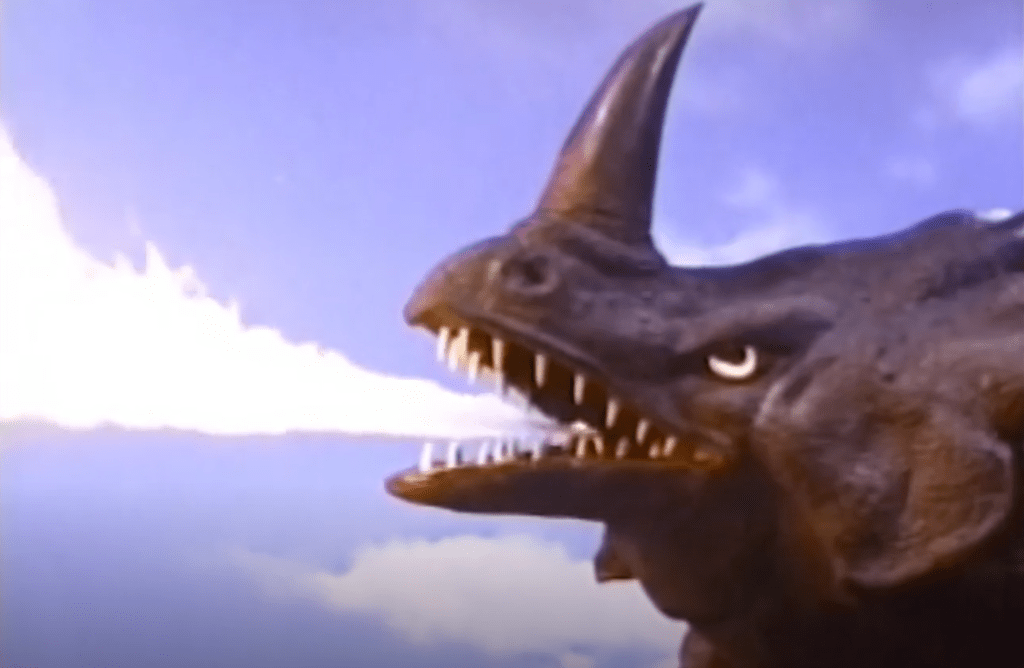
...and it can also breath fire!
…and it can also breath fire!
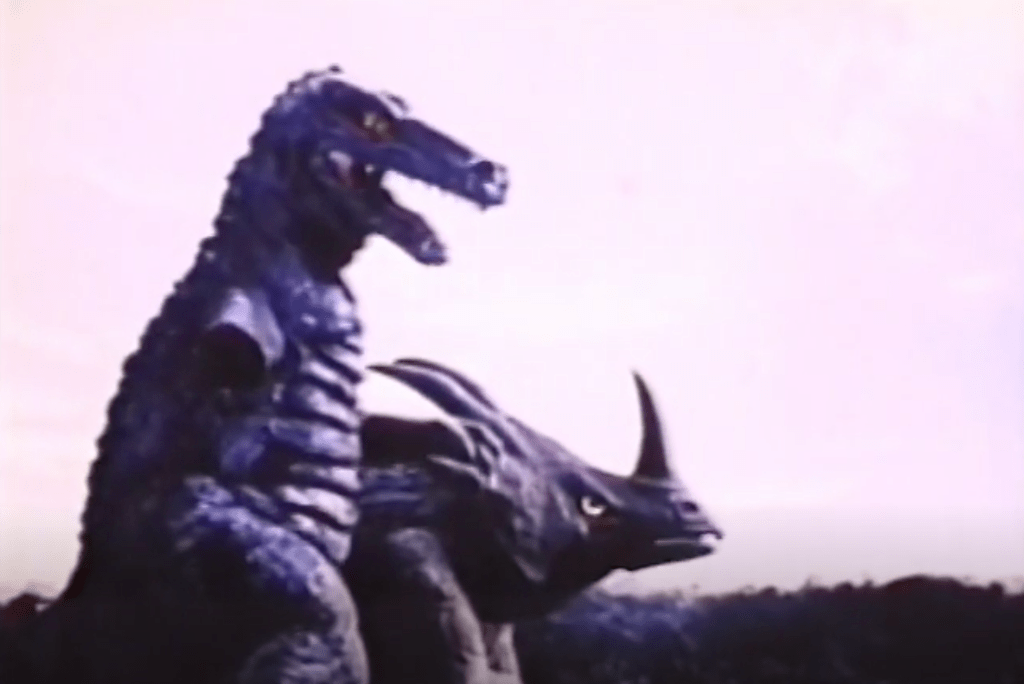
The styracosaurus teams-up another super monster, who has had one of its arms sawn off by Gemini Force!

Another dino-kaiju that attacks the surface world is a huge pteranodon that commands a flock of killer bats! This beaked beast pecks at a skyscraper at one point.

When pterosaurs attack!
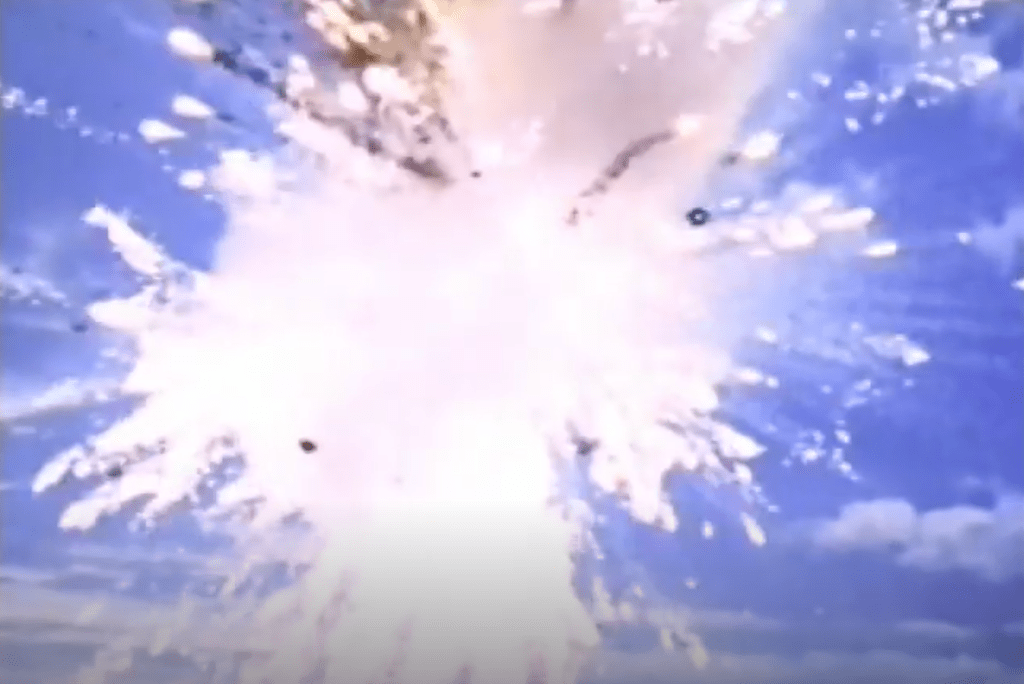
 Gemini Force injures the pteranodon... and it explodes!
Gemini Force injures the pteranodon… and it explodes!
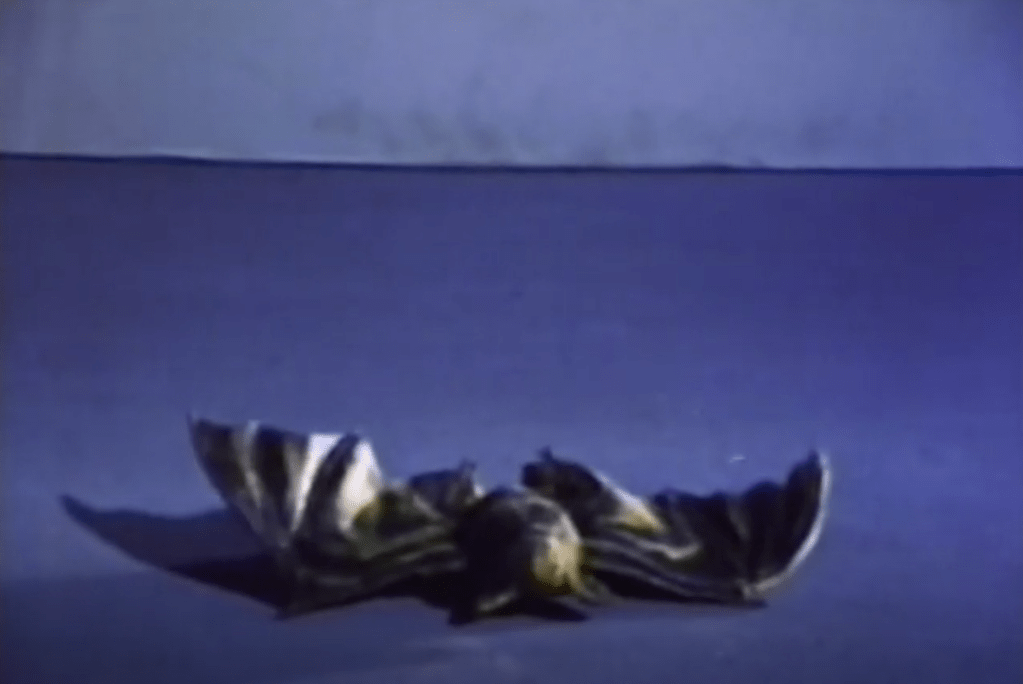
A dead killer bat
A dead killer bat

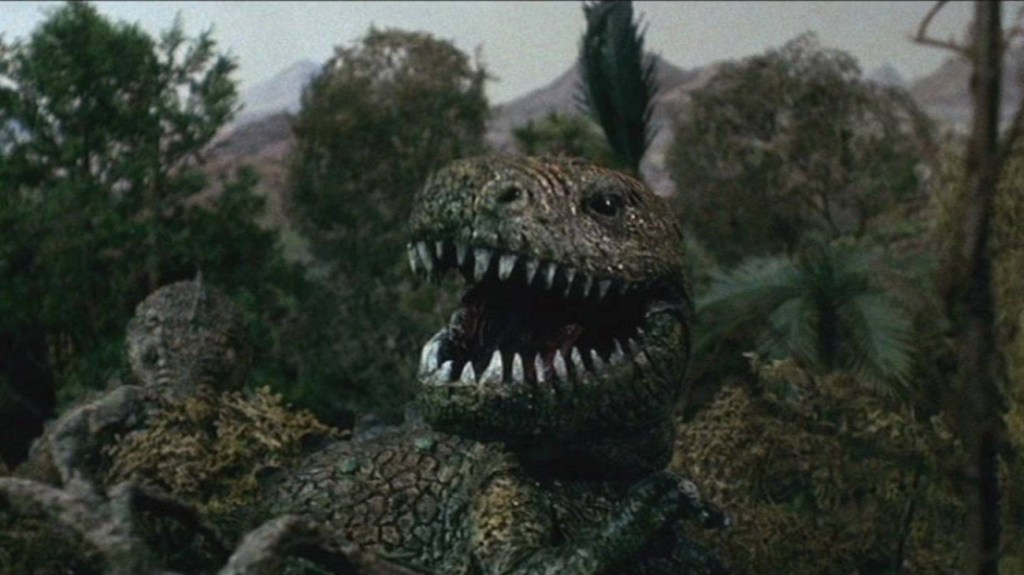
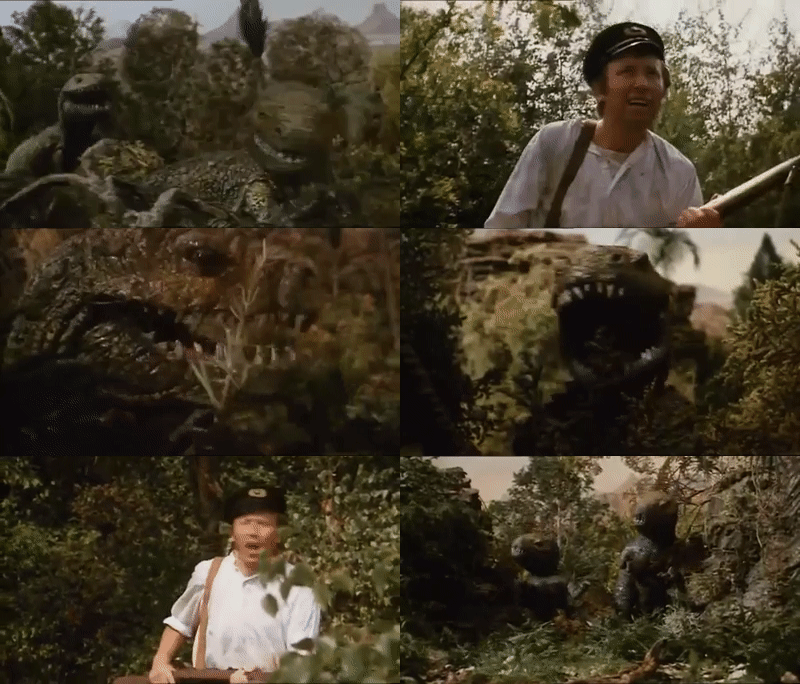
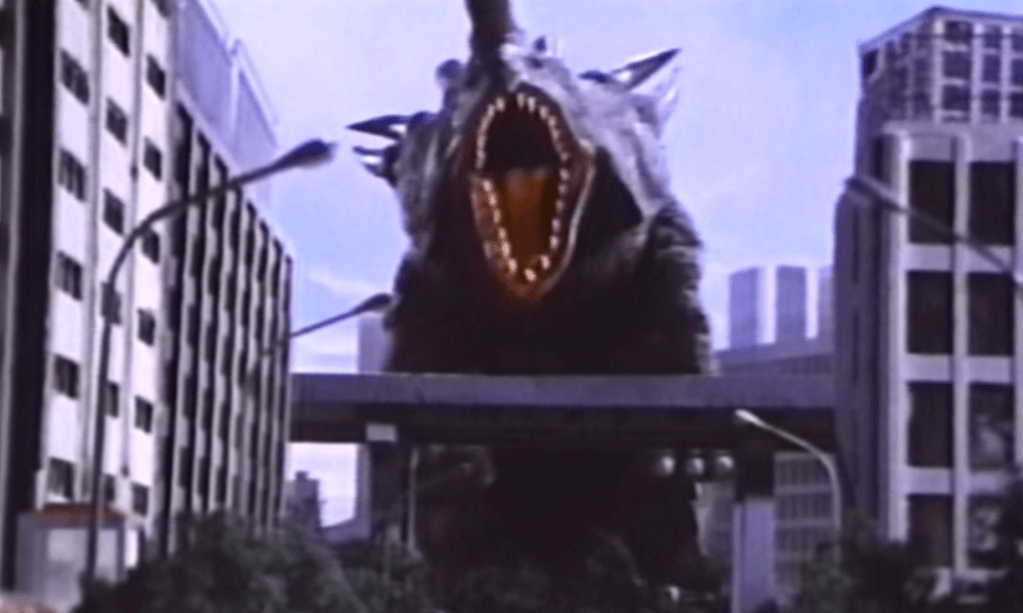
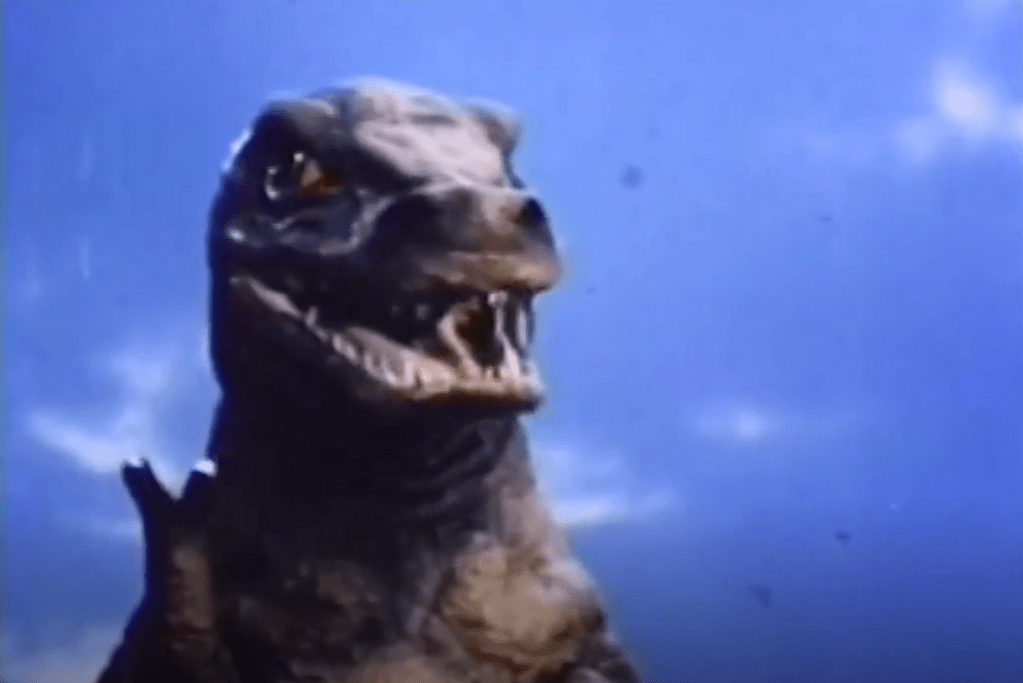
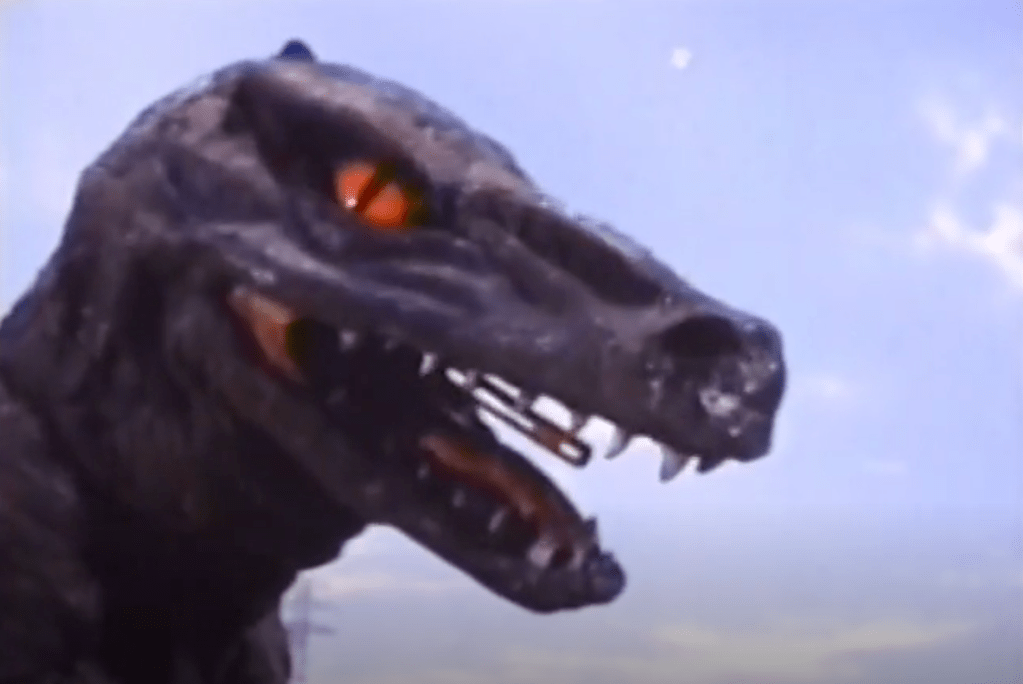
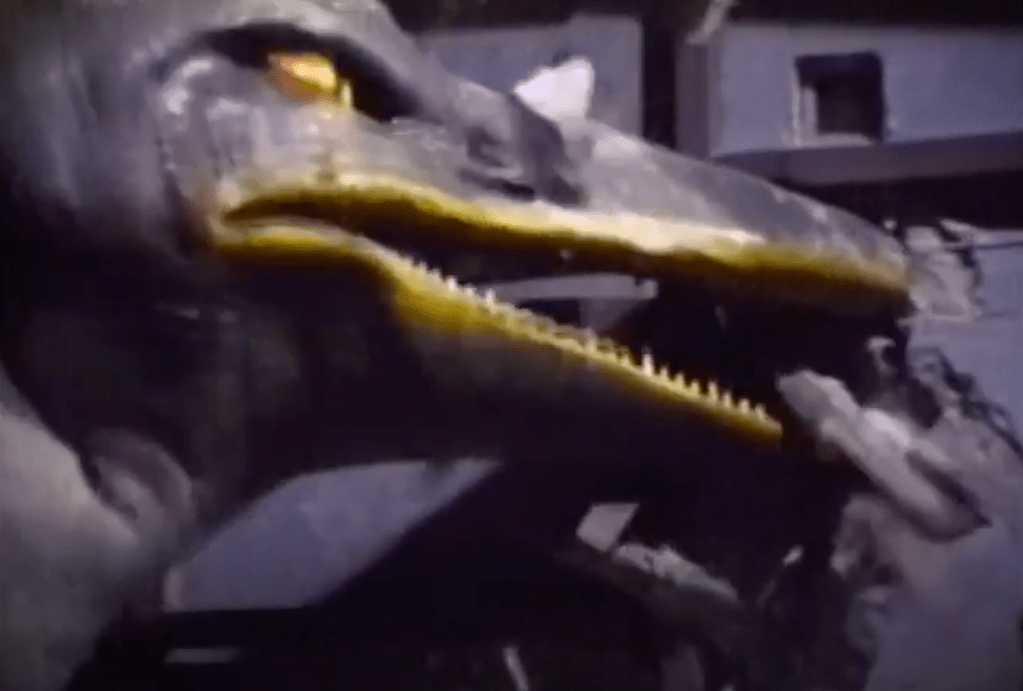
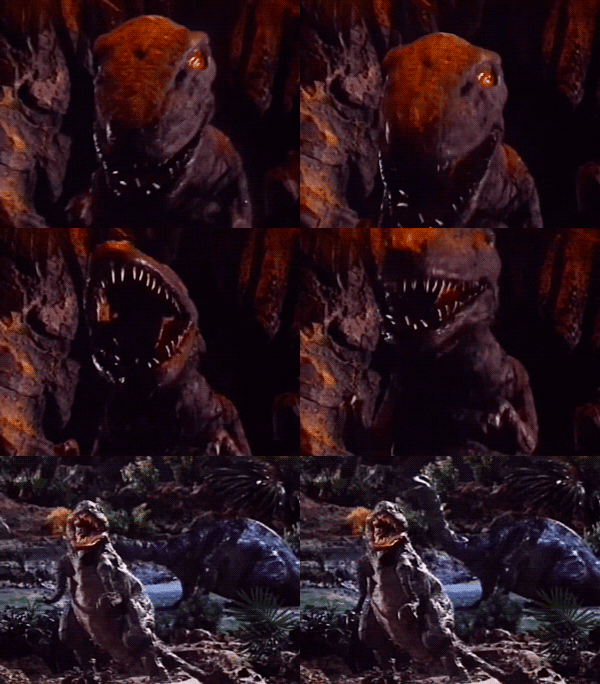
The main villain, Lord Tyrannus, is actually portrayed by the reused T-Rex suit from the gloriously cheesy film THE LAST DINOSAUR (1977)!

Man-in-suit Lord Tyrannus rules over his stop-motion dinosaur underlings!

Oh, the madness of it all!

Boom!
Boom!

Don’t try to logically make sense of it all, or your brain may well explode just like the dinosaurs do in this film. Just go with the flow and enjoy…